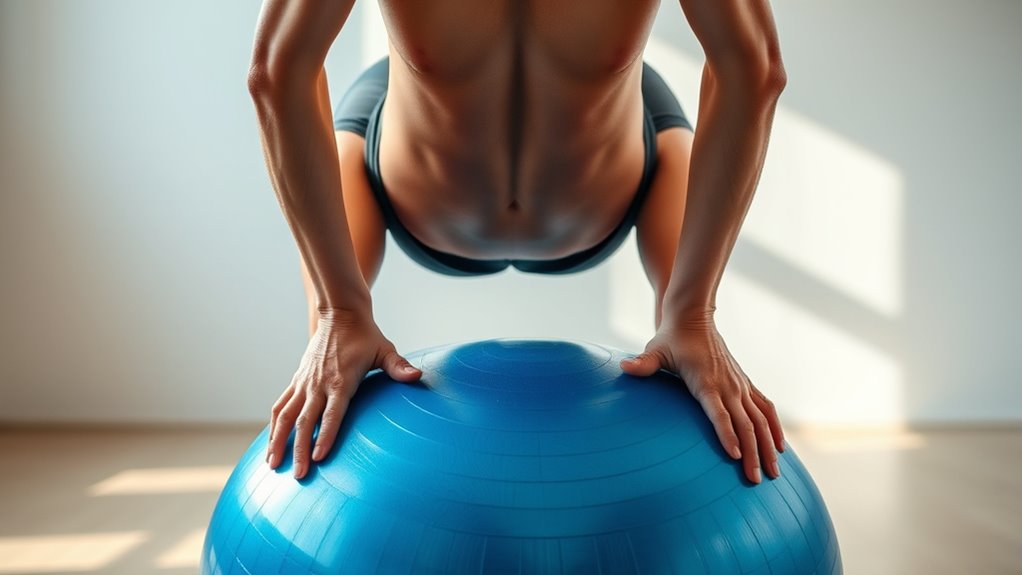

Using a Swiss ball for core stability is highly effective because it challenges your muscles to work on an unstable surface. It improves balance, strengthens deep core muscles, and supports better posture—all essential for injury prevention. Focus on proper setup, controlled movements, and gradual progression to maximize results while avoiding common mistakes. Keep practicing these exercises consistently, and you’ll gain access to more advanced techniques that take your core strength even further.
Key Takeaways
- Swiss ball exercises enhance core stability by challenging balance and engaging deep abdominal and back muscles.
- Proper equipment setup and correct posture are essential for safe, effective core training on the Swiss ball.
- Incorporate progressive movements like planks, ball rollouts, and single-leg balances to strengthen core muscles.
- Focus on controlled movements, proper breathing, and avoiding overtraining to maximize core stability benefits.
- Gradually increase exercise complexity and difficulty to ensure continuous improvement in core strength and stability.

Core Balance Exercise Ball for Workouts, Anti-Burst and Slip Resistant, Swiss Yoga Ball for Pregnancy, Stability, Fitness and Physical Therapy, 4 Sizes, with Pump (22" / 55cm Teal)
RANGE OF SIZES FOR A PERFECT WORKOUT: Core Balance Gym Balls come in a choice of sizes to…
As an affiliate, we earn on qualifying purchases.
As an affiliate, we earn on qualifying purchases.
Benefits of Using a Swiss Ball for Core Training
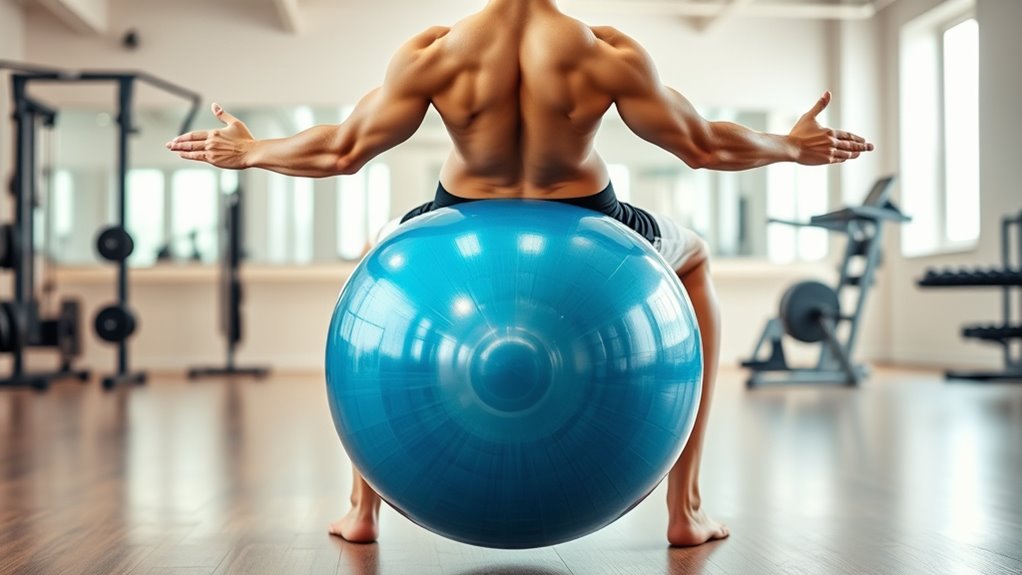
Using a Swiss ball for core training offers several advantages that can enhance your fitness routine. One key benefit is balance enhancement, as performing exercises on an unstable surface forces your muscles to stabilize your body. This improves coordination and overall stability, making daily movements easier and safer. Additionally, using a Swiss ball helps prevent injuries by strengthening deep core muscles, which support your spine and improve posture. When your core is strong and balanced, you’re less likely to experience strains or falls. Incorporating Swiss ball exercises into your routine challenges your muscles in new ways, promoting better control and resilience. The unstable surface also encourages muscle engagement, activating stabilizer muscles that are often neglected in traditional workouts. Moreover, engaging in mindfulness during these exercises can further enhance your focus and effectiveness. Research also shows that integrating Swiss ball training can contribute to muscle activation and improved proprioception, leading to more effective workouts. Consistent use of the Swiss ball can also help improve postural alignment, reducing the risk of chronic back pain. Overall, these benefits contribute to a more effective, safer workout that supports your long-term health and fitness goals.

VEVOR 23-inch Half Exercise Ball Trainer, 660 lbs Capacity Balance Ball, Includes Resistance Bands and Pump, Ideal for Full Body Workouts, Yoga, and Strength Training at Home Gym, Blue2
Multi-functional Exercise: The half exercise ball trainer, unlike any other fitness equipment, offers various strength training methods targeting…
As an affiliate, we earn on qualifying purchases.
As an affiliate, we earn on qualifying purchases.
Essential Tips for Safe and Effective Exercises
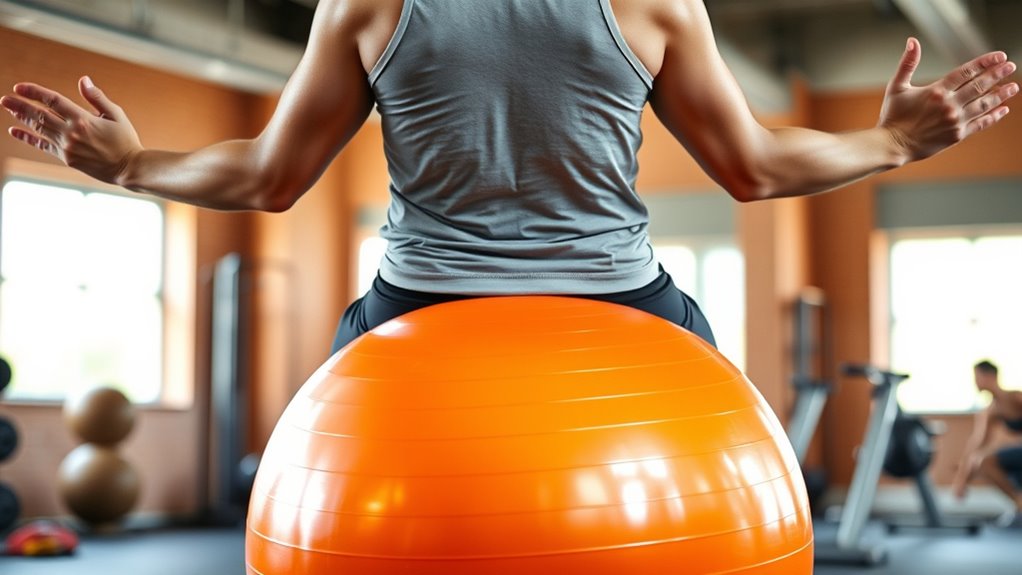
To get the most from your Swiss ball exercises, start with proper equipment setup to guarantee stability and safety. Keep your posture correct throughout each movement to prevent injuries and maximize effectiveness. Paying attention to these details will help you perform exercises safely and see better results. Incorporating professional equipment ensures optimal support and reduces the risk of accidents. Additionally, understanding core stability principles can enhance your workout effectiveness by targeting the right muscle groups. When selecting your Swiss ball, consider ball size and material to match your height and workout needs for improved comfort and performance. Being aware of smart toilet features can also inspire innovative approaches to fitness and hygiene integration in your routine.
Proper Equipment Setup
Ensuring your Swiss ball is properly set up is essential for safe and effective core exercises. Start by checking the ball’s inflation—it should be firm but still slightly yielding when you press down, providing stability without being too hard or soft. Proper equipment placement is key; place the ball on a flat, non-slip surface to prevent slipping during exercises. Before working out, make sure the ball is adequately inflated to match your height—generally, your knees should be at a 90-degree angle when seated on the ball. Avoid over or under-inflating, as this can compromise your balance and safety. Always double-check the setup to ensure the ball feels stable and secure, laying a solid foundation for your core workout. Incorporating automation’s role in business intelligence can also help monitor and optimize your exercise routines through data analysis. Additionally, staying aware of machine learning advancements can provide insights into customizing your fitness plans for better results. Proper fitness equipment maintenance ensures the longevity and safety of your workout tools, contributing to more effective training sessions.
Maintain Correct Posture
Maintaining correct posture during Swiss ball exercises is essential for maximizing benefits and preventing injuries. Focus on posture correction by keeping your back straight and shoulders relaxed. Proper spinal alignment ensures that your core engages effectively and reduces strain on your neck and lower back. As you perform each movement, avoid slouching or arching your back excessively. Keep your head aligned with your spine, and engage your abdominal muscles to support your posture. Using a mirror can help you monitor your form. Remember, maintaining good posture isn’t just about balance—it’s about protecting your spine and optimizing core activation. By staying mindful of your spinal alignment throughout your workout, you’ll enhance safety and achieve better results. Additionally, being aware of AI discoveries in healthcare can inform safer and more effective exercise practices.

CanDo Inflatable Exercise Ball – Blue 11.8", Durable Extra Thick Non-Slip Stability Ball for Core Workouts, Yoga, Pilates, Active Seating, Physical Therapy, Pregnancy, Home Gym, Flexibility
Inflatable Exercise Ball – The CanDo Inflatable Exercise Ball is ideal for home and gym workouts, rehab and…
As an affiliate, we earn on qualifying purchases.
As an affiliate, we earn on qualifying purchases.
Basic Swiss Ball Exercises to Build Core Strength
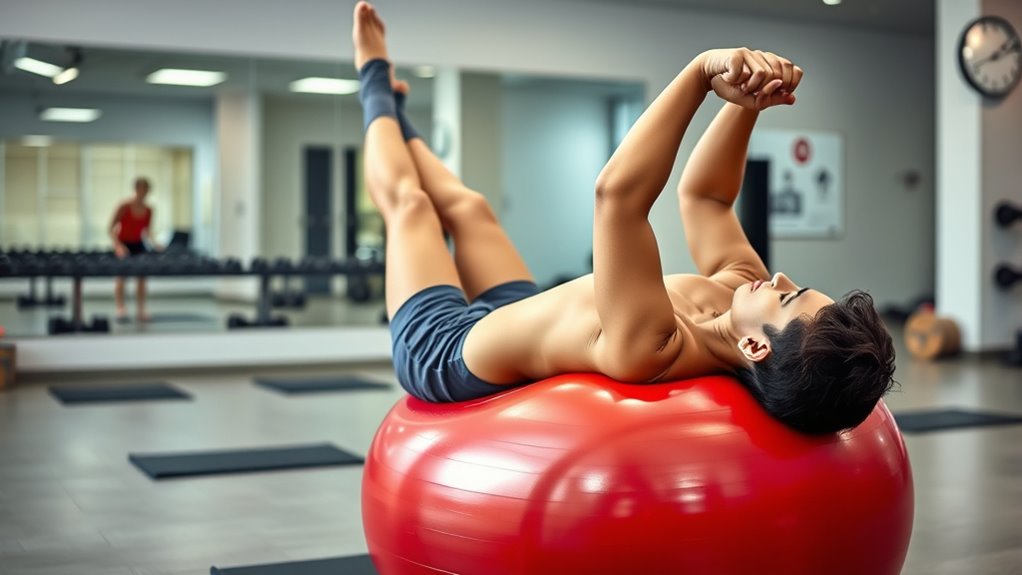
Starting with simple yet effective movements, basic Swiss ball exercises are an excellent way to strengthen your core muscles. Proper ball placement is essential; position the ball securely under your lower back or hips to maintain stability during each exercise. Focus on grip techniques by holding onto the ball or placing your hands on your hips to keep control and balance. Keep your core engaged throughout to maximize benefits and prevent injury. Exercises like pelvic tilts, seated marches, and bridge lifts help activate core muscles without overwhelming your system. Stay mindful of your posture, ensuring your spine remains neutral. These foundational movements build a solid core base, setting the stage for more advanced routines later on. Consistency and proper technique are key to seeing progress.

ProBody Pilates Exercise Ball – Multiple Sizes Gym Grade Balance Ball for Fitness, Workout, Pregnancy & Physical Therapy, Stability Yoga Ball Chair (Blue, 65cm)
ANTI BURST AND SLIP RESISTANT: A work out ball with sturdy PVC to withstand the most punishing workouts….
As an affiliate, we earn on qualifying purchases.
As an affiliate, we earn on qualifying purchases.
Intermediate Movements to Challenge Your Stability
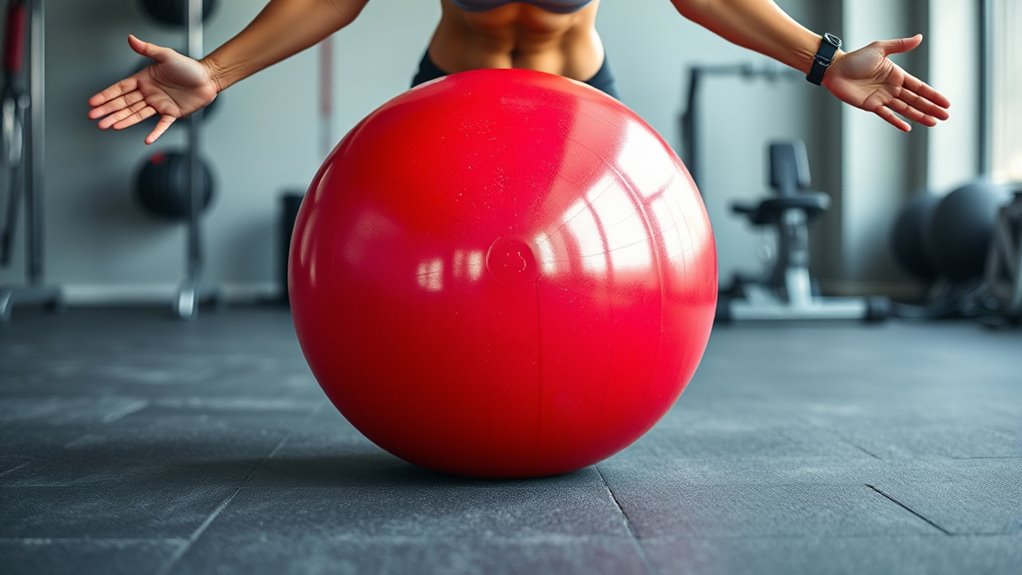
To take your core stability to the next level, try single-leg balance challenges on the Swiss ball. Incorporating dynamic ball tosses adds an element of movement that tests your control and coordination. These intermediate exercises will push your limits and improve your overall stability.
Single-Leg Balance Challenges
When you challenge your balance on a single leg, you activate your core muscles more intensely to stabilize your entire body. This movement enhances balance improvement by forcing your stabilizers to work harder, which translates to better coordination and control. As you hold a single-leg stance, your core engages to prevent wobbling or falling, strengthening muscles that support joint stability. Regularly practicing this exercise can also aid in injury prevention by improving proprioception and muscular balance around your hips and knees. It’s a simple yet effective way to elevate your core stability and overall athletic performance. Keep your gaze steady and core tight as you maintain the position, gradually increasing the duration for continued progress and greater benefits. Incorporating mindful movement and maintaining awareness of your body can further enhance the effectiveness of this exercise and promote sustainable progress. Additionally, focusing on core engagement techniques can optimize your stability training results and help develop muscular endurance essential for long-term stability.
Dynamic Ball Tosses
Dynamic ball tosses are an effective way to challenge your stability while engaging your core muscles in movement. By incorporating controlled tosses and bounces on the Swiss ball, you improve your balance and coordination. Focus on toss accuracy to prevent losing control, and practice ball bounce techniques to increase difficulty. These exercises activate deep core muscles, enhancing overall stability. To maximize benefits, vary the toss height and speed, challenging your muscles further. Incorporating core activation strategies can help maintain your hair health during these movements. Additionally, ensuring proper wall organization can create a clutter-free environment that supports your fitness routine. Regular practice can also help improve postural alignment, which is essential for effective core stability.
Advanced Swiss Ball Workouts for Core Power
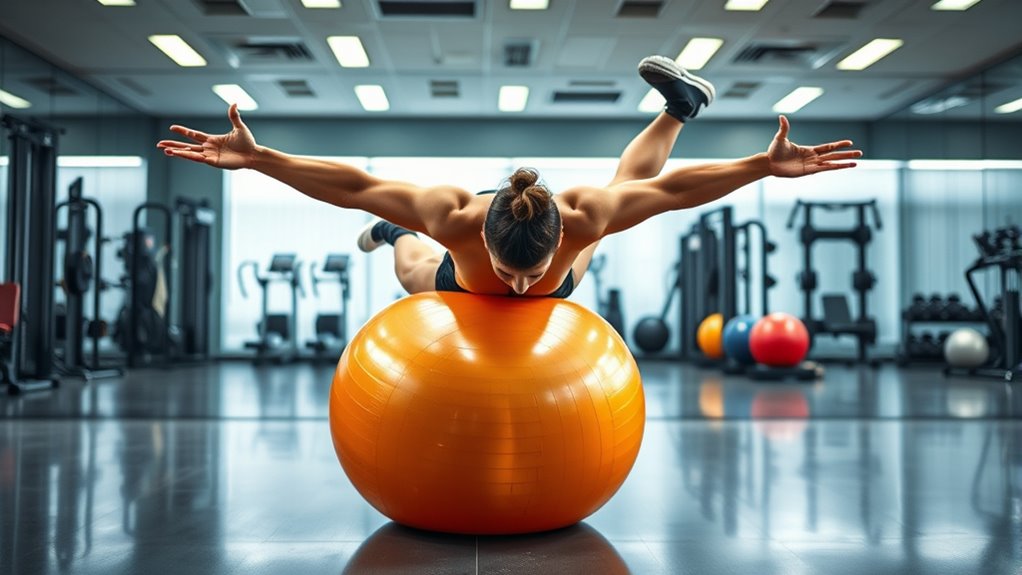
If you’re ready to take your core training to the next level, advanced Swiss Ball workouts can considerably boost your strength and stability. To maximize results, choose the right ball size—smaller for controlled moves, larger for dynamic stability. Focus on maintaining a steady exercise tempo, slowing down *progressions* to increase muscle engagement. Here’s what you can do:
- Perform planks on a stability ball, shifting weight side to side.
- Incorporate ball rollouts with controlled, slow movements.
- Try single-leg balance exercises on a medium-sized ball.
- Execute rotational twists with deliberate, steady tempo.
These exercises challenge your core intensely, improve coordination, and enhance overall stability. Push yourself with precision, and watch your core power grow.
Incorporating Swiss Ball Exercises Into Your Routine

Incorporating Swiss ball exercises into your routine can substantially enhance your core strength and stability when done consistently. To start, choose the right ball by considering size and firmness; a properly selected ball guarantees proper form and safety. Incorporate these exercises into your workout schedule gradually, aiming for at least two to three sessions per week. Consistency is key, so set realistic goals and track your progress. Mix different exercises to target various core muscles and keep your routine engaging. Remember, quality over quantity matters—perform each movement with control and focus. As your strength improves, you can increase workout intensity or duration. By selecting the right ball and maintaining regular workout frequency, you’ll effectively build a stronger, more stable core. Proper exercise technique also plays a crucial role in maximizing benefits and preventing injury.
Common Mistakes to Avoid During Swiss Ball Workouts
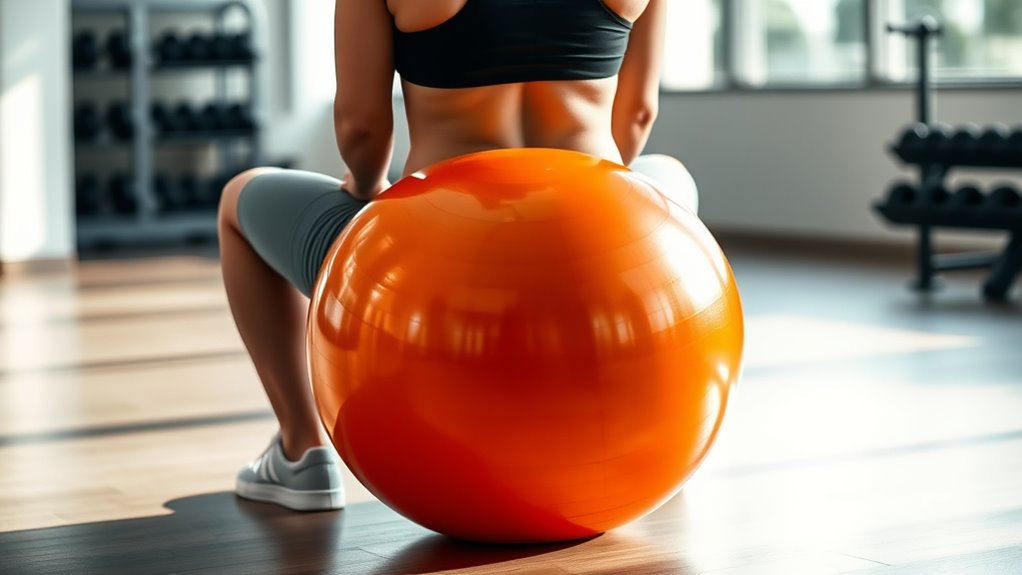
To maximize the benefits of Swiss ball exercises, it’s essential to avoid common mistakes that can compromise your form and safety. First, overtraining pitfalls can lead to fatigue and injury, so listen to your body and rest when needed. Second, avoid incorrect breathing techniques; exhale during exertion and inhale during relaxation to maintain stability and avoid unnecessary strain. Third, don’t rush through exercises—poor control increases injury risk and diminishes effectiveness. Fourth, make certain your movements are controlled, and your core remains engaged throughout. Additionally, understanding core stability and proper exercise techniques can significantly enhance your training results. Incorporating mindful movement practices ensures that each exercise is performed with precision, reducing the risk of injury and promoting better muscle engagement. Being aware of proper equipment use can also prevent accidents and ensure that you’re performing exercises safely and effectively. Furthermore, paying attention to body alignment helps prevent strain and ensures that exercises target the intended muscles effectively.
Progressing Your Core Stability Program
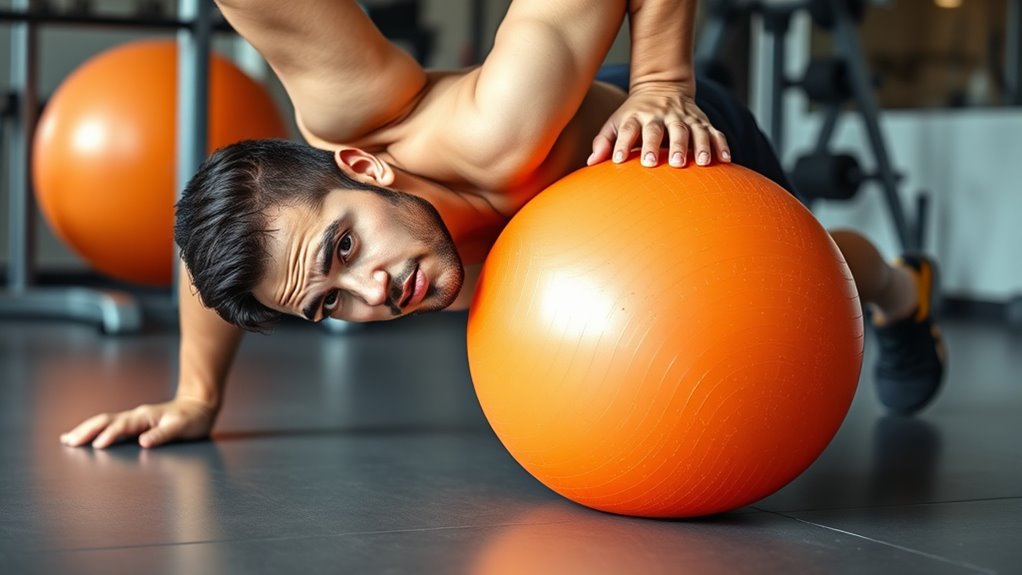
Progressing your core stability program is essential to continue challenging your muscles and prevent plateaus. To improve ball stability and boost your results, gradually increase the difficulty of your exercises. Start by adding more dynamic movements or reducing your base of support, such as lifting one leg or performing rotational twists. Incorporate exercise progression by switching to more unstable surfaces or trying advanced Swiss ball exercises that demand greater balance and control. Focus on maintaining proper form while increasing intensity, ensuring your core remains engaged. Consistent progression keeps your muscles adapting, which enhances strength and stability. Remember, small, incremental changes are more effective than sudden jumps in difficulty. This approach ensures steady improvement and maximizes the benefits of your core stability routine.
Frequently Asked Questions
Can Swiss Ball Exercises Help With Back Pain Relief?
You might wonder if Swiss ball exercises can ease back pain. They do this by engaging your core muscles, which provides better support for your spine. When you perform ball rolls or face stability challenges, you strengthen those muscles, reducing strain on your back. As you improve stability, you’ll likely experience less discomfort and increased confidence in everyday movements. So, yes, these exercises can be a helpful part of back pain relief.
How Often Should I Perform Swiss Ball Core Workouts?
You should aim for 2-3 times a week with your Swiss ball core workouts. Keep your exercise frequency consistent to see results without overdoing it. Each session should last about 20-30 minutes, balancing workout duration and intensity. Remember, listening to your body is key—rest if needed, and gradually increase the difficulty for ongoing progress. This routine helps improve strength and stability effectively.
Are Swiss Ball Exercises Suitable for Beginners With Injuries?
Like a gentle breeze guiding a leaf, Swiss ball exercises can be suitable for beginners with injuries if you approach with caution. Always prioritize injury prevention by consulting your healthcare provider first. Use beginner modifications, such as decreased range of motion or support, to reduce strain. These adjustments help you build strength gradually, making Swiss ball workouts a safe and effective way to improve stability without risking further injury.
What Size Swiss Ball Is Best for My Height?
When choosing a ball size, your height guides the selection. For height-specific recommendations, if you’re under 5’4″, opt for a 55cm ball. If you’re between 5’4″ and 5’11”, a 65cm ball suits you best. For those over 6′, a 75cm ball provides better support. Proper ball size selection guarantees comfort and effective exercises, helping you maintain proper posture and avoid strain during workouts.
Can Swiss Ball Training Improve Athletic Performance?
Did you know Swiss ball training can boost your athletic performance? It’s true; using a ball enhances balance, which translates to better coordination and agility on the field. Plus, it improves flexibility by engaging your muscles in dynamic ways. Regularly incorporating Swiss ball exercises challenges your stability and strengthens core muscles, leading to faster recovery and reduced injury risk. So, yes—this versatile tool can definitely help you perform at your best!
Conclusion
By integrating Swiss ball exercises into your routine, you build a strong core that supports daily life. Imagine your muscles as a sturdy bridge, balancing stability and strength—yet without proper form, that bridge could wobble and collapse. Embrace the challenge, stay mindful of technique, and watch your core transform from fragile to formidable. With persistence, you’ll find yourself standing taller, stronger, and more resilient—ready to face whatever comes your way.