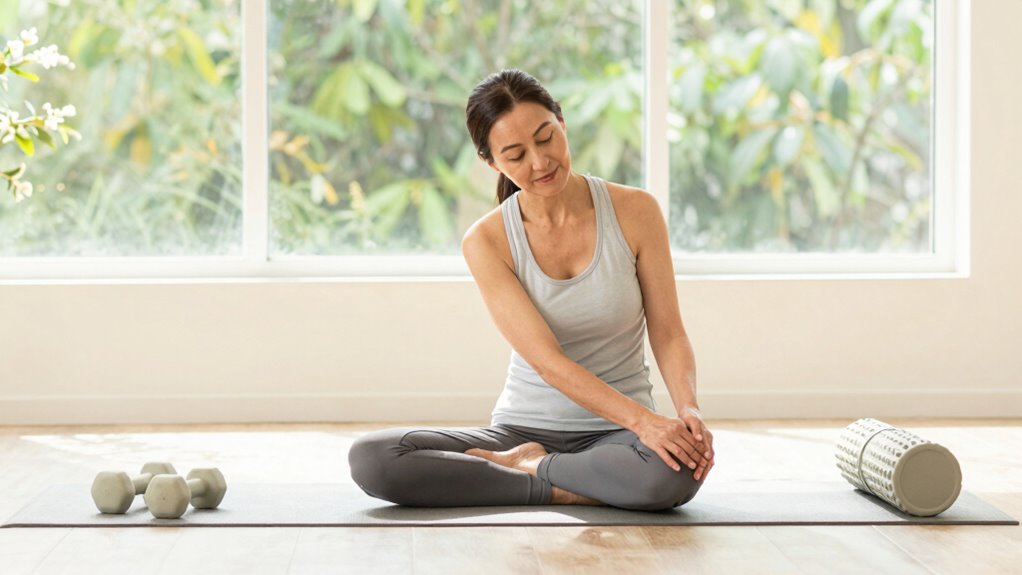

To stay active with mild joint pain, focus on gentle, low-impact exercises like swimming, water aerobics, or walking at a comfortable pace. Incorporate stretches such as ankle circles and hamstring movements to improve flexibility without causing discomfort. Use proper technique, supportive gear, and listen to your body to avoid pain. Starting slow and gradually increasing activity helps. Keep exploring to discover more tips for maintaining an active lifestyle safely with joint issues.

Get workout gear delivered free — and shop member deals
- Fast, free delivery on millions of items
- Access to Prime Big Deal Days deals on October 6–7
- Prime Video, Amazon Music and more included
Key Takeaways
- Incorporate gentle, joint-friendly stretches like ankle circles and hamstring stretches daily to maintain flexibility and reduce stiffness.
- Engage in low-impact activities such as swimming, water aerobics, or stationary cycling to support joint health.
- Gradually increase activity duration and intensity, listening to your body’s responses to prevent overexertion.
- Use proper techniques and supportive gear to minimize joint stress during exercise sessions.
- Consult healthcare professionals for personalized guidance and stop activities if you experience pain.
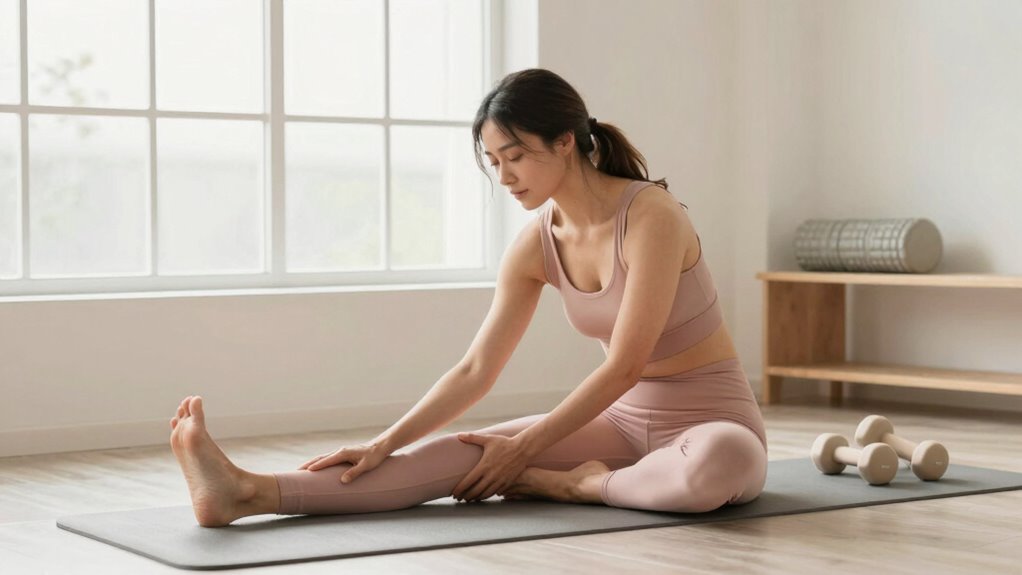
Dealing with mild joint pain doesn’t mean you have to give up on staying active. In fact, staying active is one of the best ways to manage your symptoms and maintain your overall health. The key is to choose activities that don’t put too much strain on your joints. You can incorporate joint-friendly stretches into your routine, which help improve flexibility and reduce stiffness. These stretches are gentle and designed to avoid aggravating your pain. For example, simple movements like ankle circles, wrist stretches, and gentle hamstring stretches can keep your joints mobile without causing discomfort.
Low impact exercises are another excellent option. They allow you to stay active without putting excessive pressure on your joints. Swimming or water aerobics are especially beneficial because the water provides support and resistance, helping you strengthen muscles around your joints without added stress. Cycling on a stationary bike can also be gentle yet effective, as it promotes cardiovascular health while minimizing joint strain. Walking is often recommended, but you should listen to your body and keep your pace comfortable, avoiding uneven or hilly terrain that might cause pain or discomfort. Incorporating joint mobility exercises can further support your efforts to stay active comfortably.
Incorporating these activities into your daily routine can help you stay consistent and avoid inactivity, which can sometimes worsen joint pain. You might find that doing joint friendly stretches in the morning helps loosen up your joints for the day ahead, while low impact exercises in the afternoon keep your muscles strong and your joints supported. Remember to start slow and gradually increase intensity or duration as your body allows. Pushing too hard too quickly can lead to setbacks, so pay attention to how your joints feel during and after each activity.
It’s also important to use proper technique and supportive gear, like cushioned shoes or braces if needed. Maintaining a healthy weight reduces stress on your joints, so combining your activity routine with a balanced diet can enhance your progress. Additionally, paying attention to joint health can help you make informed decisions about activity levels and modifications. Incorporating proper technique can further reduce the risk of injury and ensure that you are exercising safely. Always listen to your body—if a movement causes pain, stop immediately and choose a gentler alternative. Consulting with a healthcare professional or physical therapist can provide personalized guidance tailored to your specific needs, ensuring you stay safe while staying active.
As an affiliate, we earn on qualifying purchases.
Frequently Asked Questions
Can Mild Joint Pain Turn Into a Serious Condition?
Mild joint pain can sometimes develop into a serious condition if left untreated. It might signal issues like joint instability or inflammation management problems, which could worsen over time. You should monitor your symptoms closely and seek medical advice if pain persists or worsens. Proper diagnosis and early intervention help prevent complications, ensuring your joints stay stable and healthy. Staying active safely supports overall joint health, but always listen to your body.
Are There Specific Exercises to Avoid With Joint Pain?
You should avoid high-impact activities and strenuous exercises when you have joint pain. Running on hard surfaces or jumping might feel like fun, but they can turn your mild discomfort into a serious troublemaker. Instead, opt for low-impact options like swimming or cycling. These gentle movements keep you active without pounding your joints into submission, helping you stay fit without making your pain worse.
How Can I Tell if My Activity Worsens My Joint Pain?
You can tell if your activity worsens your joint pain by paying attention to joint pain triggers during or after exercise. If you notice increased pain, swelling, or stiffness, it’s a sign to contemplate activity modification. Take note of which movements cause discomfort and adjust your routine accordingly. Listening to your body helps prevent further joint damage, so modify or reduce activities that aggravate your symptoms to stay active safely.
Should I See a Doctor Before Starting New Activities?
Yes, you should see a doctor before starting new activities. A medical consultation helps assess your joint condition and provides guidance on exercise safety. Your doctor can recommend appropriate activities and modifications, reducing the risk of worsening your pain or injury. Prioritizing professional advice guarantees you stay active safely, build strength, and manage your joint health effectively, giving you peace of mind as you incorporate new exercises into your routine.
What Are Quick Relief Options for Joint Pain During Activity?
When joint pain flares during activity, try ice therapy to reduce inflammation and numb the area quickly. Over-the-counter pain relievers like acetaminophen or NSAIDs can provide fast relief if used as directed. Rest the joint briefly if needed, and avoid activities that worsen pain. Applying ice and taking pain relievers together can help manage discomfort, allowing you to continue your activity with less pain.
Conclusion
Staying active with mild joint pain might seem intimidating, like trying to dance through a drizzle—you can still move, but you need to be gentle. Remember, gentle exercise isn’t just about easing pain; it’s about embracing the freedom of movement, even when stiffness tries to hold you back. So, keep moving, stay hopeful, and find joy in each step. After all, a little effort today paves the way for a more active tomorrow.
Fall Picks
fall essentials
As an affiliate, we earn on qualifying purchases.