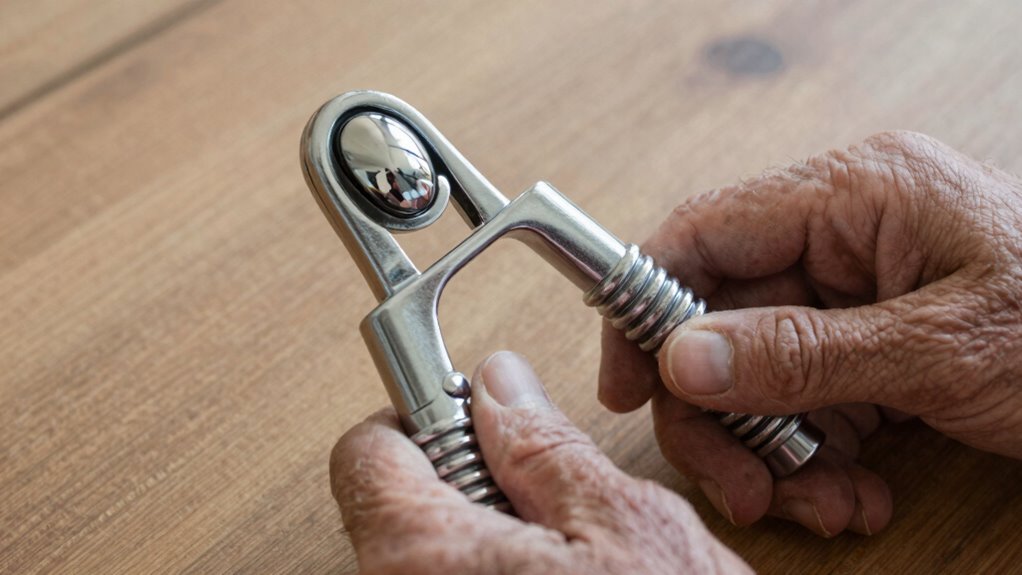

Grip strengtheners may be small, but they offer big aging benefits. By regularly squeezing these portable tools, you can boost hand strength, improve joint health, and maintain dexterity as you age. They support muscle endurance and help prevent stiffness, making daily tasks easier. Consistent use can also enhance coordination and reduce the risk of injury. To discover how a tiny tool can transform your hand health, keep exploring what these simple devices can do.

Get workout gear delivered free with Prime
- Fast, free delivery on millions of items
- Prime Video, Amazon Music and more included
- Member-only deals all year
Key Takeaways
- Small grip strengtheners effectively combat age-related decline in hand dexterity and muscle endurance.
- Regular use supports joint health, reduces stiffness, and improves circulation for aging hands.
- They help maintain functional independence by enhancing everyday task performance.
- Portable tools allow consistent practice anywhere, promoting long-term hand health.
- Incorporating grip exercises into routines can prevent injury and sustain strength with aging.
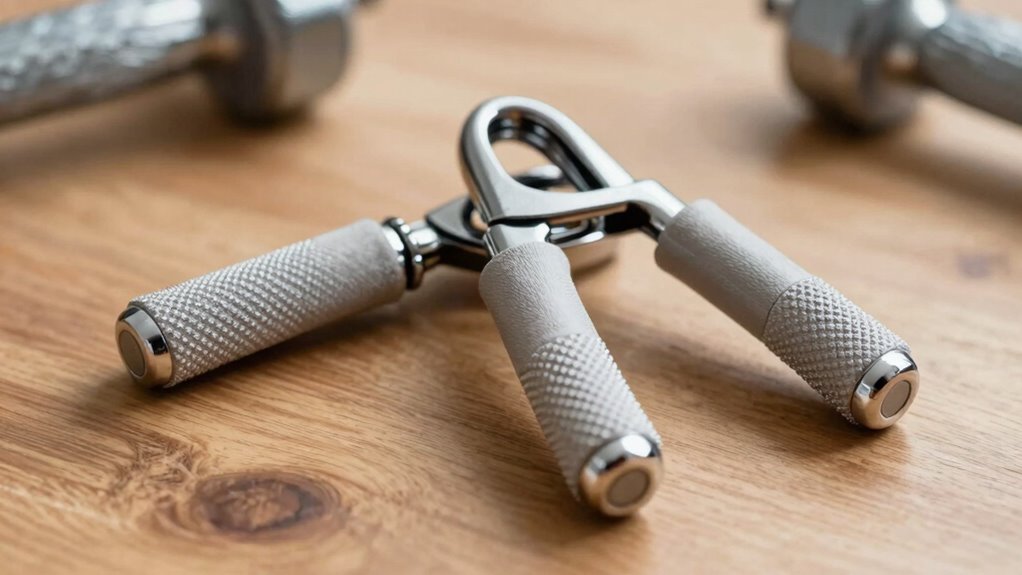
Have you ever wondered how to boost your hand strength effectively? Using grip strengtheners might be just what you need. These tiny tools are often overlooked, but they hold significant potential for improving your hand health and overall strength. Incorporating grip strengtheners into your routine can be a game-changer, especially if you’re interested in maintaining dexterity and reducing the risk of age-related decline. When you focus on hand therapy exercises, you’re not only enhancing your grip but also supporting joint health and muscle endurance. These benefits become increasingly important as you age, helping to preserve independence and prevent injury.
Starting with grip strengtheners is straightforward. You can add them to your daily exercise routines without much hassle. Simply squeeze and release the device for a set number of repetitions, gradually increasing the resistance as your strength improves. This simple activity engages multiple muscles in your hand, fingers, and forearm, leading to better coordination and endurance over time. The key is consistency—regular practice ensures steady progress and long-term benefits. As you perform these exercises, you’ll notice improvements in your grip strength that translate into better performance in everyday tasks like opening jars, carrying groceries, or tying shoelaces. Additionally, understanding muscle endurance can help you tailor your exercises for optimal results.
Start with simple squeeze and release exercises, gradually increasing resistance for stronger, more coordinated hands.
Beyond daily convenience, grip strengtheners are also valuable in hand therapy. If you’re recovering from an injury or managing conditions like arthritis, targeted exercise routines can accelerate healing and restore functionality. These tools help maintain muscle mass and joint flexibility, which are indispensable for overall hand health. When used properly, grip strengtheners can reduce stiffness and improve circulation, making them an essential part of your rehabilitation process. Many physical therapists recommend incorporating these tools into a personalized hand therapy plan to regain strength and prevent future issues. Incorporating neural interfaces into your routine can also enhance the connection between your brain and hand muscles, further improving coordination and strength. A comprehensive approach that combines various exercises can maximize your recovery and strength gains. Furthermore, integrating functional movements into your exercises can help improve your ability to perform everyday activities with greater ease. Additionally, the versatility of grip strengtheners allows for progressive resistance, enabling you to challenge yourself as your strength develops.
Moreover, the compact size of grip strengtheners makes them portable, so you can use them anywhere—at home, work, or while traveling. This flexibility encourages you to stay consistent with your exercises and incorporate hand strengthening into your daily routine. Whether you’re looking to enhance athletic performance, prevent age-related decline, or recover from an injury, these tiny devices are an efficient way to build resilience in your hands. Remember, the secret lies in regular, mindful use. When you commit to a steady exercise routine with grip strengtheners, you’re investing in healthier, stronger hands that serve you well for years to come.
hand grip strengthener for aging
As an affiliate, we earn on qualifying purchases.
As an affiliate, we earn on qualifying purchases.
Frequently Asked Questions
Are Grip Strengtheners Suitable for All Age Groups?
Yes, grip strengtheners are suitable for all age groups, but you should consider your hand size and grip technique. If you have smaller hands, choose a device with adjustable resistance to avoid strain. Proper grip technique is essential to prevent injury and maximize benefits. Start with lighter resistance, gradually increase as your strength improves, and always listen to your body to guarantee safe and effective use across various ages.
How Often Should I Use a Grip Strengthener?
You should use a grip strengthener about three to five times a week to build hand endurance and improve grip flexibility. Start with light resistance and gradually increase as your strength improves. Pay attention to how your hands feel; if you experience pain, reduce the frequency or resistance. Consistent use helps strengthen muscles, enhances dexterity, and prevents fatigue, making daily tasks easier and reducing the risk of injury over time.
Can Grip Strengtheners Prevent Age-Related Hand Decline?
Like a modern-day Hercules, you can strengthen your grip to help prevent age-related hand decline. Regularly using grip strengtheners boosts hand dexterity and supports joint health, making daily tasks easier and reducing the risk of stiffness or weakness. By dedicating time to this simple exercise, you actively work against the natural decline of hand strength, helping you maintain mobility and independence well into your later years.
Are There Any Risks Associated With Using Grip Strengtheners?
Using grip strengtheners can pose risks like hand fatigue or joint strain, especially if you overuse them or use improper technique. You might experience soreness or discomfort if you push too hard or don’t give your hands enough rest. To avoid injury, start with light resistance, focus on proper form, and gradually increase intensity. Listening to your body helps prevent strain and keeps your hand health on track.
Do Different Grip Strengtheners Target Specific Hand Muscles?
Did you know that different grip strengtheners can target specific hand muscles? Yes, they do! Hand muscle specificity varies with grip variation, allowing you to focus on particular areas like the fingers, palms, or forearm muscles. For example, a squeeze ball emphasizes finger and palm muscles, while a grip ring targets overall hand strength. Choosing the right grip strengthener helps you improve overall hand function and avoid muscle imbalances.
Conclusion
So, next time you find yourself struggling to open that stubborn jar or impressing friends with your “muscle,” remember: a tiny grip strengthener might just be your secret weapon against aging. Who knew that a little squeeze could keep you feeling young and spry? So go ahead, squeeze away those years—your hands (and your future self) will thank you. After all, why lift heavy when you can just grip your way to eternal youth?
Columbus Day / Indigenous Peoples' Day Picks
long weekend sales
As an affiliate, we earn on qualifying purchases.