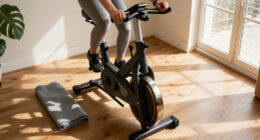

To stay safe while working out at home, create an uncluttered space with sturdy furniture for support. Focus on gentle exercises like stretching, chair-based activities, and light strength training using household items. Always warm up first, move slowly, and listen to your body. Stop if you feel pain or dizziness. Consult your healthcare provider before starting new routines. Keep your workouts consistent, and you’ll discover more ways to stay active safely.

Get workout gear delivered free with Prime
- Fast, free delivery on millions of items
- Prime Video, Amazon Music and more included
- Member-only deals all year
Key Takeaways
- Create a clutter-free, well-lit exercise space to reduce fall risks and ensure safety during workouts.
- Incorporate gentle warm-ups and start with low-impact exercises to prevent strain or injury.
- Use sturdy furniture or chairs for support and balance during seated or standing exercises.
- Include regular strength, flexibility, and balance exercises 2-3 times weekly for overall safety and health.
- Consult healthcare providers before starting new routines, especially with existing health conditions or concerns.
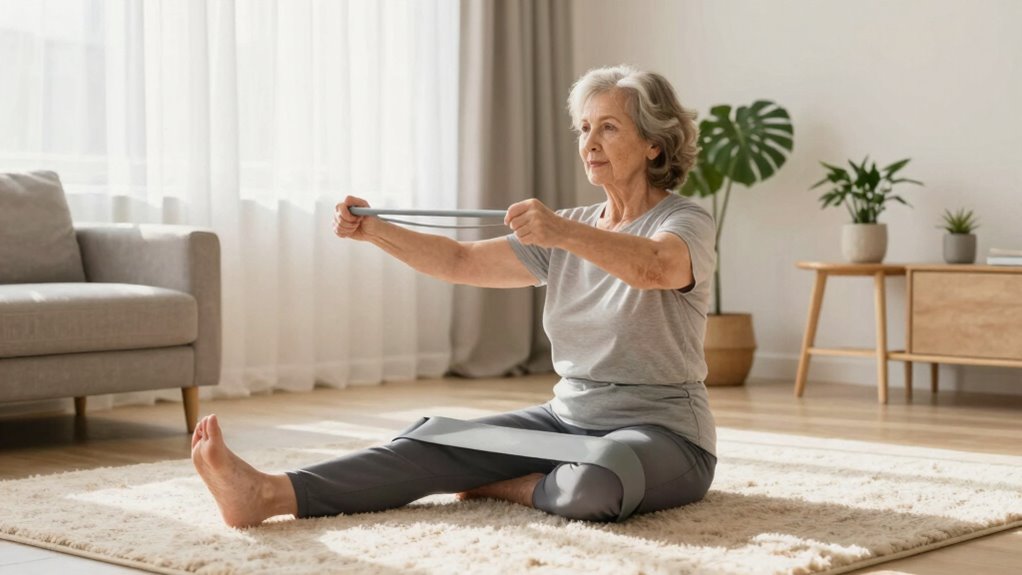
Staying active is essential for maintaining your health and independence, especially if you live alone. Regular movement helps you stay strong, flexible, and balanced, reducing the risk of falls and other injuries. Even if you prefer working out at home, there are plenty of safe and effective ways to stay fit. Incorporating strength training and flexibility exercises into your routine can make a significant difference in how you feel daily. Strength training isn’t just for building muscle; it also helps improve bone density, supports your joints, and boosts your metabolism. You can start with simple exercises like wall push-ups, seated leg lifts, or light dumbbell routines, using household items if necessary. The key is to focus on controlled movements and avoid overexertion, especially if you’re new to strength exercises. Performing these activities consistently, about two to three times a week, can help you maintain muscle mass and strength, making everyday tasks easier and less tiring.
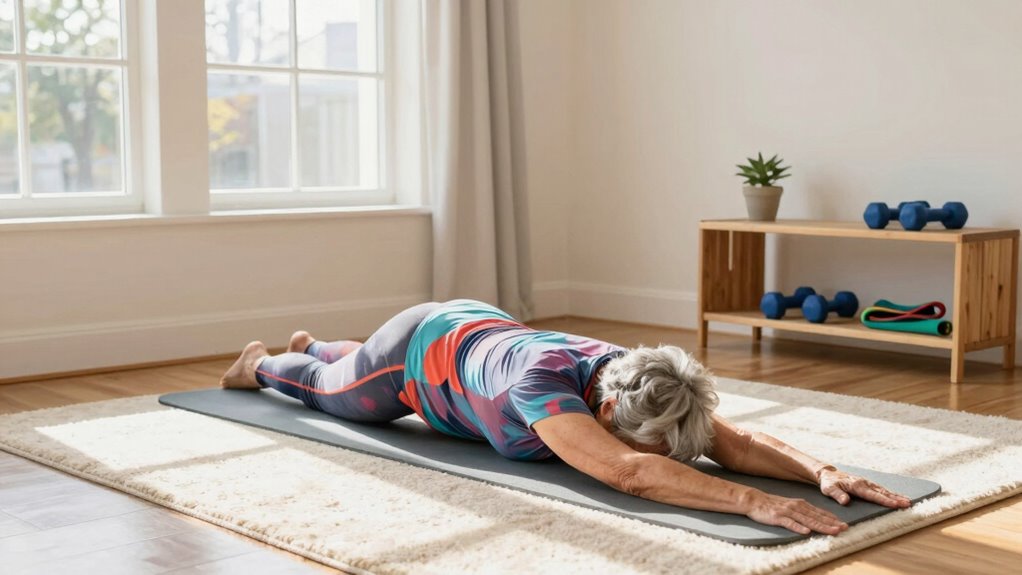
Flexibility exercises are equally important. They help keep your joints mobile, prevent stiffness, and improve your overall range of motion. Gentle stretching can be easily integrated into your daily routine, such as stretching your arms overhead, reaching down to touch your toes, or doing neck rotations. Yoga and chair stretches are excellent options because they are low-impact and can be tailored to your comfort level. Remember to move slowly and breathe steadily during each stretch, never forcing your body into painful positions. Flexibility exercises also promote relaxation and reduce stress, contributing to your overall well-being. Incorporating safe exercise environments can help you stay injury-free and comfortable while working out. Additionally, understanding the importance of physical activity benefits can motivate you to stay committed to your routine. Creating a home workout space that is safe and inviting can further enhance your consistency and enjoyment. To further support your safety, consider using assistive devices if needed, to help maintain balance and stability during exercises.
Safety should always be your top priority. Make sure your workout area is free of clutter, and use sturdy furniture or chairs for support if needed. Always start with a gentle warm-up, like marching in place or light arm circles, to prepare your muscles. If you experience pain or dizziness, stop immediately and consult a healthcare professional. It’s a good idea to check with your doctor before starting any new exercise regimen, especially if you have existing health conditions. Setting realistic goals and listening to your body ensures you stay motivated and avoid injury. With a consistent routine that includes strength training and flexibility exercises, you’ll find yourself feeling stronger, more agile, and more confident in your daily life—all from the comfort of your home.
sturdy dining chair for exercise
As an affiliate, we earn on qualifying purchases.
As an affiliate, we earn on qualifying purchases.
Frequently Asked Questions
Can I Do These Workouts if I Have Mobility Issues?
Yes, you can do these workouts even if you have mobility issues. Just follow modified routines designed for your needs and use adaptive equipment like walkers or chairs for added support. Focus on gentle movements and listen to your body. It’s always a good idea to consult with your healthcare provider before starting, ensuring your workout plan is safe and tailored to your abilities.
How Often Should I Update My Workout Routine?
You should update your workout routine every few months, about three to six, to keep it effective and safe. Pay attention to your progress and how your body responds, especially if you use exercise equipment. Adjust your workout frequency and exercises as needed to prevent boredom and avoid injury. Regular updates help you stay motivated, challenge yourself safely, and make certain your routines suit your changing fitness levels.
What Should I Do if I Feel Dizzy During Exercise?
If you feel dizzy during exercise, don’t ignore it—listen to your body and act fast. Sit or lie down immediately to prevent falls, and focus on dizziness management by breathing deeply and staying hydrated. Always prioritize exercise safety; stop exercising and seek medical advice if dizziness persists. Remember, better safe than sorry—taking quick action keeps you healthy and active without unnecessary risks.
Are There Specific Exercises for Improving Balance?
Yes, you can improve your balance with specific exercises. Incorporate strength training exercises like heel-to-toe walks and single-leg stands to boost stability. Flexibility routines, such as gentle leg stretches and yoga poses, also help enhance your range of motion. Consistently practicing these activities can reduce fall risk and increase confidence. Always start slowly and listen to your body, and consider consulting a professional for personalized guidance.
How Can I Stay Motivated to Exercise Regularly?
Imagine your motivation as a gentle breeze guiding your journey. To stay consistent, try motivation techniques like setting small goals and rewarding yourself. Exercise tracking can serve as a friendly compass, showing your progress and encouraging you to keep going. Find activities you enjoy, and make a schedule that feels natural. These steps can turn your routine into a satisfying part of your day, inspiring you to stay active consistently.
Conclusion
By sticking to these safe home workouts, you’re building an unstoppable fortress of strength and resilience. Imagine transforming your living room into a powerhouse where every move makes you feel like a superhero in your own story. With each workout, you’re not just staying active—you’re creating an invincible shield that keeps you vibrant, energized, and ready to conquer anything. So, keep moving and turn your home into the ultimate fortress of health!
Halloween Picks
halloween
As an affiliate, we earn on qualifying purchases.