Drinking more water helps improve your eating habits by supporting digestion and nutrient absorption, making you feel fuller and reducing the urge to snack excessively. It also helps differentiate hunger from thirst, preventing overeating. Water acts as a natural appetite suppressant, stabilizes blood sugar levels, and boosts energy. Plus, staying hydrated promotes mindful eating and better portion control. Keep exploring how water can transform your eating patterns even further.

Get workout gear delivered free with Prime
- Fast, free delivery on millions of items
- Prime Video, Amazon Music and more included
- Member-only deals all year
Key Takeaways
- Drinking water helps differentiate between hunger and thirst, preventing unnecessary eating.
- Water acts as a natural appetite suppressant, increasing satiety and reducing cravings.
- Staying hydrated stabilizes blood sugar levels, promoting consistent energy and healthier food choices.
- Consuming water before meals supports mindful eating and portion control.
- Proper hydration improves digestion, leading to better nutrient absorption and balanced eating habits.
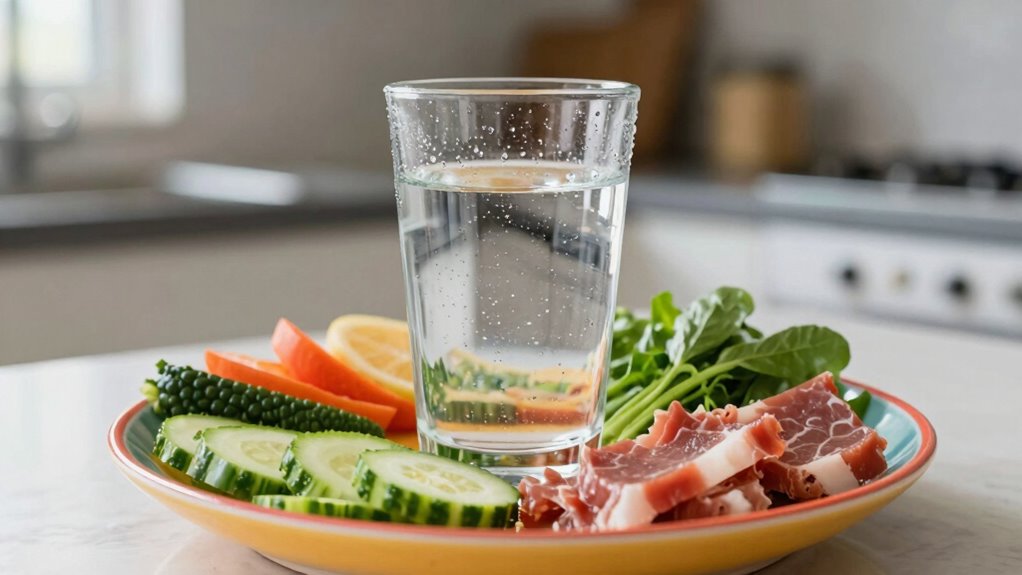
Drinking more water isn’t just good for your health—it can also positively influence your eating habits. When you stay well-hydrated, you support hydration and digestion, which are vital for overall well-being and effective nutrient absorption. Proper hydration helps break down food more efficiently, ensuring your body can extract the nutrients it needs. It also keeps your digestive system moving smoothly, reducing issues like bloating or constipation that might otherwise lead you to eat more to compensate for discomfort. By maintaining good hydration, you’re less likely to experience digestive discomforts that can trigger unnecessary snacking or overeating.
Staying well-hydrated supports digestion and reduces discomfort that can lead to overeating.
Additionally, water plays a key role in appetite regulation. Sometimes, your body can mistake thirst for hunger, making you reach for snacks when you’re actually just dehydrated. Drinking a glass of water before meals can help you distinguish whether you’re hungry or simply thirsty. This simple habit can prevent you from eating more than you need, supporting better portion control and reducing calorie intake without feeling deprived. When you hydrate properly, you’re more likely to listen to your body’s true signals of hunger and fullness, helping you develop healthier eating patterns over time.
Furthermore, water can act as a natural appetite suppressant. When your stomach senses the presence of water, it signals to your brain that you’re full or nearing fullness, which can curb unnecessary cravings. This effect is especially helpful if you’re trying to cut back on high-calorie snacks or late-night munching. Drinking water also adds volume to your meals, making them feel more satisfying without adding extra calories. For example, adding more water to soups, stews, or salads can make your meals more filling, helping you feel satisfied sooner and stay full longer.
You might notice that when you drink enough water throughout the day, you’re less tempted to reach for sugary or processed foods. Proper hydration stabilizes blood sugar levels, reducing the spikes and crashes that often lead to cravings. It also supports energy levels, so you’re less likely to seek quick energy fixes from unhealthy snacks. Over time, consistent water intake can markedly influence your eating habits by promoting better digestion, controlling appetite, and reducing unnecessary calorie consumption. Staying hydrated is a simple yet powerful way to support a healthier relationship with food, making it easier to stick to your nutritional goals and enjoy more balanced, mindful eating habits.
Products Worth Considering

Withings Sleep Under-Mattress Sleep Tracking Pad

LEVOIT Vital 200S-P Smart Air Purifier for Large Rooms up to 1875 sq ft

Garmin Forerunner 970 GPS Running and Triathlon Smartwatch, 47mm, Carbon Gray DLC Titanium with Black/Whitestone Band
As an affiliate, we earn on qualifying purchases.
Frequently Asked Questions
Can Drinking Water Help With Specific Food Cravings?
Yes, drinking water can help with specific food cravings. When you feel a craving, water can provide flavor suppression, reducing the urge for sweet or salty snacks. It also acts as a craving distraction, giving your brain time to realize you’re actually thirsty, not hungry. By staying hydrated, you can manage cravings more effectively and make healthier choices without feeling deprived.
How Much Water Should I Drink Daily for Better Eating Habits?
Think of your body as a well-tuned engine—staying hydrated keeps it running smoothly. Aim for about 8 glasses (roughly 2 liters) daily, adjusting for activity and climate. Use hydration strategies like sipping water steadily throughout the day, and pay attention to water quality to guarantee it fuels you properly. Proper hydration helps control hunger and improves eating habits, making your daily routine feel like a well-oiled machine.
Does Water Intake Affect Digestion Efficiency?
Yes, water intake considerably affects digestion efficiency. Proper hydration boosts your metabolism, helping your body convert food into energy more effectively. It also aids in water and nutrient absorption, ensuring your digestive system functions smoothly. When you drink enough water, your digestion becomes more efficient, reducing issues like constipation and bloating. Staying well-hydrated supports overall digestive health and helps your body absorb essential nutrients from your meals.
Can Drinking Water Prevent Overeating During Meals?
Yes, drinking water can prevent overeating during meals. When you stay hydrated, water enhances the fullness sensation, helping you feel satisfied sooner. Drinking water before and during meals can reduce your appetite, making you less likely to overeat. Proper hydration supports healthy digestion and helps regulate your hunger signals, so you eat only what your body needs. Keep a glass of water nearby to promote better eating habits and control your portions.
Are There Any Risks of Drinking Too Much Water?
Yes, drinking too much water can pose risks, especially if you experience water overdose. While hydration myths often exaggerate how much water you need, consuming excessive amounts can lead to hyponatremia, a dangerous condition caused by low sodium levels. You should listen to your body’s signals and avoid forced drinking. Moderation is key to staying hydrated without risking health issues from overhydration.
Conclusion
By drinking more water, you’re watering the seeds of healthier habits that blossom into better eating. It’s like giving your body a gentle nudge toward mindful choices, clearing the fog of cravings, and nourishing your inner garden. When you sip wisely, you cultivate a life where nourishing food and hydration grow hand in hand, transforming your habits into a vibrant, thriving landscape. So, take that sip—your journey to better eating starts now.