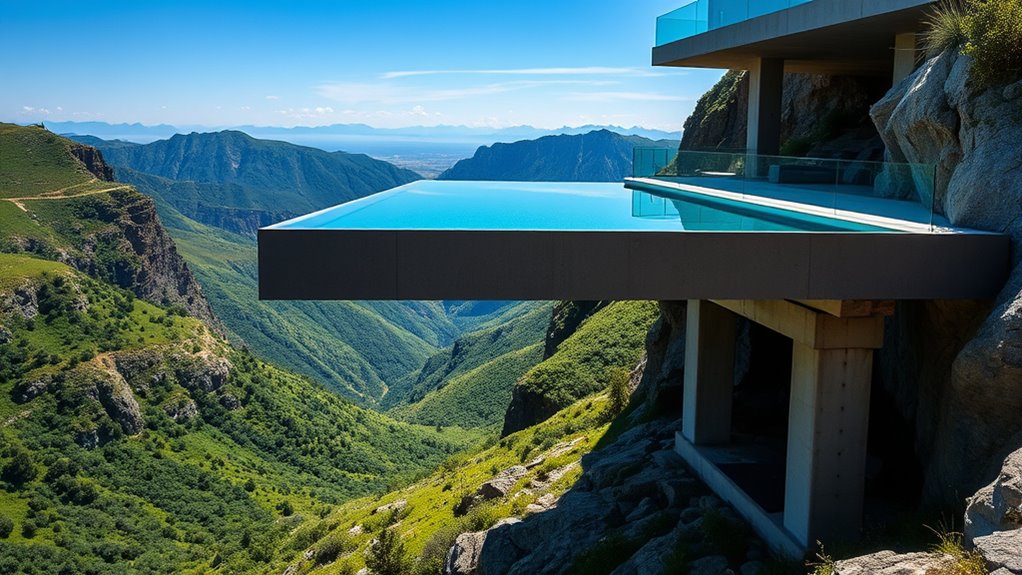

When designing hillside infinity pools, you need to evaluate the topography, soil stability, and slope grade to guarantee safety. Foundation choices like reinforced concrete with deep piles or retaining walls help support the weight and prevent shifting. Incorporating waterproofing, drainage, and erosion control measures protects against water damage and soil movement. For long-term safety, addressing soil erosion and adding support structures is key. For thorough insights, keep exploring how to optimize design and stability.
Key Takeaways
- Conduct comprehensive site evaluation and soil testing to ensure foundation stability on hillside terrain.
- Design reinforced foundations with deep piles and anchoring systems to support weight and prevent shifting.
- Implement erosion control measures and advanced drainage solutions to manage water flow and hillside stability.
- Select durable, waterproof materials and incorporate structural reinforcements for long-term hillside support.
- Plan ongoing maintenance and safety inspections to monitor structural integrity and extend the pool’s lifespan.
Assessing Site Topography and Soil Conditions
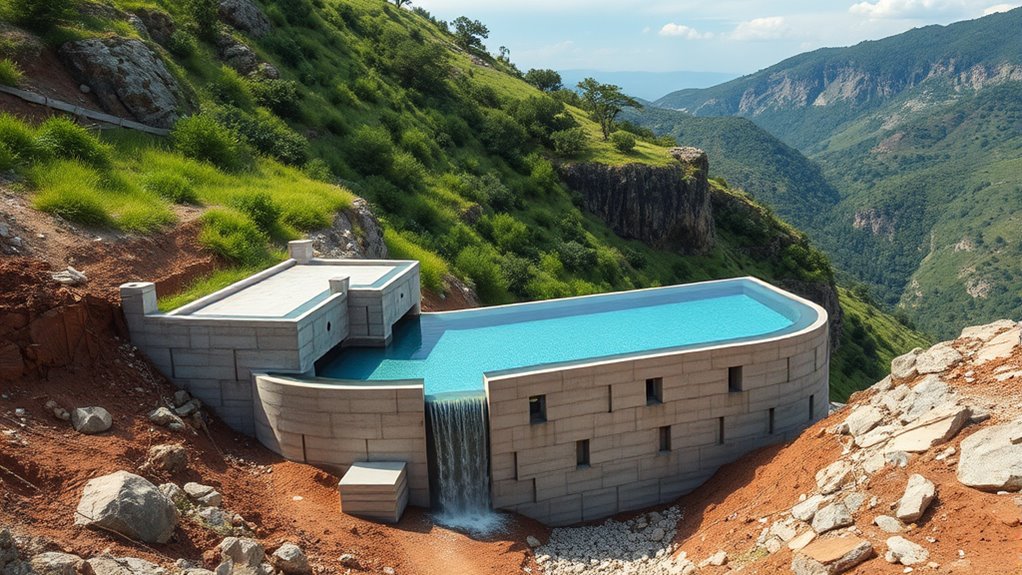
Before designing an infinity pool on a hillside, you need to carefully evaluate the site’s topography and soil conditions. You should start by analyzing the slope’s gradient and stability, as these factors influence drainage and structural support. Look for signs of erosion, loose soil, or existing cracks that could compromise the pool’s foundation. Conduct soil tests to determine its composition, bearing capacity, and water drainage properties. Understanding whether the soil is clay, sandy, or silty helps you anticipate potential issues like shifting or settling. Take detailed measurements of the terrain to identify the best location that balances aesthetic appeal with stability. Additionally, understanding the soil’s drainage properties can help prevent water accumulation and erosion around the pool area. This thorough assessment ensures your design accounts for natural land features, reducing risks and enabling a safe, long-lasting infinity pool.
Designing Foundations for Sloped Terrain
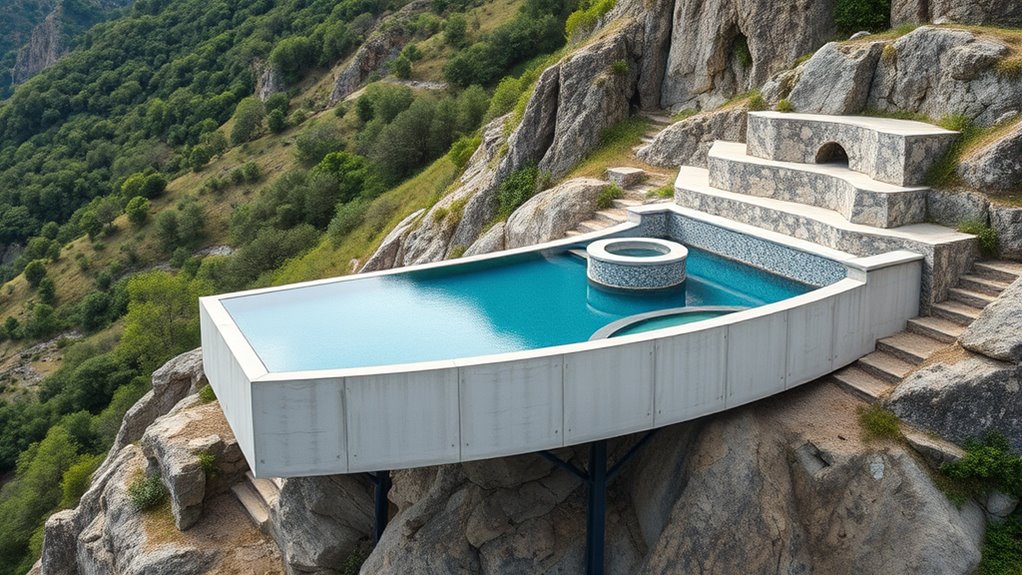
When designing foundations on sloped terrain, you need to carefully evaluate soil conditions to guarantee stability. Choosing the right foundation materials and anchoring techniques is vital to prevent shifting or settling. By focusing on these points, you can create a secure base that supports the infinity pool effectively. Incorporating sound design principles, such as proper structural support, can further enhance safety and durability.
Soil Assessment Strategies
Evaluating soil conditions is a crucial step in designing foundations for hillside infinity pools, especially on sloped terrain. You need accurate data to determine stability and prevent future issues. Start with soil borings and testing to understand compaction, moisture, and load-bearing capacity. Conduct geotechnical surveys to identify potential weaknesses like clay pockets or loose sediments. Visual inspections help spot erosion or unstable slopes. Consider the following:
| Soil Type | Strength Level | Drainage Characteristics |
|---|---|---|
| Compact Clay | Moderate | Poor drainage |
| Loose Sand | Low | Excellent drainage |
| Gravel | High | Excellent drainage |
This information guides your foundation design, ensuring safety and longevity of the pool in hillside conditions. Additionally, understanding the soil types and their properties helps optimize the design for durability and stability.
Foundation Material Choices
Choosing the right foundation materials is essential for guaranteeing stability and durability when building hillside infinity pools. You need materials that can withstand uneven loads and resist shifting over time. Concrete is the most common choice because of its strength and adaptability; you can use reinforced concrete to handle complex slopes. Steel reinforcement within the concrete adds extra stability, especially on steep terrain. In some cases, you might consider compacted gravel or crushed stone as a base layer to improve drainage and reduce settling. Always select materials that are resistant to moisture and soil movement, as hillside environments are prone to shifting soil. Security systems can also be integrated into hillside properties to monitor for soil movement or land shifts that could impact structural stability. Proper material choice ensures your pool remains secure, level, and long-lasting despite the challenges posed by sloped terrain.
Anchoring Techniques for Stability
Effective anchoring techniques are essential for maintaining the stability of hillside infinity pools, especially given the uneven terrain. You need to secure the structure firmly to prevent shifting or settling. Techniques include deep pile foundations driven into stable bedrock, reinforced retaining walls that hold back soil, and anchored anchors embedded into the slope. Imagine:
- Steel piles reaching deep into solid rock, providing a strong point of attachment.
- Reinforced concrete walls acting as a barrier, stabilizing the soil behind them.
- Heavy-duty anchors drilled into the hillside, resisting lateral forces.
These methods ensure the pool stays level and secure, even during heavy rainfall or soil movement. By carefully selecting and implementing these anchoring techniques, you create a foundation that withstands natural forces and maintains long-term stability.
Reinforcement Strategies for Structural Stability
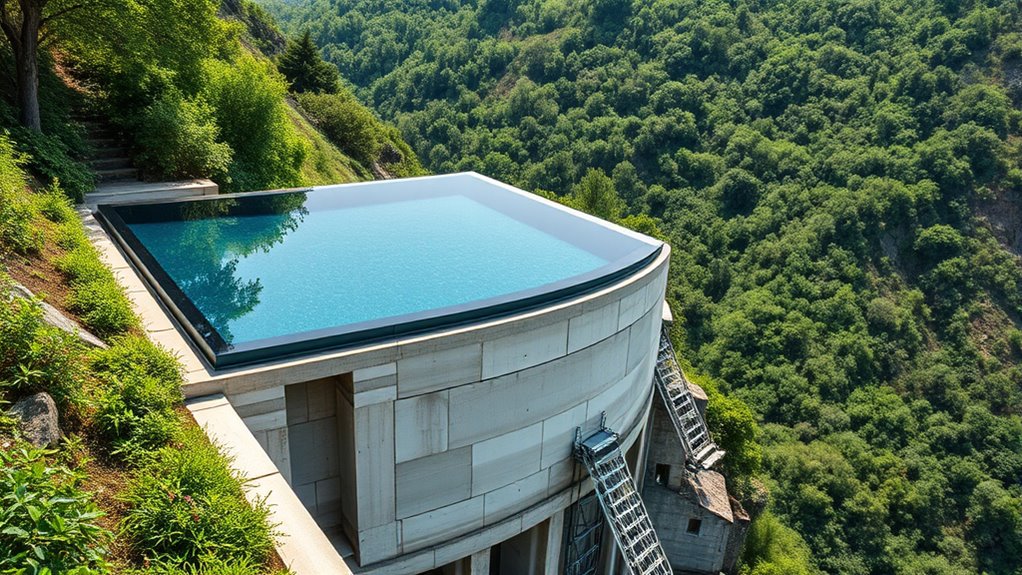
To guarantee the stability of hillside infinity pools, implementing robust reinforcement strategies is essential. You should focus on strengthening the structure to resist lateral forces and soil movement. Reinforced concrete with steel rebar is a common choice, providing both tensile and compressive strength. Additionally, incorporating post-tensioning can reduce cracking risks and enhance load distribution. Here’s a quick overview of reinforcement options:
| Reinforcement Type | Purpose | Benefits |
|---|---|---|
| Steel Rebar | Tensile strength, flexibility | Durable, familiar, cost-effective |
| Post-tensioning | Reduce tension, control cracking | Increases structural capacity |
| Geogrids | Soil reinforcement | Stabilizes slopes, reduces settlement |
Selecting the right combination ensures your pool remains stable under hillside conditions. Additionally, understanding soil reinforcement techniques can further improve stability and longevity of the structure.
Water Load Calculations and Management

Understanding how to accurately calculate the water weight in your infinity pool is essential for ensuring structural safety. You need to contemplate how the water load impacts your design and what reinforcement strategies are necessary to support it. Proper management of these loads will help prevent structural failures and prolong the lifespan of your hillside pool.
Calculating Water Weight
Calculating the water weight in hillside infinity pools is a critical step in guaranteeing structural safety and stability. You need to determine the total volume of water and convert it to weight, considering the density of water. Visualize the pool as a massive, shimmering body of liquid pressing downward. To do this accurately, consider:
- The pool’s dimensions and depth
- The water’s density, typically 8.34 pounds per gallon
- The shape of the pool, which affects volume calculation
- Employing data-driven strategies can help in making precise load estimations.
Accurate calculations help you understand the load your structure must support. Remember, the weight increases with water level fluctuations, so account for maximum fill levels. This ensures your design accommodates the full water load, safeguarding against potential structural failure.
Structural Reinforcement Strategies
Accurately evaluating the water load in hillside infinity pools allows you to develop effective reinforcement strategies that guarantee structural stability. You should incorporate robust structural elements, like reinforced concrete and steel supports, to withstand the immense water pressure. Using precise calculations, you can determine the necessary thickness and reinforcement placement to counteract load stresses. Additionally, implementing tension cables or additional bracing helps distribute forces evenly, reducing potential weak points. Incorporate waterproof membranes and drainage systems to manage water infiltration and prevent pressure build-up. A thorough understanding of load distribution principles ensures the longevity and safety of your structure. Regular inspection and maintenance are vital for early detection of stress or cracks. By integrating these strategies, you guarantee your infinity pool remains safe, durable, and capable of handling fluctuating water levels and environmental forces.
Addressing Soil Erosion and Drainage Challenges
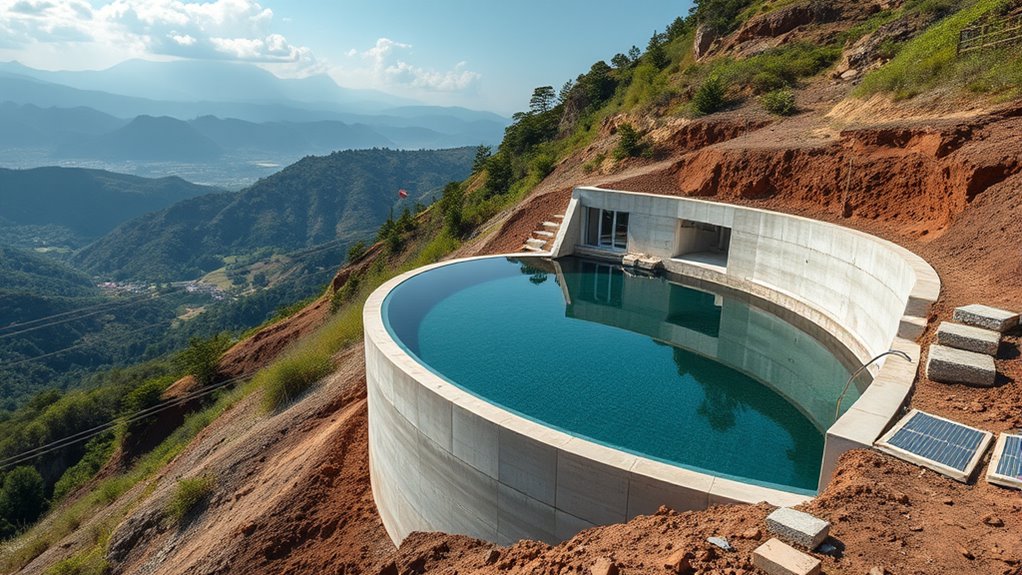
Soil erosion and drainage issues pose significant challenges when constructing hillside infinity pools, as unstable slopes can lead to water runoff problems and structural instability. To combat this, you need effective drainage solutions that redirect water away from the pool area and stabilize slopes to prevent erosion. Techniques include installing perforated pipes, building retaining walls, and creating drainage channels that guide water safely downhill. Imagine:
- Channels carved into the hillside, capturing excess water before it causes erosion
- Reinforced retaining walls holding back shifting soil
- Drainage pipes hidden beneath the surface, quietly managing runoff
These measures work together to protect your pool’s foundation, maintain landscape stability, and ensure long-term durability. Proper planning and installation are key to managing soil erosion and water movement in hillside environments.
Material Selection for Durability and Safety
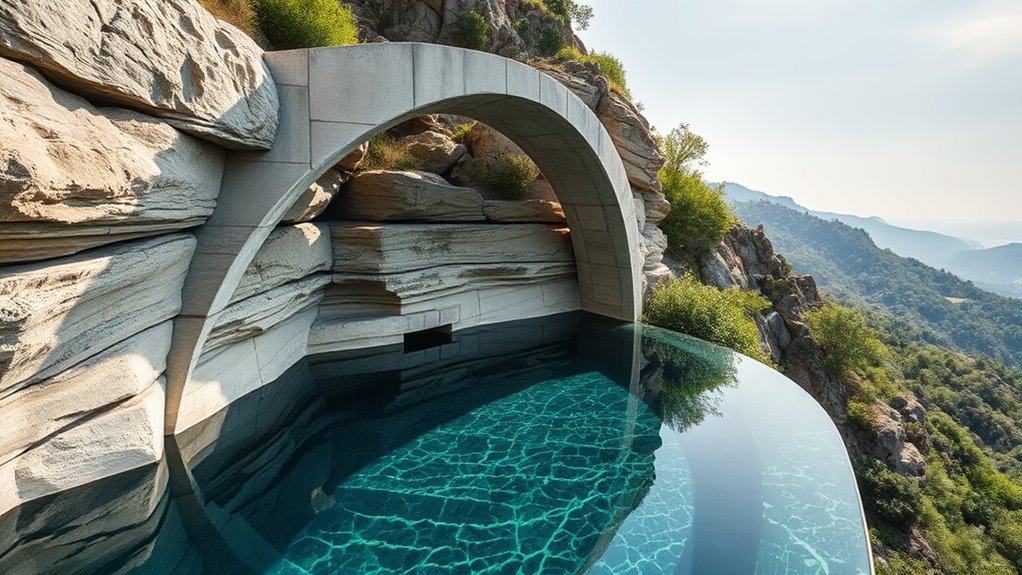
Choosing the right materials is essential for guaranteeing your hillside infinity pool remains durable and safe over time. You need materials that withstand water exposure, weather, and soil pressure. High-quality concrete is ideal for the pool shell, offering strength and longevity. Waterproof membranes prevent leaks and protect structural elements. Reinforced steel ensures stability against earth movement. Consider non-slip tiles for safety around the pool area. Here’s a quick overview:
| Material | Purpose | Benefits |
|---|---|---|
| Reinforced Concrete | Pool shell & structure | Durability, strength |
| Waterproof Membranes | Leak prevention | Long-lasting waterproofing |
| Non-slip Tiles | Pool deck safety | Reduces slips, enhances safety |
Selecting these materials guarantees your hillside infinity pool stands the test of time safely. Ensuring proper material selection can also help prevent issues related to environmental exposure and soil pressure, providing peace of mind for the long term.
Incorporating Retaining Walls and Support Structures

In hillside infinity pool projects, incorporating retaining walls and support structures is essential to guarantee stability and safety. These elements hold back soil, prevent erosion, and support the pool’s weight on uneven terrain. You should consider the following key features:
- Reinforced concrete walls that blend seamlessly with the landscape while resisting lateral pressure
- Strategically placed piers and columns to distribute weight evenly and prevent shifting
- Anchoring systems that secure support structures to bedrock or stable soil layers
Waterproofing and Leak Prevention Techniques
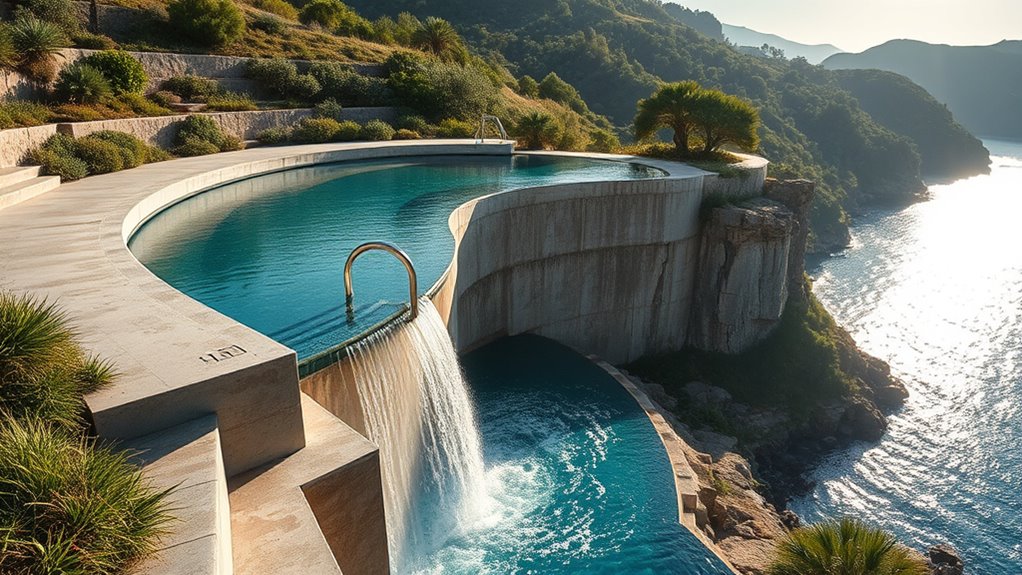
To keep your hillside infinity pool watertight, choosing the right membrane is essential for durability and compatibility. You also need effective drainage solutions to prevent water buildup that could compromise the structure. Regular maintenance guarantees early detection of leaks, helping you protect your investment over time. Additionally, understanding city dynamics can assist in planning for environmental factors that may affect your pool’s integrity.
Membrane Selection Strategies
Selecting the right membrane is essential for ensuring the durability and safety of hillside infinity pools. Your choice impacts waterproofing, leak prevention, and long-term performance. Consider membranes that provide flexibility to accommodate movement and temperature changes. Look for materials with high chemical resistance to withstand pool chemicals and UV exposure. Additionally, prioritize membranes with proven track records in hillside applications. Visualize a membrane as:
- A seamless, elastic layer conforming tightly to irregular surfaces
- A resilient barrier resisting punctures and tears
- An adaptable shield that adjusts with soil shifts and thermal expansion
Proper Drainage Solutions
Effective drainage solutions are essential for preventing water accumulation and safeguarding the structural integrity of hillside infinity pools. You need to design a drainage system that efficiently directs excess water away from the pool and surrounding structures. Incorporate slopes and channels to guide water toward designated drainage points, avoiding pooling that can cause pressure buildup or leaks. Use high-quality waterproof membranes and sealants to prevent water infiltration through joints and seams. Implement leak detection systems that alert you to potential issues early, allowing prompt repairs. Properly positioned drain outlets and backup systems enhance reliability, especially during heavy rains. By ensuring thorough waterproofing and effective water management, you protect your infinity pool from water damage, prolong its lifespan, and maintain a safe, beautiful environment.
Regular Maintenance Practices
Maintaining waterproofing and preventing leaks are ongoing priorities once your hillside infinity pool is in place. Regular inspections help catch issues early, ensuring the structure stays secure. You should routinely check the pool’s surface for cracks or signs of water seepage. Keep an eye on expansion joints and seals, replacing any worn or damaged materials promptly. Consider scheduling professional waterproofing assessments annually. Visualize the process as:
- Inspecting the pool liner for tiny cracks or bubbles
- Reapplying sealants to vulnerable joints and edges
- Testing drainage systems to prevent water buildup
Integrating Structural Support With Aesthetic Design
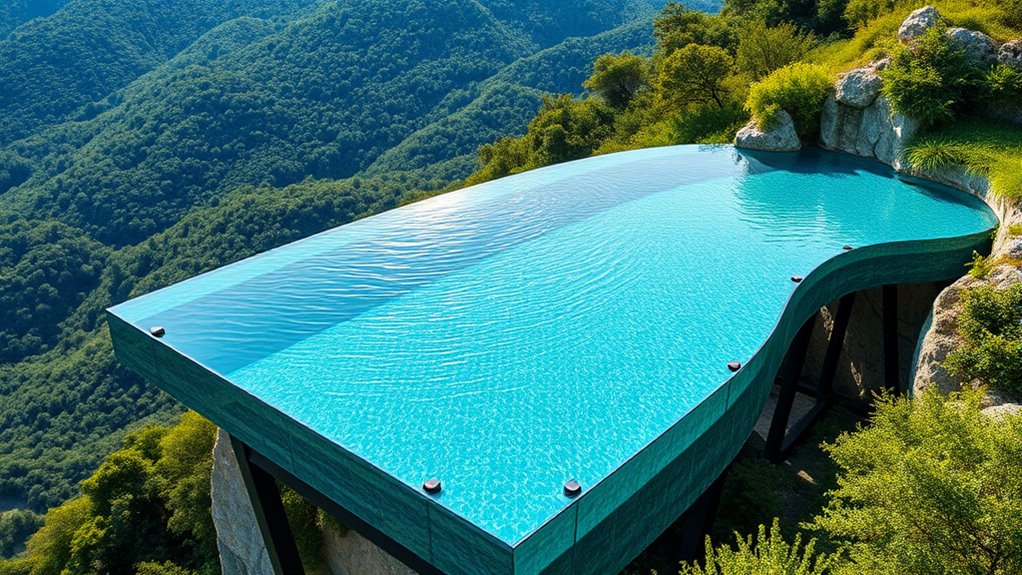
Integrating structural support with aesthetic design is essential to create hillside infinity pools that are both visually stunning and structurally sound. You want the pool to blend seamlessly with the landscape while maintaining stability. To achieve this, choose materials like natural stone or concrete that complement the surroundings and provide strength. Incorporate support elements such as cantilevered edges or hidden beams that don’t detract from the view. Pay attention to the pool’s lines and shapes, ensuring they enhance the landscape’s natural contours. By thoughtfully combining structural features with design elements, you create a harmonious balance that elevates the pool’s beauty without compromising safety. This integration not only boosts visual appeal but also ensures long-lasting durability in challenging hillside environments.
Ensuring Long-Term Safety and Maintenance
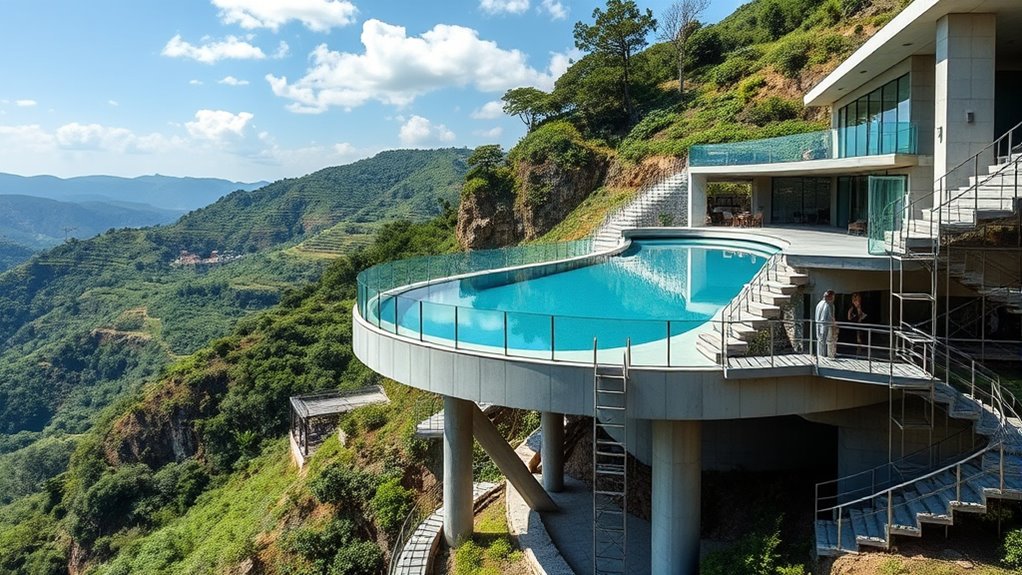
To guarantee your hillside infinity pool remains safe and functional over time, attention must be given to ongoing maintenance and regular safety checks. You should routinely inspect the structural supports for any signs of wear or shifting. Keep an eye on the water levels and waterproofing integrity to prevent leaks. Regularly examine the decking and surrounding landscape for erosion or instability that could affect the pool’s foundation.
Visualize:
- Checking for cracks or corrosion in the support beams
- Monitoring water clarity and filtration systems
- Clearing debris to prevent blockages and damage
Staying proactive helps catch issues early, ensuring longevity and safety. Consistent maintenance preserves the beauty and structural integrity of your hillside infinity pool, allowing you to enjoy it worry-free for years to come.
Frequently Asked Questions
How Do Seismic Considerations Affect Hillside Infinity Pool Structural Design?
Seismic considerations critically impact your hillside infinity pool’s structural design by guaranteeing it can withstand earthquakes. You need to incorporate flexible joints, reinforced concrete, and deep foundations to absorb seismic forces and prevent failure. Additionally, analyzing soil stability and integrating seismic restraints help maintain the pool’s integrity during tremors. By prioritizing these measures, you protect your investment and ensure safety for users during seismic events.
What Are the Environmental Impacts of Hillside Infinity Pools on Local Ecosystems?
Did you know that hillside infinity pools can disrupt local water flow and wildlife habitats? Your construction may lead to soil erosion, affecting plant life and animal movement. Additionally, chemical runoff from pool maintenance can contaminate groundwater and nearby streams. You should consider eco-friendly materials, proper drainage, and sustainable practices to minimize environmental impacts. By doing so, you protect the ecosystem while enjoying your luxurious pool.
How Can Renewable Energy Be Integrated Into Hillside Infinity Pool Systems?
You can integrate renewable energy into hillside infinity pool systems by installing solar panels on nearby structures or pool covers to harness sunlight. Consider geothermal systems for heating and cooling, reducing reliance on traditional energy sources. Using solar-powered pumps and LED lighting further minimizes your environmental footprint. By choosing these sustainable options, you make your infinity pool eco-friendly, lowering energy costs while protecting the hillside ecosystem.
What Are the Best Practices for Minimizing Visual Impact of Support Structures?
You should use slender, unobtrusive support structures that blend with the natural landscape. Opt for materials like glass or transparent components to reduce visual bulk. Position supports behind walls or natural features whenever possible, and consider cantilevered designs that minimize ground contact. Incorporate landscaping to hide or soften support presence, and choose colors and finishes that match the surroundings for a seamless appearance, keeping the focus on the pool and scenery.
How Is Safety Ensured During Construction on Steep, Unstable Slopes?
You guarantee safety on steep, unstable slopes by conducting thorough geotechnical assessments first. Then, you design supports that minimize ground disturbance and use specialized equipment for stability. During construction, you monitor soil conditions constantly, implement erosion controls, and restrict heavy machinery to prevent slope destabilization. Clear safety protocols and trained personnel further reduce risks, helping you maintain safety throughout the project.
Conclusion
Think of your hillside infinity pool as a delicate sculpture perched on a hillside. With careful engineering, you’re shaping a masterpiece that balances beauty and strength. By evaluating the terrain, reinforcing structures, and planning for water and soil challenges, you’re creating a safe haven that stands the test of time. Trust your structural design to hold the weight of your dreams, just like a sturdy frame supports a breathtaking work of art.