
Choosing between saltwater and chlorine for your infinity pool depends on your priorities. Saltwater pools offer gentler water that’s easier on skin and eyes, with lower ongoing chemical costs and a more eco-friendly profile. Chlorine pools are simpler and cheaper to install, but they can cause dryness and irritation. To get a clearer picture of what suits your needs and how each system impacts your pool’s performance, explore the details below.
Key Takeaways
- Saltwater pools offer gentler, more soothing water, enhancing the luxurious infinity pool experience.
- Chlorine pools typically have lower initial costs and simpler setup, suitable for easier maintenance.
- Saltwater systems provide more stable water chemistry, reducing ongoing chemical adjustments for an infinity pool’s aesthetic.
- Saltwater pools are more eco-friendly, aligning with sustainability goals for high-end, modern infinity designs.
- Proper material selection in saltwater pools prevents corrosion, essential for the durability of an infinity pool’s features.
Understanding the Chemistry and Maintenance of Saltwater and Chlorine Pools
While both saltwater and chlorine pools are designed to keep your water clean and safe, their chemistry and maintenance requirements differ considerably. In a chlorine pool, you manually add chlorine, which dissolves to sanitize the water. You need to regularly test and balance pH, alkalinity, and chlorine levels to prevent algae and bacteria growth. Saltwater pools, on the other hand, generate chlorine automatically through a salt-chlorine generator, which electrolyzes the salt in the water. While this reduces the need for manual chemical addition, you still need to monitor salt levels and maintain proper pH. Saltwater pools tend to have more stable chemistry, but both types require routine testing and balancing to ensure safe, clean swimming conditions. Proper maintenance keeps your pool inviting and minimizes chemical-related issues.
Cost Considerations for Both Pool Types
When comparing saltwater and chlorine pools, your initial installation costs are a key factor to contemplate. You’ll also want to evaluate ongoing expenses like maintenance and operating costs, which can vary considerably between the two. Understanding these financial aspects helps you choose the pool that best fits your budget and lifestyle. Additionally, considering maintenance requirements can ensure your pool remains safe and enjoyable over time.
Initial Installation Expenses
Initial installation expenses for saltwater and chlorine pools can vary considerably, with each option presenting different upfront costs. Saltwater systems typically require a higher initial investment due to the cost of the saltwater generator and specialized equipment. You’ll also need to budget for the cost of the saltwater chlorinator, which can add to your overall expenses. In contrast, chlorine pools usually have lower upfront costs since standard chlorination systems are less expensive and more straightforward to install. However, keep in mind that the complexity of installation can depend on your pool’s size and design. If you’re installing an infinity pool, the unique structure might influence costs, but generally, the choice between saltwater and chlorine impacts your initial expenditure considerably. Additionally, the installation process may be more complicated for saltwater pools due to the need for specific plumbing and electrical setups.
Maintenance and Operating Costs
After considering the upfront costs, it’s important to evaluate how much you’ll spend maintaining and operating your pool over time. Saltwater pools generally have lower chemical costs because salt generators produce chlorine on-site, reducing the need for frequent chemical purchases. However, you might face higher initial expenses for the salt cell and occasional replacement. Chlorine pools require regular chemical additions, which can add up over the years, but their equipment tends to be less costly upfront. Both pool types need routine cleaning, filter maintenance, and equipment checks, impacting ongoing expenses. Saltwater systems may need more frequent servicing of the salt cell, while chlorine pools often have higher chemical costs. Overall, saltwater pools tend to be more economical long-term, but your specific maintenance needs can vary based on pool size and usage. Additionally, proper system maintenance is essential to ensure the longevity and efficiency of your pool equipment.
Impact on Skin, Eyes, and Overall Comfort

Saltwater pools often feel gentler on your skin and eyes compared to chlorinated pools, which can cause dryness and irritation. You might notice that after swimming in a saltwater pool, your skin feels softer and less tight. Your eyes are less likely to sting or turn red, making the experience more comfortable, especially for sensitive eyes. Saltwater contains fewer harsh chemicals, reducing the likelihood of allergic reactions or rashes. Overall, you’ll probably find saltwater pools more pleasant for prolonged swims and lounging. However, some people with sensitive skin may still experience dryness if they don’t shower afterward. Ultimately, saltwater pools tend to provide a more soothing environment, making your swim more enjoyable without sacrificing comfort.
Environmental Effects and Sustainability Factors
Saltwater pools are often considered more environmentally friendly than traditional chlorinated pools, primarily because they rely on electrolysis to generate chlorine on-site, reducing the need for large chemical shipments and storage. This process minimizes transportation emissions and chemical waste, making it a greener option. Additionally, saltwater systems typically require less frequent chemical additions, decreasing the overall chemical footprint. However, the production of salt and the energy used for electrolysis contribute to environmental impacts, especially if powered by non-renewable sources. Saltwater pools also tend to have lower chemical runoff into nearby water systems, reducing potential harm to ecosystems. Overall, while they offer sustainability benefits, balancing energy use and chemical sourcing is essential to maximizing their environmental advantages. Understanding efficiency ratings is crucial for optimizing the performance and sustainability of saltwater systems.
Installation and Equipment Requirements
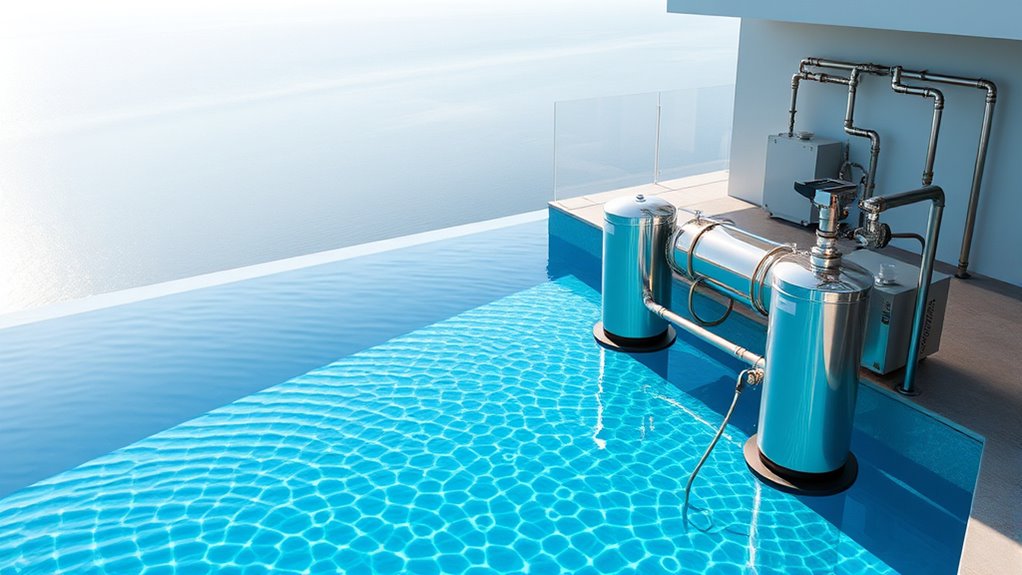
Installing a saltwater pool requires specific equipment and careful planning to guarantee proper operation. You’ll need a salt chlorine generator, which converts salt into chlorine, and a reliable filtration system to keep the water clear. It’s essential to ensure your pool’s plumbing can handle the saltwater’s corrosive nature, so choosing corrosion-resistant pipes and fittings is crucial. A saltwater pool also requires a dedicated power supply for the generator and a control system to monitor salt levels and chlorine production. Proper placement of the generator and equipment is necessary to prevent damage from weather or debris. Regular maintenance of the salt levels and cleaning of the generator are vital for consistent performance. Additionally, understanding the cost factors involved can help you budget effectively for your setup. With the right setup, your saltwater system can operate efficiently and smoothly.
Long-Term Durability and Pool Longevity

While saltwater pools are often praised for their gentle water quality, their long-term durability depends heavily on proper maintenance and material choices. Saltwater systems can corrode certain metals and pool components if not regularly monitored, leading to costly repairs. You need to use corrosion-resistant materials like stainless steel or specific plastics for parts exposed to salt. Regularly checking and balancing your water’s pH and salt levels prevents damage and extends the life of your pool equipment. Additionally, salt cells require periodic cleaning to maintain efficiency. Proper corrosion resistance and material selection are crucial to prevent degradation over time. Chlorine pools, by contrast, typically suffer less corrosion but may experience other issues like liner degradation over time. Overall, your pool’s longevity hinges on consistent upkeep and choosing compatible materials suited to your water type.
Frequently Asked Questions
How Does Water Taste in Saltwater Versus Chlorine Pools?
In saltwater pools, you’ll notice a slightly salty, mineral-like taste, similar to seawater but milder. Chlorine pools often have a noticeable chemical taste and smell, which can be slightly bitter or harsh on your tongue. If you’re sensitive to tastes, saltwater pools tend to be more pleasant and less overpowering. Overall, saltwater pools offer a more natural, subtle flavor, while chlorine pools have a stronger, chemical-like taste.
Are There Specific Health Conditions That Favor One Type Over the Other?
Think of your health as a delicate garden; certain conditions can influence your pool choice. If you have sensitive skin, allergies, or asthma, saltwater pools often cause less irritation, making them a better fit. Conversely, if you have a compromised immune system or skin conditions that require stronger disinfectants, chlorine pools might be necessary. Always consult with a healthcare professional to determine the safest option for your unique health needs.
Can Saltwater Pools Be Used With Existing Chlorine Pool Equipment?
Yes, saltwater pools can often be used with existing chlorine pool equipment, but you’ll need a saltwater chlorinator installed to convert salt into chlorine. Some equipment may require adjustments or upgrades to handle the salt’s corrosive properties. Check with your pool manufacturer or a professional to verify compatibility and proper installation. This way, you can enjoy the benefits of a saltwater system without replacing all your current pool gear.
What Are the Noise Levels During Pool Maintenance for Each System?
Think of pool maintenance noise as a gentle hum versus a loud symphony. Saltwater systems typically produce less noise, akin to a soft whisper, thanks to fewer chemical handling processes. Chlorine systems can be louder, like a busy street, because of the additional equipment needed for chlorine generation or application. If peace and quiet matter, saltwater pools generally offer a calmer maintenance experience.
How Does Each Pool Type Affect Nearby Landscaping and Vegetation?
You’ll find that saltwater pools are gentler on nearby plants because they produce fewer chloramines and have lower chlorine levels, reducing potential damage. Chlorine pools may emit more chemical fumes and residues that can harm delicate landscaping over time. To protect your vegetation, guarantee proper pool maintenance, use appropriate salt or chlorine levels, and consider installing barriers or buffers like plants or fencing around your pool.
Conclusion
Choosing between saltwater and chlorine pools depends on your priorities, but remember, a pool is like a garden—you reap what you sow. Saltwater pools often feel gentler on your skin and eyes, while chlorine pools can be more budget-friendly upfront. Think about maintenance, environmental impact, and your long-term goals. Whichever you pick, regular care guarantees your oasis remains a sanctuary—because a well-maintained pool is a reflection of a well-tended life.