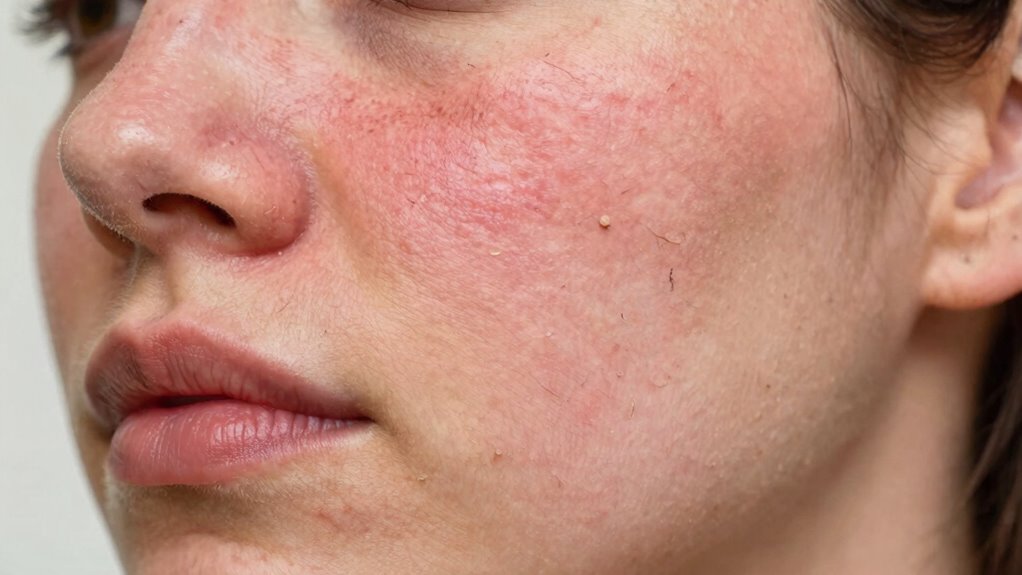

Over-exfoliating can ruin your skin goals by damaging your skin’s protective barrier, leading to redness, irritation, and increased sensitivity. It strips away essential layers, making your skin more vulnerable to environmental damage and slowing healing. This can cause hyperpigmentation, uneven texture, and even prevent you from achieving that smooth, radiant look you want. If you keep going, you’ll discover how to protect your skin while reaching your skincare goals.
Key Takeaways
- Over-exfoliating damages the skin’s protective barrier, leading to irritation, redness, and increased sensitivity.
- Excessive exfoliation strips away essential skin layers, disrupting natural functions and weakening skin defenses.
- It can cause hyperpigmentation, uneven texture, and hinder progress toward smooth, radiant skin.
- Over-exfoliating raises skin reactivity, making it more vulnerable to environmental stressors and irritation.
- Maintaining a balanced routine supports skin health, resilience, and helps achieve long-term skincare goals.
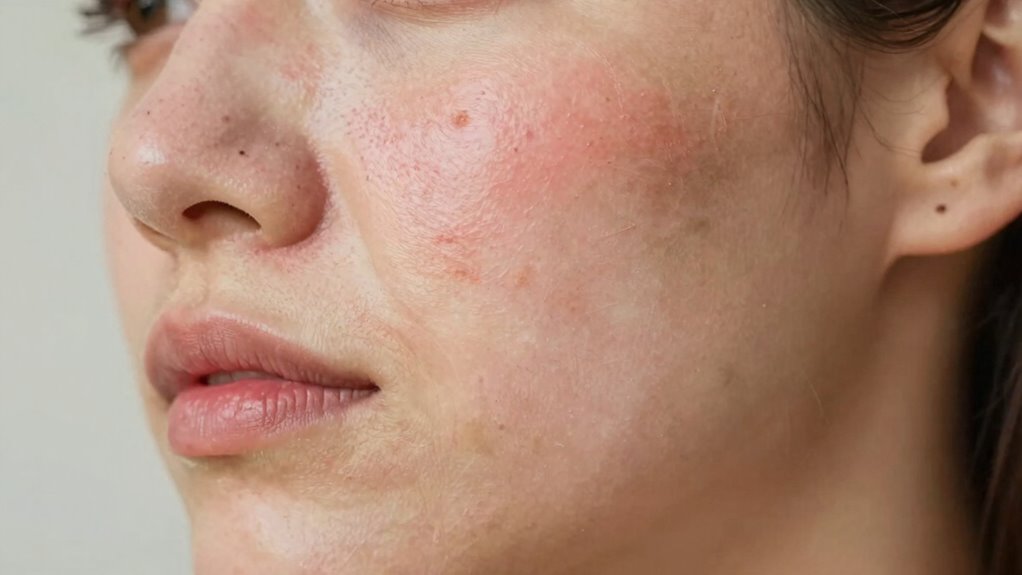
Exfoliating can do wonders for your skin, but overdoing it can quickly backfire. When you exfoliate too often or use harsh products, you risk damaging your skin’s protective barrier, which can lead to a range of issues like redness, irritation, and even chemical burns. These burns aren’t always obvious right away; sometimes, they manifest as persistent discomfort, peeling, or a raw feeling that makes your skin more sensitive to environmental factors. Over-exfoliation can also heighten your skin’s sensitivity, making it more reactive to other skincare products, sunlight, and pollution. This heightened sensitivity can undo your progress toward achieving smooth, radiant skin, as it leaves your skin vulnerable rather than resilient.
Over-exfoliating damages your skin’s barrier, causing redness, irritation, and increased sensitivity that can hinder your skincare goals.
It’s tempting to think that more exfoliation equals faster results, but the truth is, your skin needs a delicate balance. When you push too hard, you strip away too much of the outermost layer, disrupting its natural functions. This can cause inflammation and weaken the skin’s ability to protect itself, leading to increased irritation and potential chemical burns if you’re using potent acids or scrubs. Such burns can set back your skincare goals significantly, leaving you with damaged skin that’s difficult to heal. Instead of improving your skin’s appearance, over-exfoliation can cause hyperpigmentation, dark spots, and uneven texture, all of which make it harder to reach your desired look. Recognizing the importance of skin barrier health is essential to avoid over-exfoliating and damaging your skin. Incorporating proper skincare practices can help maintain this delicate balance and support your skin’s natural resilience.
Your skin’s sensitivity is also a crucial factor to consider. If you have naturally sensitive skin, over-exfoliating can turn minor redness into chronic irritation. Over time, this may lead to a compromised skin barrier that struggles to recover, making your skin more susceptible to environmental stressors and allergens. This cycle can be frustrating, especially when you’re trying to achieve a clear, glowing complexion. Incorporating natural filtration systems like gentle physical or chemical exfoliants can help maintain skin health without overdoing it. Additionally, understanding how environmental factors like indoor air quality impact your skin health can help you develop a more balanced skincare routine. Ultimately, over-exfoliating can derail your skin goals by causing damage rather than improvement. It’s better to adopt a gentle, consistent routine that respects your skin’s natural rhythm. By doing so, you’ll reduce the risk of chemical burns and excessive sensitivity, paving the way for healthier, more resilient skin that truly supports your beauty ambitions.

e.l.f. SKIN Holy Hydration! Gentle Peeling Exfoliant, Cleanser, Effective, Easy to Apply, Peels Away Dead Skin, Removes Dirt, Ideal for All Skin Types
- Gentle Exfoliating Cleanser: Removes dead skin for a healthy glow
- Easy to Use: Apply, massage, rinse, 2-3 times weekly
- Vegan and Cruelty-Free: Ethically made, worldwide cruelty-free
As an affiliate, we earn on qualifying purchases.
As an affiliate, we earn on qualifying purchases.
Frequently Asked Questions
How Do I Know if I’M Exfoliating Too Much?
You might be exfoliating too much if your skin becomes red, irritated, or feels sensitive after using chemical peels or DIY masks. Overdoing it can cause dryness, breakouts, or even peeling. Pay attention to your skin’s response and reduce frequency if needed. Limit chemical peel treatments and DIY masks to a few times a week, and always follow product instructions to prevent damage.
Can Over-Exfoliating Cause Permanent Skin Damage?
Think of your skin like a vintage vinyl—if you over-enthusiastically clean it, damage might be permanent. Over-exfoliating can cause lasting harm, especially if you push too hard with chemical peels or aggressive scrubs. Repeatedly stripping away layers hampers natural skin renewal, leading to persistent redness, sensitivity, or scars. To avoid this, stick to gentle exfoliation and give your skin time to recover, ensuring lasting health and vibrancy.
What Are the Best Exfoliants for Sensitive Skin?
For sensitive skin, opt for gentle exfoliants like mild chemical peels with soothing ingredients such as aloe or chamomile. Avoid harsh physical scrubs with big, jagged particles that can irritate. Instead, use these chemical peels weekly to remove dead skin without causing damage. Always patch-test first and follow with a calming moisturizer to keep your skin balanced and healthy.
How Often Should I Exfoliate for My Skin Type?
Think of your skin as a delicate garden that needs just the right watering. For sensitive skin, you should exfoliate only 1-2 times a week, using gentle methods like enzymatic masks or mild chemical peels. These treatments remove dead skin without stripping moisture, helping your skin stay balanced. Overdoing it can cause irritation and damage, so listen to your skin’s signals and keep your exfoliation routine simple and consistent.
Are There Natural Exfoliation Methods to Avoid Overdoing It?
Yes, you can use natural exfoliation methods like DIY scrubs with ingredients such as oatmeal, sugar, or coffee grounds to gently remove dead skin without overdoing it. Avoid harsh physical scrubs and opt for mild, natural options. You might also consider gentle chemical peels with plant-based acids like AHAs or BHAs, but always patch-test first and limit use to prevent skin damage. Consistency is key for healthy, balanced skin.
Conclusion
If you keep over-exfoliating, you’re like a gardener stripping too many leaves from a delicate plant—you risk damaging its roots and stunting its growth. Your skin needs gentle care to flourish, not harshness that leaves it raw and vulnerable. Imagine your skin as a vibrant landscape; over-exfoliating is like bulldozing it, destroying the natural beauty you’re working so hard to achieve. Treat your skin kindly, and watch your goals bloom into radiant, healthy glow.