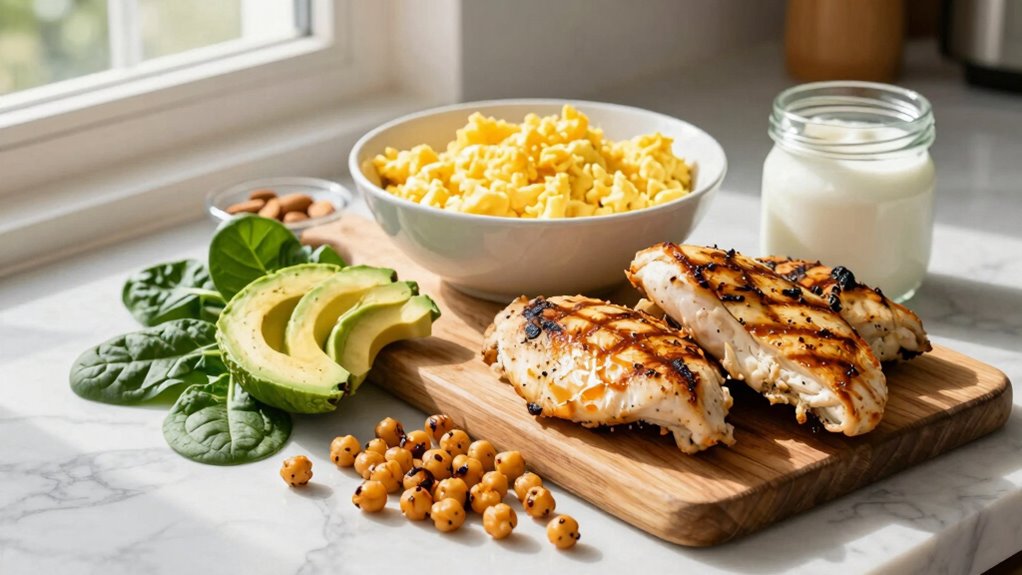

You can boost your protein intake by incorporating a variety of plant-based sources like lentils, chickpeas, quinoa, nuts, and seeds into your meals. Meal prepping with bulk-cooked staples makes it easy to add protein to salads, stews, or snacks throughout the week. Tofu and tempeh are versatile options that absorb flavors well and can be used in many dishes. If you keep exploring, you’ll discover effective strategies to make high-protein eating simple and satisfying.

Get workout gear delivered free with Prime
- Fast, free delivery on millions of items
- Prime Video, Amazon Music and more included
- Member-only deals all year
Key Takeaways
- Incorporate a variety of plant-based proteins like lentils, chickpeas, quinoa, nuts, and seeds into daily meals.
- Prepare high-protein meals in advance to ensure consistent intake without reliance on shakes.
- Add nuts, seeds, or tofu to salads, stir-fries, and grain bowls for extra protein.
- Include a protein source with every meal and snack for steady nutritional intake.
- Use portioning strategies and meal prep tools to help maintain balanced, high-protein portions throughout the day.
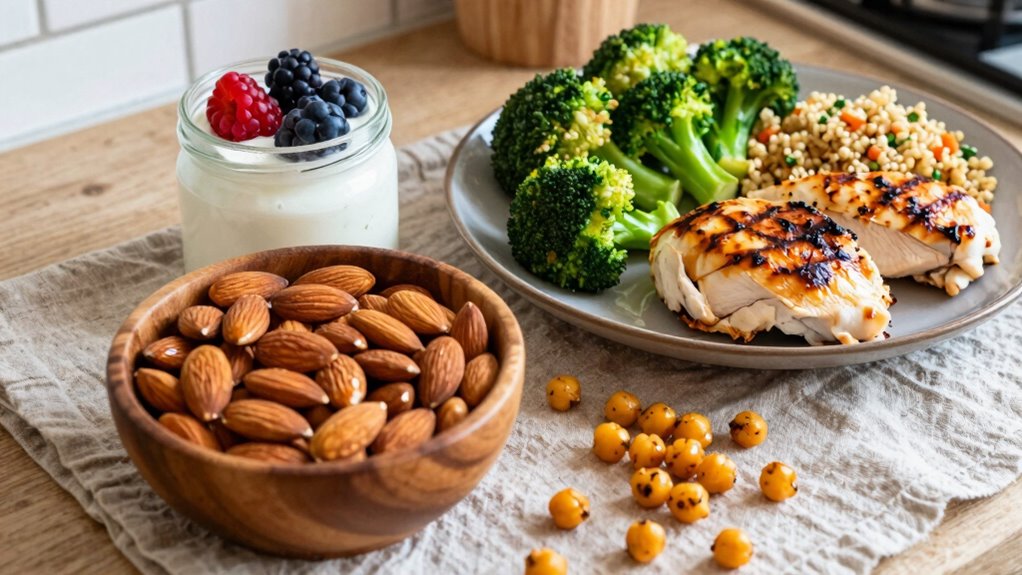
If you’re looking to boost your protein intake without relying solely on shakes, there are plenty of tasty and nutritious options to contemplate. One effective way is through meal prep, which allows you to plan and prepare high-protein meals ahead of time, making it easier to stick to your goals. Focus on incorporating a variety of plant-based sources of protein into your weekly menu. Legumes like lentils, chickpeas, and black beans are excellent choices—they’re packed with protein and fiber, and they’re versatile enough to be added to salads, stews, or wraps. Quinoa is another fantastic plant-based source because it’s a complete protein, meaning it contains all nine essential amino acids. You can cook it in bulk and use it as a base for bowls, salads, or even breakfast porridges.
Boost your protein with meal prep: lentils, chickpeas, quinoa, and more for tasty, high-fiber, plant-based meals.
Nuts and seeds are compact sources of protein that also provide healthy fats. Almonds, pumpkin seeds, chia seeds, and hemp seeds are easy to sprinkle over yogurt, oatmeal, or salads, or to include in homemade energy bars. Incorporating these into your meal prep routine saves time and guarantees you always have high-protein options on hand. Additionally, tofu and tempeh are versatile, plant-based proteins that absorb flavors well, making them perfect for stir-fries, sandwiches, and grain bowls. Preparing these in advance and storing them in the fridge can streamline your cooking process during busy weekdays. Including well-drained soil in your gardening can also promote healthier plant growth, which can support your nutritional goals by growing fresh produce at home.
Eating a variety of protein sources throughout your day is essential to meet your nutritional needs and maintain energy levels. Consuming a balanced intake of different proteins ensures you get all essential amino acids and other vital nutrients. Incorporating protein-rich foods into your meals can also help improve satiety and prevent overeating later in the day. To maximize your protein intake without living on shakes, you should focus on combining these sources throughout your day. This can be achieved by understanding the Indian numbering system, which helps in better planning and portioning of your meals, especially when dealing with large quantities. Aim to include a protein source with every meal and snack. This not only helps meet your daily targets but also keeps you energized and satisfied longer. Remember, meal prep is your best friend in this endeavor—by planning ahead, you prevent the temptation of less nutritious options and create a consistent, balanced diet rich in plant-based and other high-quality proteins.
high protein plant-based meal prep containers
As an affiliate, we earn on qualifying purchases.
As an affiliate, we earn on qualifying purchases.
Frequently Asked Questions
Can Plant-Based Proteins Meet My Daily Needs Effectively?
Yes, plant-based proteins can meet your daily needs effectively. Many believe in plant protein myths, but vegan protein sources like lentils, chickpeas, tofu, and quinoa are rich in essential amino acids. Incorporating a variety of these options guarantees you get sufficient protein. With careful planning, you can easily surpass your daily requirements without relying on shakes, proving that plant-based diets are both nutritious and sustainable.
Are There Specific Foods to Avoid When Increasing Protein Intake?
You should avoid high-fat, processed, and fried foods when increasing your protein intake, as they can hinder digestion and nutrient absorption. Pay attention to meal timing, spreading your protein sources evenly throughout the day for better absorption. Relying too much on supplements can limit whole food benefits, so focus on incorporating lean meats, beans, and dairy into your meals. Balance is key to boosting protein without overdependence on supplements or unhealthy options.
How Does Cooking Affect the Protein Content in Foods?
Cooking methods can impact protein stability, but generally, they don’t considerably reduce protein content if done properly. High heat or prolonged cooking may cause some protein denaturation, which doesn’t diminish its nutritional value much. To preserve maximum protein, opt for gentle cooking methods like steaming, poaching, or sous-vide. Avoid overcooking meats or eggs, as excessive heat can slightly lower the available protein while still keeping most of its nutritional benefits.
What Are the Best Snacks High in Protein?
You should choose snacks high in protein like protein-rich nuts and dairy-based options. Grab a handful of almonds or walnuts for a quick, nutritious boost, or enjoy Greek yogurt or cheese for a dairy-based snack packed with protein. These choices are easy, portable, and satisfy your hunger while helping you meet your daily protein goals without resorting to shakes.
Is It Necessary to Track My Protein Intake Daily?
Imagine your plate as a colorful canvas, each protein source adding vibrant strokes. You don’t have to track your intake daily; instead, focus on consistent meal planning that includes diverse, high-protein foods. This way, you naturally meet your needs. If you want extra assurance, consider supplement options like protein powders or bars. This approach keeps your meals balanced and your goals on track without the stress of daily tracking.
Conclusion
Incorporating more protein into your diet doesn’t mean relying solely on shakes. Focus on adding eggs, lean meats, beans, and dairy to your meals. Did you know that about 60% of adults worldwide don’t meet their daily protein needs? By making simple swaps and including diverse sources, you can boost your intake naturally. Remember, small changes add up—so start today and enjoy the benefits of a protein-rich diet without the shakes!
Fall Picks
fall essentials
As an affiliate, we earn on qualifying purchases.