TL;DR

Get workout gear delivered free with Prime
- Fast, free delivery on millions of items
- Prime Video, Amazon Music and more included
- Member-only deals all year
A Fit&Well writer reported reaching a 5,889-foot summit in Albania after training year-round with step-ups and Bulgarian split squats. The exercises can be done at home or in a gym and adjusted with different platform heights or weights, but the account does not establish that they will prevent injury or make every hike easier.
A Fit&Well writer says year-round practice of step-ups and Bulgarian split squats helped them feel steadier while hiking to a 5,889-foot (1,795-meter) summit in the Albanian Alps. The account offers two ways to train single-leg strength, though it is a personal report rather than evidence that the exercises will prevent knee pain or make uphill walking easier for everyone.
The writer, who says they live in London and seek out hills when traveling, described the Albanian climb as tough but enjoyable. They reported feeling steady while stepping over boulders and rocks and said they had no knee niggles on the descent. Those details describe one person’s experience, not a measured result or a guarantee for other walkers.
The writer said a coach regularly includes both movements in their training plan and that they also program them for personal training clients. Step-ups involve pressing through one foot on a raised surface to lift the body, then lowering with control. The article recommends 8–12 repetitions per side and says a lower step can make the exercise easier, while a higher step or a weight held at the chest can increase the challenge.
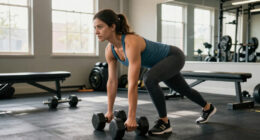
For a Bulgarian split squat, the back foot rests on a bench, chair or similar platform while the front leg bends to lower the body. The source also recommends 8–12 repetitions per side. It suggests adding weight in the hands or at the chest to make the movement harder. Both exercises can be done at home or in a gym, using a stable chair or platform suited to the person’s ability.
Training for Steeper Walking
Walking uphill and negotiating uneven ground place demands on balance and the muscles that control each leg. The Fit&Well report presents these exercises as a practical way to build single-leg strength: the writer says both movements work the hips, hamstrings, quadriceps and glutes, while also challenging core stability. A controlled step-up has a movement pattern that resembles climbing onto a higher surface, which may make it relevant to uphill training.
For walkers with limited access to hills, the exercises offer a way to practice at home or in a gym. Their adjustable difficulty may also help people start with bodyweight and progress gradually. But the report does not compare these exercises with other training, measure changes in hiking performance, or show that they prevent injuries. The useful takeaway is a pair of options to discuss or try at an appropriate level—not a promise of a particular hiking outcome.
Products Worth Considering

BowFlex Results Series SelectTech Adjustable Dumbbells (Pair)

Bowflex SelectTech 840 Adjustable Kettlebell

Oral-B iO Series 9 Limited Rechargeable Electric Toothbrush with 7 Cleaning Modes
As an affiliate, we earn on qualifying purchases.
How the Exercises Are Done
The source gives a basic progression for each exercise. For step-ups, stand in front of a stable box or chair with feet about hip-width apart. Place one foot on the platform, press through it to rise, and bring the other foot up; lower under control and finish the set before switching sides. A walker can keep the trailing foot hovering rather than placing it on the platform, as shown in the source’s demonstration.
For the split squat, place the top of one foot behind you on a knee-height bench or chair, with the other foot planted in front. Bend the front knee to lower, keeping it aligned above the ankle, then press through the front foot to stand. The report’s suggested range is 8–12 repetitions on each side, but it does not provide a personalized schedule, training frequency, or guidance for people with existing pain or mobility limitations.
“It was tough, but I was still able to enjoy it because I do single-leg exercises year-round.”
— Fit&Well writer
What One Hike Cannot Show
The report does not give the hike date, route details, duration, or the writer’s training frequency and progression. It also does not identify a study or measured evidence showing how much either exercise affected the summit effort. The writer’s report of no knee niggles is individual experience and should not be read as proof that the movements prevent pain or injury.
It is also unclear how suitable the suggested repetitions or platform heights would be for a particular walker. People with existing injuries, balance concerns, or health conditions may need individualized advice before changing their exercise routine. The source offers no specific screening guidance or details about how to modify the movements for those needs.
A Gradual Route Into Training
The Fit&Well report does not announce a follow-up study, new program, or additional hike, so no further milestone is specified. For readers considering the exercises, the next step described in the article is practical: start with a stable, lower platform and bodyweight, use controlled movement, and increase the challenge only if the exercise remains comfortable and manageable. A qualified trainer can help with technique and progression; people with pre-existing conditions or ongoing pain should seek professional guidance. The source provides a repetition range, but not a universal weekly schedule.
The article’s central claim remains limited to the writer’s own experience: these two exercises formed part of their preparation for a demanding hike. Whether they help another walker will depend on that person’s current fitness, technique, training history, and the demands of the route.
Key Questions
Which two exercises did the writer use?
The writer named step-ups and Bulgarian split squats as regular parts of their training.
What peak did the writer climb?
The writer reported reaching a 5,889-foot (1,795-meter) summit in the Albanian Alps. The source does not identify the peak by name.
How many repetitions does the source suggest?
The Fit&Well report suggests 8–12 repetitions per side for each exercise. It does not prescribe how many sessions to do each week.
Can these exercises be done without gym equipment?
Yes. The source says they can be done at home using a stable chair or similar platform. It recommends adjusting the platform height and adding weight only to change the difficulty.
Do the exercises prevent knee pain?
The report does not establish that they prevent knee pain. The writer said they experienced no knee niggles on this particular descent, but that is a personal account, not proof of a protective effect.
Source: fitandwell.com