
TL;DR
Fit&Well published a dumbbell-friendly leg routine built around forward, side and curtsy lunges, recommending six to eight repetitions per leg and two or three sets of each exercise. The report says the variations work the glute muscles from different directions, but it does not provide research showing that doing the sequence once weekly guarantees stronger glutes.
Fit&Well has published a three-move leg workout built around forward, side and curtsy lunges, offering readers a dumbbell or bodyweight routine intended to train the glutes and other lower-body muscles. The report recommends six to eight repetitions per leg and two or three sets of each lunge, while presenting the routine as an option to include in a weekly training plan—not as a guarantee of results from one weekly session.

Get workout gear delivered free with Prime
- Fast, free delivery on millions of items
- Prime Video, Amazon Music and more included
- Member-only deals all year
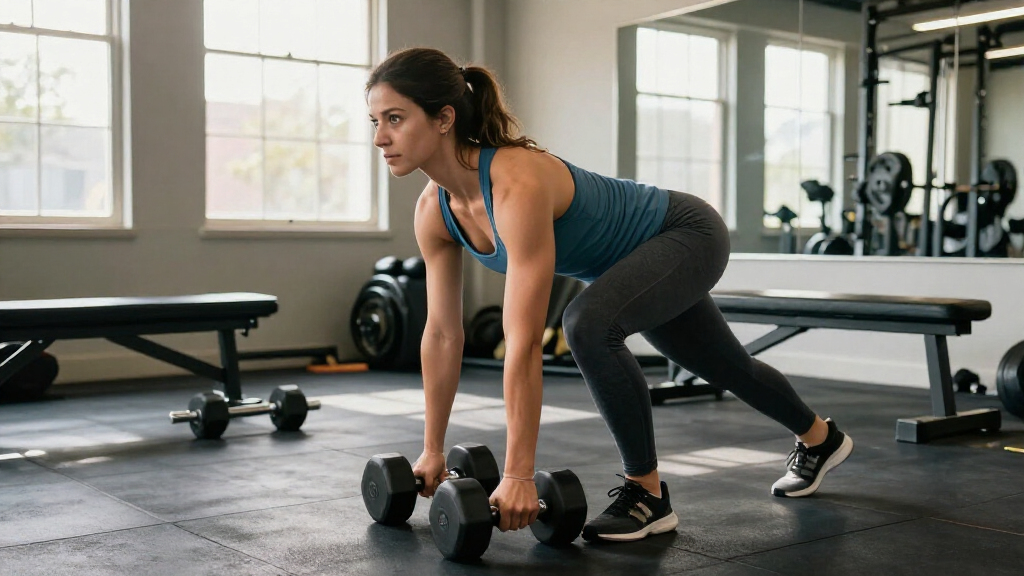
The workout combines three lunge directions: forward, lateral and diagonal back-crossing, or curtsy. Fit&Well says the variations recruit the gluteus maximus, medius and minimus, alongside other lower-body muscles. The report describes those glute muscles as contributing to actions such as moving the hip and thigh, stabilizing the pelvis, and helping with everyday movements including walking and standing up from a chair.
For each variation, the report suggests two or three sets of six to eight reps on each side. For the forward lunge, step ahead, bend both knees and lower while keeping the front knee aligned over the foot, then push back to standing. For the side lunge, step laterally, bend the stepping knee and move the hips back while keeping the other leg straight. For the curtsy lunge, step one foot diagonally behind the other and lower before pushing back up through the front foot.
Fit&Well says the exercises can be performed with dumbbells held at the sides or shoulders, or with one dumbbell at the chest. Bodyweight is another option; the report advises adjusting repetitions so the final reps feel challenging. It recommends starting weighted sessions with a bodyweight warm-up and increasing load gradually. Anyone who finds balance difficult can complete all repetitions on one side before switching rather than alternating each rep.
How the Three Lunges Differ
The routine uses three directions of movement: a forward lunge moves front to back, a side lunge moves laterally, and a curtsy lunge adds a diagonal step. Fit&Well says the variations provide different demands on the lower body. The report also describes options for performing the movements with bodyweight or dumbbells.
The report says side and curtsy lunges engage muscles and ligaments around the core and lower spine, and that loading joints in different directions may support mobility and stability. These are claims made in the article; the supplied material does not include evidence establishing them. The author also describes using the sequence during recovery after a bulging-disc diagnosis. That personal account does not establish that the workout is suitable for people with back conditions.
The routine specifies exercises and a starting volume, but does not provide a progression schedule, rest periods or a comparison with other exercises. Strength gains can depend on factors including consistent training and an appropriate level of challenge.
Products Worth Considering

BowFlex Results Series SelectTech Adjustable Dumbbells (Pair)

BowFlex Results Series 552 SelectTech Adjustable Dumbbell

BowFlex SelectTech 840 Adjustable Kettlebell
As an affiliate, we earn on qualifying purchases.
A Lunge-Based Weekly Session
The Fit&Well report contrasts lunges with squats, saying the writer uses lunges to target areas of the glutes that they feel squats do not reach. That is the writer’s rationale for choosing this sequence; the supplied report does not cite a head-to-head study or claim that lunges should replace squats.
The author suggests fitting the sequence into a broader weekly workout plan or using it on its own as a brief exercise session. The phrase “once a week” in the article’s headline is a suggested frequency, not a tested minimum or a finding that one session is sufficient for every person. The material provided does not specify participants, measured outcomes, or a study design.
““There’s another leg exercise I do to target parts of the glutes that squats don’t reach: the lunge.””
— Fit&Well report author
What the Routine Does Not Establish
The supplied material does not identify the report’s publication date or provide independent research demonstrating that this exact routine, performed once a week, builds strong glutes. It also does not define what “strong” means or give a timeframe for results. The suggested sets and repetitions are workout guidance from Fit&Well, not a universal prescription.
Readers with pain, balance concerns, an existing injury or a health condition may need individualized guidance before trying loaded lunges. The report does not provide detailed modifications for every limitation, nor does it establish that its claims about joint health or lower-back benefits apply to all readers. It is also unclear how the routine would fit into a person’s existing training volume or recovery needs.
How to Use the Workout Safely
Readers following the report can begin with a bodyweight round to practise the movements, then add a manageable dumbbell load if technique remains controlled. Fit&Well advises increasing weight gradually and keeping the range of motion comfortable. Stop if an exercise causes pain, and seek guidance from a qualified fitness or health professional when unsure—especially with a pre-existing back or joint condition.
The report suggests placing the sequence within a consistent program and assessing progress over time. It does not announce a follow-up study, measured results or a scheduled update.
Key Questions
What exercises are in the workout?
The routine includes forward lunges, side lunges and curtsy lunges, performed on both legs.
How many sets and repetitions does Fit&Well recommend?
The report suggests two or three sets of six to eight repetitions on each side for each variation.
Do I need dumbbells?
No. The report says the sequence can be done with bodyweight or dumbbells held at the sides or shoulders, or one dumbbell held at the chest. It recommends starting weighted sessions with a bodyweight warm-up.
Does the article prove one weekly session builds glutes?
No. It offers a weekly workout suggestion, but the supplied material includes no study or measured results showing that this exact frequency guarantees stronger glutes.
Source: fitandwell.com