You’ll actually use foam rollers, massage balls, and recovery tools if you incorporate them into your routine to manage muscle tension, reduce soreness, and prevent injuries. These tools help break up knots, improve blood flow, and boost flexibility, making recovery more effective. By using them consistently and correctly, you’ll support your muscles and keep injuries at bay. Keep exploring how these tools can fit into your self-care to get the most benefit.

Get workout gear delivered free — and shop member deals
- Fast, free delivery on millions of items
- Access to Prime Big Deal Days deals on October 6–7
- Prime Video, Amazon Music and more included
Key Takeaways
- Choose versatile tools like foam rollers for overall muscle health and targeted massage balls for specific tight spots.
- Incorporate proper technique to maximize effectiveness and prevent tissue damage during use.
- Use recovery tools proactively to prevent injuries and maintain flexibility for consistent training.
- Select tools that fit your muscle areas and personal comfort to ensure regular, sustainable use.
- Integrate recovery tools into your routine for long-term benefits like reduced soreness and improved mobility.
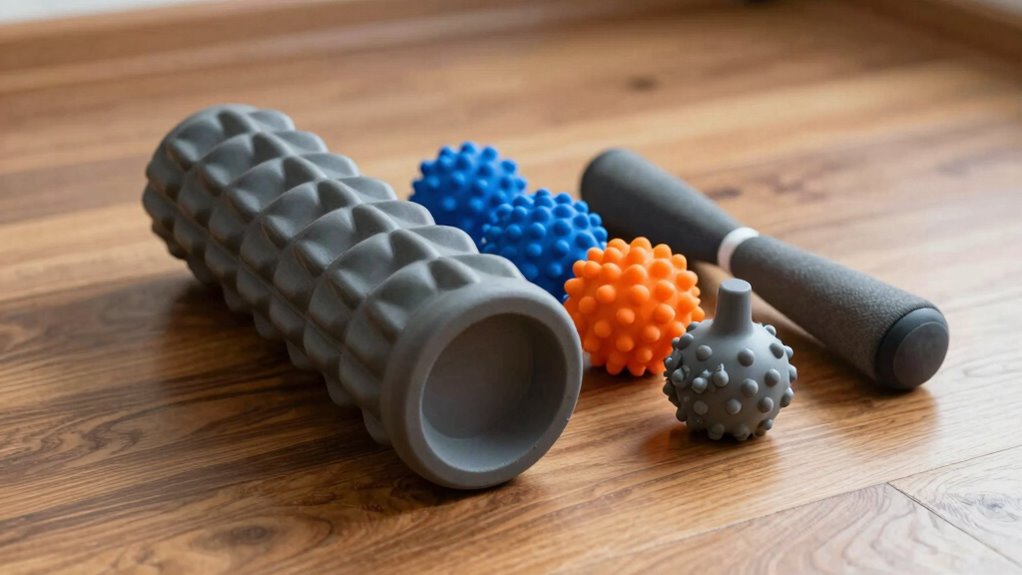
If you’re looking to enhance your recovery routine, foam rollers and other recovery tools can be game changers. These tools are designed to help you manage muscle tension and reduce soreness, so you can train harder and recover faster. When you use a foam roller properly, you break up knots and tight spots in your muscles, which not only eases discomfort but also helps prevent injuries. By loosening tight muscles and fascia, you’re less likely to strain or pull muscles during your workouts, making injury prevention a natural benefit of incorporating these tools into your routine.
Using a foam roller isn’t just about feeling good; it’s about taking control of your recovery. When you roll out tight muscles, you increase blood flow to the area, delivering essential nutrients and oxygen that speed up healing. This enhanced circulation helps clear out waste products like lactic acid that build up during exercise, reducing delayed-onset muscle soreness (DOMS). Regularly using a foam roller can also improve your flexibility and range of motion, which are vital for maintaining proper movement patterns and avoiding overuse injuries. The more you incorporate these tools, the more your muscles stay resilient and less prone to strain. Additionally, understanding proper foam rolling techniques can maximize benefits and prevent potential tissue damage, especially when combined with self-myofascial release strategies. Developing a mindful approach to your recovery, including proper technique and consistency, can significantly enhance your results and overall well-being. Incorporating proper pressure and pacing during foam rolling can further optimize tissue response and recovery.
Massage balls are another effective recovery tool that you’ll find yourself reaching for often. They are particularly useful for targeting smaller, hard-to-reach areas like your shoulders, hips, and feet. Using a massage ball allows you to focus on specific spots where muscle tension tends to accumulate, alleviating tightness and discomfort. This targeted approach helps keep your muscles supple and ready for action, which is essential to injury prevention. Plus, managing muscle tension proactively means you’re less likely to develop imbalances or compensations that could lead to injuries down the line.
Recovery tools like foam rollers and massage balls aren’t just about recovery after a tough workout—they’re about integrating proactive care into your routine. When you regularly release muscle tension and keep your muscles healthy, you’re creating a more resilient body that can handle the demands of training. These tools also make self-myofascial release accessible and convenient, so you’re more likely to stick with a consistent recovery plan. Over time, you’ll notice fewer aches, improved mobility, and a stronger, more balanced physique. In short, investing in these recovery tools isn’t just about feeling good; it’s about protecting your body and setting yourself up for ongoing success.
As an affiliate, we earn on qualifying purchases.
Frequently Asked Questions
How Often Should I Replace My Foam Roller or Massage Ball?
You should replace your foam roller or massage ball every 6 to 12 months, depending on material durability and usage frequency. If you notice cracks, tears, or significant wear, it’s time for a new one. Regularly replacing these tools guarantees continued effectiveness, and it’s cost-effective in the long run because worn-out tools can lose their benefits and potentially cause injury. Keep an eye on their condition to maintain maximum recovery.
Can Recovery Tools Help Prevent Injuries or Only Treat Existing Ones?
Recovery tools can help with injury prevention and chronic pain management. By regularly using them, you improve muscle flexibility, reduce tension, and promote better circulation, which lowers your risk of strains or injuries. They also address ongoing discomfort, preventing it from worsening. Consistent use strengthens your muscles and enhances recovery, making these tools valuable not just for treatment but for maintaining overall musculoskeletal health and preventing future issues.
Are There Specific Recovery Tools Recommended for Beginners?
Think of recovery tools as your new best friends, gently guiding you into better habits. For beginners, start with simple tools like foam rollers and massage balls, which are easy to handle and versatile. Use beginner techniques like gentle rolling and controlled pressure. Tool selection tips? Choose lightweight, ergonomic designs that feel comfortable in your hands. Focus on consistency, and soon these tools will become your allies in staying injury-free and feeling great.
How Long Should I Use These Tools During Each Session?
You should aim for 1-2 minutes per muscle group during each session, focusing on effective techniques like steady pressure and controlled movements. Pay attention to your body’s response—if you feel pain, ease up. Duration guidelines help prevent overdoing it, ensuring you get relief without irritation. Use these tools consistently, and you’ll notice better recovery, improved flexibility, and less soreness over time.
Can Recovery Tools Be Used on All Muscle Groups Effectively?
Yes, recovery tools can be used effectively on all muscle groups. Their versatility allows you to target different muscles, from your calves to shoulders, guaranteeing thorough muscle targeting. Equipment versatility means you can switch between foam rollers, massage balls, or other tools based on your needs. Just make certain you adjust pressure and technique for each muscle group, and you’ll maximize recovery and reduce soreness across your entire body.
Conclusion
So, now that you’ve got the scoop on foam rollers, massage balls, and recovery gear, it’s time to stop the excuses and start rolling. Because nothing says “I’m serious about recovery” like actually using your tools—shocking, right? Toss those fancy gadgets aside and get to work. Your muscles will thank you, and maybe, just maybe, you’ll impress your friends with your newfound dedication. Or at least stop grimacing every time you stand up.
Halloween Picks
halloween
As an affiliate, we earn on qualifying purchases.