TL;DR

Get workout gear delivered free — and shop member deals
- Fast, free delivery on millions of items
- Access to Prime Big Deal Days deals on October 6–7
- Prime Video, Amazon Music and more included
A Fit&Well writer tested carrying two 10kg dumbbells between rooms whenever they moved between a kitchen desk and the living room. After two weeks, the writer reported easier-feeling grip tasks, more awareness of posture and a 15-second longer side-plank hold, but said the experiment cannot establish that the carries caused those changes.
A Fit&Well writer reported that carrying two 22-pound (10kg) dumbbells between rooms during everyday trips coincided with changes in grip-related exercises and a longer side-plank hold over two weeks. The personal experiment suggests one way to add brief movement breaks to a workday, but it does not establish that carrying the weights caused the reported results.
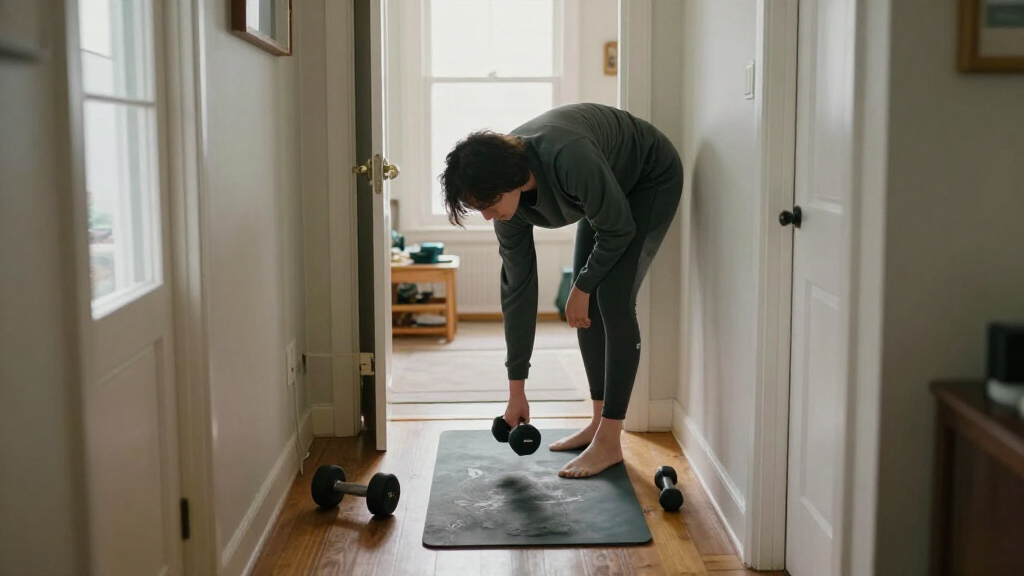
The writer adapted an idea shared on Instagram by personal trainer Kate Rowe-Ham, who suggested leaving weights near the stairs and carrying them on trips between floors. Rowe-Ham credited nutrition consultant Laurel Seabrook with a similar approach using a 25-pound kettlebell. Because the writer rarely went upstairs while working, they instead carried two dumbbells between a desk in the kitchen and the living room whenever a task took them between those rooms.
The writer said the repeated carries provided a reason to get up from the desk and walk. They felt more attentive to posture after returning to work and reported that their neck felt less stiff by the end of the experiment. The account does not separate the possible effect of carrying weights from the effect of taking more frequent breaks from sitting.
The writer also said the dumbbells felt easier to carry by the second week and that their grip seemed to hold up better in some workouts, including wood chops. In a side-plank check, the writer recorded 1 minute 33 seconds on day one and 1 minute 48 seconds after two weeks, a 15-second difference. This was one person’s informal test, not a controlled assessment.
Small Carries, Measurable Personal Changes
The report offers readers a practical example of fitting movement into ordinary tasks rather than setting aside a separate workout period. Repeated short carries may also prompt someone working at a desk to stand, walk and notice how they are holding their body. Those are the writer’s observations, not proof that the routine treats neck stiffness or produces a predictable fitness benefit.
The side-plank result gives the experiment a before-and-after measure, but it remains a single comparison from one participant. Differences in effort, technique, rest, or familiarity with the test could affect the time. The report is best read as a personal account of a low-complexity activity, not evidence of a general training outcome.
adjustable dumbbells for home workouts
As an affiliate, we earn on qualifying purchases.
As an affiliate, we earn on qualifying purchases.
From Stairway Idea to Room-to-Room Carries
The original suggestion described in the Fit&Well report was to place weights at the bottom of a staircase and carry them upstairs, then return them on a later trip. Rowe-Ham shared the idea on Instagram and credited Seabrook, who had used a 25-pound kettlebell. The Fit&Well writer changed the setup to suit a home workday spent mainly between a kitchen desk and a living room.
The writer carried the two dumbbells on trips between those rooms for two weeks. The report gives no total number of trips, total carrying time, training schedule, or comparison period without the carries. It describes the activity as repeated farmer’s carries, a walking movement in which weights are held at the sides.
What the Two-Week Test Cannot Show
The report does not show whether the reported changes would occur for other people or persist beyond the two-week period. It also does not establish how much the carries contributed to the writer’s neck comfort, grip, or side-plank time. There was no control group, and the account does not detail other exercise, changes in daily activity, or repeated testing conditions.
The writer’s experience with grocery bags and dropping objects was also self-reported, without a measured comparison. The weight may not be appropriate for every person, and the report does not give individualized guidance on selecting a load or carrying it safely.
The Writer Plans to Keep Carrying
The Fit&Well writer said they intended to continue adding carries to the day and might try single-arm carries to track progress over time. The report does not specify a future testing schedule or promise further results.
Anyone trying a similar routine should choose a manageable load, keep a clear path, and stop if carrying causes pain or unsteadiness. People with injuries or relevant health conditions can seek guidance from a qualified health professional or trainer before adding loaded carries.
Key Questions
What did the Fit&Well writer do?
For two weeks, the writer carried two 22-pound (10kg) dumbbells between a kitchen desk and a living room whenever a task took them between the rooms.
What changes did the writer report?
The writer reported greater awareness of posture, less neck stiffness, weights that felt easier to carry, and a longer side-plank hold. These are personal observations, not confirmed effects for other people.
How much longer was the side-plank hold?
The writer recorded 1 minute 33 seconds at the start and 1 minute 48 seconds after two weeks, a 15-second difference. The report does not establish that carrying the dumbbells caused it.
Does the report prove that room-to-room carries improve posture or grip?
No. It describes one person’s experience and does not use a controlled comparison. More frequent breaks from sitting, other activity, or differences in testing could have influenced the results.
Is the routine suitable for everyone?
The report does not provide individualized safety advice. A person trying it should use a manageable weight and a clear route; people with injuries or relevant health conditions can ask a qualified professional for guidance.
Source: rss
Halloween Picks
halloween
As an affiliate, we earn on qualifying purchases.