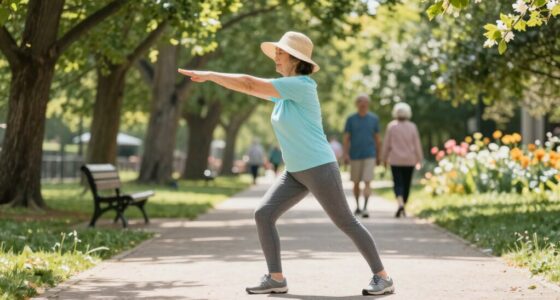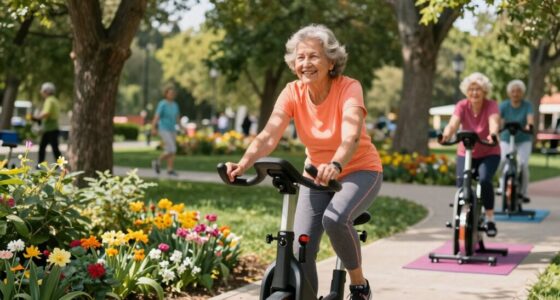

Create a balanced weekly workout schedule that includes at least 150 minutes of moderate aerobic activity like brisk walking or cycling, twice-weekly strength training with light weights or resistance bands, and dedicated days for balance and flexibility exercises such as yoga or tai chi. Dedicating specific days to these activities helps improve stability, mobility, and overall well-being. Starting slow and gradually increasing intensity guarantees safety. Keep exploring for tips to customize your routine and stay motivated.

Get workout gear delivered free — and shop member deals
- Fast, free delivery on millions of items
- Access to Prime Big Deal Days deals on October 6–7
- Prime Video, Amazon Music and more included
Key Takeaways
- Incorporate at least 150 minutes of moderate aerobic activity like walking or swimming weekly.
- Dedicate 2 days to strength training with light weights or resistance bands.
- Include balance and flexibility exercises, such as yoga or tai chi, on specific days like Mondays and Thursdays.
- Gradually increase exercise intensity and duration, listening to your body’s signals.
- Ensure a safe environment with proper lighting and high-contrast visuals to support motivation and visibility.
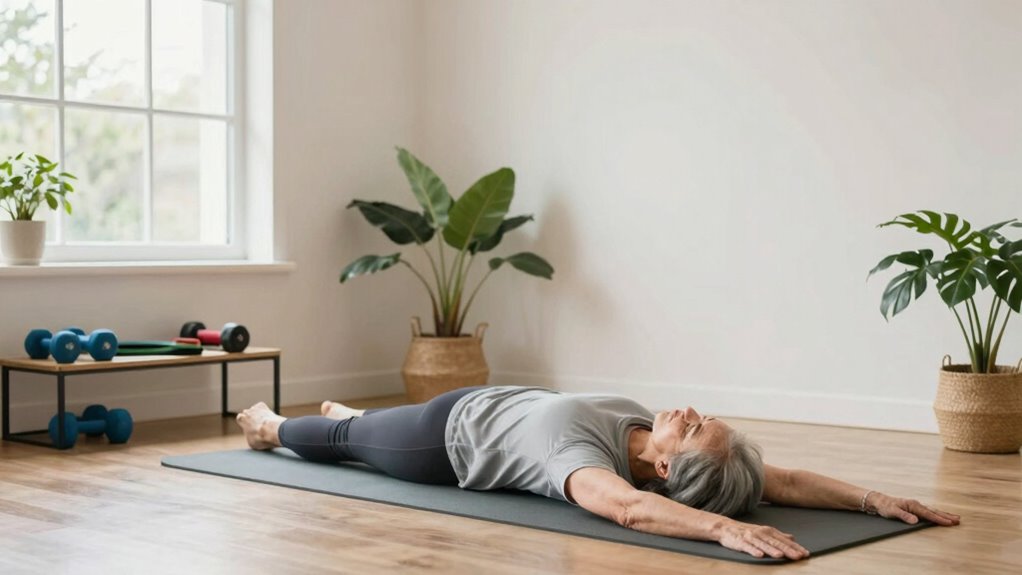
Maintaining an active lifestyle is crucial for older adults to stay healthy, independent, and energized. Incorporating a well-rounded workout schedule helps you achieve these goals by focusing on different aspects of fitness. One key element is balance training, which enhances your stability and reduces the risk of falls. You can incorporate balance exercises like standing on one foot, heel-to-toe walks, or gentle yoga poses into your routine. These activities improve your core strength and coordination, making everyday movements safer and easier. Alongside balance training, flexibility exercises play an important role in maintaining your range of motion and preventing stiffness. Regular stretching, yoga, or tai chi sessions help keep your muscles limber and joints supple, enhancing your overall mobility. Incorporating proper exercise techniques can also maximize the benefits and reduce the risk of injury during workouts.
A balanced weekly workout schedule should include a mix of aerobic activity, strength training, balance training, and flexibility exercises. For aerobic activity, aim for at least 150 minutes of moderate-intensity exercise, such as brisk walking, cycling, or swimming, spread throughout the week. This boosts your cardiovascular health, stamina, and mood. Strength training should be incorporated twice a week using light weights, resistance bands, or body-weight exercises like squats and wall push-ups. Building muscle helps maintain bone density and supports daily activities. Additionally, understanding the importance of a high contrast ratio in visual displays can motivate you to create an environment that supports better visibility and reduces eye strain during exercise or relaxation. Incorporating visual ergonomics into your daily routine can also help prevent eye fatigue, especially when engaging in activities that require sustained focus. Paying attention to your overall environmental setup can make your fitness journey safer and more enjoyable. Maintaining proper lighting conditions is also essential for creating a safe exercise environment, especially if you’re working out at home.
Dedicating specific days for balance training and flexibility exercises makes your routine thorough and sustainable. For example, you might do balance exercises and stretching on Mondays and Thursdays, while keeping the other days for aerobic and strength activities. Consistency is key, so find activities you enjoy and can perform comfortably. Remember to start slow and gradually increase intensity or duration to avoid injury. Always listen to your body; if you experience pain or discomfort, adjust your routine accordingly. By integrating these exercises into your schedule, you’re creating a comprehensive approach that supports both your physical and mental well-being.
Incorporating these elements into your weekly schedule ensures you’re targeting all critical aspects of fitness tailored for older adults. Balance training and flexibility exercises specifically help you stay agile, reduce fall risks, and maintain independence longer. Pairing these with aerobic and strength workouts creates a balanced approach that boosts your overall health. With dedication and mindful progression, you’ll find yourself feeling more energized, confident, and capable to handle daily challenges. Staying active isn’t just about physical health; it also improves your mental well-being, social connections, and quality of life. By sticking to a thoughtfully planned weekly workout schedule, you’re investing in your long-term health and happiness.
light resistance band set for seniors
As an affiliate, we earn on qualifying purchases.
As an affiliate, we earn on qualifying purchases.
Frequently Asked Questions
How Can Older Adults Prevent Workout Injuries?
To prevent workout injuries, you should start with gentle exercises and gradually increase intensity. Follow nutrition tips like staying hydrated and eating a balanced diet to support recovery. Listen to your body and rest when needed. Incorporate mental health practices such as mindfulness to reduce stress. Proper warm-ups and cool-downs are essential, and consulting a healthcare provider guarantees your routine suits your health, helping you stay safe and injury-free.
Are There Exercises Suitable for Limited Mobility?
Yes, there are exercises suitable for limited mobility. You can try chair exercises to strengthen muscles without putting strain on joints. Gentle stretching routines help improve flexibility and reduce stiffness. Focus on slow, controlled movements, and avoid overexertion. These modifications allow you to stay active safely, boost circulation, and maintain mobility, all while minimizing the risk of injury. Always consult with your healthcare provider before starting new exercises.
How Should Older Adults Adjust Workouts When Feeling Tired?
When you’re feeling exhausted, even the tiniest workout can seem like climbing Mount Everest. To adjust, listen to your body and incorporate rest day strategies like gentle stretching or light walking instead of intense activity. Rest days aren’t just downtime—they boost your mental health benefits, reducing stress and boosting mood. Prioritize recovery, and remember, taking it easy now keeps you stronger and happier in the long run.
Can Seniors Safely Use Gym Equipment?
Yes, seniors can safely use gym equipment if they follow proper guidelines. Always start with balance training and flexibility routines to warm up and prevent injury. Use machines with appropriate weight settings, and focus on controlled movements. It’s best to consult a trainer or healthcare provider beforehand, especially if you have health concerns. Regularly listening to your body guarantees safe, effective workouts that support your overall health.
What Are Signs of Overexertion in Older Adults?
Did you know that over 50% of older adults experience signs of overexertion during exercise? You should watch for muscle fatigue, which causes weakness and soreness, and breathing difficulties, like shortness of breath or chest tightness. These signs indicate you’re pushing too hard. If you notice them, slow down, rest, and consult a healthcare professional. Listening to your body helps prevent injury and keeps your fitness routine safe.
Conclusion
Stick to this workout schedule, and you’ll release a newfound energy you never thought possible. But remember, the real secret isn’t just in the routine—it’s in your commitment to staying active. Each week, you’ll discover new strengths and resilience you never knew you had. Are you ready to see how far you can go? The journey to a healthier, more vibrant you starts now—don’t wait to find out what’s next.
Halloween Picks
halloween
As an affiliate, we earn on qualifying purchases.