To stay strong at home, focus on simple exercises like chair squats and wall push-ups to build your lower and upper body strength. Incorporate balance moves such as standing on one leg with support to prevent falls, and include gentle stretching routines to keep muscles flexible. Doing these exercises regularly boosts your stability and confidence. Keep exploring for more tips to create a safe, effective routine that keeps you independent and active every day.

Get workout gear delivered free with Prime
- Fast, free delivery on millions of items
- Prime Video, Amazon Music and more included
- Member-only deals all year
Key Takeaways
- Focus on simple, equipment-free exercises like chair squats and wall push-ups to build functional strength safely at home.
- Incorporate balance exercises, such as single-leg holds, to improve stability and prevent falls.
- Include flexibility routines to enhance range of motion and reduce injury risk.
- Perform exercises regularly, starting with 10-15 repetitions and gradually increasing intensity.
- Prioritize safety by listening to your body and consulting healthcare professionals when needed.
Staying strong as you age is essential for maintaining independence and overall health, and you don’t need a gym to do it. You can build strength right at home with simple, effective moves that don’t require special equipment. Incorporating balance exercises into your routine is a smart way to prevent falls and improve stability. Stand behind a chair, hold onto it lightly, and lift one foot off the ground for a few seconds. Switch sides and repeat. As your confidence grows, try balancing on one leg without support, aiming for 10 to 15 seconds. These exercises help strengthen the small stabilizer muscles around your ankles and hips, making everyday movements safer. Understanding muscle groups helps target exercises more effectively to support your overall strength. Flexibility routines are equally important, especially as joints tend to stiffen with age. Gentle stretching can keep your muscles limber and improve your range of motion. Focus on major muscle groups like your hamstrings, calves, shoulders, and back. For example, sit on the edge of a chair and reach toward your toes to stretch your hamstrings. Hold the stretch for 20 to 30 seconds without bouncing. Include shoulder rolls and neck stretches to loosen up tension in your upper body. Consistency is key—doing these routines daily can make a noticeable difference in how your body feels and moves.
Improve stability and prevent falls with simple at-home balance exercises using a chair or one-legged holds.
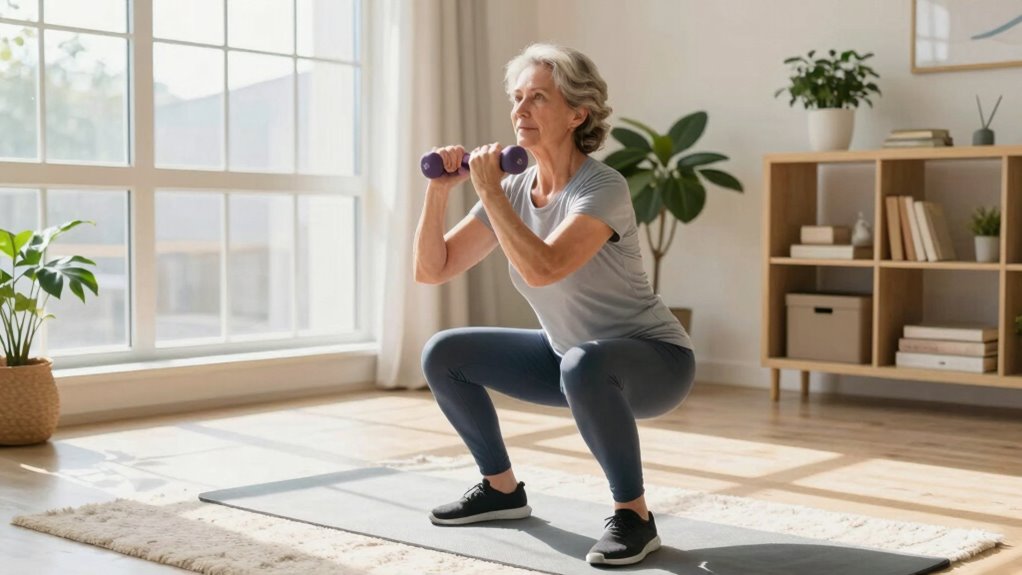
In addition to balance and flexibility, strength exercises like chair squats are perfect for at-home workouts. Stand in front of a sturdy chair, feet shoulder-width apart. Lower yourself slowly as if sitting down, then press through your heels to stand back up. Repeat for 10 to 15 reps. This move targets your thighs, hips, and buttocks, helping you maintain functional strength. Pair it with wall push-ups—stand an arm’s length from a wall, place your hands on it, and bend your elbows to bring your chest toward the wall. Push back to start and repeat. These exercises strengthen your upper body and improve your posture.
You don’t have to dedicate hours to exercise; just a few minutes daily can make a big difference. Mix balance exercises, flexibility routines, and strength moves into your schedule for a well-rounded approach. Remember to listen to your body, go at your own pace, and consult with a healthcare professional if you have any concerns. Staying active at home keeps you safe, boosts your confidence, and helps you stay independent longer. With consistency and focus, you can enjoy a healthier, more resilient body as you age.
at-home chair squats for seniors
As an affiliate, we earn on qualifying purchases.
As an affiliate, we earn on qualifying purchases.
Frequently Asked Questions
How Often Should Older Adults Perform Strength Exercises Weekly?
You should aim to perform strength exercises at least two to three times weekly. To stay consistent, incorporate progression planning by gradually increasing resistance or repetitions, which keeps your workouts challenging and effective. Use motivation strategies like setting achievable goals and tracking progress to stay engaged. This routine supports muscle health and balance, helping you maintain independence and reduce fall risks as you age.
Are There Any Safety Precautions for Beginners?
Sure, beginners might think they can jump right into strength moves, but that’s where safety precautions come in. You should always start with a proper warm-up to loosen muscles and practice breathing techniques to stay relaxed. Avoid overexertion, listen to your body, and gradually increase intensity. Remember, it’s not a race—safety first guarantees you can enjoy the benefits without setbacks.
Can Strength Training Improve Balance and Reduce Falls?
Yes, strength training can improve your balance and markedly reduce fall risk. By targeting muscles responsible for stability, you enhance balance improvement, making you steadier on your feet. Regularly practicing at-home strength moves helps build core strength and coordination, essential for fall prevention. Consistent effort in strength training not only boosts your confidence but also helps you maintain independence and safety in daily activities.
What Equipment Is Necessary for At-Home Strength Workouts?
Think of your at-home workout as a blank canvas—you don’t need much to get started. You can use equipment alternatives like resistance bands, water bottles, or sturdy chairs. Just make sure your workout space considerations include enough room to move freely and avoid obstacles. You don’t need fancy gear; a little creativity turns everyday items into effective strength tools, making your workout both accessible and effective.
How Do I Modify Exercises for Joint Pain or Arthritis?
To accommodate joint pain or arthritis, you should focus on joint-friendly modifications and arthritis-safe exercises. Use gentle, low-impact movements, such as seated exercises or water-based workouts, to reduce stress on your joints. Avoid high-impact activities and sharp, quick movements. Incorporate resistance bands or light weights carefully, and listen to your body. Always consult your healthcare provider for personalized advice and guarantee you’re exercising safely and comfortably.
Conclusion
Remember, age is just a number. By incorporating these simple at-home strength moves, you’re investing in your health and independence. Consistency is key, so keep moving and stay positive. As the saying goes, “A journey of a thousand miles begins with a single step.” Embrace each workout as a step toward a stronger, healthier you. Stay motivated, and enjoy the journey to better strength and well-being!
Halloween Picks
halloween
As an affiliate, we earn on qualifying purchases.