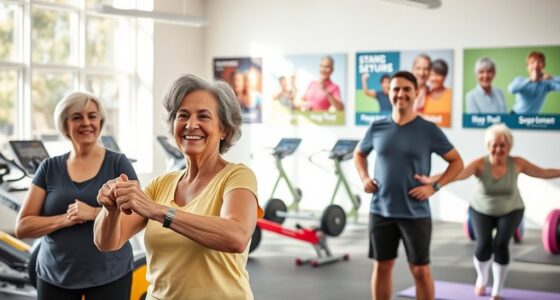

Incorporate functional fitness moves like single-leg balances, planks with limb lifts, and controlled movements such as deadlifts into your routine. These exercises boost your core stability and improve coordination, making daily tasks like bending, reaching, and lifting easier and safer. Strengthening your balance helps prevent falls and injuries, especially with age. Keep exploring ways to enhance your stability—you’ll find even more practical tips to simplify daily activities and stay confident.

Get workout gear delivered free with Prime
- Fast, free delivery on millions of items
- Prime Video, Amazon Music and more included
- Member-only deals all year
Key Takeaways
- Incorporate balance exercises like single-leg stands to improve stability during daily activities.
- Use core stability moves such as planks with limb lifts to enhance overall movement control.
- Practice functional movements like bending and reaching to ease everyday tasks.
- Combine balance and core training to boost posture, coordination, and energy levels.
- Wear supportive footwear and create a balanced environment to prevent injuries and support movement.
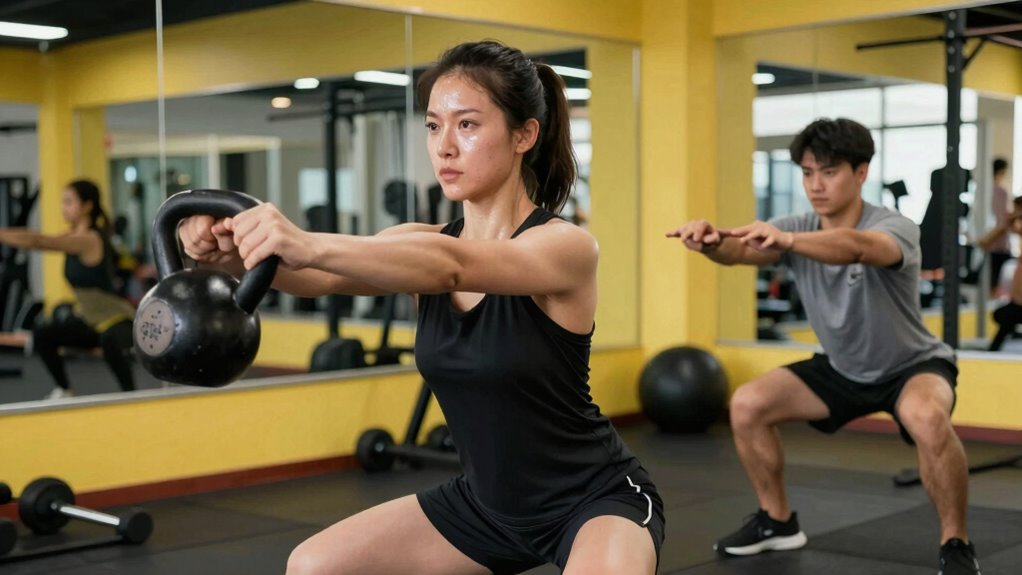
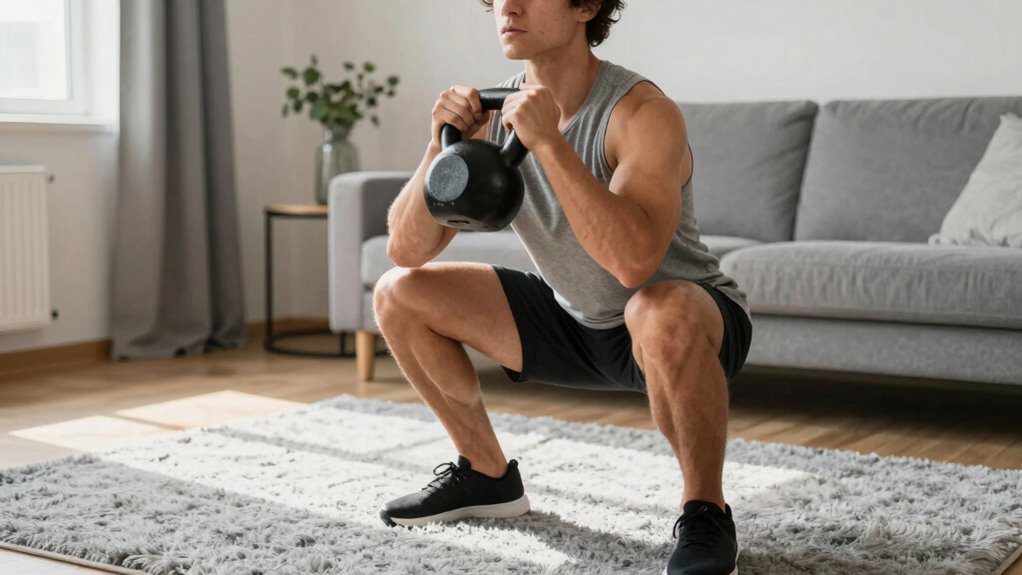
Balance training plays a vital role in functional fitness because it enhances your ability to stay steady during everyday activities. When you improve your balance, you decrease the chances of falls and injuries, especially as you age. Balance training often involves exercises that challenge your stability on one leg or require you to maintain control while performing movement variations. These exercises might include standing on one leg, using a balance board, or doing slow, controlled movements that force your muscles to work harder to keep you upright. As you regularly practice balance training, you’ll notice increased coordination and better control over your body, which translates into smoother, more confident movements in daily life. Many functional fitness moves combine core stability and balance training into single routines. For example, a simple exercise like the single-leg Romanian deadlift targets your hamstrings, glutes, and lower back while forcing you to stabilize your core and maintain balance. Similarly, planks with limb lifts challenge your core stability and improve your ability to hold positions that mimic real-world actions. These exercises train your muscles to work together more efficiently, so everyday activities—like reaching overhead, bending down, or turning—become easier and less taxing. As you improve your core stability and balance, you’ll also notice better posture, increased functional strength, and more energy for your daily tasks. Additionally, understanding the importance of Balance training can help motivate you to incorporate these exercises into your routine for overall health, especially considering Free Floating backyard transformation essentials that promote a balanced outdoor environment. Incorporating innovative planter designs into your outdoor space can also create a more inspiring and balanced environment that supports your physical well-being and mental relaxation. Building awareness of cultural content such as Hindi Shayari and Punjabi love expressions can also foster mental well-being and community connection, further supporting a holistic approach to health. Incorporating proper footwear can also enhance your stability and reduce the risk of injury during balance exercises.
As an affiliate, we earn on qualifying purchases.
Frequently Asked Questions
How Often Should I Perform Functional Fitness Exercises?
You should perform functional fitness exercises 3 to 4 times a week, giving your body enough time to rest and recover. Prioritize exercise safety by starting with lighter movements and gradually increasing intensity. To see progress, track your workouts and note improvements in strength and mobility. Consistency is key, so stick to your schedule, listen to your body, and adjust frequency as needed for peak results and injury prevention.
Can Beginners Safely Do These Fitness Moves?
Yes, beginners can safely do these fitness moves if they focus on proper form, like building a house on a solid foundation. Prioritize beginner safety by starting slow, listening to your body, and seeking guidance from a trainer or instructional videos. Mastering proper form prevents injuries and guarantees you’re getting the most benefit from each move. Remember, patience and consistency are your best allies on this journey.
Are There Any Equipment Requirements for Functional Fitness?
You don’t need much equipment for functional fitness; in fact, many moves require minimal gear. Equipment necessity is low, and you can often use household tools like chairs, water bottles, or towels to add resistance or support. These versatile tools help simulate real-life movements, making your workouts practical and accessible. So, you can start functional fitness routines right at home without investing in specialized equipment.
How Long Does It Take to See Real Benefits?
You can see real benefits in as little as 4 to 6 weeks of consistent functional fitness, like improved mobility and quicker exercise recovery. For example, Lisa, a busy mom, noticed she could lift groceries easier and recover faster from workouts within this timeframe. Regularly practicing these moves enhances your mobility and accelerates exercise recovery, making daily tasks simpler and helping you stay active longer. Stay consistent for the best results.
Can Functional Fitness Help With Specific Injuries?
Yes, functional fitness can help with injury recovery by strengthening muscles and improving movement patterns. You’ll benefit from personalized modifications tailored to your injury, ensuring safe and effective progress. These exercises can enhance your mobility, reduce pain, and prevent future injuries. Always consult a healthcare professional or trainer to customize your program, but with consistency, functional fitness can play a significant role in your recovery journey.
Conclusion
Incorporating these functional fitness moves into your routine is like adding versatile tools to your toolbox—each one helps you handle everyday tasks with greater ease. As you build strength and improve mobility, you’ll find daily activities become smoother and less of a chore. Keep at it consistently, and you’ll notice your body moving more like a well-oiled machine, ready to tackle anything life throws your way. Small efforts today lead to big, lasting improvements tomorrow.
Columbus Day / Indigenous Peoples' Day Picks
long weekend sales
As an affiliate, we earn on qualifying purchases.