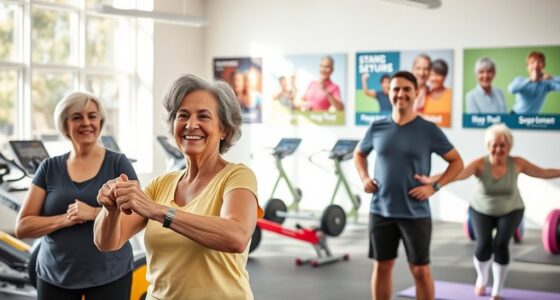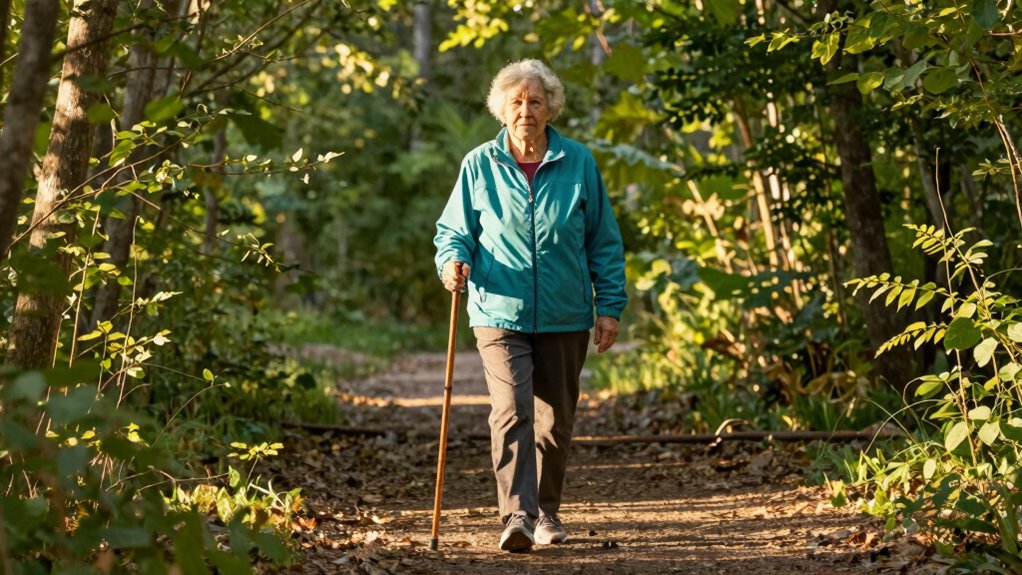

Walking helps you build strength in your legs, hips, and core, making daily tasks easier and reducing fatigue. It also improves your balance and stability, which lowers your risk of falls. Plus, walking supports your heart and lung health, keeping you active and independent longer. It’s simple, accessible, and can become part of your daily routine. Keep going, and you’ll discover more ways walking can boost your energy and confidence at any age.

Get workout gear delivered free with Prime
- Fast, free delivery on millions of items
- Prime Video, Amazon Music and more included
- Member-only deals all year
Key Takeaways
- Walking strengthens leg, hip, and core muscles, enhancing overall physical strength and endurance for daily activities.
- It improves balance and stability, reducing the risk of falls and supporting independence.
- Regular walking boosts cardiovascular health, enabling older adults to perform daily tasks with greater ease.
- Walking is an accessible activity that promotes consistent physical activity, maintaining mobility over time.
- It offers mental and emotional benefits, fostering confidence and resilience necessary for independent living.
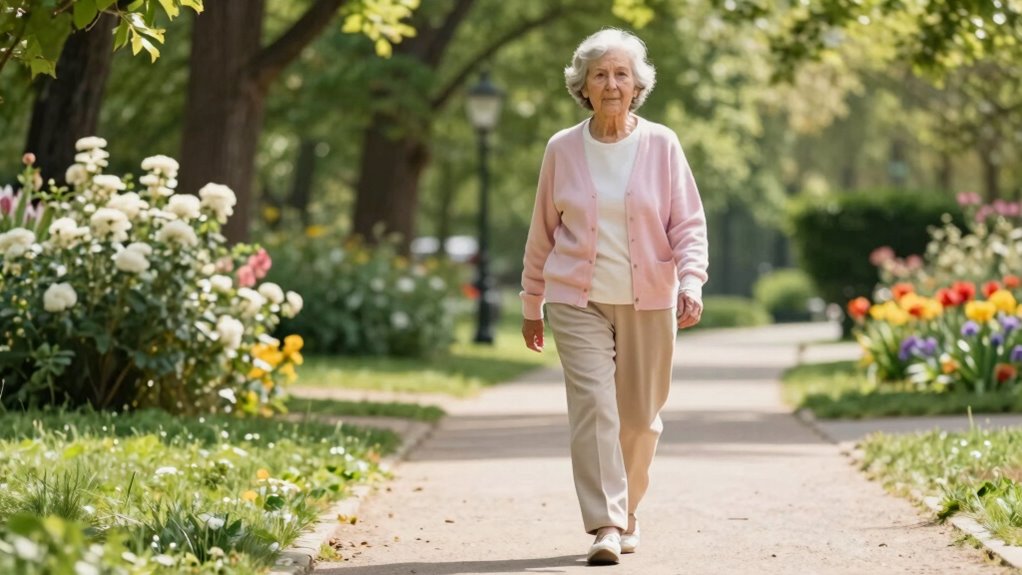
Walking plays a essential role in maintaining strength and independence as you age. It’s a simple activity that offers powerful benefits, especially when it comes to balance training and boosting muscle endurance. As you walk regularly, you engage muscles throughout your legs, hips, and core, helping to strengthen these indispensable areas. Over time, this leads to increased muscle endurance, meaning your muscles can perform longer without fatigue—an important factor in everyday activities like climbing stairs or carrying groceries. The more consistent your walking routine, the more your muscles adapt, becoming stronger and more resilient.
Balance training is another fundamental aspect of walking’s benefits. When you walk, you constantly adjust your body to maintain stability, especially on uneven surfaces or when navigating obstacles. These subtle adjustments improve your proprioception—your sense of body position—making you more stable and less prone to falls. Regular walking challenges your balance in a natural way, gradually enhancing your ability to stay upright and confident in varied environments. This is particularly essential as aging often brings a decline in balance, increasing the risk of falls and injuries. By incorporating walking into your routine, you actively train your body to stay centered and coordinated, which directly supports your independence.
In addition to strengthening muscles and improving balance, walking promotes cardiovascular health, which is indispensable for overall vitality. When your heart and lungs work efficiently, you’ll find it easier to perform daily tasks, reducing reliance on assistance or mobility aids. The rhythmic, low-impact nature of walking makes it accessible for most people, regardless of fitness level, and it’s easy to integrate into your daily schedule. Whether it’s a morning stroll or a walk after dinner, these small efforts add up, helping you stay active and engaged in life.
Furthermore, walking is not just about physical health; it also offers mental and emotional benefits. As you walk, you can enjoy nature, socialize with friends, or simply clear your mind. These mental benefits encourage consistency, which is key to maintaining the physical gains you achieve through regular walking. Over time, this holistic approach to activity reinforces your independence by keeping you physically capable and mentally resilient.
As an affiliate, we earn on qualifying purchases.
Frequently Asked Questions
How Can I Start Walking Safely After a Fall?
To start walking safely after a fall, first consult your healthcare provider for personalized fall prevention strategies. Begin with short, supported walks using adaptive walking aids like a cane or walker to enhance stability. Practice in a safe, clutter-free environment, and gradually increase distance as your confidence and strength improve. Always listen to your body, take breaks as needed, and consider working with a physical therapist for tailored guidance.
What Are the Best Shoes for Elderly Walkers?
You should choose shoes with a proper fit that aren’t too tight or loose, ensuring stability while walking. Look for shoes with good arch support to help maintain balance and reduce foot fatigue. Opt for non-slip soles for safety on various surfaces. Avoid shoes with high heels or overly flexible soles, as these can increase the risk of falls. Comfort and support are key for elderly walkers to stay steady and confident.
How Much Daily Walking Is Recommended for Seniors?
You should aim for about 30 minutes of daily walking, but pace customization is key—listen to your body and adjust your speed accordingly. Incorporate walking accessories, like supportive shoes, to enhance comfort and stability. Break your walks into shorter sessions if needed, and focus on steady, moderate activity to boost strength and independence. Consistency is more important than intensity, helping you stay active safely every day.
Can Walking Help With Specific Health Conditions?
Walking can be a powerful ally for managing specific health conditions. Imagine steady strides that improve your balance, helping you stay steady on your feet and reducing fall risks. It also benefits joint health by gently lubricating your joints and reducing stiffness. With each step, you boost circulation and flexibility, making daily activities easier and more confident. Walking becomes a simple, effective way to support your overall health and well-being.
How Do I Motivate an Elderly Loved One to Walk Regularly?
To motivate your elderly loved one to walk regularly, use motivation techniques like setting small, achievable goals and celebrating progress. Incorporate family encouragement by walking together, which makes the activity more enjoyable and social. Remind them of the benefits, such as improved strength and independence. Your consistent support, praise, and gentle encouragement can boost their confidence and help establish a regular walking routine that feels rewarding.
Conclusion
Walking wields wonderful, lasting benefits, bolstering your balance, boosting your bones, and banishing barriers to independence. By simply stepping out and staying steady, you strengthen your structure, support your stamina, and sustain your self-sufficiency. So, seize the chance to stride, stay strong, and savor your sovereignty, because every step you take today paves the path for a more mobile and meaningful tomorrow. Keep walking, keep winning!
Fall Picks
fall essentials
As an affiliate, we earn on qualifying purchases.