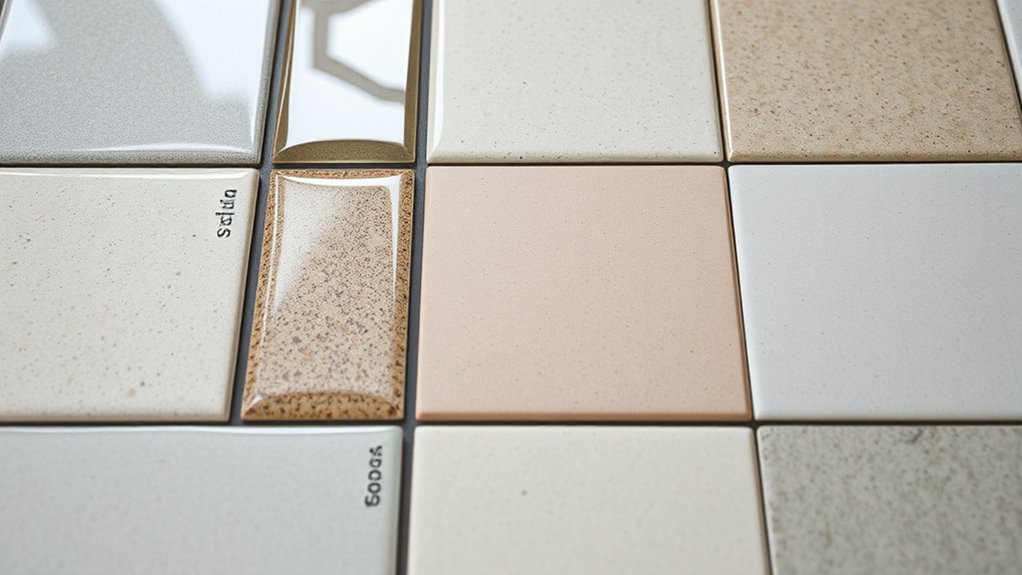

When choosing between glass and porcelain tiles, consider where you’ll install them and your style preferences. Glass tiles add a modern, reflective look perfect for backsplashes or accent walls but may chip more easily. Porcelain offers durability for floors and high-traffic areas. Also, pay attention to slip ratings—higher ratings like R10 or R11 improve safety in wet spaces. If you want to make a smart, informed choice, keep exploring these factors in more detail.
Key Takeaways
- Glass tiles offer a modern, reflective look suitable for backsplashes and accent walls, while porcelain tiles are durable for floors and outdoor use.
- Porcelain tiles are highly resistant to stains, scratches, and moisture, making them ideal for high-traffic or wet areas.
- Slip ratings (e.g., R9, R10, R11) indicate tile safety; higher ratings provide better traction, especially in wet or outdoor environments.
- Glass tiles are easy to clean but may be slippery when wet; textured or matte finishes improve slip resistance.
- Choose tiles based on environment, durability needs, safety standards, and design style to ensure optimal performance and aesthetics.
Types of Tiles: An Overview of Glass and Porcelain

Are glass and porcelain tiles the right choice for your space? Both options bring unique qualities that can elevate your design. Glass tiles offer a sleek, modern look with their reflective surfaces, perfect for creating a sense of openness and brightness. They are ideal for accent walls, backsplashes, or even shower enclosures. Porcelain tiles, on the other hand, are known for their durability and versatility. They resist stains, scratches, and moisture, making them suitable for high-traffic areas, floors, and outdoor use. While glass tiles provide a contemporary aesthetic, porcelain tiles can mimic natural stone or wood, giving you more design flexibility. Your choice depends on your specific needs, style preferences, and the environment where you’ll install the tiles. Incorporating natural materials like porcelain can add authenticity and longevity to your space.
Key Differences Between Glass and Porcelain Tiles
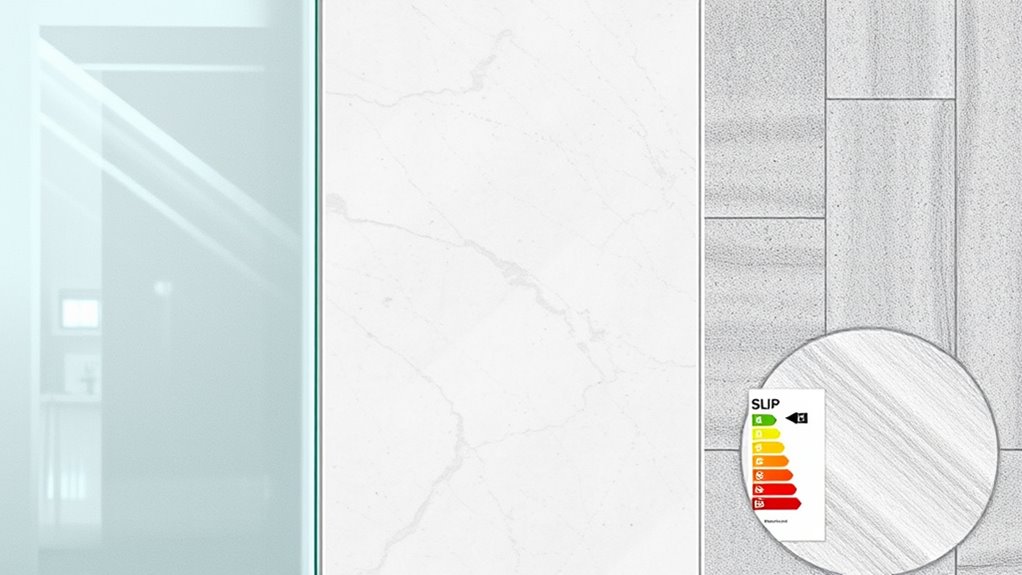
Understanding the key differences between glass and porcelain tiles can help you make an informed decision for your space. Glass tiles are translucent or clear, offering a sleek, modern look with reflective qualities. They’re softer and more delicate, prone to chipping if mishandled. Porcelain tiles are dense, hard, and highly durable, making them ideal for high-traffic areas. They resist moisture and scratches better than glass tiles. Here’s a quick comparison:
| Feature | Glass Tiles | Porcelain Tiles |
|---|---|---|
| Material | Glass | Ceramic with porcelain blend |
| Durability | Moderate, prone to chipping | Very durable, scratch-resistant |
| Maintenance | Easy to clean, less porous | Low maintenance, stain-resistant |
| Aesthetic | Reflective, decorative | Versatile, natural look |
| Best Use | Backsplashes, accents | Floors, walls, outdoor areas |
Additionally, understanding material properties can help you choose the right tile based on your specific needs and environment.
Choosing the Right Tile for Your Space and Style
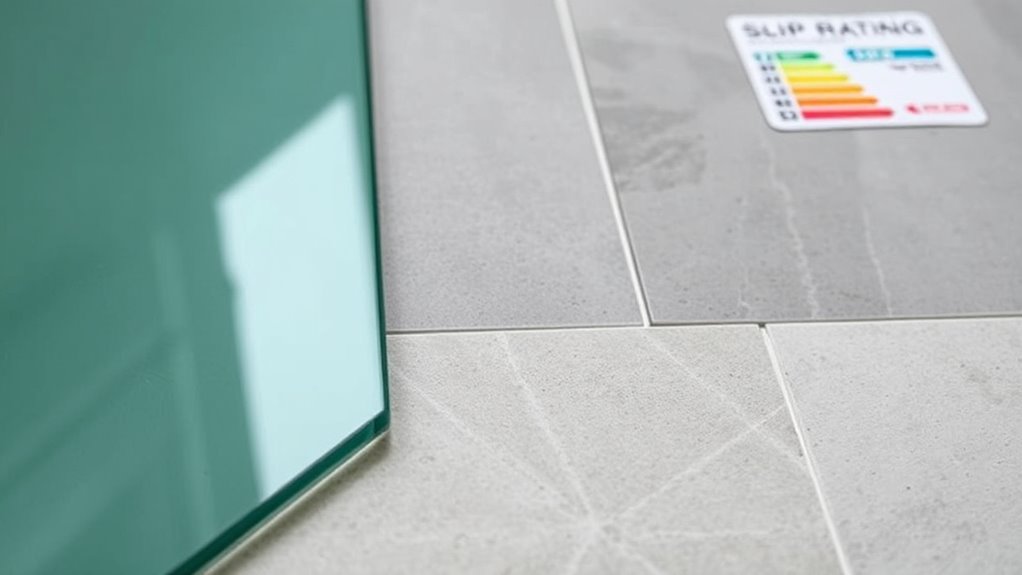
Choosing the right tile for your space and style involves considering both functional needs and aesthetic preferences. To make the best choice, focus on how the tile will look and perform in your environment. Here are three key factors to contemplate:
- Room Use: Will the tile face high traffic, moisture, or outdoor conditions?
- Design Style: Do you prefer modern, rustic, or classic looks? Match the tile’s color, pattern, and finish to your decor.
- Size and Shape: Larger tiles can make a space feel bigger, while smaller ones add detail. Consider your room’s proportions and layout.
- Material Durability: Selecting a durable material like porcelain or glass ensures longevity and resistance to wear and tear, especially in wet environments.
Durability and Maintenance Considerations
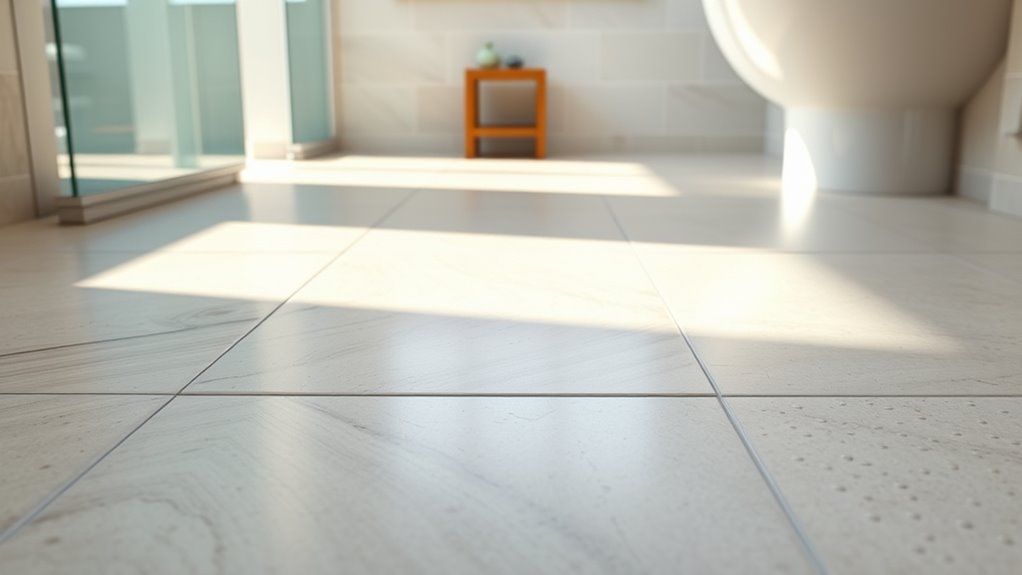
When choosing tiles, it’s important to take into account how well they stand up to daily wear and tear. You’ll also want to think about how easy they are to clean and maintain over time. Focusing on durability and upkeep helps ensure your tile choice stays beautiful and functional for years. Considering wear and tear is especially important if you plan to install tiles in high-traffic areas or spaces prone to moisture.
Wear and Tear Resistance
To guarantee your tile withstands daily use, it’s essential to contemplate its wear and tear resistance. This determines how well your tile endures foot traffic, impacts, and daily activity without showing damage. Here are key factors to consider:
- Mohs Hardness Rating: Higher ratings mean more resistant to scratches and chips.
- Porcelain vs. Ceramic: Porcelain tiles are denser and more durable, ideal for high-traffic areas.
- Surface Finish: Matte finishes hide scratches better, while glazed surfaces are easier to clean but may show wear over time.
Choosing tiles with strong wear resistance ensures longevity and reduces maintenance needs, keeping your space looking pristine longer. Don’t overlook this aspect when selecting your tiles for busy areas.
Cleaning and Upkeep
Maintaining your tiles’ appearance and functionality requires regular cleaning and proper upkeep. To keep your tiles looking their best, sweep or vacuum frequently to remove dirt and debris. Use a mild detergent or specialized tile cleaner for washing, avoiding harsh chemicals that could damage the surface. For porcelain and glass tiles, gentle scrubbing with a soft brush prevents scratches. Promptly wipe up spills to prevent staining, especially on porous tiles. Grout lines may need occasional cleaning with a grout brush and a baking soda paste or a mild cleaning solution. Seal porous tiles and grout regularly to protect against moisture and stains. Additionally, understanding tile durability factors can help you choose the right maintenance routine for your specific tile type. Proper maintenance guarantees your tiles stay durable, attractive, and functional for years to come.
Slip Ratings Explained: What They Mean for Safety
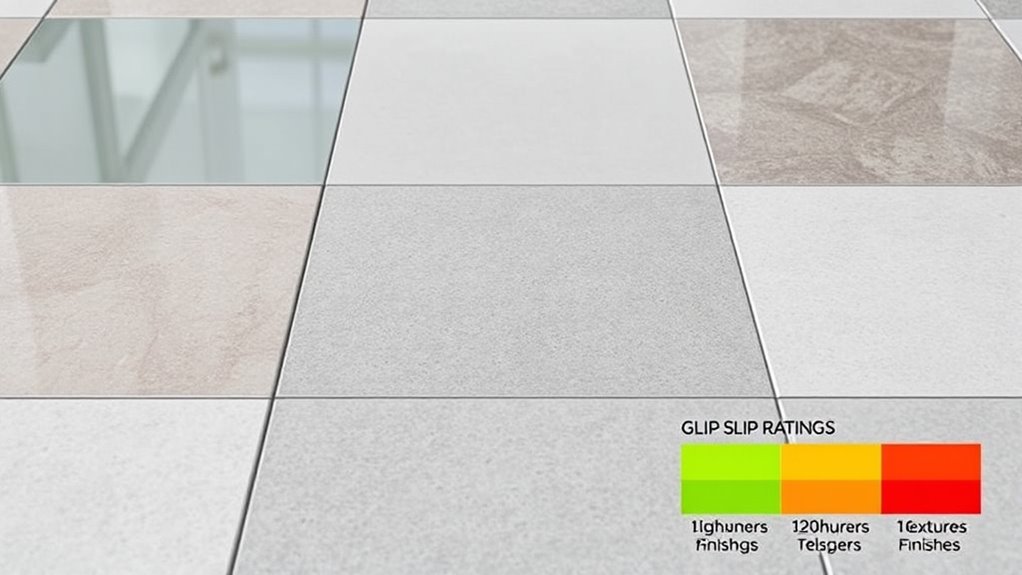
Slip ratings provide a clear way to understand how safe a tile surface is under wet or oily conditions. They measure the tile’s slip resistance and help you choose safer options for different environments. Higher slip ratings mean better traction and less risk of slipping. Here are three key points to contemplate:
- Rating Scale: Slip ratings typically range from low to high, indicating increasing safety.
- Standards: Ratings are based on standardized tests, such as the DIN or ANSI classifications.
- Application: Use tiles with higher ratings in areas prone to moisture, like bathrooms or outdoor spaces, to prevent accidents.
Understanding slip ratings helps you select tiles that enhance safety without sacrificing style. Always check these ratings before making your final decision. Additionally, being aware of Tile Safety Standards can guide you toward more reliable and secure choices.
How to Interpret Slip Resistance Classifications
Understanding slip resistance classifications is essential for making informed tile choices because they provide a standardized way to compare safety levels. These classifications, often based on tests like the ramp or pendulum test, assign tiles a slip resistance rating such as R9, R10, or R11. The higher the number, the more slip-resistant the tile is. For example, R11 tiles are suitable for areas prone to moisture or heavy foot traffic. When interpreting these ratings, consider the environment where the tile will be installed, along with the weight and type of footwear used. Always check the specific standards referenced, as classifications can vary by region. This knowledge helps you choose tiles that minimize slip risks and enhance safety in your space.
Best Uses for Glass Tiles: Pros and Cons
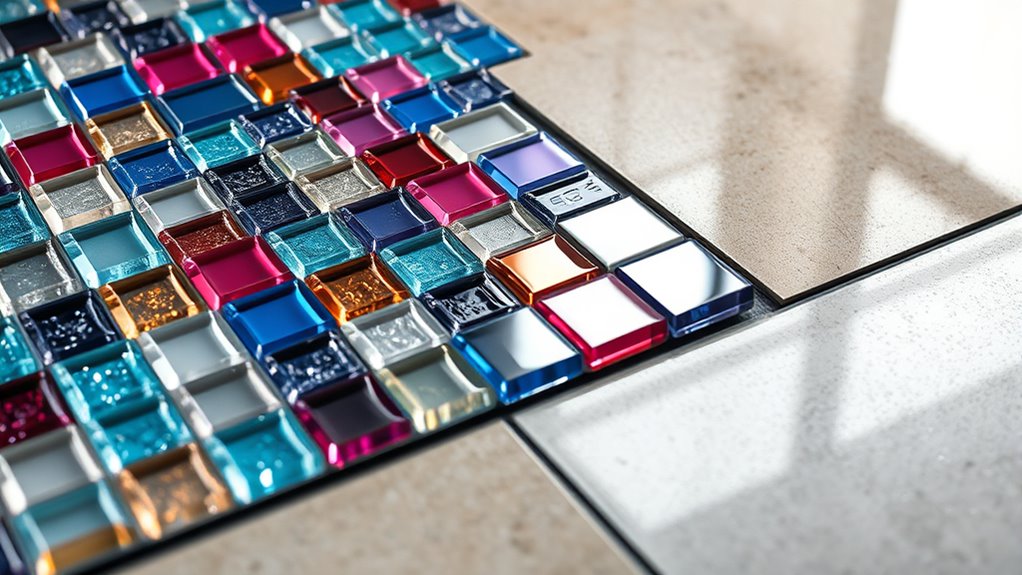
Glass tiles offer striking visual appeal and can elevate your space’s style, but they may require more maintenance to keep them looking their best. They’re generally durable, yet their slip resistance varies, affecting safety in different areas. Understanding these pros and cons helps you choose the right application for your needs. Additionally, considering imagination’s role in design choices can inspire innovative uses of glass tiles to create unique and personalized spaces.
Visual Appeal & Style
When considering the visual appeal and style of glass tiles, you’ll find they bring a sleek, modern look that can instantly elevate any space. Their reflective surface adds brightness and depth, creating an open feel. Glass tiles work especially well in kitchens and bathrooms, making small areas appear larger. Here are three reasons why you might choose glass tiles:
- They create a stunning, contemporary aesthetic that can serve as a focal point.
- Their translucency allows light to bounce around, enhancing natural and artificial lighting.
- They come in a wide variety of colors, textures, and finishes to match your unique style.
- The visual impact of glass tiles can significantly enhance the overall ambiance of your interior design.
While their appearance is striking, remember that glass tiles may require more careful installation and maintenance to keep their shine.
Durability and Maintenance
While the sleek appearance of glass tiles makes them an attractive choice, their durability and maintenance requirements are equally important to take into account. Glass tiles are prone to chipping and cracking if subjected to heavy impact or harsh conditions, so they’re best suited for walls rather than flooring. They require regular cleaning with non-abrasive products to maintain their shine and prevent soap scum or mineral deposits from building up. Grout lines can stain or discolor over time, demanding periodic sealing and careful cleaning. While resistant to moisture and stains when properly maintained, glass tiles may show fingerprints and smudges more easily, requiring frequent wiping. Additionally, understanding the heat pump’s features can help in selecting the most suitable system for your climate and needs. Overall, they offer a beautiful aesthetic but need attentive upkeep to stay looking their best.
Safety and Slip Resistance
Although glass tiles add a stunning visual appeal, their safety and slip resistance depend heavily on their surface texture and installation. Smooth glass tiles can be slippery, especially when wet, making them less ideal for high-traffic or moisture-prone areas. To guarantee safety, consider these factors:
- Choose textured or matte finishes to improve grip and reduce slipping.
- Avoid polished glass in areas prone to water exposure, like bathrooms or outdoor patios.
- Proper installation with non-slip adhesives and sealants enhances overall safety.
- Incorporating GMC tuning techniques can optimize the overall performance and safety features of your vehicle, ensuring better handling in slippery conditions.
Ideal Applications for Porcelain Tiles
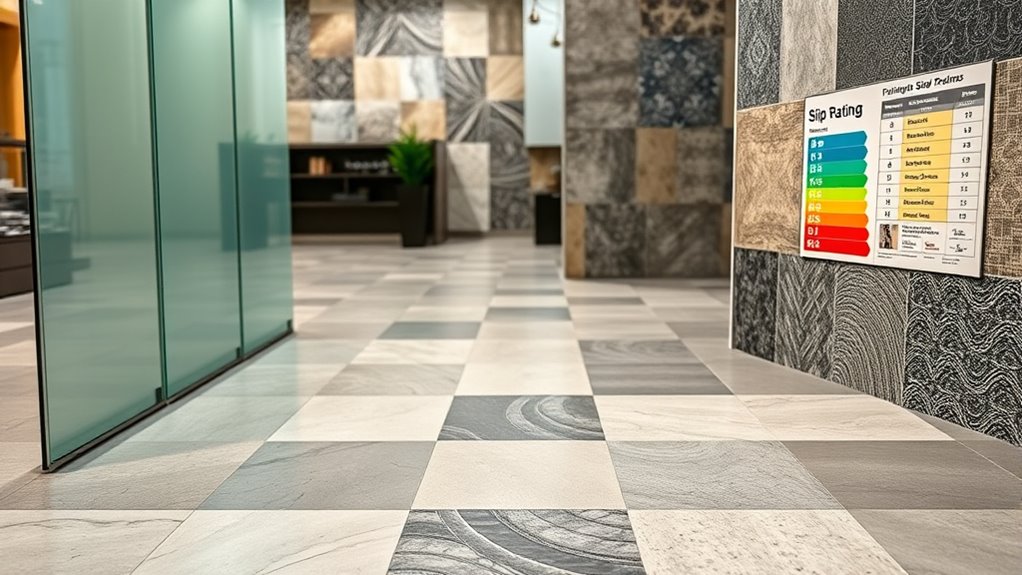
Are porcelain tiles the right choice for your space? If you need durable, low-maintenance flooring, porcelain tiles are an excellent option. They work well in high-traffic areas like kitchens, hallways, and entryways thanks to their hardness and resistance to scratches. Porcelain is also ideal for bathrooms and outdoor spaces because it’s highly water-resistant and can withstand temperature changes without cracking. If you’re looking for a sleek, modern look with a variety of styles and colors, porcelain tiles can meet those aesthetic demands. They’re suitable for both residential and commercial applications, especially where durability and longevity are priorities. Keep in mind that their dense composition makes them a good fit for areas exposed to moisture, heavy use, or outdoor conditions.
Tips for Installing and Caring for Your Tiles

Proper installation is crucial to guarantee your porcelain tiles look great and last for years. First, ensure the surface is clean, level, and free of debris before laying tiles. Use the right adhesive for your tile type and follow manufacturer instructions carefully. Second, leave consistent grout lines and avoid rushing; proper spacing prevents cracking and uneven surfaces. Third, seal your tiles and grout if recommended, to protect against stains and moisture. Maintain your tiles by regularly sweeping or vacuuming to remove dirt. Clean spills promptly with a gentle, non-abrasive cleaner. Avoid harsh chemicals that can damage the surface. By following these tips, you’ll preserve the beauty and durability of your tiles, ensuring they stay stunning and functional for years to come.
Making an Informed Choice: Factors to Consider
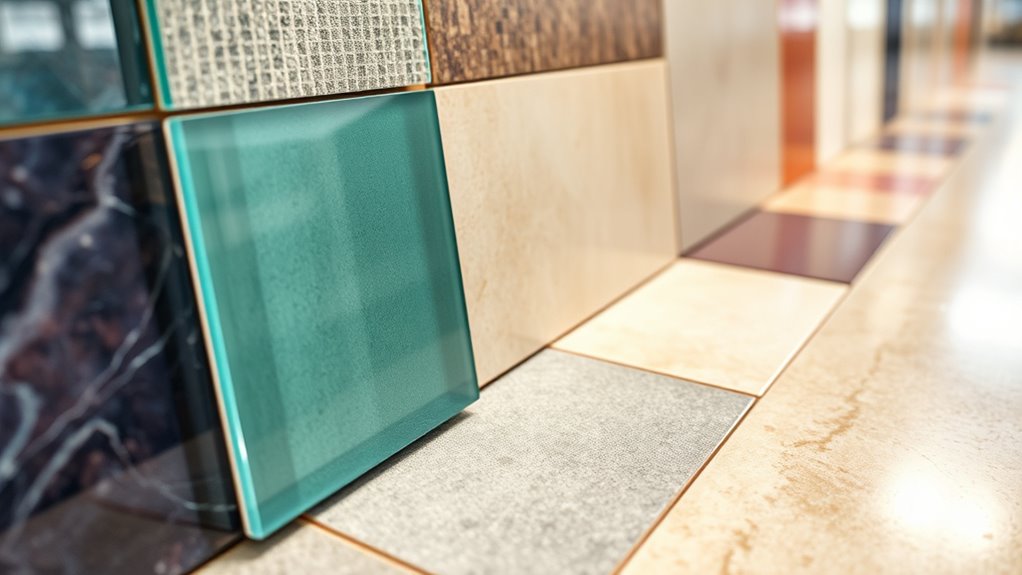
Choosing the right tiles requires careful consideration of several key factors to guarantee they meet your needs and preferences. First, assess the tile’s durability and slip resistance, especially if you’re installing in high-traffic or wet areas. Consider the tile material—glass, porcelain, or ceramic—based on its suitability for your space and maintenance needs. Think about the aesthetic you want; color, pattern, and finish all influence the overall look. Also, evaluate the tile’s rating for water absorption and slip resistance to assure safety and longevity. Your environment plays a role—outdoor spaces require weather-resistant options, while indoor areas may demand different textures. By carefully weighing these factors, you’ll make an informed choice that balances function, style, and durability.
Frequently Asked Questions
How Do Tile Materials Affect Indoor Air Quality and Environmental Impact?
Your choice of tile materials impacts indoor air quality and the environment. For example, glazed tiles may emit volatile organic compounds (VOCs) if they contain certain chemicals, while natural porcelain or glass tiles generally emit fewer pollutants. Environmentally friendly options like recycled or sustainably sourced tiles reduce ecological footprints. Selecting low-emission, non-toxic tiles helps guarantee healthier indoor air and supports eco-conscious building practices.
Are There Specific Tiles Recommended for Outdoor or Wet Environments?
If you want tiles that can handle the wildest weather and the splashiest showers, go for porcelain! It’s practically indestructible against rain, snow, and moisture, making it perfect for outdoor or wet areas. Plus, its dense, non-porous surface resists slipping and staining like nothing else. Glass tiles are stunning but better suited for indoor accents, while slip ratings help you choose the safest option—so pick wisely to keep your space both beautiful and safe!
What Are the Latest Innovations in Tile Slip Resistance Technology?
You’ll find that the latest slip resistance innovations include textured surfaces, nano-coatings, and advanced rubberized treads, all designed to enhance safety without sacrificing style. These technologies actively improve grip even when wet or oily, making tiles safer for outdoor and high-traffic areas. By choosing tiles with these modern features, you guarantee better safety and durability, providing peace of mind in any environment.
How Can I Match Tile Styles With Existing Home Decor?
Think of your home like a vintage vinyl collection—you want everything to harmonize. To match tile styles with your decor, consider color palettes, textures, and patterns that complement your existing furnishings. For a modern look, choose sleek, minimalist tiles, while rustic spaces benefit from textured, earthy options. Visualize the overall vibe and pick tiles that enhance, not clash, with your current style for a cohesive, stylish space.
What Are Cost-Effective Options for High-Traffic Commercial Spaces?
For high-traffic commercial spaces, you should choose durable, cost-effective tiles like porcelain or high-quality ceramic. These options resist wear and stains while staying budget-friendly. Opt for simpler designs or neutral colors to save money and ensure longevity. Additionally, consider large-format tiles to reduce grout lines, making maintenance easier and the space look cleaner. Regular cleaning and sealing will also prolong your tiles’ lifespan, keeping costs down long-term.
Conclusion
Ultimately, making a mindful, measured decision means matching your material’s merits with your needs. Whether you prefer the gleaming glamour of glass or the practical perfection of porcelain, understanding their unique qualities helps you choose confidently. Consider your space, style, and safety, then select the tile that truly transforms your terrain. By balancing beauty and brawn, you’ll craft a charming, durable design that delights day after day.