To match waterfall soundscapes to your setting, first identify the environment’s tone and purpose. For calming spaces, choose gentle, steady waterfalls with soft, flowing sounds that promote relaxation. For energizing atmospheres, select more dynamic cascades or splashy sounds. Consider environmental factors like background noise and space acoustics to optimize sound placement and layering. Keep experimenting with sound types and volumes to create a seamless, immersive experience. If you want to explore more ways to enhance your setting, keep going.
Key Takeaways
- Analyze the environment’s natural sounds and noise levels to select waterfall sounds that complement and blend seamlessly.
- Match the waterfall’s volume, pitch, and dynamics to the setting’s mood—calm for relaxation, energetic for stimulation.
- Use spatial audio and layering techniques to create a realistic, immersive experience aligned with the scene’s spatial characteristics.
- Combine waterfall sounds with other natural elements like birds or wind to evoke specific environments or emotional responses.
- Adjust timing, frequency, and panning to synchronize water sounds with visual cues, enhancing overall realism and mood consistency.
Understanding the Different Types of Waterfall Sounds
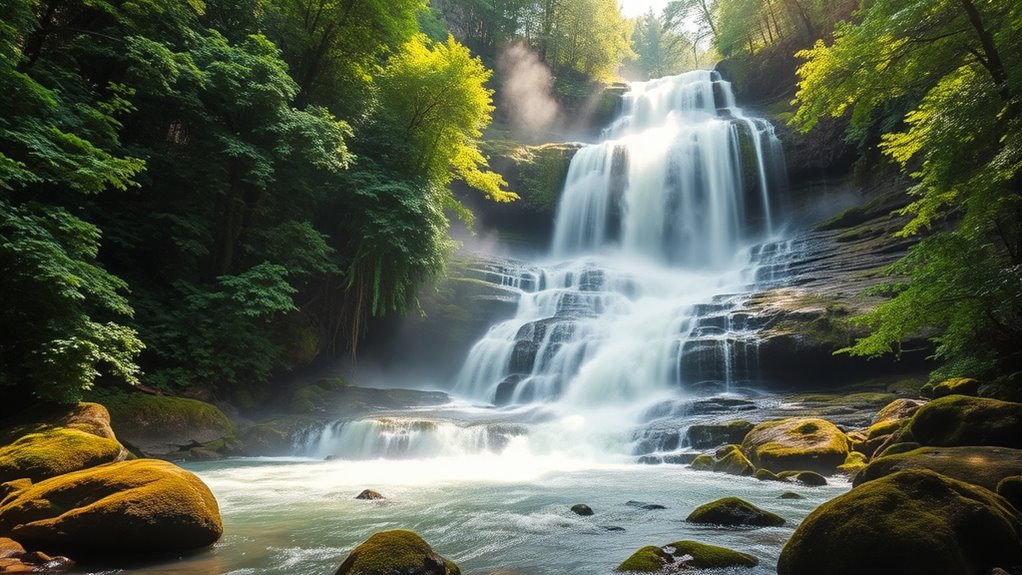
Waterfall sounds vary widely, and understanding their different types can enhance your appreciation of nature’s symphony. The roar of a large waterfall produces a powerful, thunderous sound that fills the air and commands attention. Conversely, smaller cascades create a gentle, soothing murmur that’s perfect for relaxation. Some waterfalls emit a constant, steady rush, while others produce irregular, splashy noises with splattering droplets. The sound’s character depends on factors like waterfall height, volume, and the surrounding environment. You might notice a deep, bass-like hum from a broad, wide-flowing waterfall or a higher-pitched, tinkling sound from a narrow, rapid stream. Recognizing these variations helps you identify specific waterfalls and choose the ideal soundscape for your mood or setting. Additionally, factors such as soundscape selection can influence how effectively a waterfall sound complements your environment or relaxation goals.
Assessing Your Environment and Its Acoustic Characteristics

To effectively choose or create a suitable water soundscape, you first need to evaluate your environment and its acoustic features. Begin by identifying the primary sounds present, such as traffic, conversations, or natural noises. Next, assess how much background noise there is and whether it’s steady or fluctuates. Finally, consider the space’s size and shape, as these influence sound reflection and absorption. Incorporating data-driven strategies can help analyze and optimize the acoustic environment for the most soothing water soundscape.
Selecting the Right Waterfall Sound for Relaxation and Meditation

When choosing a waterfall sound for relaxation, pay attention to natural variations in the noise. These subtle differences can help deepen your meditation focus and make the experience more authentic. Selecting the right sound involves finding one that feels calming and enhances your sense of tranquility. Incorporating auto functionality features that adjust the sound dynamically can further improve your relaxation experience.
Natural Sound Variations
Natural waterfall sounds vary widely in tone, pitch, and rhythm, offering a range of options to match your relaxation needs. You can choose sounds that are gentle and steady, perfect for calming your mind. Alternatively, more dynamic and energetic waterfalls can invigorate your senses during meditation. The key is to find a sound that aligns with your mood and environment. Consider these variations:
- Soft, trickling waterfalls for peaceful, understated relaxation.
- Loud, cascading waterfalls to energize and stimulate focus.
- Irregular, variable flows that mimic natural unpredictability, fostering a sense of organic calm.
Enhancing Meditation Focus
Choosing the right waterfall sound can considerably enhance your meditation focus by aligning the auditory environment with your intended state of relaxation or alertness. If you seek deep relaxation, opt for gentle, steady waterfalls with soft, consistent flows that soothe your mind and minimize distractions. For more alert meditation, select waterfalls with a slightly more energetic or varied sound, which can help maintain your attention without becoming overwhelming. Consider the tone and pitch—lower, mellow sounds promote calm, while higher, lively cascades can invigorate your focus. Personal preference plays a key role, so experiment with different water sounds until you find one that resonates with your meditation style. The goal is to create a soundscape that anchors your attention, deepening your practice and enhancing mental clarity. Additionally, soundscape design can influence your emotional response, helping you tailor your meditation environment even further.
Enhancing Workspaces With Calming Waterfall Backgrounds

Have you ever noticed how the gentle sound of a waterfall can instantly create a sense of calm in a busy workspace? Incorporating waterfall soundscapes can boost focus and reduce stress. To maximize its benefits:
- Place speakers near your desk for consistent background sound.
- Choose recordings with a steady, gentle flow to avoid distractions.
- Adjust volume to ensure the sound remains soothing, not overpowering.
- Selecting the right sound technology, such as high refresh rates, can enhance audio clarity and immersion.
Waterfalls evoke a natural sense of tranquility, helping you stay centered amid deadlines. Keep the sound subtle enough to mask distracting noises while maintaining a peaceful environment. This simple addition can improve your concentration and overall mood during work hours. Using calming water sounds transforms your workspace into a more serene, productive zone.
Creating Atmosphere for Social Gatherings and Events

Creating the right atmosphere for social gatherings and events can turn an ordinary space into a memorable experience. Choosing the right waterfall sounds enhances the mood, whether you want a lively, energetic vibe or a calm, relaxed setting. For lively parties, opt for waterfalls with gentle, bubbling sounds that promote conversation and energy. If you aim for an intimate or sophisticated atmosphere, select softer, flowing water sounds that evoke tranquility. Position speakers strategically to distribute the sound evenly, avoiding overwhelming certain areas. Consider the natural acoustics of your space and adjust volume accordingly. Incorporating water sounds subtly complements music and conversation without overpowering them. Understanding the importance of soundscapes can help you craft a more immersive environment. When used thoughtfully, waterfall audio creates an inviting environment that encourages connection and makes your gathering stand out.
Designing Virtual Environments With Immersive Waterfall Audio

When designing virtual environments with waterfall audio, choosing natural sounds that feel authentic is vital. You’ll want to apply spatial audio techniques to create a sense of depth and immersion. Additionally, incorporating setting-appropriate variations guarantees the soundscape stays engaging and realistic. Using carefully selected soundscapes can enhance the overall authenticity and emotional impact of the environment.
Natural Sound Selection
How can selecting the right natural sounds transform a virtual environment into an immersive experience? By choosing appropriate water sounds, you set the tone and mood, making the scene feel authentic. To do this effectively:
- Match the sound’s intensity to the environment’s scale—quiet streams for intimate settings, roaring waterfalls for grandeur.
- Consider seasonal variations and time of day to add realism—gentle flows during dawn, more vigorous sounds in storms.
- Incorporate subtle background noises, like birds or wind, to enrich the scene without overpowering the main water feature.
- Pay attention to sound layering techniques to create depth and realism in your virtual environment.
These choices help anchor users in the environment, creating a seamless, believable experience that enhances immersion and emotional connection.
Spatial Audio Techniques
Have you ever wondered how spatial audio techniques can make a virtual waterfall feel truly immersive? By leveraging 3D sound positioning, you place water sounds precisely within a virtual space, creating a sense of depth and distance. Using binaural recording or head-related transfer functions (HRTFs), you mimic how ears perceive sound from different directions, enhancing realism. Dynamic panning allows water sounds to move naturally as you navigate the environment, making the experience feel alive. Layering multiple audio sources with varying intensities and spatial locations helps construct a rich, three-dimensional landscape. These techniques work together to trick your brain into perceiving the waterfall as part of a real environment, heightening immersion and emotional engagement in your virtual setting. Understanding how resources and tools can aid in creating convincing spatial audio can further improve the fidelity of your virtual landscapes.
Setting-Appropriate Variations
Creating a convincing virtual waterfall depends on tailoring the sound design to suit the environment’s context and purpose. To achieve this, consider these key variations:
- Adjust the volume and intensity to match the scene’s mood, whether tranquil or energetic.
- Incorporate subtle environmental sounds like birds or wind to enhance realism.
- Vary the waterfall’s pitch and flow to reflect different times of day or weather conditions.
- Selecting the appropriate sound technology ensures the waterfall audio integrates seamlessly with other soundscape elements, enhancing immersion.
Combining Waterfall Sounds With Other Nature Elements
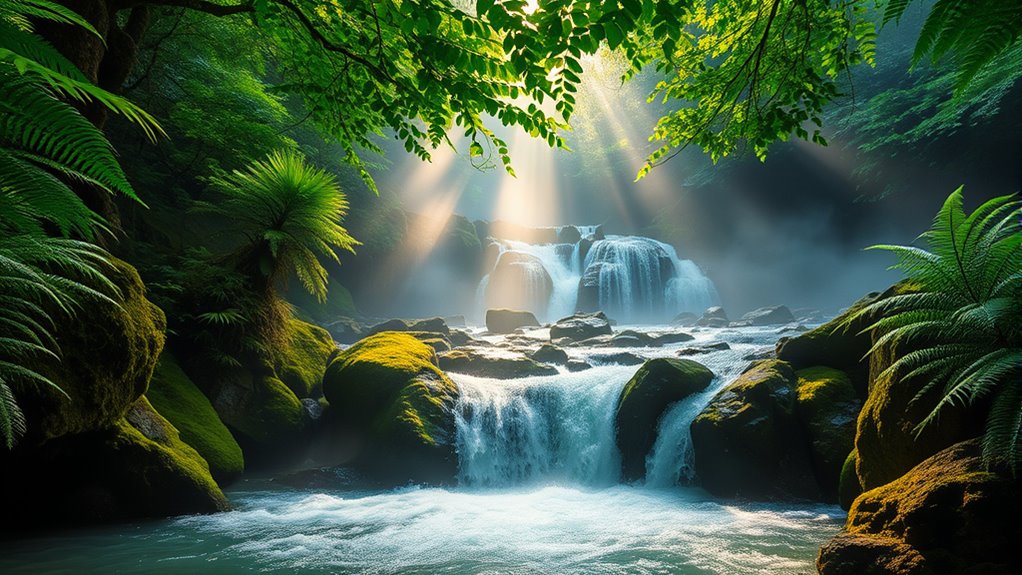
Blending waterfall sounds with other natural elements can considerably enhance the sense of immersion in your soundscape. Adding bird calls, rustling leaves, or distant animal sounds creates a richer, more authentic environment. For example, pairing a gentle waterfall with chirping birds evokes a peaceful forest, while mixing it with wind and distant thunder suggests a mountain ridge after a storm. Layering multiple sounds prevents the scene from feeling monotonous and adds depth. Be mindful of volume levels and timing to ensure each element complements the others without overpowering. You can also adjust the frequency and intensity of individual sounds to match the setting’s mood. By thoughtfully combining these elements, you craft a dynamic, engaging experience that transports you to a more natural and enthralling space.
Technical Tips for Synchronizing Waterfall Audio With Visuals

To achieve seamless synchronization between waterfall audio and visuals, you need to pay close attention to timing and rhythm. First, match the audio’s tempo to the visual flow by adjusting the playback speed or selecting sounds with a similar pace. Second, use visual cues, like the movement of water or falling drops, to align with the beats or key moments in the sound. Third, employ editing software that allows you to fine-tune the audio and video tracks, guaranteeing they stay in sync throughout. Keep in mind that slight adjustments can make a big difference; don’t hesitate to experiment with timing until the water’s flow and sound feel naturally unified. This careful approach ensures your soundscape enhances the visual experience seamlessly.
Tips for Customizing and Layering Waterfall Soundscapes

Customizing and layering waterfall soundscapes allows you to craft a rich, immersive auditory experience that perfectly suits your environment or project. Start by selecting different water sounds, like gentle streams or cascading waterfalls, to create depth. Adjust volume levels so no single element overpowers the others, maintaining a natural balance. Use equalization to emphasize bass or treble, mimicking the specific setting you want to evoke. Layer sounds thoughtfully—adding ambient elements like birds, wind, or forest sounds can enhance realism. Experiment with panning to create a sense of space and movement. Regularly listen and tweak your mix, ensuring it feels seamless and authentic. With careful customization, your soundscape will evoke the desired mood and transport listeners to your perfect setting.
Frequently Asked Questions
How Can I Effectively Measure Acoustic Properties of My Environment?
You can effectively measure your environment’s acoustic properties by using a sound level meter or a smartphone app designed for acoustic analysis. Place the device at different points to record sound levels and frequency responses. Take multiple readings to guarantee accuracy, and analyze the data for reverberation, ambient noise, and sound decay. This approach helps you understand the space’s acoustics and tailor your soundscape accordingly.
What Equipment Is Best for High-Quality Waterfall Sound Recordings?
You need a top-tier portable recorder like the Zoom H6 or Tascam DR-40X, paired with a high-quality shotgun or stereo microphone such as the Rode NTG series or Sennheiser MKH series. These gear pieces capture every thunderous roar and gentle trickle of a waterfall with stunning clarity. Use windshields to prevent noise, and position your microphones carefully to avoid unwanted sounds, ensuring your recordings are breathtakingly crisp and immersive.
How Do I Determine the Optimal Volume Level for Different Settings?
You should adjust the volume so it feels natural and immersive without overwhelming the space. Start by listening at a low level, then gradually increase until it blends seamlessly with the environment. Pay attention to clarity and balance—if the sound drowns out other elements or feels too faint, tweak it accordingly. Trust your ears, and remember, the ideal volume enhances relaxation without causing distraction or discomfort.
Can Water Soundscapes Be Customized for Specific Emotional Responses?
Yes, water soundscapes can be customized for specific emotional responses. You can tweak tempo, intensity, and tone to evoke calmness, focus, or relaxation. Experiment with softer babbling brooks for serenity or lively waterfalls for energy. Adjust volume and background sounds to match your mood. By blending these elements thoughtfully, you craft a soundscape that speaks directly to your emotional needs, creating a personalized peaceful or invigorating environment.
What Are Common Mistakes When Integrating Waterfall Sounds Into Spaces?
You might overuse waterfall sounds, making them too overpowering or distracting. Avoid poor quality recordings, which can sound unnatural or harsh. Don’t neglect the volume, keeping it balanced so it blends seamlessly into the space. Also, don’t ignore the environment; loud waterfalls in small rooms can cause discomfort. Ultimately, failing to match the sound with the setting’s mood can break immersion and reduce the calming effect.
Conclusion
Just as Botticelli painted serenity into his masterpieces, you can craft tranquil environments with the perfect waterfall soundscape. By understanding your space and selecting the right auditory elements, you create a sanctuary that calms the mind and elevates your experience. Remember, the right sound is your modern-day muse—transforming ordinary moments into timeless memories, much like nature’s own symphony, waiting to be tuned to your personal harmony.