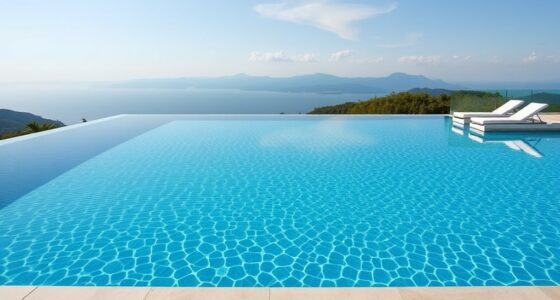
When selecting skimmers and drains for your overflow pool, focus on ensuring compatibility with your pool’s size and flow rate. Choose high-quality, durable materials that meet safety standards for long-term performance. Consider the type of skimmer that best suits your design—automatic or surface-level models—and ensure drains are designed for efficient circulation without creating hazards. Proper installation and regular maintenance are vital, and exploring these topics further will help you make the best choices for your pool’s safety and functionality.
Understanding the Role of Skimmers and Drains in Overflow Pools

Skimmers and drains are essential components that work together to maintain clean and safe overflow pools. Skimmers are positioned at the water surface, capturing floating debris like leaves, bugs, and oils before they sink. They help keep the water clear and reduce strain on the filtration system. Drains, on the other hand, are located at the bottom of the pool, removing settled debris and circulating water through the filtration system for thorough cleaning. Together, they ensure continuous water movement, preventing stagnation and maintaining water quality. Properly functioning skimmers and drains diminish maintenance needs and enhance safety by preventing water buildup and potential hazards. Understanding how these components interact helps you design an efficient system that keeps your overflow pool pristine and safe for swimmers. Additionally, the sound vibrations produced by certain pool components can influence water movement and overall health in advanced systems.
Types of Skimmers Suitable for Overflow Pool Designs
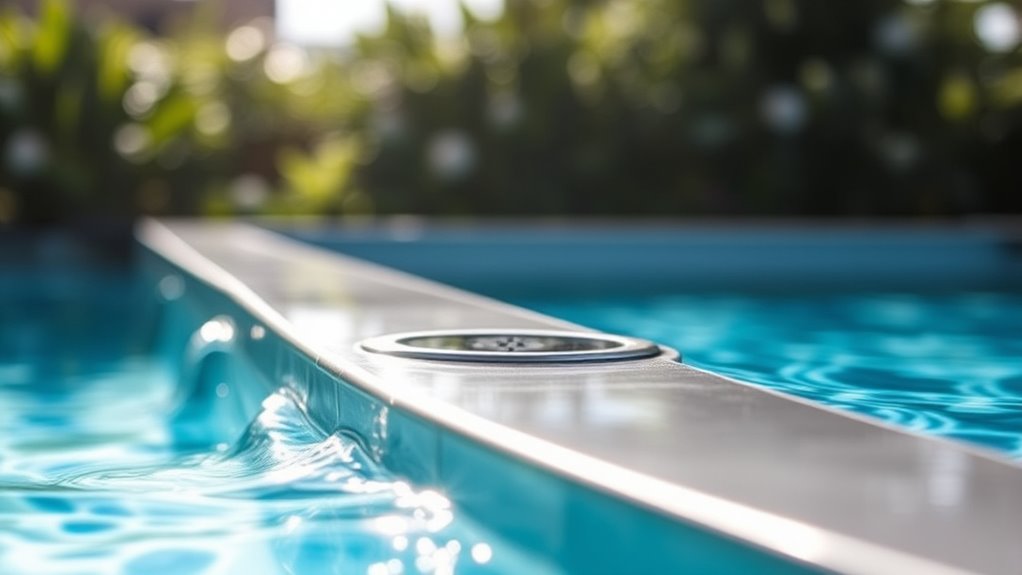
Choosing the right type of skimmer is key to ensuring your overflow pool functions smoothly and stays clean. Surface skimmers are common; they sit at the water’s edge and remove debris before it sinks. These are ideal for pools with wide, flat edges and allow easy access for maintenance. Weir skimmers use a floating gate that adjusts with water levels, maintaining consistent skimming without constant adjustments. For pools with variable water levels or specific design needs, automatic skimmers are effective—they operate continuously and adapt to changing conditions. In some cases, inline skimmers are built directly into the pool’s structure, offering a sleek appearance and efficient debris removal. Your choice depends on pool size, shape, and maintenance preferences, so select a skimmer that fits your pool’s unique design. Ensuring proper contrast ratio in your pool’s lighting and surroundings can also improve visibility and safety during maintenance and use.
Key Features to Consider When Choosing Pool Drains

When selecting pool drains, safety standards compliance is vital to protect swimmers and meet regulations. You should also consider flow rate optimization to guarantee proper water circulation without overloading the system. Paying attention to these key features helps you choose drains that are both safe and efficient. Additionally, incorporating security measures, such as surveillance or alarms, can further enhance safety around your pool area.
Safety Standards Compliance
Ensuring your pool meets safety standards is essential for protecting swimmers and complying with regulations. You need to select drains that adhere to safety codes like ASME/ANSI and NSF standards. Look for models with anti-entrapment features, such as safety covers or grates that prevent hair and body entrapment. Verifying certifications guarantees the drain’s compliance and safety. Additionally, considering the horsepower of electric dirt bikes can offer insights into the power and performance of different pool pump motors.
Flow Rate Optimization
Ever wondered how to maximize your pool’s circulation and safety? Flow rate optimization is vital when selecting pool drains. You want a drain system that maintains proper water movement, preventing stagnant spots and ensuring effective filtration. To achieve this, choose drains with adjustable flow capacities that match your pool’s size and volume. Too high a flow can cause turbulence, while too low can lead to poor circulation. Look for drains designed to distribute flow evenly, minimizing dead zones where debris can accumulate. Proper flow rate also reduces energy consumption and prolongs equipment lifespan. Selecting drains with the right flow specifications can help you comply with Louisiana Alimony Laws, ensuring your pool setup aligns with safety and legal standards—making your overflow pool both enjoyable and safe for everyone.
Compatibility and Material Selection for Longevity
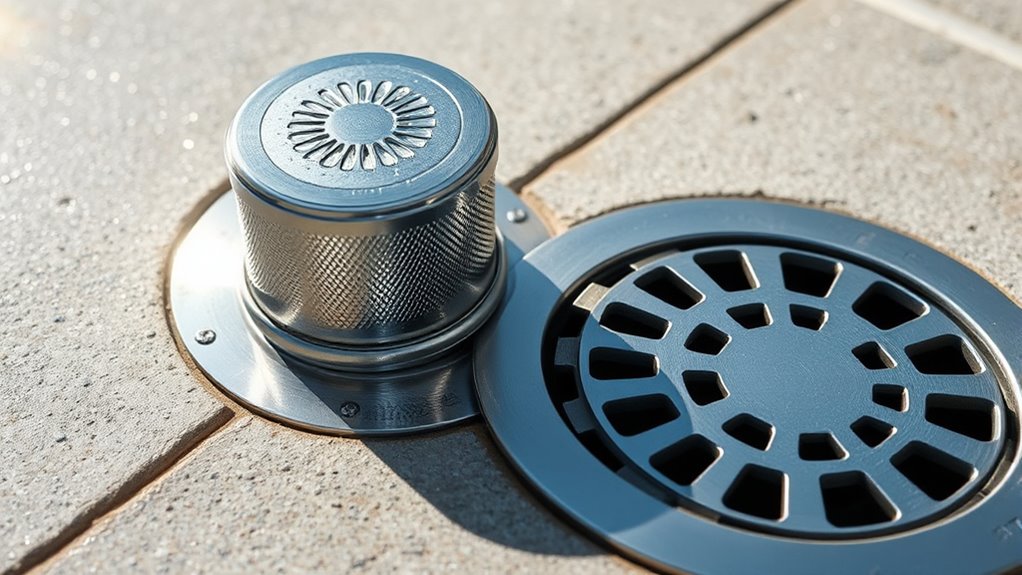
Choosing the right materials is essential for ensuring your skimmers and drains last. You need to contemplate durability factors like corrosion resistance and how well the materials match your pool’s features. Making informed choices now can save you time and money on maintenance later. Additionally, selecting materials that promote long-term resilience helps sustain the safety and functionality of your pool system over time.
Material Durability Factors
Selecting materials that can withstand exposure to water, chemicals, and environmental elements is essential for the longevity of overflow pool skimmers and drains. You need durable options that resist degradation over time. Consider materials like high-density plastics, fiberglass, or stainless steel, which are known for their resilience. These choices help prevent cracking, warping, or corrosion that can compromise performance. When evaluating materials, pay attention to factors such as UV stability, chemical resistance, and impact strength. Incorporating sound design principles into the choice of materials can also enhance the durability and performance of pool components.
Corrosion-Resistant Options
To guarantee your overflow pool skimmers and drains resist corrosion and maintain their integrity over time, it’s essential to select materials inherently resistant to chemical and environmental attack. Options like high-quality plastics, fiberglass, and stainless steel are excellent choices for longevity. These materials withstand chlorine, pH fluctuations, and moisture exposure better than traditional metals. When choosing, consider compatibility with pool chemicals and environmental conditions. Here’s a quick comparison:
| Material | Resistance Level | Cost |
|---|---|---|
| PVC Plastic | High | Low |
| Fiberglass | Very High | Moderate |
| Stainless Steel | High | Higher |
Selecting the right material ensures your system remains functional and corrosion-free over years of use.
Compatibility With Pool Features
Ensuring your overflow pool skimmers and drains are compatible with existing pool features is essential for their long-term performance. Compatibility prevents issues like leaks, mismatched fittings, and structural damage, saving you time and money. Before installation, check the materials used in your pool’s features to ensure they match or are compatible with the skimmer and drain components. Consider these factors:
- Material types (e.g., PVC, stainless steel) to prevent galvanic corrosion
- Fitting sizes and connection types for a secure, leak-proof seal
- Pool finish and design features to ensure seamless integration
- Vetted components to guarantee durability and reliability over time.
Safety Standards and Compliance for Pool Components
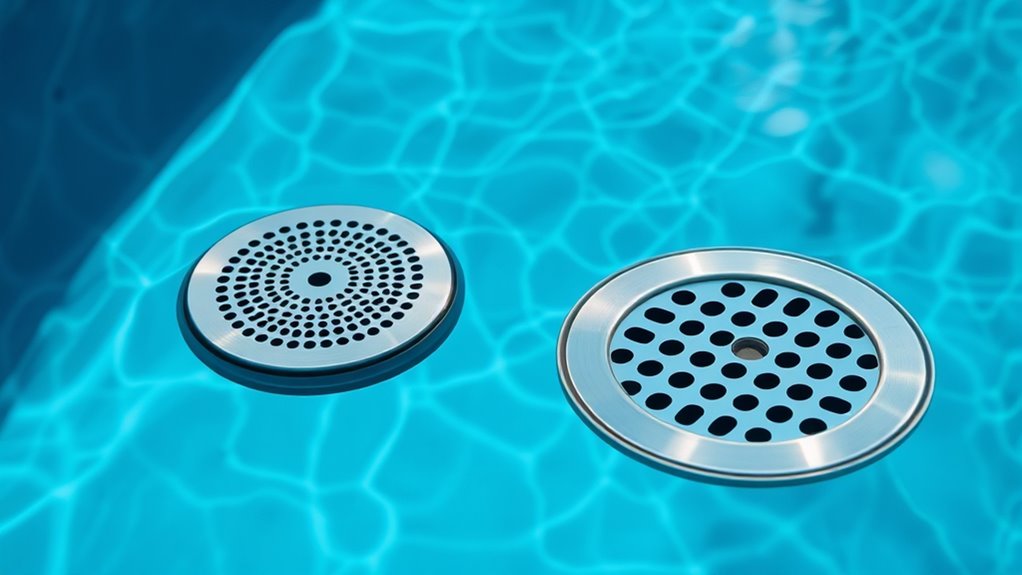
Adhering to safety standards and compliance requirements is essential when choosing pool components like skimmers and drains, as these regulations are designed to protect swimmers and prevent accidents. You must make certain that all parts meet local codes and industry standards, such as ANSI/ASME and NSF certifications. These standards specify safe designs, proper drain covers, and anti-entrapment features to avoid dangerous incidents. Check that your selected components are compliant with the latest safety updates, especially regarding anti-vortex and cover integrity. Failing to adhere to these requirements can lead to legal issues, fines, or safety hazards. Always verify certifications and consult professional guidelines to ensure your pool’s components are safe, reliable, and compliant with applicable safety standards. Additionally, understanding home security systems can help you better safeguard your property and pool area from unauthorized access or vandalism.
Water Flow Dynamics and Pump Compatibility
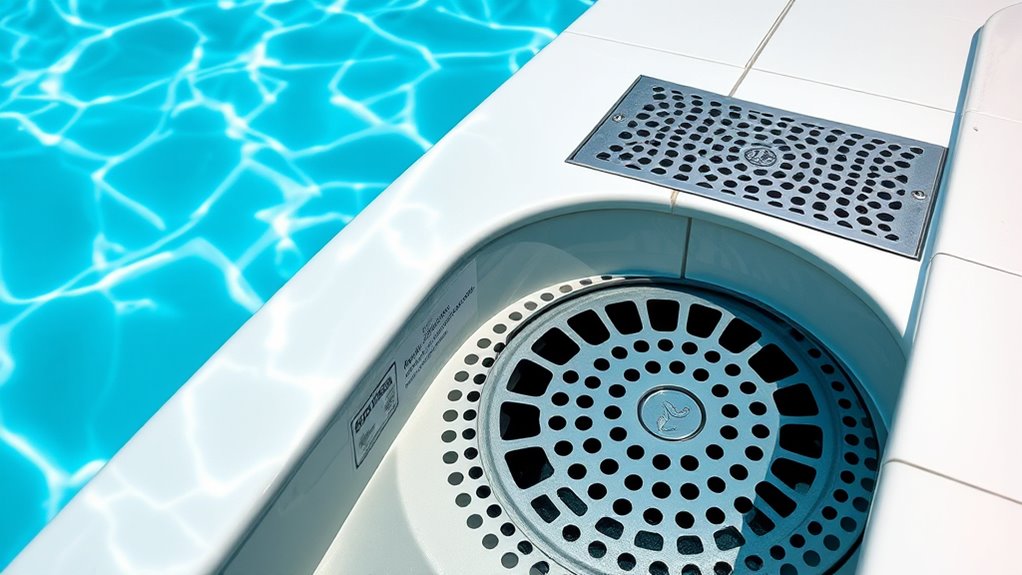
Understanding water flow dynamics is essential when selecting skimmers and drains, as improper flow can lead to reduced filtration efficiency or safety hazards. You need to guarantee the pump can handle the pool’s flow rates without causing turbulence or vortex formation. Compatibility between the pump and pool components guarantees ideal circulation and prevents strain on equipment. Consider how flow rates impact skimmer performance, especially with overflow pools where water levels fluctuate. To enhance system performance, keep these factors in mind:
- Match pump capacity to the pool’s total flow requirements
- Avoid excessive flow that causes turbulence or air entrainment
- Ensure the drain and skimmer design facilitates smooth, balanced water movement
- Utilizing appropriate pump technology can optimize flow and improve overall pool safety and efficiency.
Focusing on these aspects helps maintain safety, efficiency, and longevity of your pool system.
Installation Considerations and Best Practices
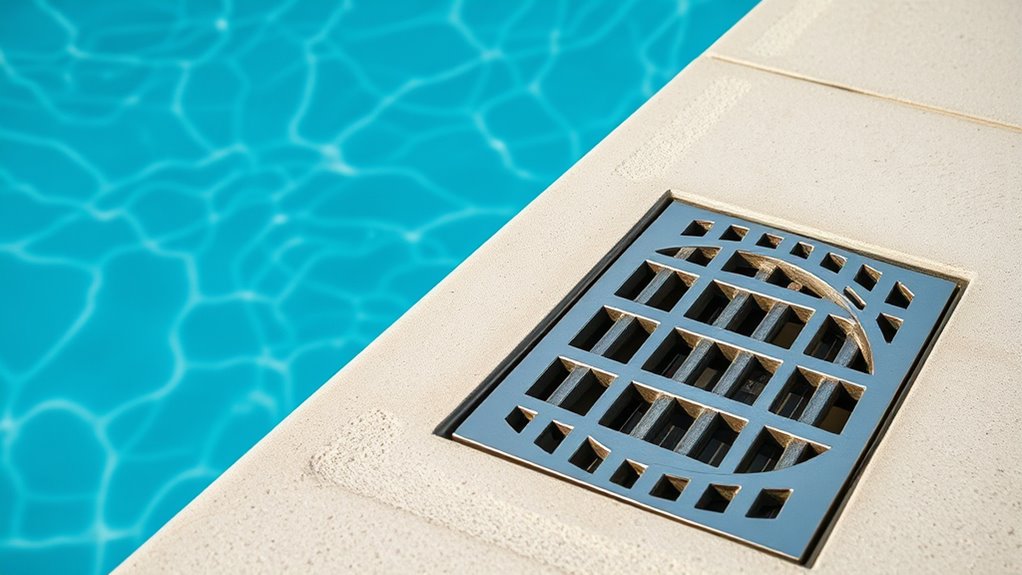
Proper installation of skimmers and drains is critical to achieve ideal water circulation and safety in overflow pools. Confirm that skimmers are positioned at appropriate heights to maximize debris removal without disrupting water levels. Drains should be installed with proper spacing to promote uniform flow and prevent vortex formation. Use high-quality fittings and follow manufacturer instructions for secure connections. Verify that all components are level and properly sealed to avoid leaks.
| Key Consideration | Best Practice |
|---|---|
| Placement | Position skimmers at water level, drains evenly spaced |
| Sealing | Use appropriate sealants to prevent leaks |
| Accessibility | Make components accessible for inspection and future adjustments |
Following these practices helps ensure efficient circulation, safety, and system longevity.
Maintenance and Troubleshooting Tips
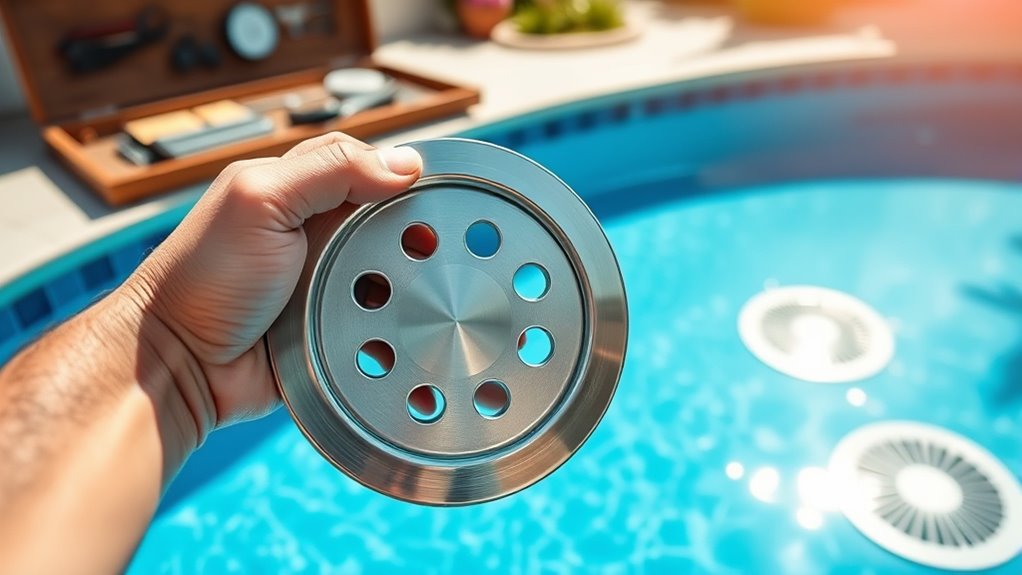
Regular maintenance and prompt troubleshooting are key to keeping your overflow pool functioning smoothly. Regularly inspect skimmers and drains for debris buildup or damage, and clean them accordingly. If you notice reduced water flow or strange noises, check for clogs or blockages. Address issues promptly to prevent bigger problems later. To keep everything in top shape:
- Clean skimmer baskets and drain covers weekly to prevent debris accumulation
- Check for leaks or cracks and repair them immediately
- Test water flow and pressure to identify potential restrictions or malfunctions
Frequently Asked Questions
How Do Skimmer and Drain Placements Affect Water Circulation Efficiency?
Proper placement of skimmers and drains directly impacts water circulation efficiency. You should position skimmers at surface levels where debris accumulates and place drains at the pool’s lowest points for ideal flow. This setup ensures debris is effectively removed, and water circulates evenly, preventing stagnation. By strategically placing these components, you improve filtration, reduce maintenance, and maintain cleaner, healthier water throughout your overflow pool.
What Are the Cost Differences Between Various Skimmer and Drain Options?
The cost differences vary widely depending on the type and quality of skimmers and drains you choose. Basic models are more affordable, typically costing a few hundred dollars, but may lack advanced features. High-end, commercial-grade options can run into thousands, offering better durability and efficiency. You’ll also need to factor in installation costs, which can add to the total expense. Overall, investing in quality can save money on maintenance and repairs long-term.
Can Existing Pool Structures Be Modified to Upgrade Skimmers and Drains?
Yes, you can modify existing pool structures to upgrade skimmers and drains. You’ll need to assess the current setup and determine if the pool walls and plumbing can support new equipment. Often, this involves cutting into the pool deck, reinforcing structures, or rerouting plumbing lines. It’s best to consult a professional to ensure the modifications meet safety standards and are compatible with your pool’s design.
How Do Climate Conditions Influence Skimmer and Drain Material Choices?
Climate conditions directly impact your choice of skimmer and drain materials. In areas with harsh winters, you should opt for materials like stainless steel or high-quality plastics that resist freezing and corrosion. If you face salty or sandy environments, choose corrosion-resistant options to guarantee longevity. Your goal is to select durable, weather-resistant materials that withstand temperature fluctuations and environmental factors, reducing maintenance and extending the lifespan of your pool components.
Are There Eco-Friendly or Energy-Saving Options for Overflow Pool Skimmers and Drains?
Yes, you can opt for eco-friendly skimmers and drains that save energy and help the planet. Look for models made from recycled or sustainable materials, and choose energy-efficient pumps that lower electricity use. Smart designs with automatic shut-offs or variable speeds reduce power consumption. By making these choices, you not only keep your pool pristine but also give Mother Earth a well-deserved break—because saving energy should be as effortless as floating in your pool.
Conclusion
Choosing the right skimmers and drains guarantees your overflow pool operates smoothly and remains a welcoming oasis. When you pay attention to compatibility, safety standards, and proper installation, you gently set the stage for trouble-free maintenance and lasting enjoyment. By selecting components thoughtfully, you nurture a harmony that keeps your pool’s beauty and function flowing effortlessly—like a well-orchestrated symphony, where every detail plays a crucial part in creating a serene, worry-free retreat.