
To photograph an infinity pool from day to night like a pro, focus on capturing the seamless edge and reflections during ideal lighting conditions. Plan your shots around golden hours and calm weather, using a tripod and wide-angle lens for stability and expansive views. Adjust settings as light changes, introducing artificial lights at night to enhance ambiance. Experiment with long exposures for dramatic effects, and explore post-processing to perfect your images—more tips unfold as you continue.
Key Takeaways
- Plan your shoot during golden hours or overcast days for optimal natural light and reflection quality.
- Use a tripod, appropriate aperture, and low ISO to capture sharp images in varying light conditions.
- Adjust camera settings gradually from daylight to night, increasing exposure time and employing long exposures for nighttime shots.
- Incorporate both ambient and artificial lighting to create balanced, visually appealing night scenes.
- Experiment with different angles, perspectives, and timing to capture the seamless infinity edge and stunning reflections.
Understanding the Unique Features of Infinity Pools
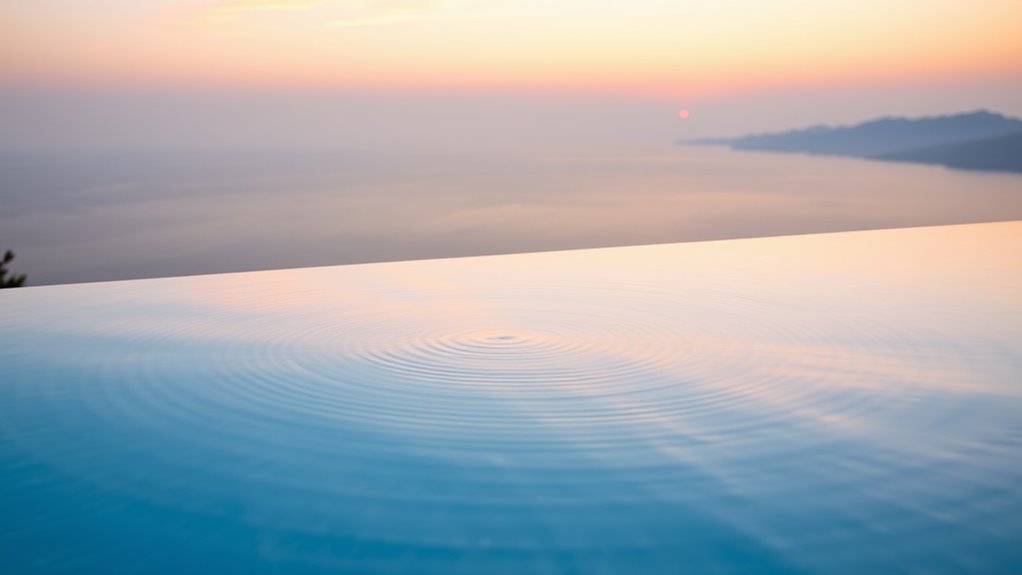
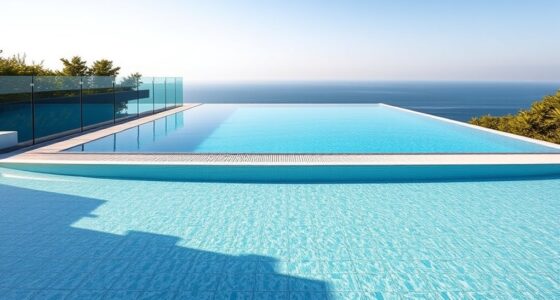
Have you ever wondered what makes infinity pools so visually stunning? It’s all about their unique design feature: the edge that seamlessly blends with the horizon. Unlike traditional pools, infinity pools create the illusion that the water extends infinitely, often overlooking breathtaking views. The key is the vanishing edge, where water flows over the side into a catch basin, making the boundary disappear. This design emphasizes openness, blending nature and architecture. The water’s surface is usually calm to maximize the reflection of the sky and surroundings. Understanding this feature helps you craft compelling compositions. You’ll want to highlight the seamless edge and the way the water appears to merge with the landscape, creating a mesmerizing visual that draws viewers into the scene. Incorporating natural materials and ensuring proper lighting can further enhance the harmonious connection between the pool and its environment.
Planning Your Shoot: Timing and Weather Considerations
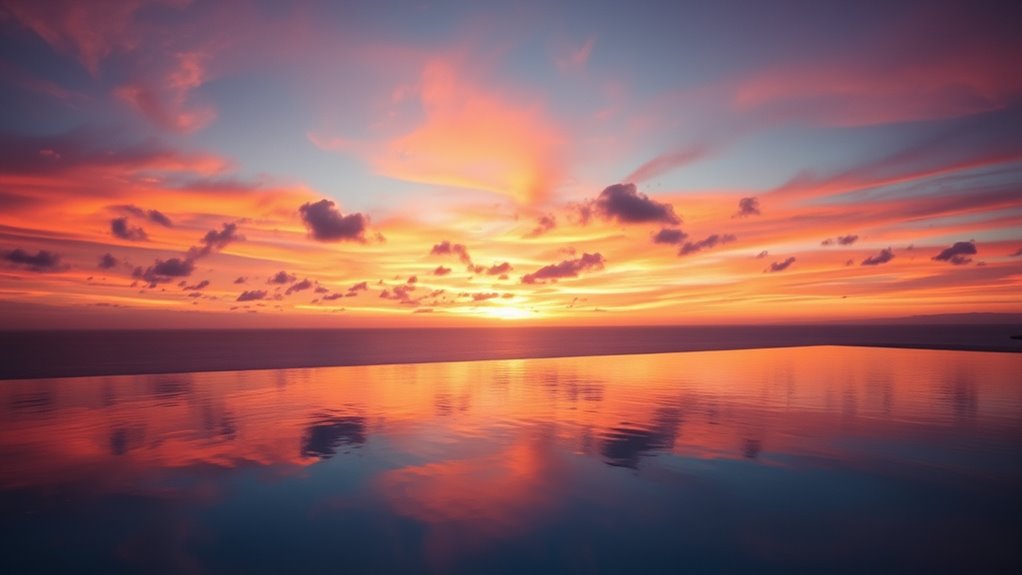
Choosing the right time of day can make a big difference in capturing stunning shots of infinity pools. Weather conditions, like wind or rain, can affect reflections and clarity, so plan accordingly. Keep an eye on cloud cover, as it can soften or enhance your images depending on the mood you want to create. Additionally, consider the quality of natural light, as lighting conditions significantly impact the overall aesthetic of your photographs.
Optimal Shooting Times
The best time to photograph infinity pools is during the golden hours—shortly after sunrise and just before sunset—when natural light is soft and warm. During these times, the sunlight creates a flattering glow, reducing harsh shadows and highlights. This enhances the pool’s reflective surface and the surrounding scenery, adding depth and richness to your images. To maximize this effect, arrive early or stay late, positioning yourself to capture the changing light angles. Overcast days can also be ideal, as diffused light minimizes glare and creates a more even exposure. Avoid midday shoots when the sun is directly overhead, causing stark contrasts and unflattering reflections. Planning your shoot around these favorable times ensures you capture the pool’s beauty in the most appealing light. Additionally, understanding lighting conditions can significantly impact the quality of your photographs, so monitor weather forecasts to choose the optimal day.
Weather Impact Factors
Weather conditions can substantially influence the outcome of your infinity pool photos. Bright, clear skies create vibrant reflections and sharp contrasts, perfect for capturing the pool’s sleek lines. Overcast days soften shadows, offering even lighting that reduces glare and highlights subtle textures. Strong winds can cause ripples on the water, making reflections blurry or distorted—best to wait for calmer conditions. Rain or storms can obscure your shot altogether and damage equipment, so keep an eye on weather forecasts. Fog or mist might add a mysterious atmosphere but can also obscure key features of the scene. Humidity can cause lens fogging, so bring lens cloths. Planning your shoot around predictable weather guarantees you get the best lighting and clarity, elevating your pool photography. Additionally, understanding angel numbers can inspire confidence and openness to unexpected opportunities during your shoot.
Planning for Clouds
Cloud cover can dramatically affect the mood and lighting of your infinity pool photos, so planning your shoot around cloudy days guarantees better results. Overcast skies soften shadows and diffuse sunlight, creating even lighting that reduces harsh reflections and glare. This diffused light enhances the pool’s tranquil appearance and highlights surrounding details without overexposure. Check weather forecasts for days with partial or full cloud cover, and consider early mornings or late afternoons when clouds are more prevalent. If you want dramatic skies, wait for stormy or textured clouds that add mood and depth. Keep in mind, however, that too many clouds can darken the scene, so balance your shoot during suitable cloud cover for your desired atmosphere. Planning ahead ensures you capture the perfect shot under ideal lighting conditions.
Essential Equipment for Infinity Pool Photography
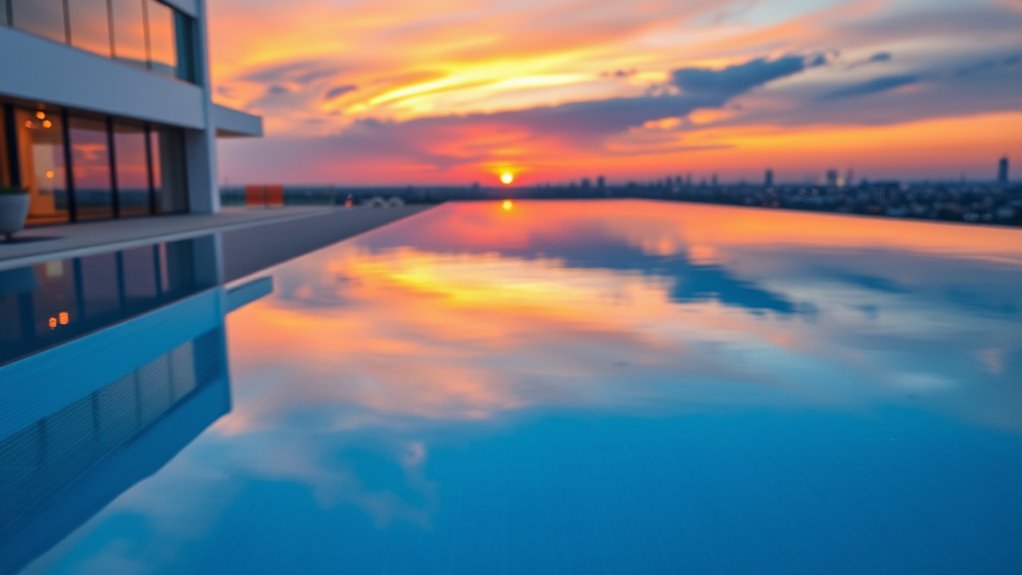
To capture stunning images of infinity pools, you need the right equipment that can handle the unique demands of this setting. A sturdy DSLR or mirrorless camera with manual controls is essential for adjusting exposure and focus precisely. A wide-angle lens (16-35mm or similar) helps capture the expansive edge and the surrounding scenery. A tripod ensures stability, especially in low light or long exposures, preventing camera shake. Consider a polarizing filter to reduce glare and reflections on the water’s surface, enhancing color and contrast. Additionally, a remote shutter release minimizes vibrations during shots. Waterproof or weather-sealed gear is advantageous if you’re shooting near water or in unpredictable conditions. Understanding the contrast ratio of your projector can help you better evaluate image quality and achieve more vibrant visual results. With the right equipment, you’ll be prepared to capture the pool’s beauty at any time of day.
Mastering Composition to Highlight the Pool’s Edge
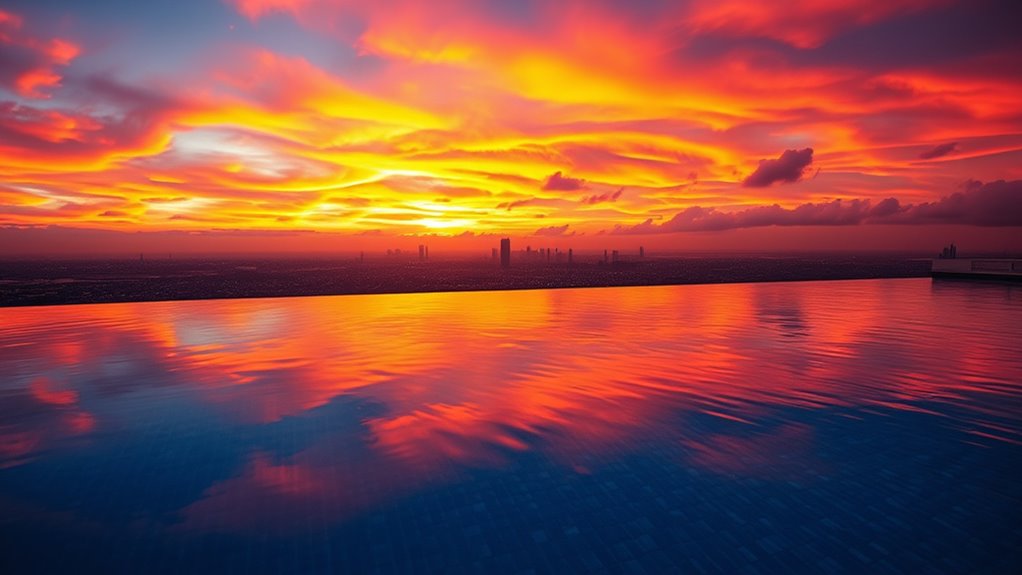
Mastering composition is key to emphasizing the pool’s edge and creating a striking image. To do this, consider your vantage point carefully—shoot from a low angle to make the edge appear more dramatic and prominent. Use leading lines, such as the pool’s edge or surrounding architecture, to draw viewers’ eyes directly to the water’s boundary. Frame your shot so the infinity edge aligns with the horizon, creating a seamless progression between water and sky. Incorporate symmetry to emphasize balance and harmony, or use asymmetry for a more dynamic feel. Pay attention to foreground elements that can frame or guide the viewer’s gaze toward the pool’s edge. Understanding composition techniques is essential for crafting compelling images that showcase the infinity effect effectively. Thoughtful composition ensures the infinity effect takes center stage, making your photograph compelling and immersive.
Playing With Natural Light During the Day

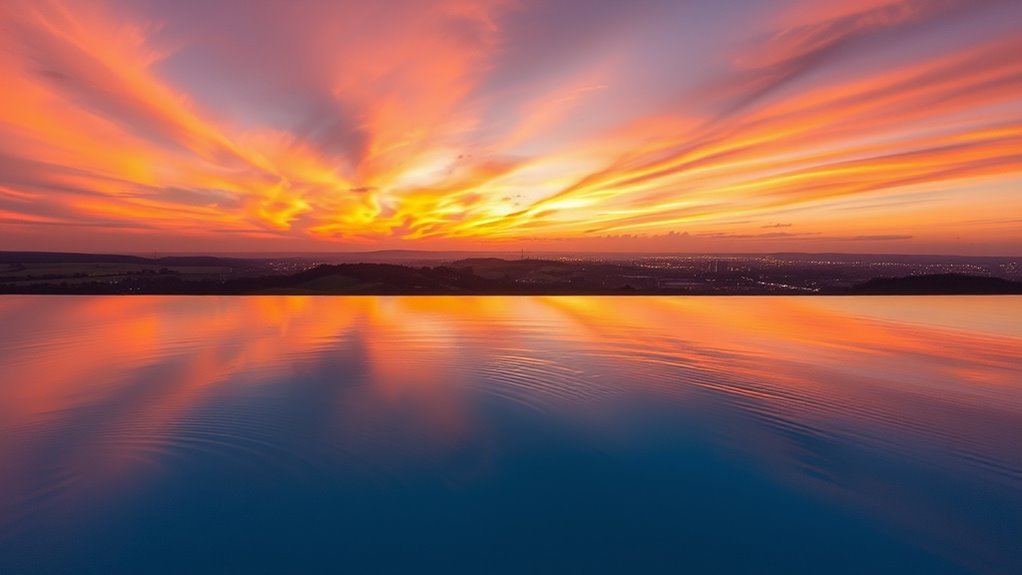
Natural daylight offers dynamic opportunities to enhance your infinity pool images, as the changing angles and intensity throughout the day can dramatically alter the scene. In the morning, soft, golden light creates a gentle, inviting atmosphere, perfect for capturing calm water and subtle reflections. As midday approaches, the light becomes harsher and more direct, emphasizing sharp edges and creating strong contrasts. To avoid overexposure, use a smaller aperture or adjust your ISO accordingly. In the late afternoon, the warm, angled sunlight adds depth and richness, highlighting textures and enhancing colors. Experiment with different times of day to see how the light transforms the scene, and don’t be afraid to move around to find the most flattering angles. Playing with natural light allows you to craft a variety of moods that showcase your pool’s beauty. Additionally, understanding seasonal variations can help you anticipate how the changing weather and sunlight will influence your shots.
Techniques for Capturing Reflections and Water Details
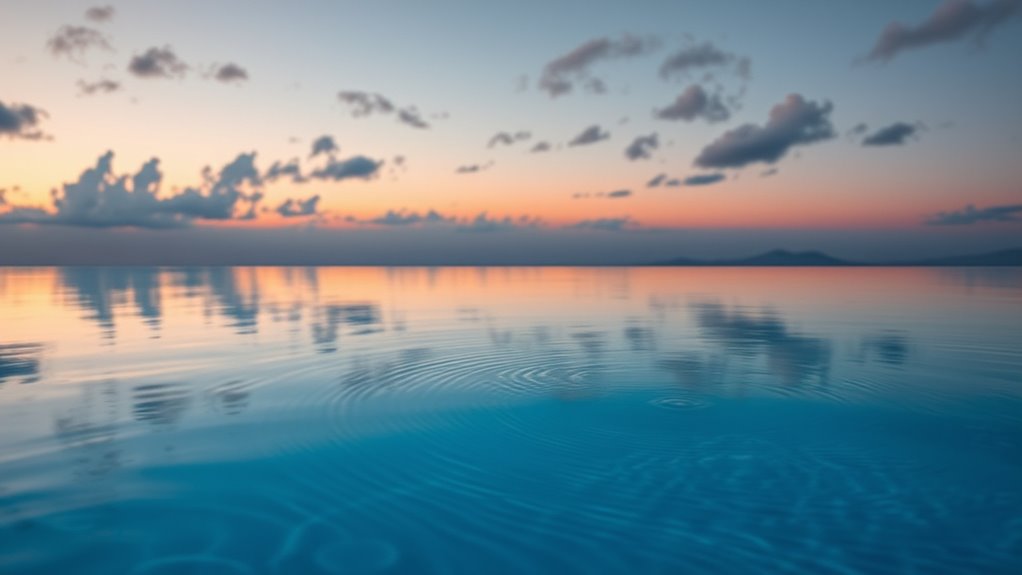
To capture stunning reflections and water details, you need to consider the best angles for your shot. Managing water motion is key—using shutter speed and timing to highlight calm or dynamic surfaces. Additionally, make sure the water remains clear by choosing the right lighting and angles to enhance its natural beauty.
Optimal Reflection Angles
Achieving stunning reflections in infinity pools requires careful attention to the angle at which you capture the shot. The right perspective can make water reflections appear more vivid and mirror-like. Position yourself so that the reflection aligns with the horizon or interesting scenery behind you. Experiment with different heights and angles to find the most mesmerizing view. Keep in mind:
- Shooting from a low angle emphasizes water surface details and reflections.
- Positioning yourself directly opposite the reflection maximizes symmetry.
- Slightly tilting your camera can enhance the clarity of reflections and water textures.
- Considering water quality, such as clarity and surface tension, can significantly impact the quality of your reflections.
Managing Water Motion
Capturing water reflections and details effectively depends on how you manage water motion during your shoot. To achieve crisp reflections, use a small aperture to increase depth of field and a low ISO for clarity. Adjust your shutter speed based on water movement: a fast shutter (1/500s or faster) freezes ripples, highlighting intricate details, while a slower shutter (1/10s or more) creates smooth, mirror-like surfaces. You can also employ a neutral density filter to extend exposure time without overexposing your shot, especially in bright conditions. Be mindful of wave patterns—minimal movement yields more defined reflections, while gentle motion adds a dynamic feel. Experiment with different shutter speeds and angles to find the perfect balance between sharp water details and artistic blur. Additionally, understanding how neural networks enhance image recognition can inspire new creative approaches to capturing complex water textures.
Enhancing Water Clarity
Enhancing water clarity begins with choosing the right camera settings and positioning. To capture sharp reflections and fine water details, set your camera to a small aperture (f/8 to f/16) for greater depth of field. Use a low ISO to minimize noise and a fast shutter speed to freeze subtle water movements. Position yourself at a low angle, close to the water surface, to emphasize reflections and surface textures.
Consider these tips:
- Use a polarizing filter to reduce glare and enhance water transparency
- Shoot during the golden hour for softer, warmer light that highlights water details
- Keep the camera steady with a tripod to avoid motion blur, especially in low light conditions
These adjustments will help you capture crisp, enthralling water images.
Transitioning From Day to Night: Adjusting Your Settings

As daylight fades, you’ll need to modify your camera settings to properly capture the changing scene. Start by lowering your ISO to reduce noise, since you’ll be working with less light. Switch from a wide aperture to a narrower one to maintain sharpness across the scene. Increase your shutter speed gradually, but be prepared to slow it down further as it gets darker to allow more light in. Use a tripod to prevent camera shake during longer exposures. Adjust white balance to match the ambient lighting, whether you’re aiming for a warmer or cooler look. Keep reviewing your shots and make incremental changes to exposure and focus. These adjustments will help you smoothly shift from bright daytime scenes to stunning, well-exposed night photographs.
Incorporating Ambient and Artificial Lights at Night
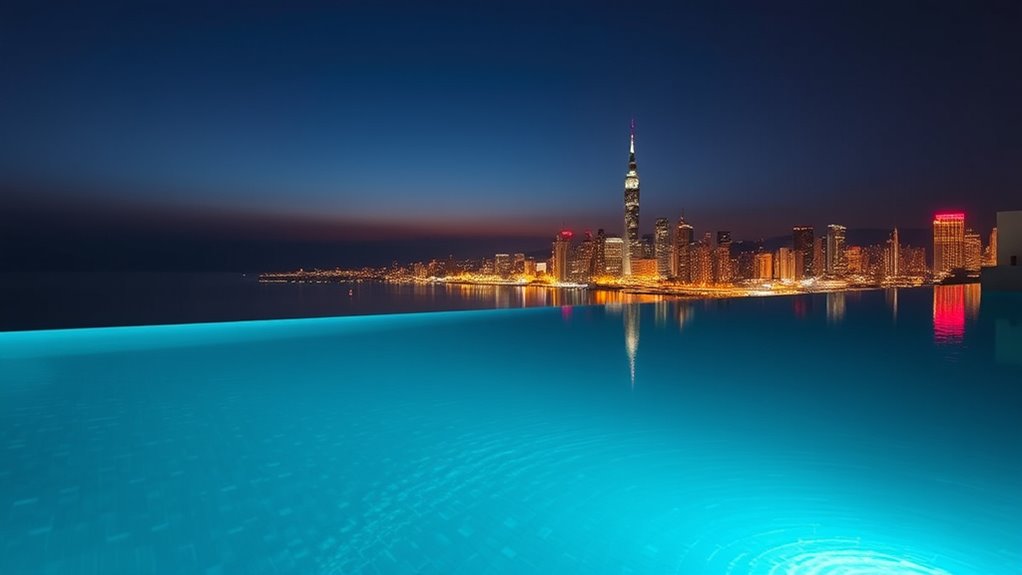
When photographing infinity pools at night, you need to balance ambient and artificial lights to create the perfect mood. Adjusting these light sources enhances the pool’s reflections and highlights its design features. By carefully managing lighting, you can elevate the overall ambiance and make your images more mesmerizing.
Balancing Light Sources
Balancing ambient and artificial light sources at night is essential to capturing stunning infinity pool photographs. Too much ambient light can wash out details, while excessive artificial lighting can create harsh shadows or glare. To achieve harmony, adjust your camera settings to balance exposure levels. Use a tripod to maintain stability during longer exposures.
Remember these key points:
- Prioritize natural ambient light to preserve atmosphere
- Use artificial lights subtly to highlight features without overpowering
- Fine-tune your exposure to prevent overexposure or underexposure
Enhancing Pool Ambiance
Enhancing the pool’s ambiance at night involves more than just adjusting light levels; it’s about creating a mood that invites relaxation and awe. Use soft, warm lighting around the pool’s perimeter to add a cozy glow, making the space inviting. Incorporate underwater LEDs to highlight the water’s clarity and create shimmering reflections. Consider string lights or lanterns for a romantic touch, ensuring they don’t overpower the scene. Dimmer switches allow you to fine-tune brightness, setting the perfect tone for evening relaxation. Balance ambient lighting with artificial sources to avoid harsh contrasts. Ultimately, the goal is to craft an environment that feels both luxurious and serene, encouraging viewers to imagine themselves unwinding by the pool as the night unfolds.
Using Long Exposures to Create Dramatic Effects
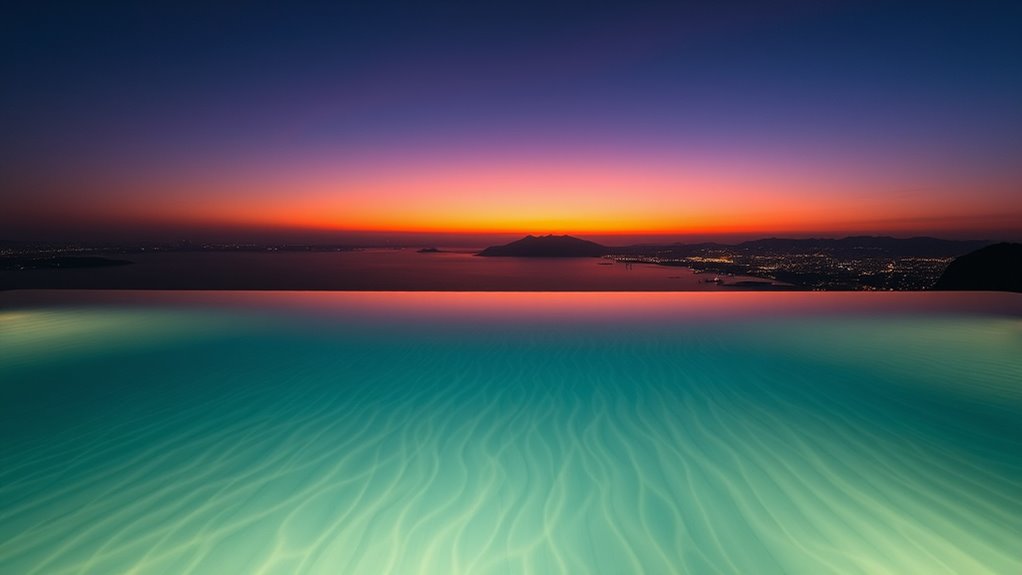
Using long exposures can transform your infinity pool photographs by capturing movement and light in ways that create stunning, dramatic effects. When you extend the shutter time, flowing water appears silky smooth, emphasizing the pool’s infinity edge and surrounding reflections. It also allows you to capture dynamic light trails from boats, passing cars, or stars, adding energy to your images. To maximize this effect, consider these tips:
Capture stunning infinity pool scenes with long exposures—smooth water, dynamic light trails, and mesmerizing reflections.
- Use a sturdy tripod to prevent camera shake
- Lower ISO settings to reduce noise
- Experiment with exposure times from several seconds to minutes
This technique is perfect for emphasizing motion and creating a sense of serenity or drama, making your pool shots truly stand out. Long exposures turn ordinary scenes into mesmerizing works of art.
Post-Processing Tips to Enhance Day and Night Shots
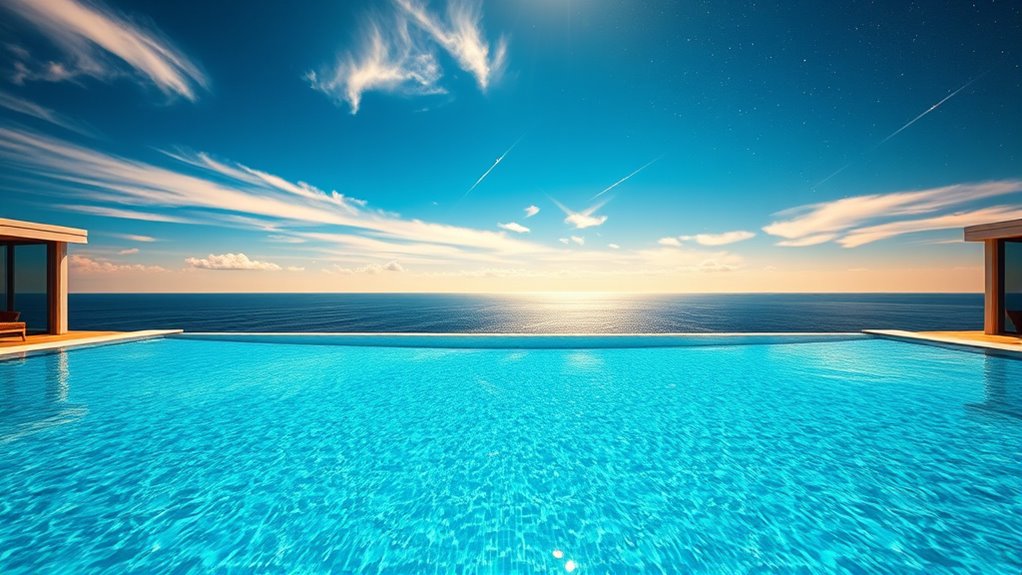
Whether you’re shooting during the day or at night, post-processing is essential for bringing out the best in your infinity pool photos. Start by adjusting the exposure and contrast to highlight the pool’s reflections and textures. Use sharpening carefully to enhance details without creating noise. For daytime shots, boost vibrance and clarity to make colors pop, especially the blue of the water and sky. At night, enhance the brightness of artificial lights to create a balanced, inviting scene. Reduce noise with noise reduction tools to keep images smooth. Fine-tune white balance to achieve natural tones, especially if the lighting is mixed. Lastly, crop or straighten your shot to emphasize symmetry and composition, ensuring your infinity pool stands out as the main feature.
Frequently Asked Questions
How Can I Ensure Safety While Photographing Near the Pool Edge?
You can guarantee safety by keeping a safe distance from the pool edge, being mindful of your footing, and avoiding sudden movements. Use a sturdy tripod or stabilizer to prevent slips, and wear slip-resistant shoes. Always have a spotter nearby if possible, and avoid leaning too far over the edge. Check your surroundings regularly and prioritize your safety over capturing the perfect shot to prevent accidents.
What Are Common Mistakes to Avoid in Infinity Pool Photography?
You should avoid common mistakes like improper composition, which can disrupt the pool’s stunning symmetry, and using incorrect settings that cause overexposure or underexposure. Don’t forget to watch your angles—shooting from too high or low can distort the infinity effect. Steer clear of distractions in the background, and always check your focus to guarantee sharpness. These tips help you capture the pool’s beauty without losing detail or impact.
How Do Weather Changes Impact the Quality of My Photos?
Weather changes can considerably affect your photos by altering lighting, reflections, and mood. Overcast days may create softer, more diffused light, reducing harsh shadows, while bright sunshine can cause glare and high contrast. Sudden rain or wind can introduce water droplets or movement that distracts from your shot. To get the best results, plan your shoot around favorable weather, and be ready to adapt your settings as conditions change.
Can Drone Photography Be Effective for Infinity Pools?
Yes, drone photography can be highly effective for capturing infinity pools. It gives you a unique aerial perspective, showcasing the pool’s design and surrounding scenery beautifully. With a drone, you can capture stunning wide shots and dynamic angles that ground photography can’t achieve. Just make certain you fly responsibly, follow local regulations, and choose the right time of day for maximum lighting to get the best shots.
What Are Creative Ways to Showcase the Pool’s Surroundings?
You can showcase the pool’s surroundings creatively by experimenting with different angles, like capturing reflections or framing the landscape through the water’s edge. Use wide-angle shots to include scenic backgrounds or shoot from elevated positions for a dramatic effect. Incorporate natural elements such as greenery or architecture to add depth. Playing with lighting, especially during sunrise or sunset, can also highlight the surroundings and create stunning, mood-filled images.
Conclusion
Think of your infinity pool shoot as a canvas waiting to be painted with light and perspective. With the right planning, equipment, and eye for detail, you’ll transform each shot from a mere reflection into a masterpiece that flows seamlessly from day to night. Embrace the journey of capturing these breathtaking moments, knowing that each click is like adding a brushstroke—building a stunning scene that leaves viewers feeling immersed in its endless beauty.