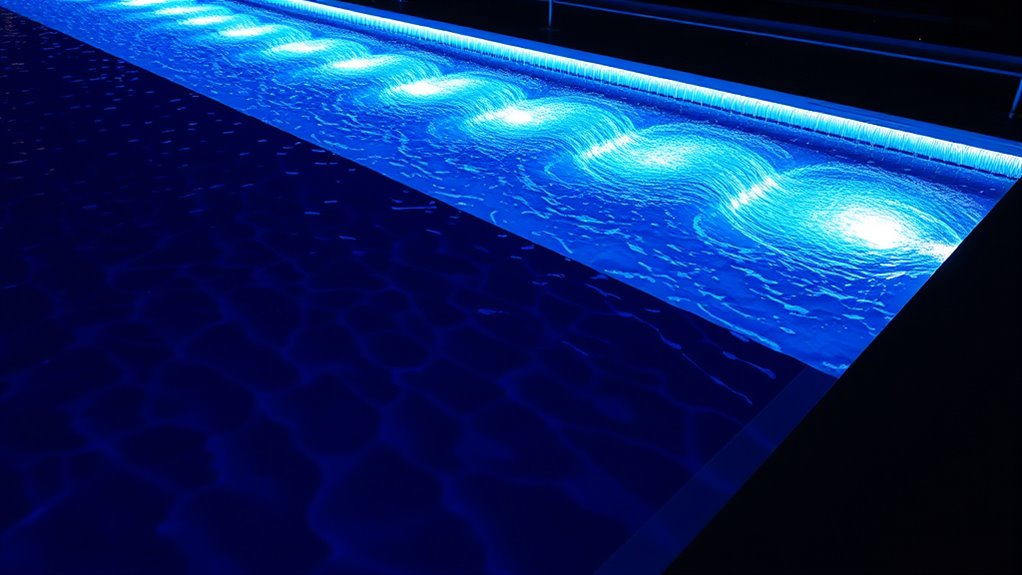

Lighting design with LEDs for water and edges transforms outdoor and indoor features into stunning, dynamic visuals. You can use colorful, programmable LEDs to emphasize water movement, texture, and contours, creating vibrant effects that enhance safety and ambiance. Selecting waterproof, energy-efficient fixtures and strategic placement helps highlight natural patterns without glare. To discover more innovative techniques and successful projects, keep exploring how advanced LED concepts can elevate your water and edge lighting designs.
Key Takeaways
- Use waterproof, high IP-rated LEDs for underwater water features to ensure durability and safety.
- Employ color-changing RGB LEDs and dynamic effects to highlight water movement and create captivating visual displays.
- Strategically position LEDs along edges or beneath surfaces to emphasize contours without causing glare.
- Incorporate layered, animated, and synchronized lighting patterns to simulate ripples, waves, and currents realistically.
- Integrate smart controls and energy-efficient LEDs to optimize performance, reduce power consumption, and enable interactive effects.
The Role of LED Lighting in Enhancing Water Features

Have you ever wondered how LED lighting transforms water features into stunning focal points? LED lights create vibrant, dynamic effects that bring water to life. They can highlight the movement and texture of fountains, waterfalls, and ponds, making them more mesmerizing after dark. With their bright, energy-efficient glow, LEDs can be customized in color and intensity, allowing you to set the perfect mood or theme. Their versatility means you can emphasize specific features or create sweeping visual displays. Plus, LED fixtures are durable and waterproof, designed to withstand water exposure and harsh weather conditions. This resilience ensures your water features remain illuminated beautifully and reliably. Proper storage and maintenance of LED lighting can extend its lifespan and performance. Ultimately, LED lighting elevates water features from simple installations to eye-catching masterpieces.
Selecting the Right LED Technologies for Water and Edge Illumination

Choosing the right LED technologies for water and edge illumination requires understanding the specific needs of your project. Consider the environment—outdoor or indoor—and the level of water exposure. For underwater applications, waterproof LEDs with high IP ratings provide durability and protection against moisture. If you need vibrant color options, RGB LEDs give flexibility for dynamic lighting effects. For subtle, natural tones, warm white LEDs are ideal. Look at the beam angle; narrow beams focus light precisely, while wider beams cover larger areas. Efficiency also matters—select LEDs that offer high lumens per watt to reduce energy costs. Lastly, guarantee the LEDs are compatible with your power supply and control systems. Choosing the right technology ensures longevity, performance, and the desired aesthetic outcome for your water and edge features.
Design Strategies for Water Feature Lighting Using LEDs
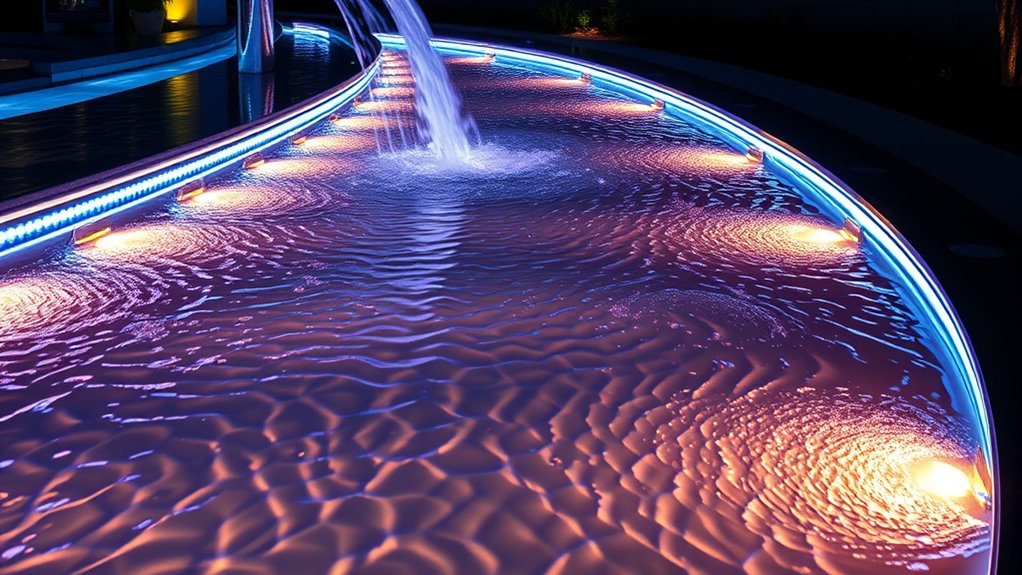
To create stunning water features, you need to highlight water dynamics effectively. Using LEDs for edge illumination can emphasize the contours and movement, making the water come alive. Focusing on these techniques will help you craft visually captivating and dynamic lighting designs.
Highlighting Water Dynamics
Ever wondered how lighting can transform the movement and texture of water features? By highlighting water dynamics, you create a mesmerizing visual experience. Use LEDs to emphasize ripples, splashes, or flowing streams with these strategies:
- Vary light angles: Position LEDs at different angles to accentuate surface movement and depth.
- Adjust brightness levels: Brighten areas where water movement is vigorous, and dim others for contrast.
- Incorporate color: Use subtle color shifts to evoke mood and highlight specific water textures.
- Consider water flow patterns: Understanding natural water behavior can help you design lighting that complements and enhances water motion.
These techniques help you reveal water’s energy and fluidity, making your water features stand out day and night. Focused lighting enhances the natural motion, drawing viewers into the scene and emphasizing the dynamism of water.
Edge Illumination Techniques
Edge illumination techniques focus on highlighting the boundaries and contours of water features to create striking visual effects. By placing LEDs along the edges or beneath the surface, you emphasize the shape and movement of the water, making it stand out even in low light. Use linear or strip lighting to trace the edges, ensuring the light is directed inward or downward to prevent glare. Adjust the color temperature and brightness to match your desired mood—cool tones evoke calmness, while warm tones add intimacy. These techniques work well with fountains, ponds, or waterfalls, adding depth and dimension. Proper installation is key: secure the LEDs tightly and waterproof them to withstand moisture. Incorporating lighting customization options allows for dynamic effects that can change with the setting or occasion. Edge illumination enhances the water’s natural elegance, transforming your landscape into a mesmerizing visual experience.
Creative Uses of Color and Dynamic Effects in Water and Edge Lighting
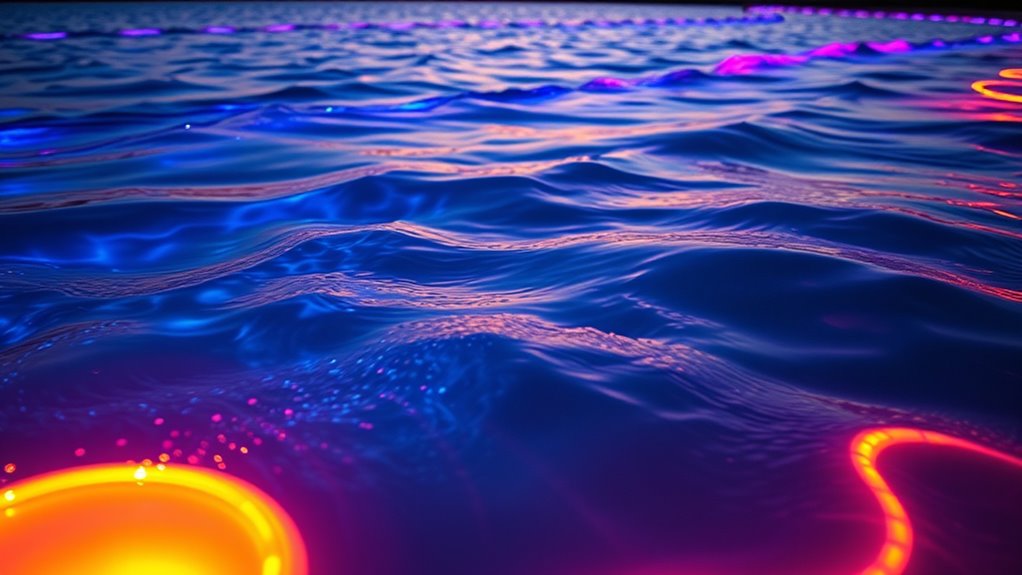
You can create stunning visual effects by using vibrant color shifts that shift smoothly across water surfaces and edges. Moving water illusions make your lighting design feel alive and dynamic, capturing attention effortlessly. Incorporating dynamic edge effects adds depth and motion, transforming simple features into captivating focal points. Additionally, understanding layer concepts can help you organize and enhance the complexity of your lighting arrangements for more innovative displays.
Vibrant Color Transitions
Vibrant color shifts in water and edge lighting create stunning visual effects that captivate viewers and enhance architectural features. These dynamic progressions add energy and mood, transforming static spaces into immersive experiences. To achieve this, you can:
- Use programmable LED controllers to smoothly cycle between colors, creating seamless progressions.
- Incorporate RGB or RGBW LEDs for a broad spectrum of vibrant hues and subtle blends.
- Adjust timing and intensity to match the desired atmosphere, whether calming or energetic.
- Understand the importance of color harmony to create visually appealing transitions that complement your space.
Moving Water Illusions
Have you ever wondered how dynamic water and edge lighting can create mesmerizing illusions that mimic movement and flow? By using carefully positioned LEDs and color variations, you can simulate ripples, waves, and flowing currents. Techniques like gradual color shifts, pulsating effects, and layered lighting add depth and realism, making static surfaces appear alive. Programmable controllers enable you to synchronize light patterns with actual water movement or create abstract illusions that evoke energy and motion. This approach enhances visual interest and transforms simple water features into enthralling focal points. The key is to choose colors and light intensities that complement the natural or designed water flow, creating a seamless, immersive experience that draws viewers into the illusion of constant movement.
Dynamic Edge Effects
Dynamic edge effects harness the power of color and movement to transform water and surface lighting into mesmerizing visual displays. By integrating vibrant colors, shifting patterns, and animated effects, you can create captivating environments that draw attention and evoke emotion. To effectively use these effects, consider:
- Color Shifts: Use smooth fades or abrupt changes to highlight different moods or times of day.
- Animated Patterns: Incorporate moving lines or ripples that mimic natural water flow or abstract designs.
- Interactive Lighting: Enable sensors that respond to movement or sound, making the effects more engaging.
These techniques elevate your lighting design, making water and edges come alive with dynamic, eye-catching visuals that captivate your audience.
Integrating LED Lighting With Water Movement and Texture
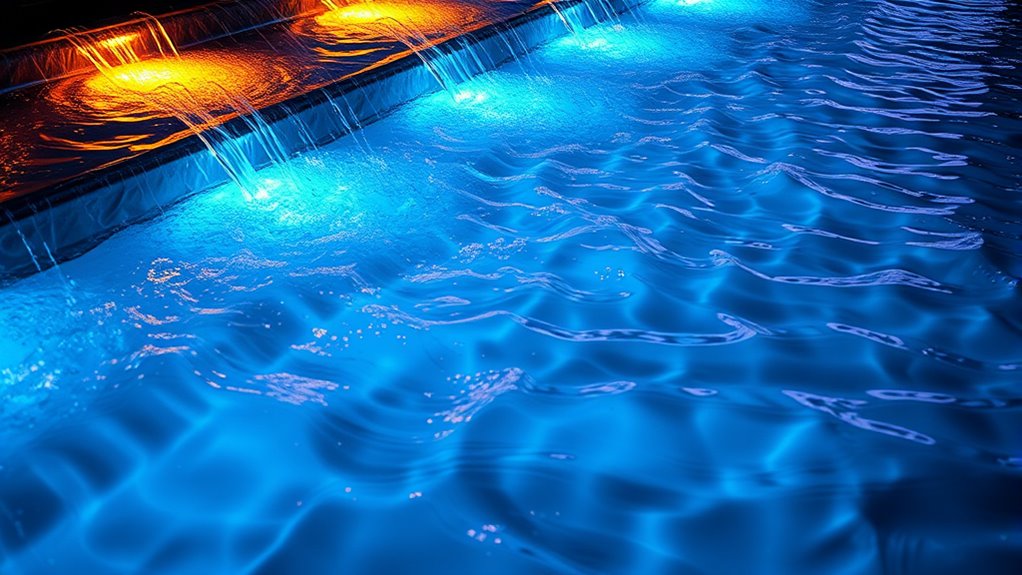
Integrating LED lighting with water movement and texture transforms aquatic spaces into visually mesmerizing environments. By synchronizing light effects with water flow, you can highlight ripples, waves, and cascades, creating dynamic visual interest. Use color-changing LEDs to emphasize movement, making waterfalls, fountains, or streams appear alive and vibrant. Texture plays a key role; illuminating textured surfaces like rocks, pebbles, or even submerged plants adds depth and contrast. Focus on strategic placement of LEDs to enhance natural water patterns and avoid glare or uneven lighting. This integration not only accentuates water’s natural beauty but also introduces a captivating, immersive experience for viewers. Carefully planning lighting angles and intensities ensures the water’s movement and texture become the centerpiece of your design. Recognizing the individual responses of water to lighting can help create more harmonious and engaging effects.
Energy Efficiency and Sustainability in Water and Edge LED Designs

Are you maximizing the energy efficiency of your water and edge LED designs? To do so, focus on these key strategies:
- Choose high-efficiency LEDs with lower wattage but strong luminosity, reducing power consumption.
- Incorporate smart controls like motion sensors and timers to limit lighting when it’s not needed.
- Opt for environmentally friendly materials and designs that promote longevity and reduce waste.
- Remember that creative practice can help develop innovative solutions for sustainable lighting designs.
Installing and Maintaining LED Water and Edge Lighting Systems
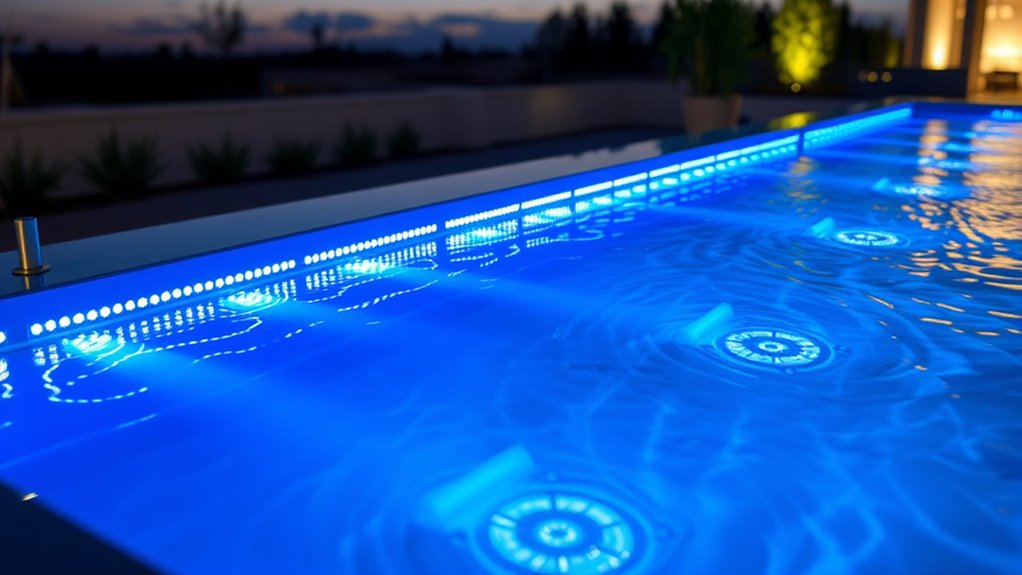
Installing LED water and edge lighting systems requires careful planning and precise execution to guarantee ideal performance and longevity. Begin by selecting the right fixtures suited for aquatic or edge environments, ensuring they are waterproof and rated for outdoor use. Proper placement is *essential*; position lights to highlight features without causing glare or light pollution. Use high-quality, corrosion-resistant connectors and cables to withstand exposure to moisture and weather. Regular maintenance involves cleaning fixtures to prevent dirt buildup and inspecting connections for corrosion or damage. Replace any faulty components promptly to avoid system failure. Keep detailed records of installation dates and maintenance schedules. To ensure durability, consider incorporating Ring Security Cameras to monitor the lighting system’s performance and detect any issues early. With diligent installation and ongoing care, your LED water and edge lighting system will deliver stunning visual effects while operating reliably for years.
Case Studies: Successful LED Water and Edge Lighting Projects
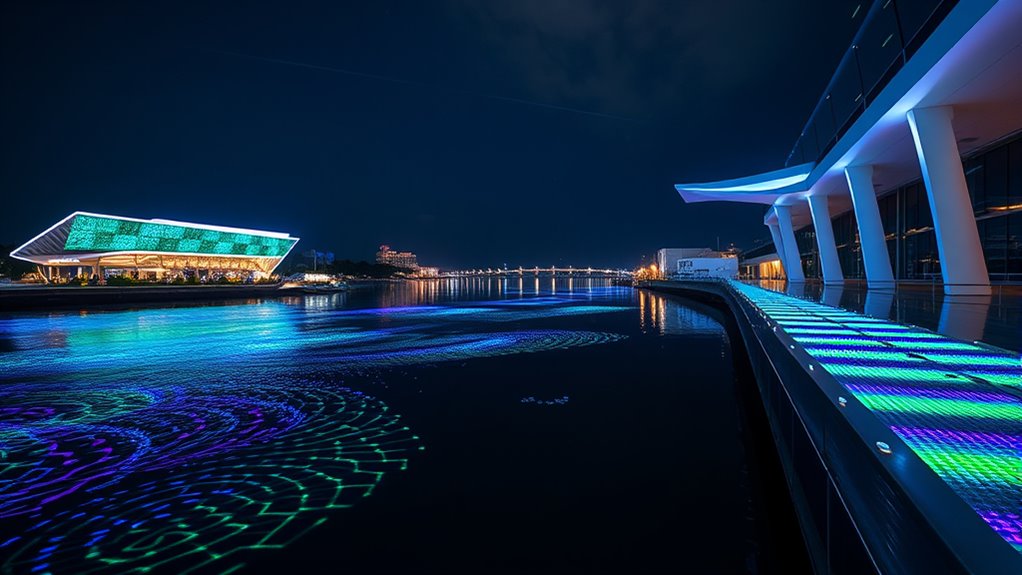
Examining successful LED water and edge lighting projects highlights the transformative impact of well-executed designs. These projects demonstrate how strategic lighting enhances aesthetics, safety, and ambiance. For instance:
Strategic LED lighting transforms spaces, enhancing beauty, safety, and atmosphere through innovative design.
- The Sydney Harbour Bridge illumination showcases how color-changing LEDs create stunning nightscapes.
- Chicago’s Millennium Park uses water features illuminated by energy-efficient LEDs to emphasize architecture.
- The Singapore waterfront employs dynamic edge lighting to highlight the city skyline and improve visibility.
These case studies reveal that thoughtful planning, proper fixture selection, and creative programming can turn ordinary spaces into engaging visual experiences. By analyzing these examples, you gain insights into effective techniques that can be adapted to your projects, ensuring successful water and edge lighting outcomes. Integrating transforming spaces principles can help optimize both safety and aesthetic appeal in your lighting designs.
Future Trends and Innovations in Water and Edge LED Lighting

As technology advances, water and edge LED lighting are poised to become even more innovative, shaping the future of architectural and landscape illumination. Expect smarter systems that adapt in real-time to environmental conditions, enhancing visual effects and energy efficiency. Integration of IoT technology will allow you to control and customize lighting remotely, creating dynamic displays that respond to weather, time, or user input. Advances in miniaturization will lead to sleeker, more discreet fixtures that blend seamlessly into their surroundings. Innovations in color mixing and tunable white LEDs will give you greater control over mood and ambiance. Additionally, sustainable materials and energy-efficient designs will reduce environmental impact. These trends will empower you to craft more immersive, responsive, and eco-friendly lighting solutions for water features and edges. As the supportive community around innovative lighting grows, sharing best practices and emerging technologies will become increasingly vital.
Frequently Asked Questions
How Do LED Lights Impact Aquatic Ecosystems?
You might not realize it, but LED lights can impact aquatic ecosystems by disrupting natural behaviors of aquatic life. When improperly installed or overly bright, LEDs can cause stress, alter feeding patterns, and interfere with breeding. However, by using eco-friendly, properly directed lighting, you can minimize these effects. Responsible lighting design helps protect water quality and the health of aquatic species, ensuring ecosystems remain balanced and vibrant.
What Are the Safety Considerations for Underwater LED Installations?
You should guarantee your underwater LED installations are properly waterproofed and rated for submersion to prevent electrical hazards. Use GFCI outlets to cut off power if a leak occurs, and verify the fixtures meet safety standards like IP68. Regularly inspect connections and wiring for corrosion or damage. Keep your installation away from high traffic areas to avoid accidental knocks, and always follow manufacturer guidelines for safe operation.
How Do Weather Conditions Affect Outdoor LED Water Lighting?
Did you know that over 70% of outdoor LED water lighting installations experience weather-related issues? Weather conditions like rain, snow, and extreme temperatures can impact your LED lights’ performance and longevity. You should verify your fixtures are rated for outdoor use, waterproof, and weather-resistant. Regular maintenance and protective enclosures help prevent damage from moisture, wind, and temperature fluctuations, ensuring your lighting stays vibrant and functional year-round.
Can LED Lighting Be Integrated With Smart Home Systems?
Yes, you can integrate LED lighting with your smart home system. Most modern LEDs come with compatible smart controls or can connect via hubs using Wi-Fi, Zigbee, or Z-Wave. This allows you to control your lights remotely, set schedules, or sync them with other smart devices. You’ll enjoy personalized lighting scenes, energy savings, and added convenience, making your outdoor or indoor lighting seamlessly fit into your smart home ecosystem.
What Are the Cost Implications of Upgrading to LED Water Lighting?
Upgrading to LED water lighting can be cost-effective in the long run. You’ll save on energy bills since LEDs use less power and last longer than traditional lights. However, initial installation costs might be higher, especially for waterproof or specialized fixtures. You should also consider maintenance savings over time. Overall, while upfront expenses may be noticeable, the energy efficiency and durability make LEDs a smart investment.
Conclusion
By embracing LED technology for water and edge lighting, you open endless creative possibilities—transforming ordinary spaces into mesmerizing masterpieces. As you explore vibrant colors, dynamic effects, and sustainable solutions, remember that your design choices shape atmospheres and inspire awe. So, why settle for dull when you can illuminate with purpose and artistry? Let your vision flow like water itself—limitless, beautiful, and brilliantly lit.