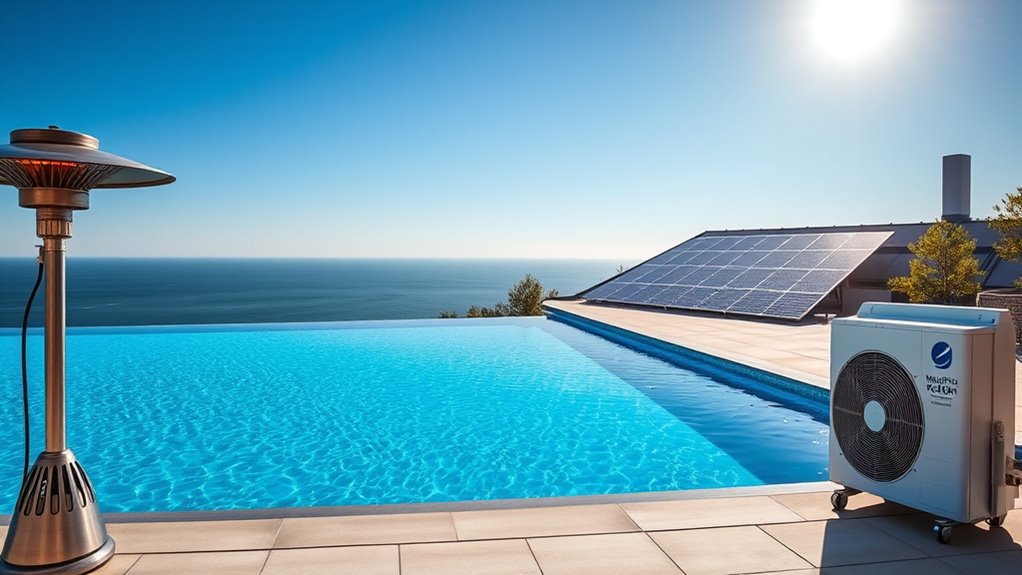

For your infinity pool, gas heaters warm water quickly and provide flexible operation, especially in colder climates, but may cost more in energy. Heat pumps offer energy-efficient heating suitable for moderate temperatures and can save you money long-term, though they take longer to heat up. Solar systems are eco-friendly and low-cost, harnessing sunlight for sustainable warmth, but their effectiveness depends on sunlight availability. Still curious? Keep exploring to find the perfect system for your needs.

Get workout gear delivered free — and shop member deals
- Fast, free delivery on millions of items
- Access to Prime Big Deal Days deals on October 6–7
- Prime Video, Amazon Music and more included
Key Takeaways
- Gas heaters provide rapid, flexible heating ideal for immediate warmth and colder climates.
- Heat pumps are energy-efficient, cost-effective options suitable for long-term use and moderate temperatures.
- Solar systems offer eco-friendly, sustainable heating with minimal ongoing costs and long lifespan.
- Gas heaters are easy to install and operate, perfect for occasional or last-minute pool heating needs.
- Combining these options depends on climate, budget, and sustainability goals for optimal infinity pool heating.
gas pool heater for infinity pool
As an affiliate, we earn on qualifying purchases.
As an affiliate, we earn on qualifying purchases.
Gas Heaters: Rapid Heating and Flexibility
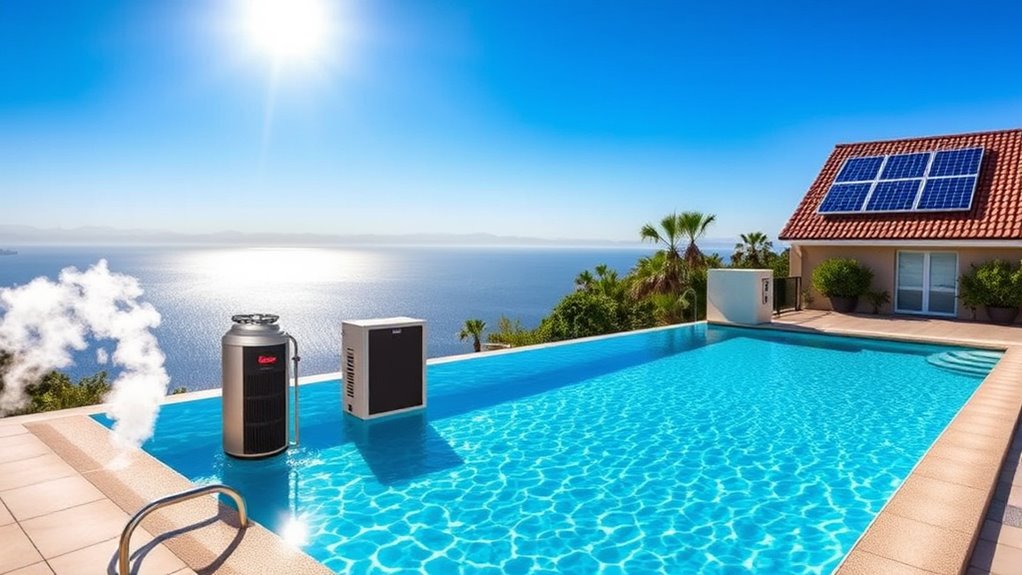
Gas heaters are a popular choice because they provide quick and efficient warmth, making them ideal for immediate comfort. When you need to heat your pool fast, gas heaters deliver rapid results, often bringing the water to the desired temperature within hours. They’re highly flexible, allowing you to turn the heater on and off as needed without long wait times. This makes them perfect for occasional use or last-minute gatherings. Gas heaters also perform well in colder climates, maintaining consistent heat despite outdoor temperature drops. Additionally, they’re relatively easy to install and operate, giving you control over your pool’s temperature. If you prioritize quick heating and flexibility, a gas heater could be the right choice for your infinity pool.
Heat Pumps: Energy Efficiency and Cost Savings
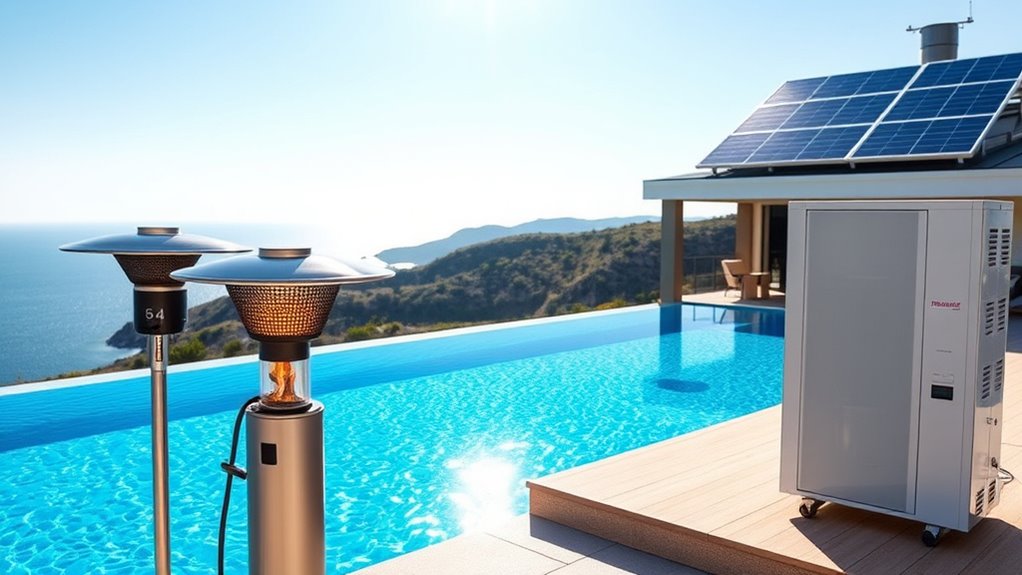
Heat pumps stand out as an energy-efficient alternative for maintaining your pool’s temperature over time. They work by extracting heat from the ambient air and transferring it to your pool, requiring less electricity than traditional heaters. This process makes them a cost-effective choice, especially for long-term use. You’ll notice lower energy bills because heat pumps operate efficiently even in moderate temperatures. They also tend to last longer with proper maintenance, saving you money on replacements. While the upfront cost might be higher than some options, the savings on energy bills quickly offset this expense. Plus, their environmentally friendly operation reduces your carbon footprint. Overall, heat pumps provide a smart balance of energy efficiency and cost savings, making them a popular choice for infinity pool owners. Additionally, advancements in heat pump technology have led to quieter operation and improved performance, further enhancing their appeal.
Solar Systems: Eco-Friendly and Sustainable Heating
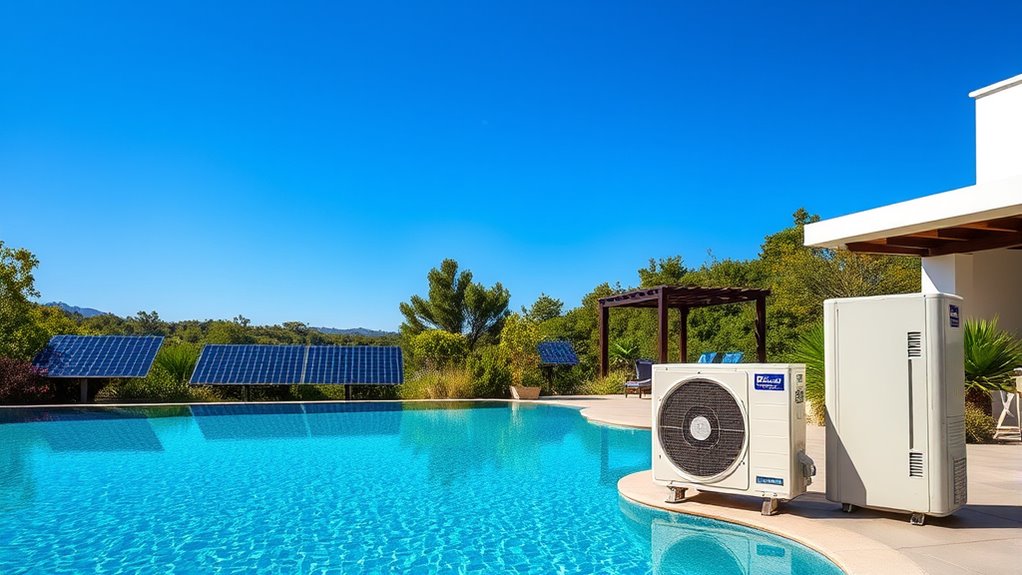
Solar systems offer a highly eco-friendly and sustainable way to heat your pool by harnessing the sun’s abundant energy. They work by capturing sunlight with solar collectors, converting it into heat, and transferring it to your pool water. Here are some benefits:
Solar pool systems provide eco-friendly, cost-effective heating by capturing and converting sunlight into warmth.
- Cost-effective operation with minimal ongoing expenses
- Environmentally friendly, reducing carbon footprint
- Low maintenance requirements, mainly periodic checks
- Long lifespan, often lasting 20+ years with proper care
- Using solar energy helps mitigate climate change by decreasing reliance on fossil fuels.
Frequently Asked Questions
Which Heating Method Is Best for Year-Round Use?
You should choose a heat pump for year-round use because it offers efficient heating in various weather conditions, reducing energy costs. Gas heaters provide quick warmth but can be more expensive and less eco-friendly. Solar options are eco-conscious but depend heavily on sunlight, making them less reliable during winter. Overall, heat pumps strike the best balance between efficiency, cost, and reliability for consistent year-round infinity pool heating.
How Do Installation Costs Compare Among Options?
You’ll find installation costs vary like choosing between a sleek sports car and a reliable sedan. Gas systems often have higher upfront costs due to complex plumbing and venting, while heat pumps are typically cheaper to install but may require more space. Solar options can be cost-effective long-term but need significant initial investment. Think of it as planting seeds—some grow faster, but all require careful planning for the best results.
What Maintenance Is Required for Each System?
You’ll find that gas systems need regular inspections and occasional filter or burner maintenance to stay efficient. Heat pumps require cleaning filters every few months and checking refrigerant levels annually. Solar systems are low-maintenance, mainly needing periodic cleaning of panels and inspection of connections. Overall, gas systems demand more upkeep, while solar and heat pumps are simpler but still benefit from routine checks to guarantee peak performance.
Can These Systems Be Combined for Optimal Efficiency?
Yes, you can combine these systems to maximize efficiency. For example, using solar heating during sunny days reduces reliance on gas or heat pumps, saving energy and costs. You might also switch between systems based on weather conditions or time of day. Integrating controls allows you to optimize performance, ensuring your infinity pool stays comfortably heated while minimizing energy use and expenses.
How Does Climate Influence the Best Heating Choice?
Imagine the sun warming your pool on a bright day or wind cooling it in winter’s grip. Climate shapes your best heating choice; if you face cold, gas heats quickly but costs more, while a solar system shines brightest in sunny zones. In milder climates, a heat pump balances efficiency and comfort. Your pool’s climate guides you to the most effective, cozy heating solution year-round.
Conclusion
Choosing your infinity pool’s heating method is like picking the perfect tune—each option has its own rhythm. Gas heaters offer quick warmth, heat pumps bring savings and efficiency, and solar systems dance with sustainability. Ultimately, your decision depends on what matters most—speed, savings, or eco-friendliness. Whichever you choose, remember: the right heat keeps your paradise warm and inviting, turning every dip into a seamless symphony of comfort and style.
Halloween Picks
halloween
As an affiliate, we earn on qualifying purchases.