To prevent efflorescence on tile and grout, choose high-quality, low-alkali materials and non-porous tiles like porcelain or glazed ceramics. Seal surfaces thoroughly and regularly to block moisture from entering. Use proper grout and mortar mixtures, avoiding excess water that can carry salts. Make certain waterproofing, proper drainage, and maintenance to keep moisture away. If you want to find out more effective strategies, continue exploring the best practices for long-lasting results.
Key Takeaways
- Use high-quality, low-alkali cement mortars and non-porous tiles like porcelain or glazed ceramics.
- Seal surfaces thoroughly with appropriate sealers to block moisture and salt migration.
- Ensure proper surface preparation, including cleaning, repairing cracks, and applying sealants periodically.
- Follow manufacturer instructions for mixing mortars and grouts to prevent excess water that promotes efflorescence.
- Install effective waterproofing, proper drainage systems, and maintain regular inspections to prevent moisture intrusion.
Understanding the Causes of Efflorescence

Efflorescence occurs when soluble salts in building materials migrate to the surface and crystallize as a white, powdery deposit. You should understand that moisture is the main driver behind this process. When water moves through porous materials like tiles, grout, or concrete, it dissolves salts present internally. As the water reaches the surface and evaporates, these salts are left behind, forming the characteristic white residue. Factors like high humidity, poor drainage, and excess water during installation increase the risk. Recognizing that efflorescence isn’t caused by dirt or mold helps you target prevention efforts effectively. Controlling moisture levels, ensuring proper drainage, and using materials with low salt content are key steps to stopping efflorescence from forming on your tiles and grout.
Choosing the Right Materials for Tile Installation

Selecting the right materials for tile installation plays a key role in preventing efflorescence. Start with high-quality, low-alkali cement-based mortars and grouts, as these reduce soluble salts that can cause efflorescence. Choose tiles made from non-porous materials like porcelain or glazed ceramic, which resist water absorption. Avoid using overly absorbent materials or natural stone without proper sealing, since moisture can carry salts to the surface. Opt for compatible adhesives that bond well and don’t trap moisture beneath the surface. Always check product specifications and ensure they meet industry standards. Using the correct, quality materials minimizes the risk of salts migrating through the tile assembly, helping you maintain a clean, durable finish and considerably reduce efflorescence formation over time. Proper material selection is essential, as it directly influences moisture retention and salt migration within the tile system.
Proper Surface Preparation and Sealing Techniques
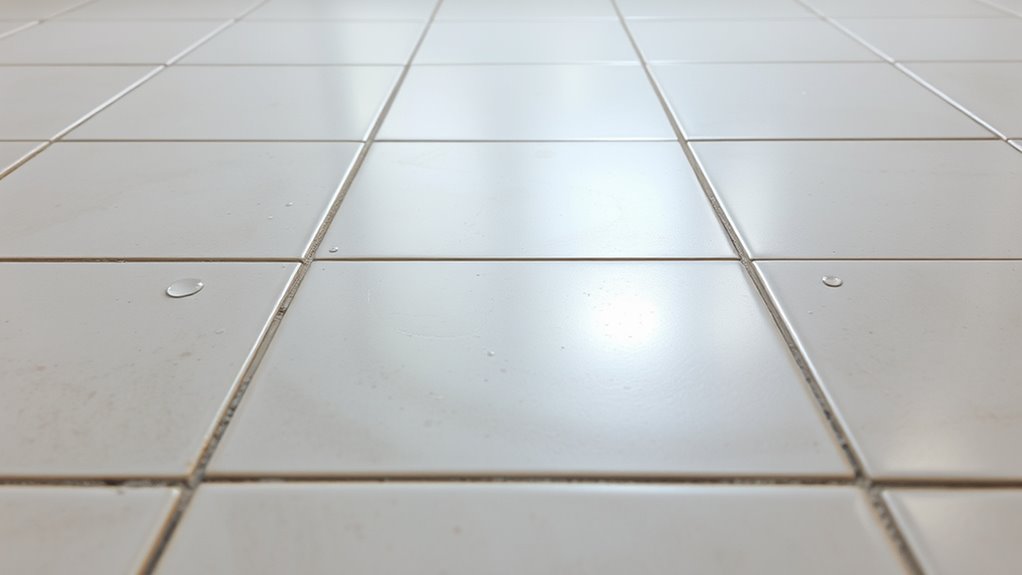
Proper surface preparation and sealing are essential steps in preventing efflorescence, as they directly influence how well moisture and salts are contained or blocked. Before installing tiles, thoroughly clean the surface to remove dust, grease, and debris, which can trap moisture. Repair any cracks or imperfections to create a smooth, even surface that minimizes water infiltration. Once the surface is prepared, apply a high-quality sealer designed for your tile and substrate type. Sealing prevents water from penetrating beneath the tiles, reducing the chances of salt migration that causes efflorescence. Reapply the sealer periodically, especially in high-moisture areas. Proper sealing acts as a barrier, helping to maintain a dry environment and greatly lowering the risk of efflorescence developing over time. Additionally, understanding local climate conditions can inform the best sealing techniques to use for long-term protection.
Applying Appropriate Grout and Mortar Mixtures

Using the correct mixture ratios guarantees your grout and mortar are strong and less likely to trap moisture, which can lead to efflorescence. Make sure the sealant you choose is compatible with your chosen mixtures to prevent chemical reactions that could cause staining or deterioration. Proper application of these mixtures is essential for long-lasting, efflorescence-resistant surfaces.
Correct Mixture Ratios
Getting the mixture ratios right is essential to prevent efflorescence from forming. When mixing grout or mortar, proper proportions ensure the right balance of water, cement, and aggregates. If the mixture is too wet, excess water can carry soluble salts that cause efflorescence. To get it right, follow these steps:
- Use the manufacturer’s recommended water-to-mix ratio.
- Mix thoroughly to achieve a uniform, workable consistency.
- Avoid adding extra water during application.
- Check the mixture’s stiffness; it should hold shape but be easy to spread.
- Using professional-grade products can also help minimize the risk of efflorescence formation.
Sealant Compatibility
Choosing the right sealant is crucial to guarantee compatibility with your grout or mortar, as incompatible products can lead to staining, reduced adhesion, or even damage over time. Always check the manufacturer’s recommendations to ensure the sealant suits your specific tiles and grout type. Using incompatible sealants may trap moisture or cause discoloration, increasing efflorescence risk. To help, here’s a quick comparison:
| Sealant Type | Best for |
|---|---|
| Acrylic | Porous tiles, interior use |
| Silicone | Non-porous tiles, waterproofing |
| Sealant Type | Not recommended for |
| Acrylic | Heavy moisture areas |
| Silicone | Porous surfaces, stone |
Matching the correct sealant with your materials ensures durability and prevents moisture issues that lead to efflorescence. Additionally, understanding the importance of contrast ratio can help you select the best projector for your home cinema setup.
Ensuring Adequate Waterproofing and Drainage
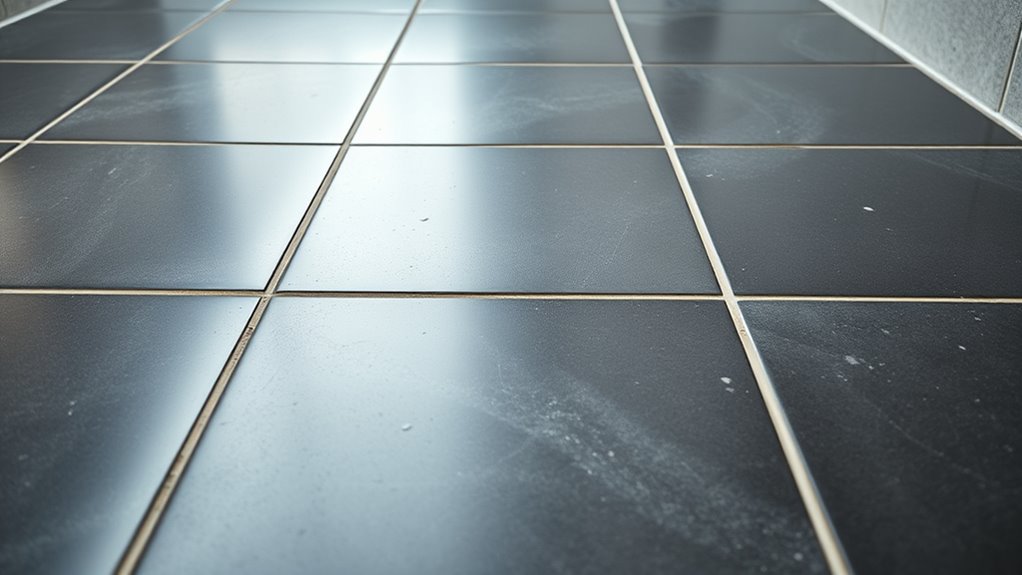
Effective waterproofing and drainage are crucial to preventing efflorescence, as water infiltration is the primary cause of salt deposits on surfaces. To guarantee proper protection:
- Check that your waterproof membranes are correctly installed without gaps or tears.
- Design your drainage system to direct water away from tiled areas efficiently.
- Use sloped surfaces to prevent water pooling on floors or walls.
- Regularly inspect for leaks or cracks that could allow water ingress.
Regular Maintenance and Cleaning Practices

Regular maintenance and cleaning are essential for preventing efflorescence from reappearing over time. Consistently removing dirt, moisture, and mineral deposits reduces the chances of salts migrating to the surface. Use mild cleaning solutions and avoid harsh chemicals that can damage tiles or grout. Regularly inspect for cracks or gaps that could trap water. To help, follow this maintenance plan:
| Task | Frequency | Tips |
|---|---|---|
| Sweep and Vacuum | Daily or weekly | Remove loose debris to prevent buildup |
| Clean with pH-neutral | Weekly or biweekly | Prevent chemical residue from forming |
| Seal grout and tiles | Every 1-2 years | Protect against moisture infiltration |
| Address leaks promptly | Immediately | Minimize water seepage that causes salts |
Frequently Asked Questions
Can Efflorescence Be Completely Eliminated Once It Appears?
Efflorescence can’t be completely eliminated once it appears, but you can substantially reduce it. You should clean the affected area with a vinegar and water solution, then seal the grout to prevent moisture penetration. Regular maintenance and controlling indoor humidity help keep efflorescence at bay. Keep in mind, persistent moisture issues may cause it to reappear, so addressing underlying leaks or drainage problems is essential for long-term control.
How Long Does It Take for Efflorescence to Develop After Installation?
Efflorescence can appear as quickly as a few days after installation, but it often takes 2 to 3 weeks to fully develop. Remarkably, 60% of efflorescence cases occur within the first month due to moisture migrating through porous materials. To minimize this, ensure proper sealing and moisture control during and after installation. Regular inspections help catch early signs, preventing it from becoming a persistent problem.
Are There Specific Brands of Grout That Resist Efflorescence Better?
Yes, some grout brands resist efflorescence better than others. Look for products labeled as stain-resistant or formulated specifically to combat efflorescence, such as Mapei Keracolor S or Laticrete Permacolor. These grouts contain additives that reduce water absorption, minimizing salt deposits. Always follow manufacturer instructions, guarantee proper installation, and maintain good sealing practices to keep your tile and grout looking their best over time.
What Are the Best Cleaning Products to Prevent Efflorescence Buildup?
Think of your tile and grout as a garden needing proper care. Use pH-neutral cleaners like vinegar diluted with water or specialized efflorescence removers to keep buildup at bay. Avoid harsh chemicals that can damage surfaces. Regularly clean and dry the area after use, like tending to delicate plants. These products and habits act as a shield, preventing efflorescence from creeping in and ruining your beautiful space.
Does Climate or Weather Influence the Likelihood of Efflorescence Formation?
Yes, climate and weather considerably influence efflorescence formation. If you live in a humid or rainy area, moisture can seep into your tiles and grout, dissolving salts that then crystallize on the surface as the water evaporates. Cold weather can cause condensation, increasing moisture levels. To prevent this, guarantee proper sealing, good ventilation, and control indoor humidity, especially in climates prone to heavy rainfall or high humidity.
Conclusion
Think of your tile and grout as a well-tended garden; with the right care and attention, efflorescence won’t take root. By choosing quality materials, sealing surfaces, and maintaining proper drainage, you’re nurturing a space that stays vibrant and beautiful. Regular cleaning is like watering your plants—keeping everything healthy and pristine. With these steps, you’ll prevent efflorescence from sneaking in, ensuring your tile masterpiece remains a stunning, enduring landscape.