To keep your endless pool in top shape, regularly check and balance water chemistry, including pH, alkalinity, and chlorine levels, at least weekly. Skim debris daily, inspect the filter and equipment, and clean filters as needed. Perform routine maintenance like water draining every 3-6 months, winterize properly, and cover the pool when not in use. Staying consistent with these steps guarantees a safe, clear pool—more tips to simplify your upkeep await.
Key Takeaways
- Test water chemistry weekly and adjust pH, alkalinity, and chlorine levels to maintain balanced water.
- Skim the surface daily and clean skimmer baskets regularly to keep debris-free.
- Inspect and clean the filtration system, including filter cartridges and pump, weekly or as needed.
- Brush pool walls periodically and ensure proper water circulation for clarity and hygiene.
- Prepare for winter by covering the pool, draining excess water, and adding winterizing chemicals.
Checking and Balancing Water Chemistry
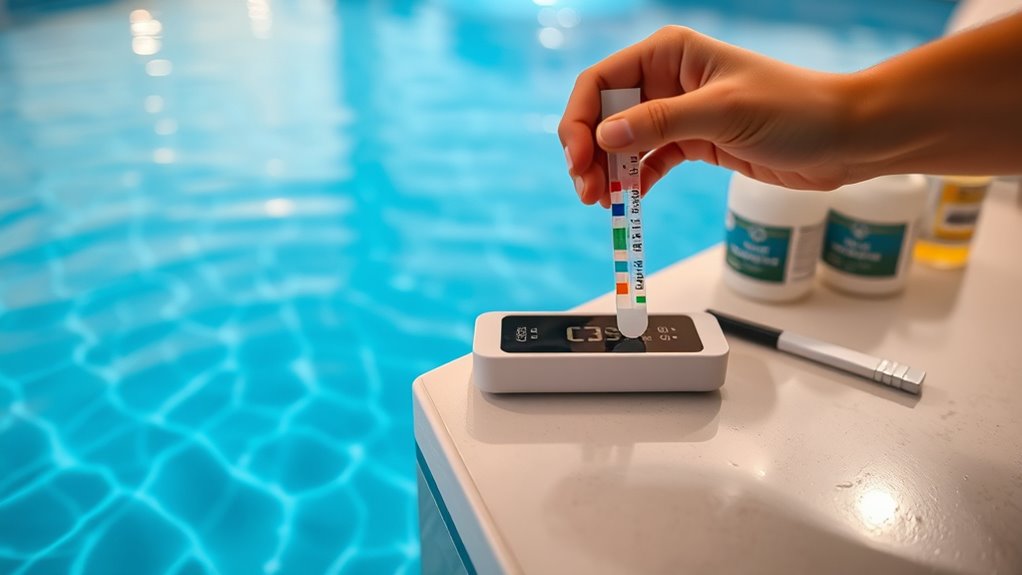
Have you ever wondered why maintaining proper water chemistry is essential for a safe and clean pool? It’s because balanced water prevents issues like algae growth, cloudy water, and skin irritation. You need to regularly test your pool’s pH, chlorine, alkalinity, and calcium hardness levels. Use a reliable test kit or strips to check these parameters at least once a week. If your pH is too high or low, it can cause scaling or corrosion. Adjust the chemicals accordingly to keep everything within ideal ranges. Maintaining proper water chemistry isn’t just about clarity; it’s about protecting your pool equipment and ensuring a safe swimming environment. Staying on top of these tests helps prevent costly repairs and keeps your pool inviting all season long.
Cleaning the Pool Surface and Skimmers
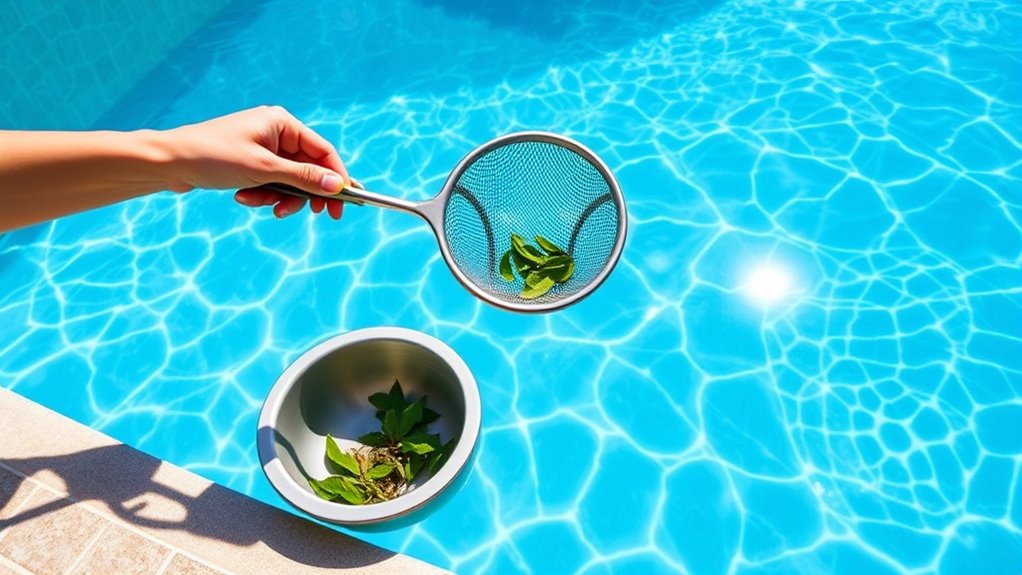
Keeping the pool surface and skimmers clean is essential for clear water and proper circulation. Regularly skimming the surface removes leaves and debris, while maintaining the skimmer basket prevents clogs. Learning effective debris removal techniques guarantees your pool stays sparkling and well-maintained. Incorporating water filtration systems can further enhance water clarity and reduce maintenance effort.
Regular Surface Skimming
Why is regular surface skimming essential for maintaining a clean pool? It prevents debris like leaves, bugs, and dirt from sinking to the bottom, which can cause stains and clog your filtration system. By skimming the surface daily, you keep the water clear and inviting. Using a leaf skimmer or net, remove floating debris quickly before it breaks down or sinks. This simple step also helps monitor surface conditions, allowing you to spot potential issues early. Regular skimming reduces strain on your filter and pump, saving energy and prolonging equipment life. Plus, it ensures your pool looks pristine, making your swimming experience more enjoyable. Incorporating a portable camping toilet into your routine can make maintenance more manageable during extended use or outdoor trips. Dedicate a few minutes each day to surface skimming, and you’ll maintain a healthier, more appealing pool effortlessly.
Proper Skimmer Maintenance
Regular surface skimming helps prevent debris from clogging your pool’s filtration system, but it’s equally important to periodically clean the skimmer itself. Over time, leaves, insects, and dirt can accumulate inside, reducing its efficiency. To clean your skimmer, turn off the pump, remove the skimmer basket, and clear out debris. Rinse the basket with a hose to remove any stubborn dirt. Regularly inspecting the skimmer opening guarantees proper flow and prevents blockages. Visualize the process with this:
| Pool Surface | Skimmer Basket |
|---|---|
| Leaves, bugs, dirt | Twigs, debris, algae |
| Clear water | Flowing smoothly |
| Cloudy surface | Clogged basket |
| Bright, clean water | Proper filtration |
Keeping your skimmer clean keeps your pool crystal clear and running smoothly. Additionally, monitoring the skimmer basket for damage or wear ensures long-term efficiency.
Debris Removal Techniques
To effectively remove debris from your pool surface and skimmers, you need to actively clear away leaves, insects, and dirt before they settle or clog the system. Regular removal keeps your pool clean and prevents damage. Here are key techniques:
- Use a pool skimmer net daily to scoop surface debris.
- Rake floating leaves and insects during routine checks.
- Empty skimmer baskets when they’re full to maintain proper flow.
- Brush the pool walls to dislodge dirt and algae, making debris easier to remove.
Consistent attention prevents debris buildup, reduces filtering strain, and keeps your pool sparkling. Quickly removing debris also minimizes staining and improves water quality. Staying proactive guarantees a hassle-free swimming experience.
Filtration System Maintenance
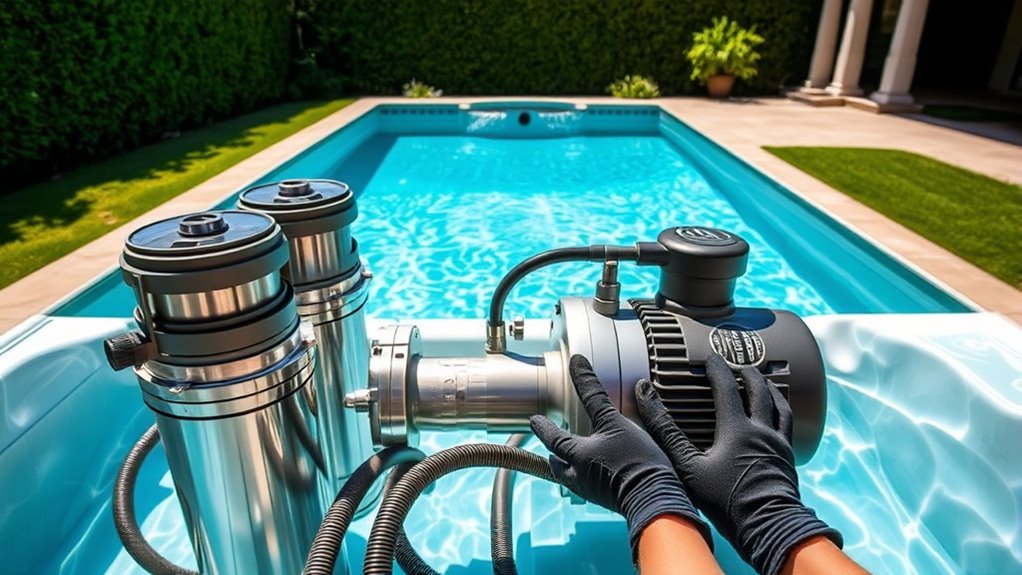
To keep your pool water clear, you need to regularly check your filtration system. Make sure to clean or replace the filter when it’s dirty, and verify that the pump is working efficiently. Proper maintenance of these components guarantees your pool stays clean and safe for swimming. Regular system monitoring can help detect potential issues early and ensure optimal performance.
Replace or Clean Filter
When your pool’s filtration system starts to slow down or shows signs of debris buildup, it’s time to decide whether to clean or replace the filter. First, check the pressure gauge; a rise of 8-10 psi indicates it’s time for cleaning. Consider how old the filter is—if it’s over two years old, replacement might be better. Next, inspect the filter for tears or damage, which cleaning won’t fix. Then, evaluate your cleaning results: if debris or oils persist after thorough cleaning, replacing the filter is the way to go. Additionally, understanding city dynamics can help you better maintain your pool environment and optimize its performance. Finally, think about your budget and time—replacing filters costs more but guarantees ideal performance. Remember, regular maintenance extends your filter’s lifespan and keeps your pool crystal clear.
Check Pump Performance
After cleaning or replacing your filter, it’s important to make certain your pump is working properly to maintain ideal water flow. Start by listening for unusual noises or vibrations, which can indicate problems. Check the pump’s pressure gauge; if it’s too high or low, it suggests a flow issue that needs addressing. Ensure the pump is running continuously and that water is circulating properly through the system. Look for leaks or cracks around fittings and seals, and tighten or replace parts as needed. Regularly inspect the impeller for debris or obstructions that could hinder performance. Maintaining proper pump function guarantees clean, clear water and prevents equipment damage, making pool upkeep easier and more efficient. Being aware of small mistakes such as neglecting routine inspections can help you catch issues early and avoid costly repairs.
Testing and Adjusting Ph and Alkalinity Levels
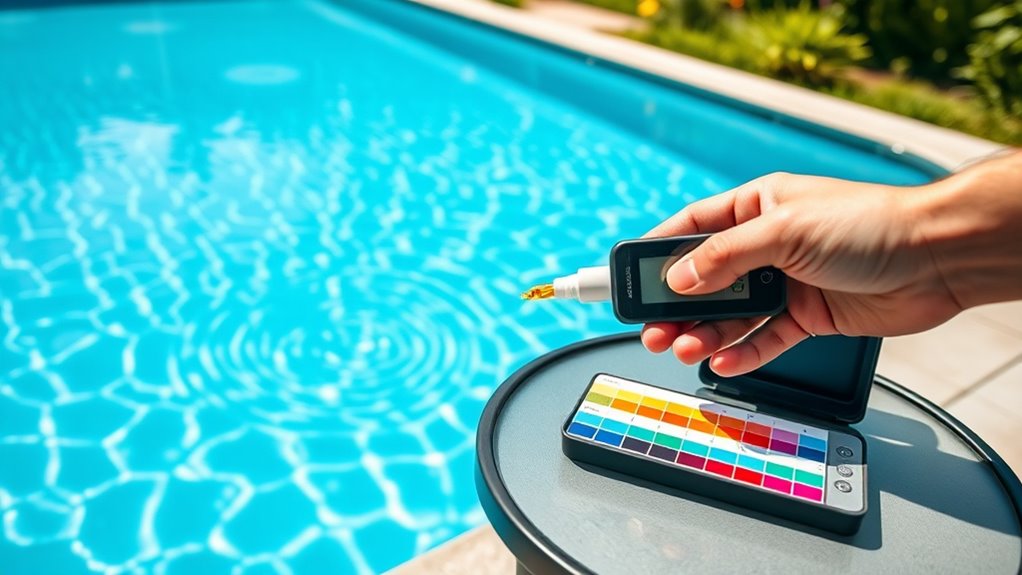
Maintaining proper pH and alkalinity levels is essential for ensuring your pool stays clean and safe. Testing regularly helps catch imbalances early. Here’s what you should do:
- Use a reliable test kit or strips to measure pH and alkalinity.
- Record your readings to track changes over time.
- Adjust alkalinity first by adding a pH buffer if it’s too low or high.
- Correct pH levels after alkalinity stabilizes, using pH increaser or decreaser as needed.
Always follow the manufacturer’s instructions for chemicals and wait a few hours between adjustments. Proper testing and adjustments prevent corrosion, scaling, and cloudy water. Regular monitoring keeps your pool balanced and inviting.
Inspecting and Cleaning the Filter Cartridge
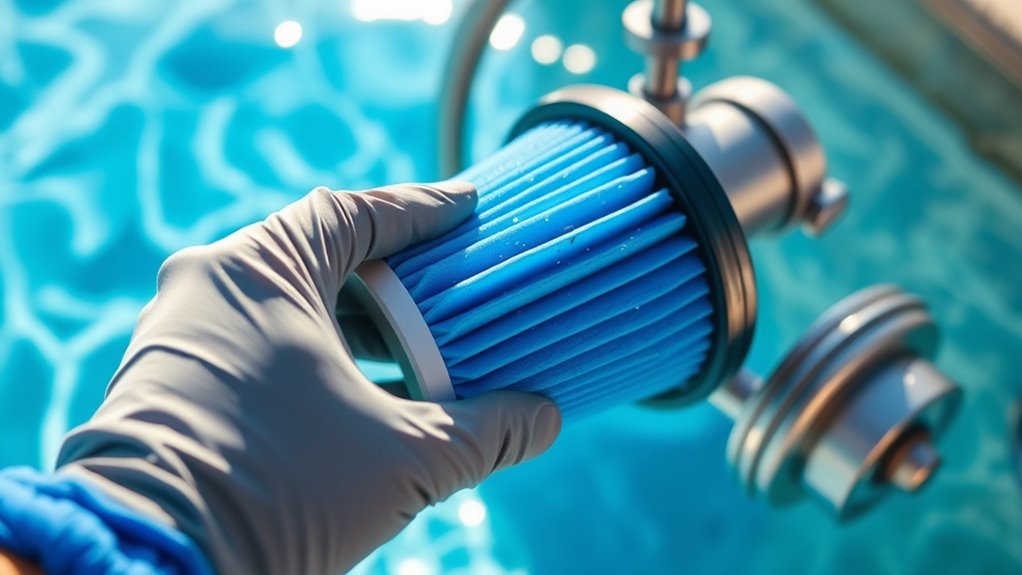
Have you checked your filter cartridge lately? Regular inspection is key to keeping your pool running smoothly. Remove the cartridge and look for debris, dirt, or buildup that can hinder water flow. If it appears dirty or clogged, it’s time to clean. Rinse the cartridge thoroughly with a garden hose, making sure to remove all dirt and grime. For stubborn deposits, soak the cartridge in a filter-cleaning solution or a mixture of water and a mild detergent. Avoid using harsh chemicals that could damage the filter. After cleaning, ensure the cartridge is completely dry before reinstalling. A clean filter cartridge improves water circulation, reduces strain on your pump, and keeps your pool water clear and fresh. Regular maintenance guarantees your pool stays inviting and hassle-free. Proper cleaning also helps maintain the efficiency of renewable energy heat pumps, ensuring they operate optimally and contribute to energy savings.
Monitoring and Controlling Chlorine Levels
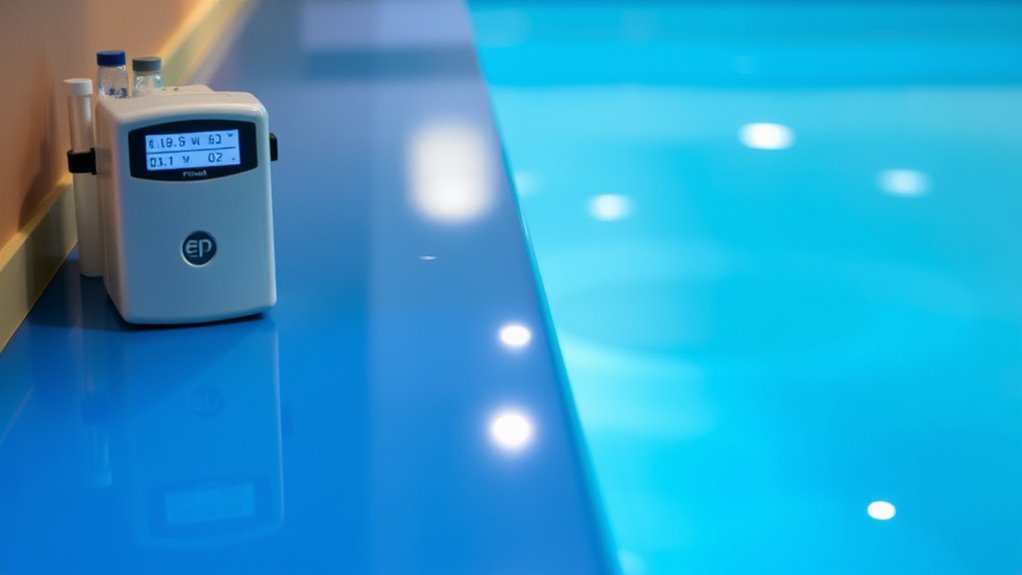
You need to regularly test your pool’s chlorine levels to guarantee safe and effective disinfection. Keeping the levels within the recommended range helps prevent bacteria growth and algae. Proper monitoring allows you to maintain a healthy, clean swimming environment with safe disinfection practices. Additionally, understanding chlorine management can help optimize your pool maintenance routine and ensure consistent water quality.
Regular Chlorine Testing
Regular chlorine testing is essential to keep your pool safe and balanced. It ensures your water stays sanitized and comfortable. To do this effectively, follow these steps:
- Test your chlorine levels at least 2-3 times a week using a reliable test kit.
- Compare your results to the recommended range (1-3 ppm) to determine if adjustments are needed.
- Add chlorine if levels are below the target, following manufacturer instructions.
- Wait at least 15 minutes after adding chemicals before retesting to get accurate readings.
Consistent testing helps prevent algae growth and bacteria buildup. It also minimizes chemical waste and keeps your pool water clear. Staying on top of chlorine levels is the key to hassle-free pool maintenance.
Maintaining Ideal Levels
Maintaining ideal chlorine levels requires ongoing monitoring and adjustments to keep your pool safe and inviting. You should test your water at least two to three times a week using a reliable test kit. Aim for a free chlorine level between 1 and 3 ppm. If levels are too low, your pool becomes vulnerable to bacteria and algae; if too high, water can be harsh on skin and eyes. Adjust chlorine by adding the appropriate amount of sanitizer, following the manufacturer’s instructions. Keep a log of your test results and chemical additions to track patterns and ensure consistency. Regular testing and timely adjustments help prevent problems and maintain a clean, healthy swimming environment. Consistency is key to hassle-free pool ownership. Additionally, understanding the effectiveness of eye patches can help you choose the best skincare routine to complement your maintenance efforts.
Safe Disinfection Practices
Monitoring and controlling chlorine levels is essential to guarantee your pool remains safe and effectively disinfected. Proper chlorine management prevents bacteria growth and keeps the water clear. To achieve this, regularly test your chlorine levels using a reliable test kit. Here are four key steps:
- Check chlorine levels daily, especially during peak usage.
- Maintain free chlorine between 1-3 ppm for safe swimming.
- Add chlorine as needed, following manufacturer instructions.
- Avoid over-chlorinating, which can cause skin irritation and damage the pool surface.
Draining and Replacing Water Periodically

Have you ever wondered why draining and replacing your pool water is essential? Over time, minerals, bacteria, and debris accumulate, making the water cloudy and unsafe. Regularly replacing the water helps maintain ideal clarity and hygiene. It also prevents the buildup of chemicals and contaminants that can damage your pool’s equipment or irritate your skin. How often you drain depends on usage and water quality, but generally, every 3 to 6 months is recommended. Before you drain, ensure your pump and filtration systems are turned off, and follow local disposal regulations. After draining, thoroughly clean the pool surfaces and refill with fresh water. This routine keeps your pool safe, clean, and ready for enjoyable swimming whenever you want.
Covering the Pool When Not in Use
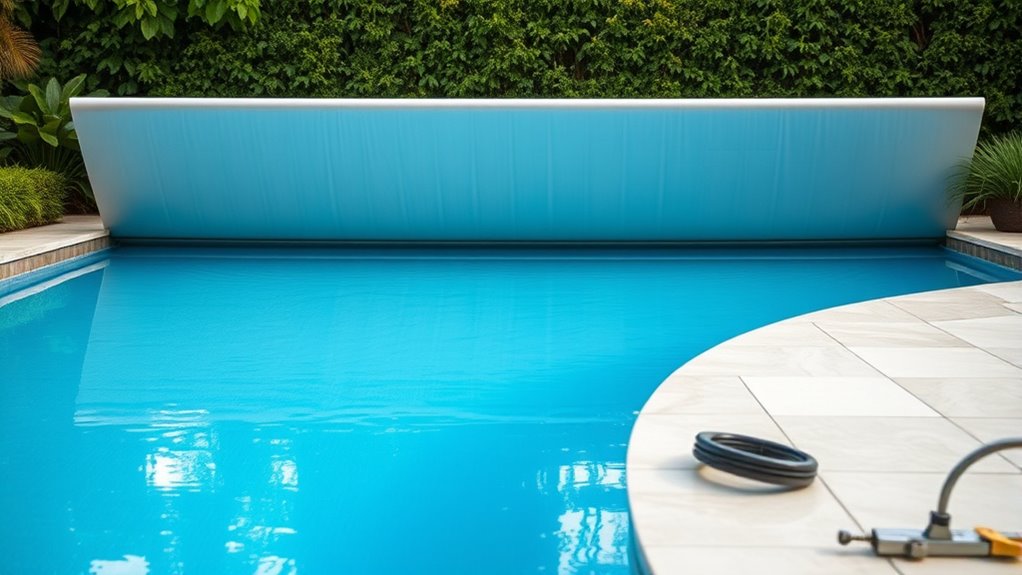
Covering your pool when it’s not in use is one of the simplest ways to keep it clean and protected. A cover prevents debris, leaves, and dirt from falling in, reducing the need for frequent cleaning. It also helps maintain water temperature and minimizes evaporation.
Here are four tips to maximize your cover’s effectiveness:
- Ensure the cover fits snugly without gaps to keep out debris.
- Regularly remove leaves and dirt from the cover surface.
- Use a cover pump if water accumulates on top.
- Check the cover for tears or damage and replace if necessary.
Winterizing Your Endless Pool
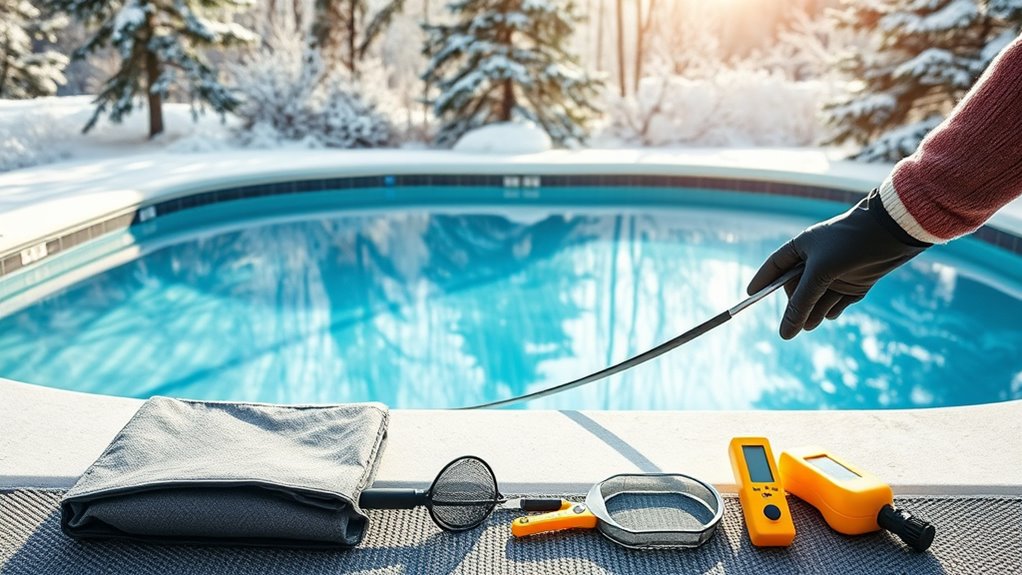
As winter approaches, it is vital to properly winterize your Endless Pool to protect it from freezing temperatures and potential damage. Start by draining the water to a safe level below the skimmer and pump inlet. Remove and store all accessories, such as ladders or floats. Clean the pool thoroughly to prevent debris buildup during the off-season. Next, add a winterizing chemical kit to prevent algae and bacteria growth. Drain and blow out the plumbing lines to prevent freezing damage, then close the valves securely. Cover the pool with a high-quality winter cover to keep out debris and moisture. If you live in a particularly cold climate, consider using a pool insulation blanket for added protection. Proper winterization ensures your Endless Pool stays in top condition for when you’re ready to swim again.
Regularly Inspecting Equipment and Components
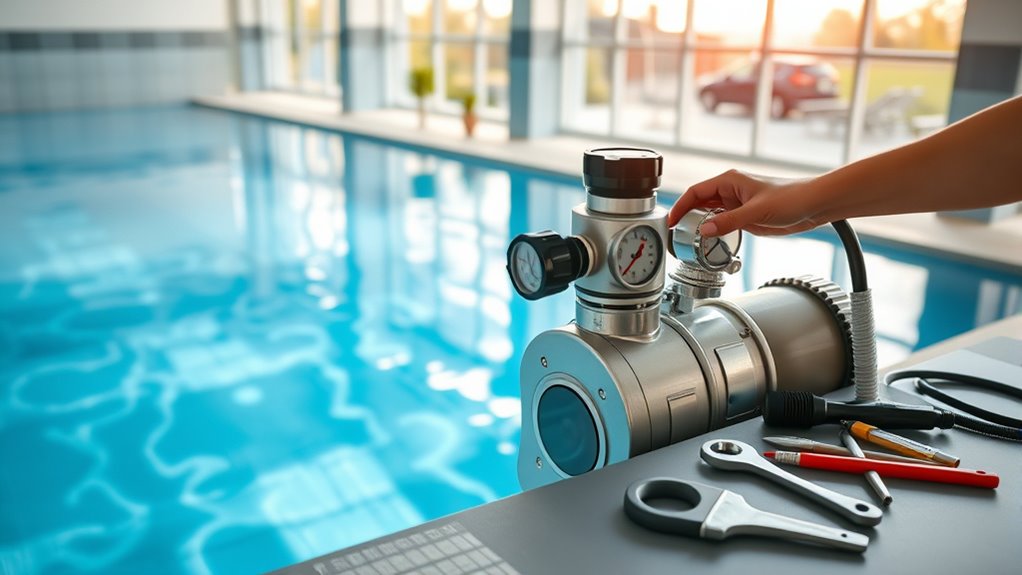
Regularly inspecting your Endless Pool’s equipment and components is essential to guarantee everything functions smoothly and to catch potential issues early. By keeping a close eye on key parts, you prevent costly repairs and downtime. Here’s what to check:
- Filter: Clean or replace it as needed to maintain proper water flow.
- Pump: Listen for unusual noises and ensure it’s operating efficiently.
- Heater: Look for leaks or corrosion, and verify it heats water correctly.
- Lights and Sensors: Test all electronic components to ensure they’re working properly.
Perform these inspections weekly or biweekly, especially during heavy use. Staying proactive helps you enjoy your pool with fewer surprises and keeps your equipment in top shape.
Frequently Asked Questions
How Often Should I Schedule Professional Maintenance for My Endless Pool?
You should schedule professional maintenance for your endless pool every 6 to 12 months. Regular check-ups help keep the system running smoothly, guarantee water quality, and catch any issues early. If you notice changes in water clarity, equipment noise, or temperature control, consider booking a service sooner. Consistent professional maintenance extends your pool’s lifespan and keeps it safe and enjoyable for your use.
What Signs Indicate My Pool Needs Urgent Repairs?
If your pool has cloudy water, persistent odors, or unusual noises, it’s a sign you need urgent repairs. Watch out for leaks, cracks, or a sudden drop in water level, which can indicate structural issues. If your heater isn’t working properly or you notice algae growth despite regular cleaning, address these problems quickly. Ignoring these signs can lead to bigger, costly repairs and unsafe swimming conditions.
Can I Use Non-Standard Chemicals in My Pool?
Sure, why not? Just like mixing paint colors, using non-standard chemicals might seem fun until your pool turns into a swamp. Stick to approved pool chemicals to keep your water safe and sparkling. Non-standard chemicals can unbalance pH levels, cause corrosion, or even turn your pool into a science experiment gone wrong. Play it safe, follow the guidelines, and enjoy a crystal-clear swim without unexpected surprises.
How Do I Prevent Algae Growth in My Endless Pool?
To prevent algae growth in your endless pool, you should regularly test and balance your water’s pH and sanitizer levels. Keep your pool clean by skimming debris and brushing surfaces weekly. Use algaecide as a preventive measure, especially during warmer months. Maintain proper circulation and filtration, and avoid overcrowding. Consistent maintenance and monitoring help keep algae at bay, ensuring your pool stays clear and inviting all season long.
What Safety Precautions Should I Follow During Maintenance?
You should always wear protective gloves and goggles during maintenance to safeguard your skin and eyes. Turn off the power before cleaning or handling chemicals, and guarantee proper ventilation to avoid fumes. Keep children and pets away from the area to prevent accidents. Follow the manufacturer’s instructions carefully, and never mix chemicals. Staying cautious ensures your safety while keeping your pool pristine and inviting.
Conclusion
Keeping your endless pool in top shape might seem like a tall order, but with consistent care, it’s smooth sailing. Regular maintenance tasks act like a well-oiled machine, preventing small issues from snowballing. Think of your pool as a garden—you need to tend to it regularly to keep it blooming. When you stay on top of these simple steps, your pool remains a sparkling oasis, ready to refresh you anytime without turning your effort into a wild goose chase.