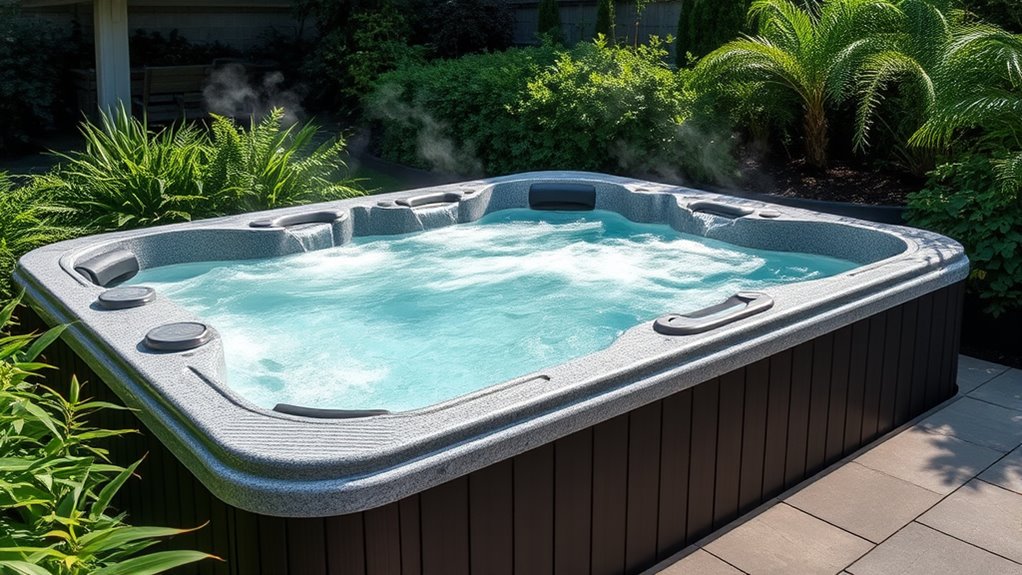

Integrated hot tubs use spillways to manage excess water, preventing overflows and safeguarding equipment, while thermal isolation retains heat and reduces energy costs. Spillways ensure proper water circulation, helping maintain safe water levels and preventing damage. Thermal insulation around shells and plumbing keeps water warm longer and minimizes heat loss. Combining these features boosts overall performance, durability, and efficiency. To discover how proper design and maintenance maximize these benefits, keep exploring this guide.
Key Takeaways
- Spillways act as safety valves, preventing overflows and protecting hot tub components by managing excess water levels automatically.
- Proper thermal isolation minimizes heat loss, helping the hot tub stay warmer longer and reducing energy consumption.
- Combining spillways with insulation enhances overall energy efficiency and extends the lifespan of the hot tub.
- Regular inspection and maintenance of spillways and insulation ensure optimal performance and prevent long-term damage.
- Material selection and structural planning are crucial for effective thermal isolation and reliable spillway operation in integrated hot tubs.
Understanding Spillways in Integrated Hot Tubs
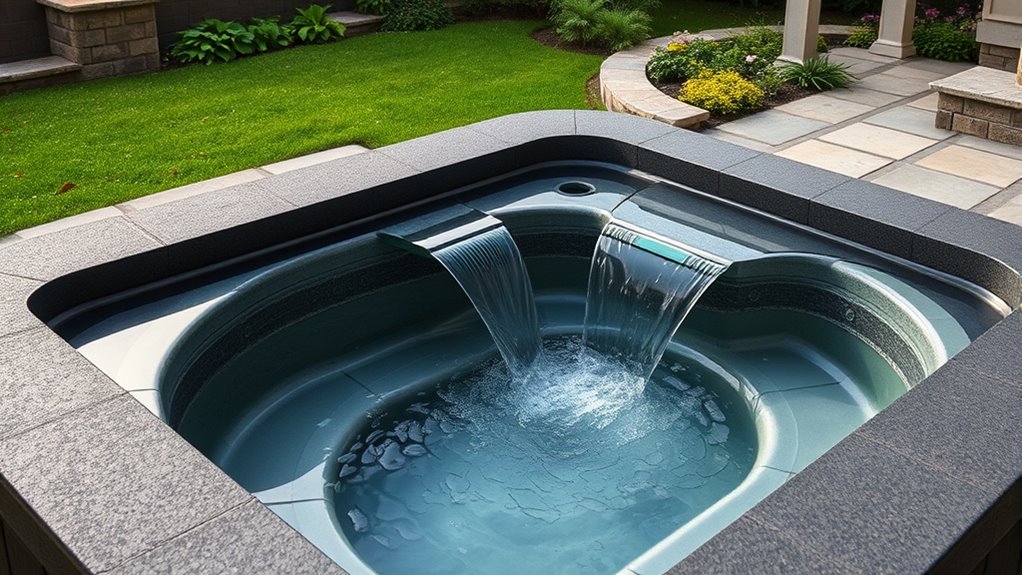
Have you ever wondered how integrated hot tubs manage excess water and maintain smooth operation? Spillways play a key role in this process. They act as safety valves, allowing surplus water to flow out when the system reaches its capacity. This prevents overflows that could damage the equipment or compromise safety. The spillway is strategically positioned to direct excess water away from sensitive components. It works automatically, opening when water levels rise too high and closing once normal levels are restored. This simple yet effective feature keeps your hot tub functioning properly without constant manual intervention. Understanding how spillways operate helps you appreciate the design that ensures longevity and reliable performance in integrated hot tubs. Additionally, proper installation planning and regular maintenance can enhance spillway efficiency and extend the lifespan of your hot tub system.
The Role of Spillways in Water Circulation and Safety
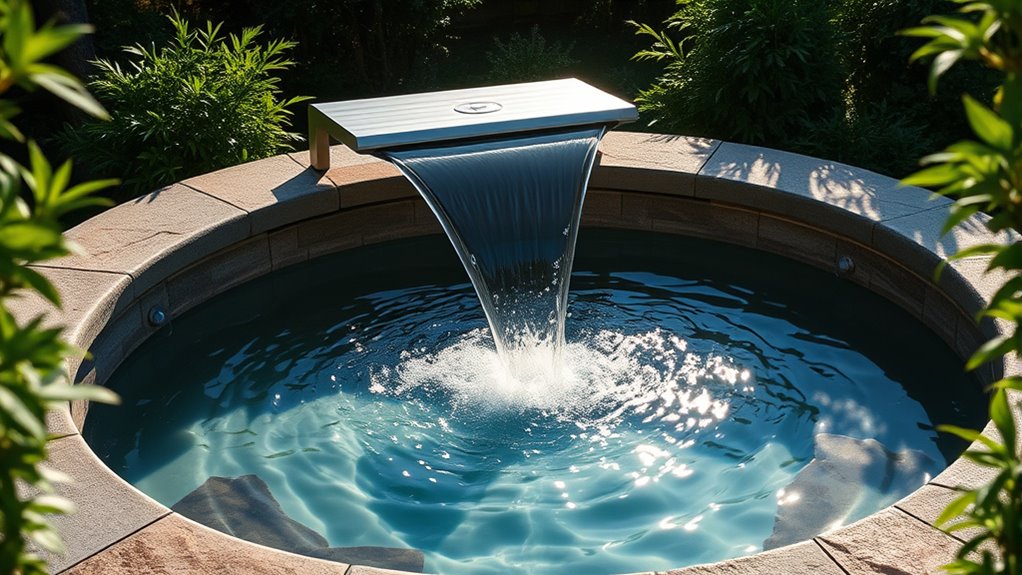
Spillways are essential for maintaining proper water flow in your hot tub system. They help prevent overflow risks and safeguard your equipment from damage. By understanding their role, you can ensure your hot tub stays safe and operates smoothly. Proper water circulation is critical for achieving optimal performance and longevity of your hot tub components.
Ensuring Proper Water Flow
Proper water flow is essential for maintaining the safety and efficiency of your hot tub, and spillways play a critical role in achieving this. They help direct water smoothly between different sections, preventing stagnation and ensuring consistent circulation. When functioning correctly, spillways reduce strain on pumps, maintain water quality, and keep your hot tub running smoothly. To maximize water flow, consider these tips:
- Regularly inspect spillways for blockages or damage
- Adjust spillway height for optimal flow rates
- Keep debris away to prevent clogs
- Balance water levels for even distribution
- Use quality spillway components for durability
- Effective spillway design enhances overall water circulation and performance
Preventing Overflow Risks
To prevent overflow risks in your hot tub, maintaining effective water circulation is essential. Spillways play a vital role by directing excess water safely away from the tub, preventing spills and potential water damage. Regularly check spillways for blockages or debris that can hinder water flow, ensuring they function properly. Properly calibrated overflow systems help manage volume fluctuations during heavy use or sudden rain, avoiding overfilling. Keep an eye on water levels and adjust inflow or outflow valves as needed. Installing reliable spillways not only prevents overflow but also promotes consistent water movement, reducing stagnation. Additionally, understanding the types of overflow systems used in hot tubs can help you select the best option for your setup. With these measures, you enhance safety, protect your equipment, and maintain a balanced, enjoyable hot tub experience.
Enhancing System Safety
Effective water circulation is key to maintaining a safe hot tub environment, and spillways play an essential role in this process. They help prevent water stagnation, ensure consistent flow, and reduce the risk of contamination. Spillways also act as safety features by diverting excess water, preventing overflows, and minimizing structural damage. Properly designed spillways contribute to overall safety by maintaining balanced water levels and reducing slips or accidents around the hot tub. Additionally, they assist in detecting and correcting passive voice, enhancing clarity and safety in communication about hot tub maintenance.
How Spillways Enhance Hot Tub Performance
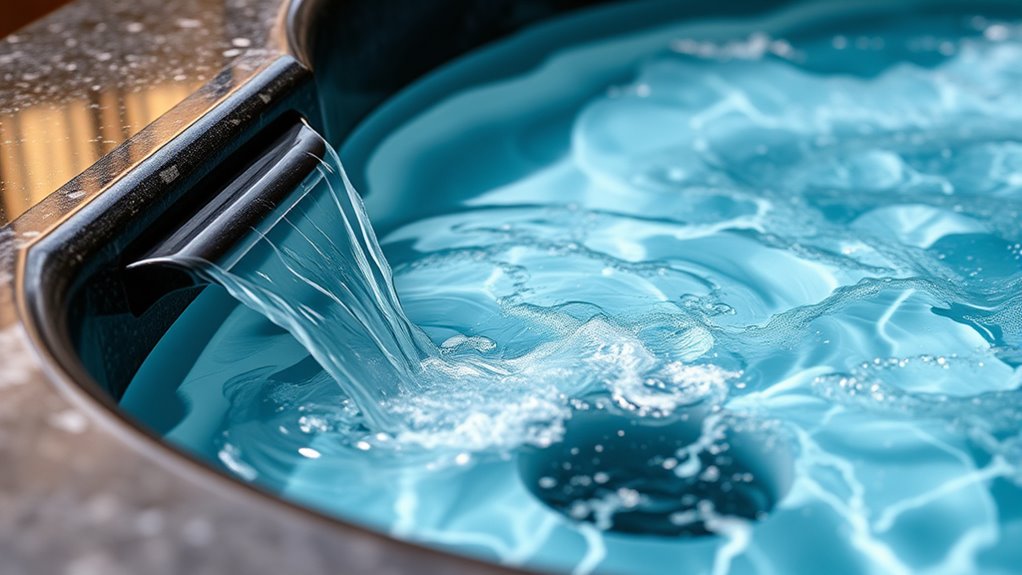
Spillways play a crucial role in improving hot tub performance by managing water flow and preventing overflows. They act as a safety feature, redirecting excess water when levels get too high, which protects your hot tub’s components from damage. By controlling the water level, spillways guarantee consistent circulation, helping maintain ideal water quality and temperature. This regulation is essential for maintaining device performance, preventing turbulence and reducing wear on pumps and filters, extending their lifespan. Spillways also help in avoiding messy spills around your hot tub area, keeping your space clean and safe. Additionally, they reduce the risk of water loss during heavy usage or sudden inflows, maintaining stable operation. Overall, spillways maximize performance by keeping water levels balanced, which leads to smoother operation and better longevity for your hot tub.
Thermal Isolation: Protecting Your Hot Tub’s Energy Efficiency
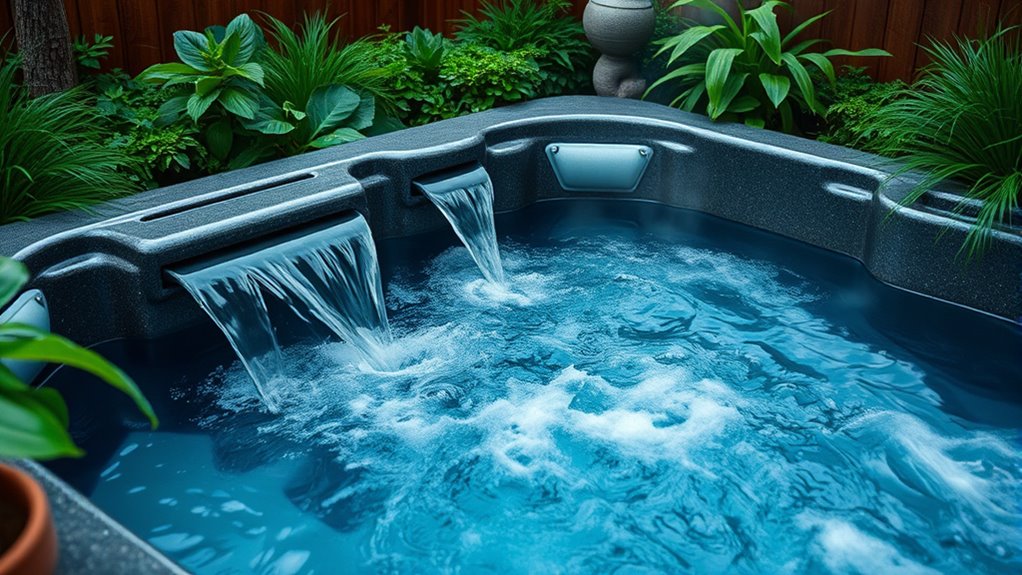
Thermal isolation in hot tubs minimizes heat loss by preventing warm water from escaping through the shell and surrounding structures. This keeps your hot tub warmer longer, reducing energy use and lowering bills. Effective insulation traps heat inside, so your heater doesn’t work as hard. You’ll notice faster warm-up times and more consistent temperatures. Proper thermal isolation also protects components from temperature swings that could damage them over time. To improve efficiency, consider these factors:
- Insulated shell and walls
- Thick, energy-efficient covers
- Sealed access panels
- Insulated plumbing lines
- Properly sealed skirting and joints
- Proper thermal insulation enhances overall energy efficiency and longevity of your hot tub.
Materials and Design Features for Effective Thermal Isolation

Choosing the right insulation materials can make a big difference in keeping your hot tub warm efficiently. Your structural design should also support thermal retention by minimizing heat loss. By focusing on both these aspects, you can improve your hot tub’s energy performance and comfort. Incorporating soundproofing techniques into your structure can further reduce heat transfer and improve overall thermal isolation.
Insulation Material Selection
Selecting the right insulation materials is essential for ensuring your hot tub maintains its temperature efficiently. The best options offer low thermal conductivity, durability, and moisture resistance. When choosing, consider materials like spray foam, rigid foam boards, fiberglass batts, mineral wool, or reflective insulation. Each has its advantages:
- Spray foam creates seamless coverage and high R-values
- Rigid foam boards are easy to cut and install
- Fiberglass batts are affordable and widely available
- Mineral wool resists moisture and mold
- Reflective insulation reflects heat for added efficiency
Your goal is to minimize heat loss while resisting water damage. Proper insulation improves energy efficiency, reduces running costs, and extends your hot tub’s lifespan. Select materials that suit your design, climate, and budget for superior thermal performance. Using vetted insulation options ensures you choose materials that offer optimal thermal isolation and longevity.
Structural Design Strategies
Implementing effective structural design strategies is essential for optimizing thermal isolation in your hot tub. Start by choosing materials with low thermal conductivity, like foam insulation or advanced composites, to reduce heat transfer. Incorporate thick, insulated walls and floors to create barriers that prevent heat loss. Use strategic layering—combining insulation with vapor barriers—to enhance efficiency. Design your hot tub with minimal joints and seams, which are potential heat escape points. Consider placing the hot tub on a raised platform with insulation underneath to further limit heat conduction to the ground. Additionally, integrating thermal breaks—materials that interrupt heat flow—can considerably improve performance. Proper structural planning ensures your hot tub maintains temperature, reduces energy consumption, and delivers a more comfortable experience. Paying attention to material selection can further enhance thermal performance and long-term durability.
Benefits of Combining Spillways and Thermal Isolation
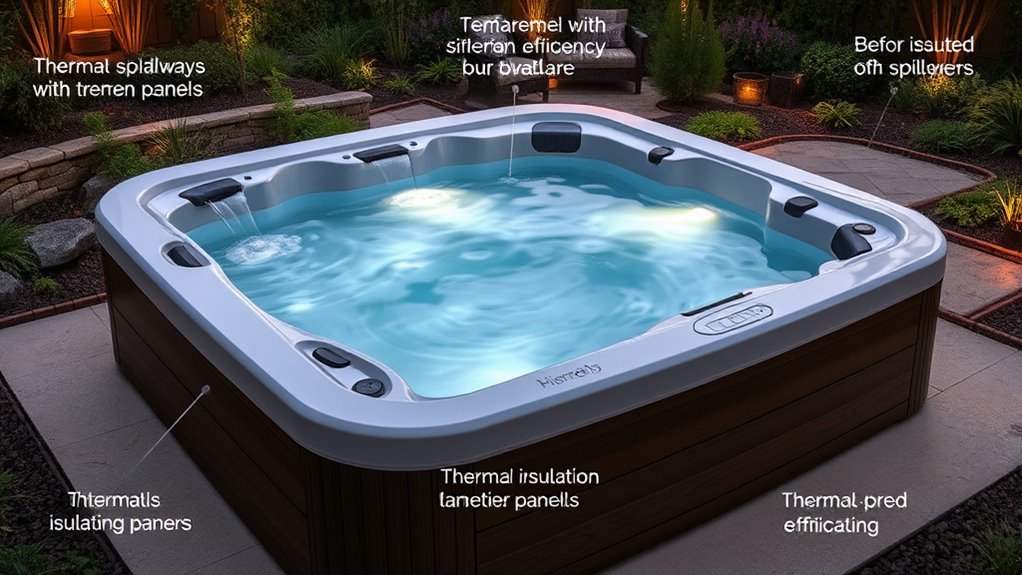
Combining spillways with thermal isolation in hot tub design offers significant advantages for both safety and energy efficiency. Spillways help manage water levels and prevent overflow, reducing damage risks. Thermal isolation minimizes heat loss, keeping your hot tub warm longer and lowering energy costs. Together, they enhance safety by preventing water overflows and maintaining ideal temperature control. You’ll enjoy consistent hot water without constantly re-heating, saving money and energy. Plus, this integration reduces maintenance needs and prolongs equipment lifespan. Here are some benefits:
Combining spillways with thermal isolation enhances hot tub safety, efficiency, and longevity.
- Prevents water overflow and spills
- Maintains stable water temperature
- Cuts energy consumption
- Protects equipment from thermal stress
- Simplifies overall hot tub management
Maintenance Tips for Spillways and Thermal Components
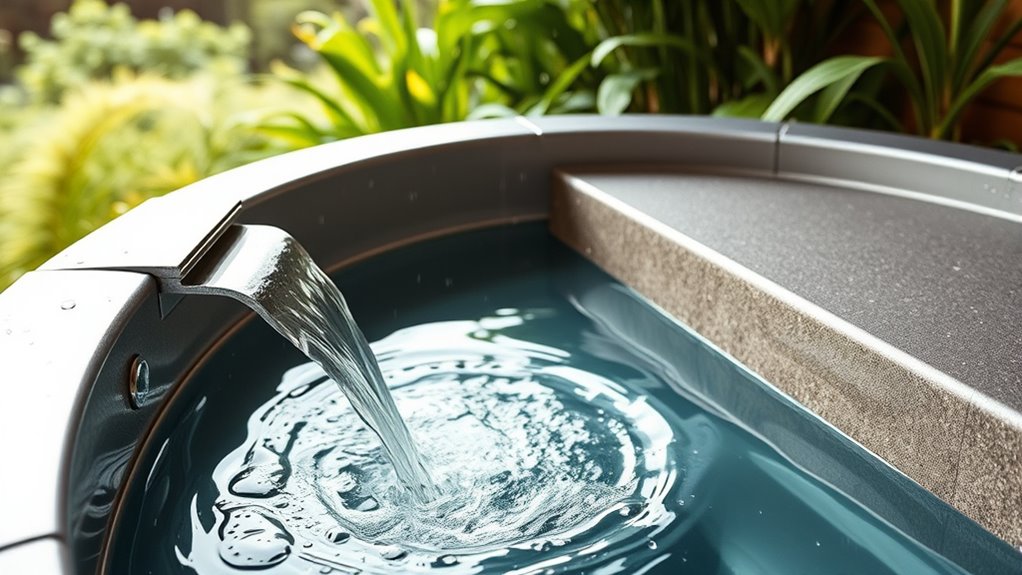
Maintaining spillways and thermal components is key to guaranteeing your hot tub operates smoothly and efficiently over time. Regular inspections help catch issues early, such as leaks or blockages. Clean spillways to prevent debris buildup that can hinder water flow. Check thermal insulation for damage or gaps, which can reduce efficiency. Ensure valves are functioning correctly to control water flow. Use a soft brush or cloth to remove dirt from components without damaging them. Keep a maintenance schedule to track inspections and cleaning.
| Maintenance Step | Recommended Action |
|---|---|
| Inspect spillways | Look for cracks or blockages |
| Clean spillways | Remove debris and algae |
| Check thermal insulation | Seal gaps or replace damaged parts |
| Test valves | Confirm proper operation |
| Schedule regular checks | Prevent long-term issues |
Frequently Asked Questions
Can Spillways Be Customized to Fit Different Hot Tub Sizes?
Yes, spillways can be customized to fit different hot tub sizes. When you work with manufacturers or specialists, they often tailor spillways to match your hot tub’s dimensions and design. This guarantees proper water flow and aesthetic integration. You should provide precise measurements and preferences, so they can create a spillway that seamlessly fits your hot tub, enhancing both functionality and appearance.
How Do Spillways Affect the Water Temperature Stability?
You might think spillways cause temperature fluctuations, but they actually help stabilize water temperature. Spillways regulate water flow, preventing sudden changes that can affect heat consistency. By allowing excess water to escape, they maintain equilibrium, keeping your hot tub at a comfortable, steady temperature. Properly designed spillways work with thermal isolation features, enhancing efficiency and ensuring your hot tub stays warm without sudden drops or spikes.
Are Thermal Isolation Features Costly to Install or Upgrade?
Thermal isolation features can vary in cost, but generally, they’re not too expensive to install or upgrade. You might find that adding insulation or upgrading existing components is a manageable expense, especially compared to the energy savings you’ll enjoy. If you’re considering upgrades, it’s wise to get quotes from professionals to understand the specific costs for your hot tub. Overall, investing in thermal isolation can be a cost-effective way to improve efficiency.
What Maintenance Is Required for Spillway Components Over Time?
Did you know spillway components can last up to 10 years with proper maintenance? You should regularly inspect for debris buildup, which can obstruct water flow, and clean or replace worn-out parts as needed. Keep an eye on seals and joints for leaks, and verify the spillway surface remains smooth to prevent clogs. Routine maintenance prolongs the lifespan and ensures your hot tub operates smoothly and safely.
Do Integrated Systems Require Specialized Repairs or Professional Servicing?
Yes, integrated systems often require specialized repairs or professional servicing. You should have trained technicians handle complex issues like spillway adjustments or thermal isolation repairs to guarantee proper function. Regular professional check-ups can prevent costly breakdowns and keep your hot tub running smoothly. Attempting repairs without expertise might cause further damage, so it’s best to rely on specialists familiar with integrated hot tub components for maintenance and repairs.
Conclusion
By integrating spillways and thermal isolation, you can boost your hot tub’s safety, efficiency, and performance. Did you know that proper thermal isolation can reduce energy costs by up to 30%? Maintaining these components guarantees your hot tub stays enjoyable and cost-effective year-round. Investing in these features not only enhances your relaxation experience but also saves you money in the long run. Take care of your hot tub, and it’ll reward you with years of soothing comfort.