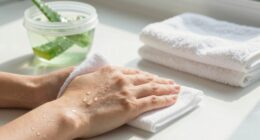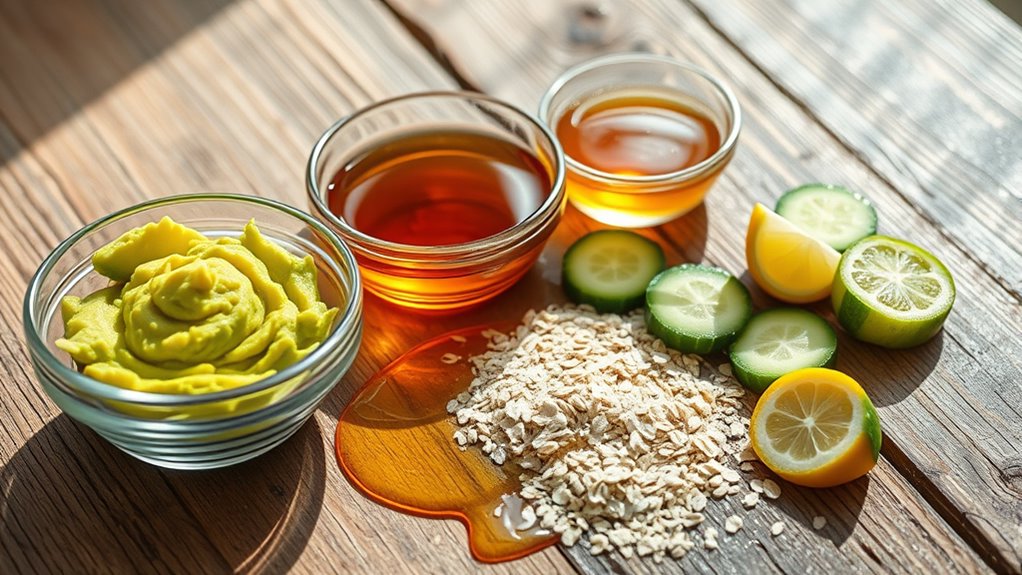

You can make safe DIY face masks using kitchen ingredients like honey, oatmeal, cucumber, yogurt, lemon, turmeric, avocado, coconut oil, green tea, clay, aloe vera, sugar, and olive oil. These natural remedies nourish, hydrate, and clarify your skin while minimizing chemical exposure. Proper mixing and application help you achieve glowing, refreshed skin. To discover effective recipes and expert tips for creating your own masks at home, keep exploring different options and techniques.

Get workout gear delivered free — and shop member deals
- Fast, free delivery on millions of items
- Access to Prime Big Deal Days deals on October 6–7
- Prime Video, Amazon Music and more included
Key Takeaways
- Use fresh, natural ingredients like honey, oatmeal, avocado, aloe vera, and lemon to ensure safety and effectiveness.
- Conduct a patch test on your wrist to check for allergic reactions before applying masks to the entire face.
- Avoid harsh ingredients or excessive acids that can irritate sensitive skin; stick to gentle, soothing components.
- Store leftover masks in airtight containers in the refrigerator and use within 24 hours to prevent bacterial growth.
- Follow proper application techniques: clean skin, even spreading, avoiding eyes, and rinsing thoroughly after 10-20 minutes.
As an affiliate, we earn on qualifying purchases.
Nourishing Honey and Oatmeal Mask

A nourishing honey and oatmeal mask is an easy and effective way to soothe and hydrate your skin. This mask fits perfectly into DIY skincare routines because it uses natural ingredients with proven benefits. Honey is a natural humectant, meaning it locks in moisture and helps heal skin irritations, while oatmeal gently exfoliates and calms inflammation. When combined, these ingredients create a soothing treatment that leaves your skin feeling soft and refreshed. Using natural ingredient benefits, this mask minimizes the need for harsh chemicals found in commercial products. Plus, it’s simple to prepare at home—just mix honey with ground oatmeal, apply, and relax. Incorporating this mask into your routine can boost your skin’s health using the power of nature, especially since natural ingredients can also support skin safety and reduce the risk of irritation.
Refreshing Cucumber and Yogurt Mask

Have you ever wanted a quick way to invigorate tired, dull skin? This cucumber and yogurt mask is a perfect DIY skincare solution. Cucumber’s cooling properties soothe inflammation and reduce puffiness, leaving your skin feeling revitalized. Yogurt provides gentle exfoliation and hydration, thanks to natural probiotics and lactic acid. Together, they create a calming, nourishing mask that awakens your complexion. To make it, blend half a cucumber with two tablespoons of plain yogurt until smooth. Apply the mixture evenly over your face, avoiding the eye area. Leave it on for 10-15 minutes, then rinse with cool water. This natural remedy is simple, affordable, and effective for instant skin refreshment. Incorporating automation technologies into skincare routines can streamline preparation and enhance consistency.
Brightening Lemon and Turmeric Mask

Lemon is great for brightening your skin and reducing dark spots, while turmeric offers powerful anti-inflammatory benefits. When mixing the mask, make sure to blend the ingredients smoothly and apply it evenly for the best results. Keep in mind, a gentle touch helps prevent irritation and ensures your skin absorbs the goodness. Incorporating color accuracy into your skincare routine can also help enhance overall results.
Lemon’s Skin Benefits
Ever wondered how a simple ingredient like lemon can transform your skin? Lemon is packed with antioxidant properties that fight free radicals, helping to slow down aging and promote a brighter complexion. Its natural acids gently exfoliate dead skin cells, revealing a fresher, more radiant look. Plus, lemon can boost skin hydration by encouraging your skin’s natural moisture production, leaving it feeling plump and smooth. Regular use of lemon in your mask can reduce dark spots and even out skin tone, giving you a luminous glow. Just remember, lemon’s acidity can be harsh if overused, so always dilute it and follow up with moisturizer. Incorporating lemon into your skincare routine can bring noticeable brightening benefits while supporting overall skin health. Additionally, understanding the role of attention in skincare routines can help you achieve better results by practicing mindful application techniques. Being aware of your skin type can help tailor the use of lemon for optimal results and minimize irritation. Incorporating skincare awareness can also help prevent overexposure and potential irritation from lemon’s acidity. Using proper application methods ensures that your skin benefits without unnecessary risks.
Turmeric’s Anti-Inflammatory Power
Turmeric is renowned for its potent anti-inflammatory properties, making it a valuable ingredient in brightening face masks. Its anti-inflammatory benefits help soothe irritated skin, reduce redness, and calm acne-prone areas. When you incorporate turmeric skincare into your routine, you’re harnessing natural compounds like curcumin that combat inflammation at the source. This can lead to a clearer, more even complexion over time. The brightening lemon combined with turmeric enhances skin radiance while minimizing discoloration. Using turmeric in your DIY masks not only supports skin health but also helps prevent future inflammation and irritation. This versatile spice is a powerful, natural way to calm sensitive skin and improve overall skin tone, making it a must-have in your homemade skincare arsenal.
Mixing and Application Tips
To get the most benefits from your brightening lemon and turmeric mask, proper mixing and application are key. Mix fresh lemon juice, turmeric powder, and a gentle base like honey or yogurt until smooth. Use a clean spatula or brush for even application, avoiding sensitive areas around your eyes. Before applying, perform an allergy test by dabbing a small amount on your inner wrist and waiting 24 hours to check for any reactions. Once ready, apply the mask evenly on your face, avoiding the eye area. To ensure freshness, store any leftover mask in an airtight container in the refrigerator and use within 24 hours. Proper face mask storage not only maintains its potency but also prevents bacterial growth, making your skincare routine safer and more effective. Regularly assessing your skin’s response can help ensure the mask remains beneficial and safe for your individual needs. Additionally, understanding eco-friendly practices for skincare ingredients can help you choose options that are safer for your skin and the environment. Incorporating knowledge about storage techniques can further extend the shelf life of your homemade masks and optimize their benefits. For added safety, consider community resilience strategies to protect your health and well-being during emergencies, especially when relying on homemade remedies.
Hydrating Avocado and Coconut Oil Mask
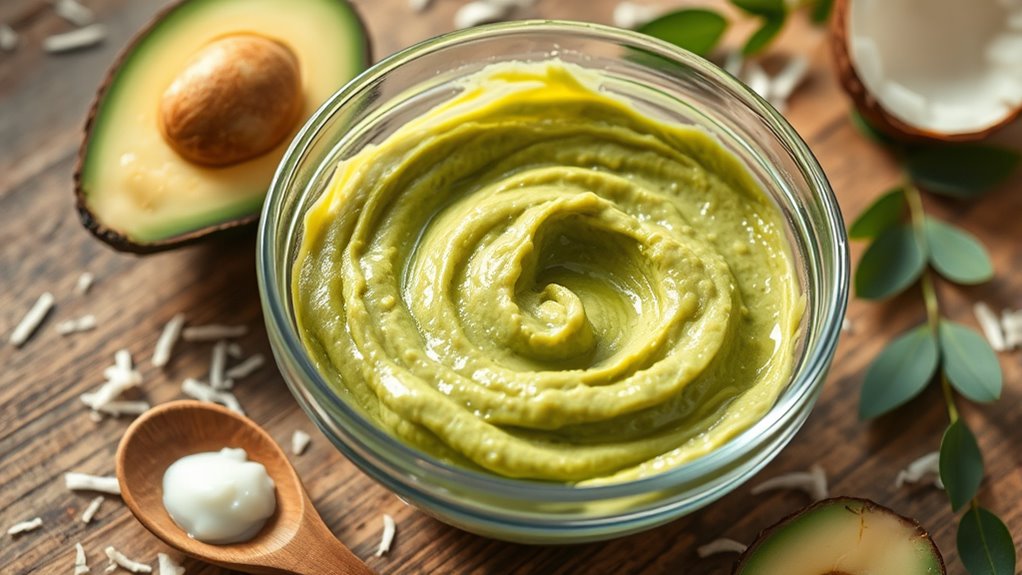
Looking for a natural way to boost your skin’s hydration? This avocado and coconut oil mask uses simple, natural ingredients to nourish your skin deeply. Avocado is rich in healthy fats and antioxidants, helping to lock in moisture and improve elasticity. Coconut oil works as a natural moisturizer that soothes dry, flaky skin while providing antimicrobial benefits. To make the mask, mash a ripe avocado until smooth and mix in a teaspoon of coconut oil. Apply the mixture evenly to your face, avoiding the eye area. Leave it on for 10-15 minutes, then rinse with warm water. This mask offers a quick, easy way to enhance your skin hydration using natural ingredients, leaving your skin feeling soft, supple, and refreshed. Angel Number Soulmate continues to highlight how understanding spiritual signs can guide personal growth and relationships. Incorporating essential oils for skin health can further support your skincare routine naturally. Additionally, using skincare ingredient optimization can help you achieve better results from your DIY treatments.
Clarifying Green Tea and Clay Mask
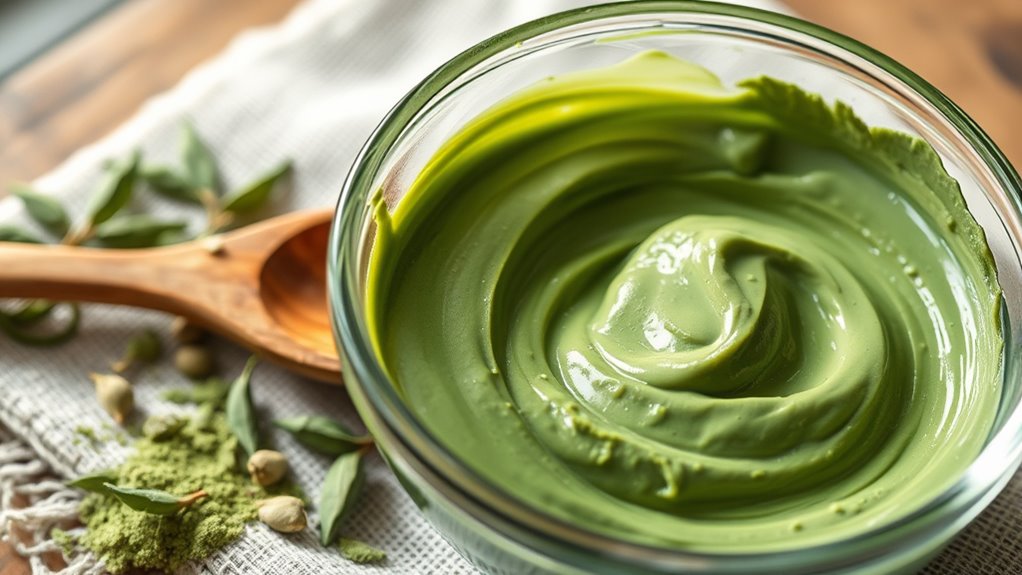
Green tea is packed with antioxidants that help reduce inflammation and control excess oil, making it perfect for clarifying your skin. When preparing your clay mask, you’ll want to combine the green tea with the clay to enhance its detoxifying effects. Let’s explore how these ingredients work together for a clearer complexion. Incorporating antioxidant-rich ingredients like green tea can boost the mask’s effectiveness against skin impurities. Using patch testing can also help prevent potential skin reactions and ensure the mask suits your skin type. Additionally, understanding credit card security measures can ensure safe online purchases, especially when shopping for skincare products online. Incorporating crochet styles for locs can also promote overall scalp health by protecting hair and scalp from external stressors.
Subheading 1: Benefits of Green Tea
Have you ever wondered how green tea can boost your skincare routine? The green tea benefits are impressive, thanks to its rich antioxidant properties. These antioxidants help protect your skin from environmental damage, reducing signs of aging like fine lines and wrinkles. Green tea also has anti-inflammatory qualities, calming redness and irritation. Regularly using green tea in your DIY masks can improve your skin’s overall tone and clarity. Its natural compounds help control excess oil, making it ideal for oily or acne-prone skin. Plus, green tea’s soothing effects promote a healthier, more radiant complexion. Incorporating green tea into your skincare routine is simple and effective, giving you a natural way to enhance your skin’s health without harsh chemicals. Using green tea can also support pimple patch effectiveness by reducing inflammation and promoting healing.
Subheading 2: Clay Mask Preparation
Combining green tea with clay creates a powerful mask that clarifies and detoxifies your skin. To prepare, choose a clay with suitable mineralogy—such as bentonite or kaolin—that matches your skin type. Mix one tablespoon of green tea (cooled) with two tablespoons of clay until you get a smooth paste. Verify your green tea is strong for maximum antioxidant benefits. When applying, use clean fingers or a brush, spreading the mask evenly over your face, avoiding the eyes. Apply a thin, consistent layer, and leave it on for 10-15 minutes. During application, gentle patting helps the mask adhere better. Rinse with lukewarm water and pat dry. Proper application techniques enhance the mask’s detoxifying effects and leave your skin feeling refreshed. Understanding face masks can help you optimize your skincare routine for better results.
Soothing Aloe Vera and Honey Mask
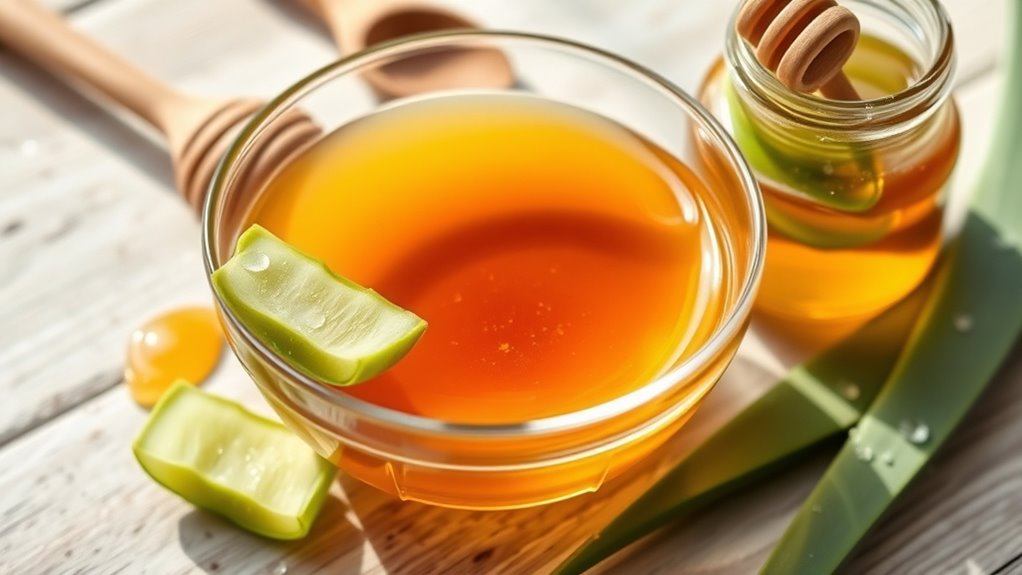
A soothing aloe vera and honey mask is an easy and natural way to calm irritated or sensitive skin. Using DIY skincare with natural ingredients, you can create a gentle mask that reduces redness and inflammation. To make it, follow these simple steps:
A gentle, natural mask to soothe irritated skin using aloe vera and honey.
- Mix 2 tablespoons of pure aloe vera gel with 1 tablespoon of honey.
- Stir until smooth and well combined.
- Apply the mixture evenly to your face, focusing on problem areas.
- Leave it on for 15-20 minutes before rinsing with lukewarm water.
This mask harnesses the healing properties of aloe vera and honey, making it perfect for sensitive skin. It’s a quick, effective remedy that’s free from harsh chemicals, ideal for your natural skincare routine.
Exfoliating Sugar and Olive Oil Mask
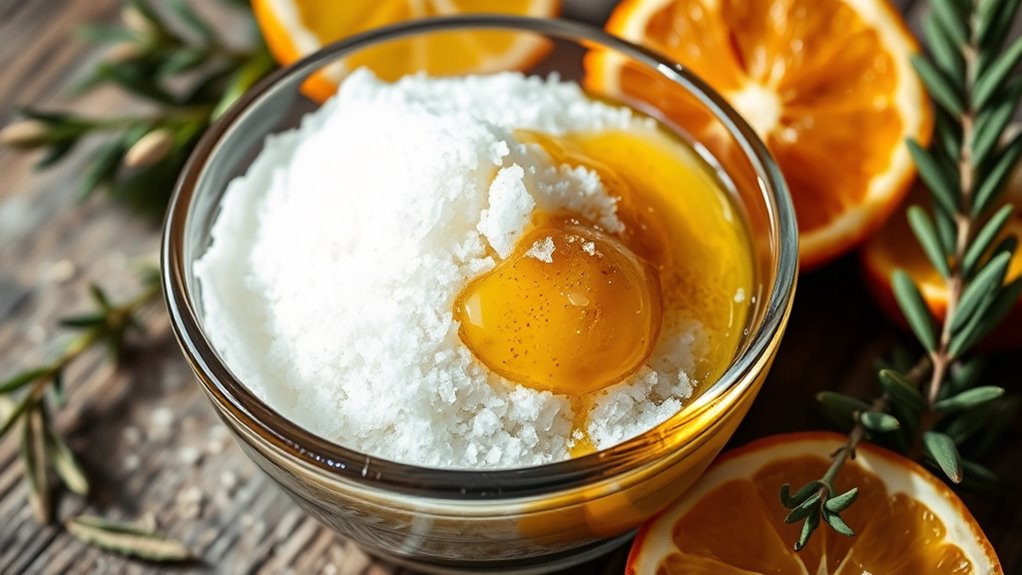
If you’re looking to gently exfoliate your skin while providing it with nourishing moisture, an exfoliating sugar and olive oil mask is an excellent choice. To apply, mix equal parts sugar and olive oil until you get a paste. Gently massage the mixture onto your face in circular motions, focusing on areas with dead skin buildup. This face massage helps remove dull cells and stimulates circulation. The sugar acts as a natural exfoliant, while olive oil moisturizes and soothes your skin. Be careful not to overdo it—exfoliating twice a week is enough. After massaging, rinse with lukewarm water. This mask can help maintain your skin pH balance, leaving your face smooth, refreshed, and glowing.
Frequently Asked Questions
Can These Masks Be Used on Sensitive Skin Types Safely?
You wonder if these DIY masks are safe for sensitive skin. It’s important to contemplate ingredient sensitivity, as some kitchen ingredients may cause skin reactions. Always do a patch test first to check for any adverse effects. If your skin reacts negatively, avoid using that ingredient. Using gentle, soothing ingredients and monitoring your skin’s response helps minimize risks and keeps your skin healthy while enjoying DIY skincare.
How Often Should I Apply These DIY Masks for Best Results?
Did you know that applying a face mask too often can lead to skin irritation? For best results, follow the recommended frequency guidelines, usually 1-3 times a week. Stick to a consistent application schedule to avoid overdoing it, which can harm your skin’s natural barrier. Listening to your skin’s response and adjusting accordingly ensures you get the benefits without adverse effects.
Are There Any Ingredients to Avoid for Allergy-Prone Skin?
If you have allergy-prone skin, you should avoid allergenic ingredients and be mindful of ingredient sensitivities. Common allergens like honey, citrus, and certain spices can trigger reactions. Always patch test new masks and research ingredients beforehand. If you notice redness, itching, or irritation, stop using that ingredient immediately. Being cautious helps prevent adverse reactions and keeps your skin safe while enjoying DIY skincare.
Can These Masks Replace Commercial Skincare Products Entirely?
You might wonder if DIY masks can replace commercial skincare. While natural ingredients are cost-effective and free from synthetic chemicals, they may not provide all the benefits of professional products. For sensitive skin, DIY masks are gentle, but for targeted issues, commercial options often contain specialized ingredients. So, you can incorporate DIY masks into your routine, but they shouldn’t fully replace skincare tailored to your skin’s needs.
How Long Should I Leave Each Mask on for Optimal Benefits?
For ideal benefits, you should leave each mask on for about 10 to 15 minutes. This application timing allows your skin to absorb the ingredients effectively without causing irritation. Keep in mind, longer isn’t always better, as it can lead to dryness or discomfort. Pay attention to your skin’s response, and remove the mask once you notice it drying or feeling tight, ensuring maximum ingredient absorption and skin rejuvenation.
Conclusion
Remember, homemade face masks can be gentle and effective when made with kitchen ingredients. Always patch test first and listen to your skin’s needs. With a little care, you can nourish, refresh, and brighten your complexion naturally. As the saying goes, “An ounce of prevention is worth a pound of cure,” so prioritize safety and quality in your DIY skincare routine. Enjoy pampering yourself with these simple, nourishing masks!
Fall Picks
fall essentials
As an affiliate, we earn on qualifying purchases.