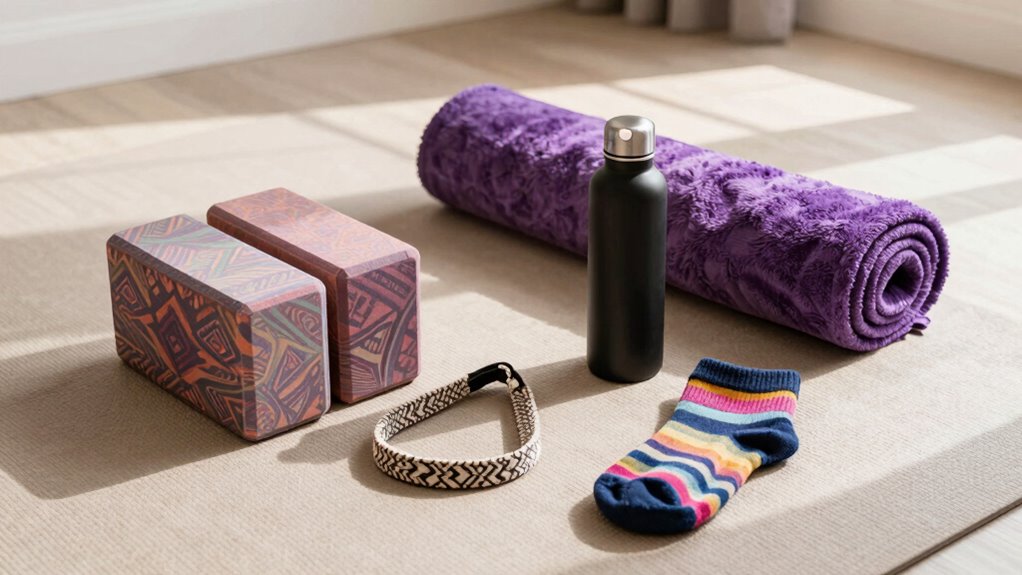

To stay consistent in your yoga practice, use good-quality accessories like a stable mat, blocks, and straps to improve comfort and alignment. Incorporate mindfulness techniques and keep a dedicated space at home to build a routine. Hydrate well and eat nourishing snacks to stay energized. Props support your progress, while a motivating environment keeps you committed. Keep these essentials in mind, and you’ll find it easier to maintain your practice over time. Want to learn more?

Get workout gear delivered free with Prime
- Fast, free delivery on millions of items
- Prime Video, Amazon Music and more included
- Member-only deals all year
Key Takeaways
- Using a high-quality, non-slip yoga mat enhances stability and comfort, encouraging regular practice.
- Incorporating blocks and straps supports proper alignment and reduces frustration for beginners.
- Creating a dedicated, visually inviting practice space fosters consistency and routine.
- Utilizing props helps prevent injury and builds confidence during challenging poses.
- Combining accessories with mindfulness techniques increases motivation and makes practice more enjoyable.
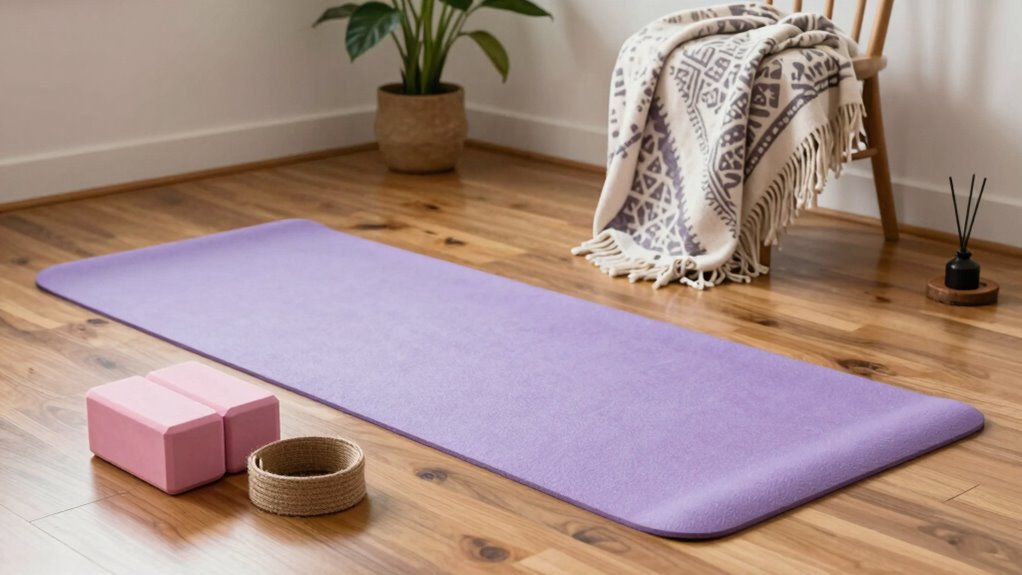
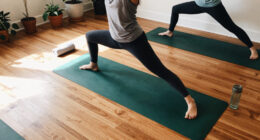
Are you new to yoga and wondering what accessories you really need? Starting your practice can feel overwhelming, especially when you see others with mats, blocks, straps, and more. But the right accessories don’t have to complicate things; they can actually help you stay consistent and motivated. One of the most essential tools is a good-quality yoga mat. It provides stability and comfort, making it easier to focus on your movements without slipping or discomfort. As you progress, you might find that adding a few blocks can help you deepen stretches or maintain proper alignment, especially in poses that require flexibility or balance. A strap is another handy accessory; it can assist you in reaching further or holding poses longer, making challenging postures more accessible.
Starting yoga? A quality mat, blocks, and a strap can support your journey and boost your confidence.
Beyond physical tools, integrating mindfulness techniques into your routine can significantly improve your consistency. When you approach yoga with mindful awareness, you become more attuned to your body’s needs and limitations. This mental focus helps you avoid frustration and injury, encouraging you to practice regularly. Pairing mindfulness with simple nutritional tips also boosts your energy levels and recovery. For example, staying hydrated and eating light, nutritious snacks before practice can give you the stamina to show up consistently. Consuming foods rich in antioxidants, healthy fats, and protein helps reduce inflammation and supports muscle recovery, making it easier to stick with your routine over time. Additionally, understanding the importance of proper equipment can enhance your safety and comfort during practice. Incorporating hydration systems into your routine can also help you maintain optimal hydration levels, especially during longer sessions. Developing a consistent routine around your yoga practice can further reinforce your commitment and make it easier to stay on track. Incorporating knowledge about yoga accessories can further optimize your practice and prevent injury.
To reinforce your commitment, consider setting a dedicated space for your practice. Having a specific area in your home, equipped with your mat and accessories, creates a sense of routine and expectation. This environment can serve as a visual reminder to prioritize your yoga sessions. Additionally, keeping a journal to track your progress and reflect on your experiences fosters accountability. Writing down your mindfulness techniques and nutritional tips can help you identify what works best for you and motivate ongoing engagement.
Ultimately, the key to staying consistent isn’t just about the accessories you buy but how you use them. Use your mat and props to support your practice, incorporate mindfulness techniques to stay mentally present, and follow simple nutritional tips to maintain your energy. With these tools, you can develop a sustainable yoga habit that nourishes both your body and mind. Remember, consistency comes from making your practice enjoyable and accessible, not from perfection or intensity. As you continue, you’ll find that small, intentional steps—supported by the right accessories and mindset—lead to lasting progress.
As an affiliate, we earn on qualifying purchases.
Frequently Asked Questions
Can Yoga Accessories Improve My Flexibility?
Yes, yoga accessories like props can improve your flexibility. Using yoga props, such as blocks, straps, and bolsters, supports your body, allowing you to hold stretches longer and deepen poses safely. This flexibility enhancement helps you progress gradually without strain or injury. By incorporating these accessories into your practice, you’ll notice increased range of motion and comfort, making it easier to advance in your yoga journey and stay consistent.
Are Expensive Accessories Necessary for Beginners?
No, expensive accessories aren’t necessary for beginners. You can start with basic, affordable items that fit your beginner budget. Focus on essentials like a comfortable mat and maybe a yoga block, which often cost less. Cost considerations matter, but investing in high-end gear isn’t essential at first. As you progress, you can gradually add more accessories if desired. The key is consistency, not spending a lot upfront.
How Often Should I Replace My Yoga Mat?
You should replace your yoga mat every 6 to 12 months, depending on its durability and how often you practice. Regular accessory maintenance, like cleaning your mat, extends its lifespan, but signs of wear—such as thinning, tears, or loss of grip—mean it’s time for a new one. Prioritize replacing your yoga mat when its durability starts to decline to guarantee safety and comfort during your practice.
Do Accessories Help Prevent Injuries?
Think of your yoga accessories as your safety net; they play a crucial role in injury prevention. Non-slip mats, blocks, and straps provide stability and proper alignment, reducing strain and the risk of falls. These accessory benefits empower you to practice with confidence and focus on your form. Investing in quality accessories not only supports your practice but also acts as a barrier against injuries, helping you stay consistent and injury-free.
Can I Do Yoga Without Any Accessories?
Yes, you can do yoga without any accessories, especially if you’re focusing on minimal equipment for your home practice. Many foundational poses require just your body weight, making it easy to get started without extra gear. As you progress, however, accessories like mats or blocks can enhance comfort and stability. But at the beginning, simply use a clean, quiet space and your body to build strength and mindfulness.
Conclusion
With the right accessories in hand, you’ll feel more anchored and confident on your yoga journey. Picture yourself unrolling your mat, the soft grip of your yoga towel, and the gentle support of your blocks guiding you through each pose. As you breathe deeply, these tools become your allies, helping you stay committed and steady. Embrace your practice, knowing that with each session, your strength and flexibility grow—one mindful stretch at a time.
Fall Picks
fall essentials
As an affiliate, we earn on qualifying purchases.