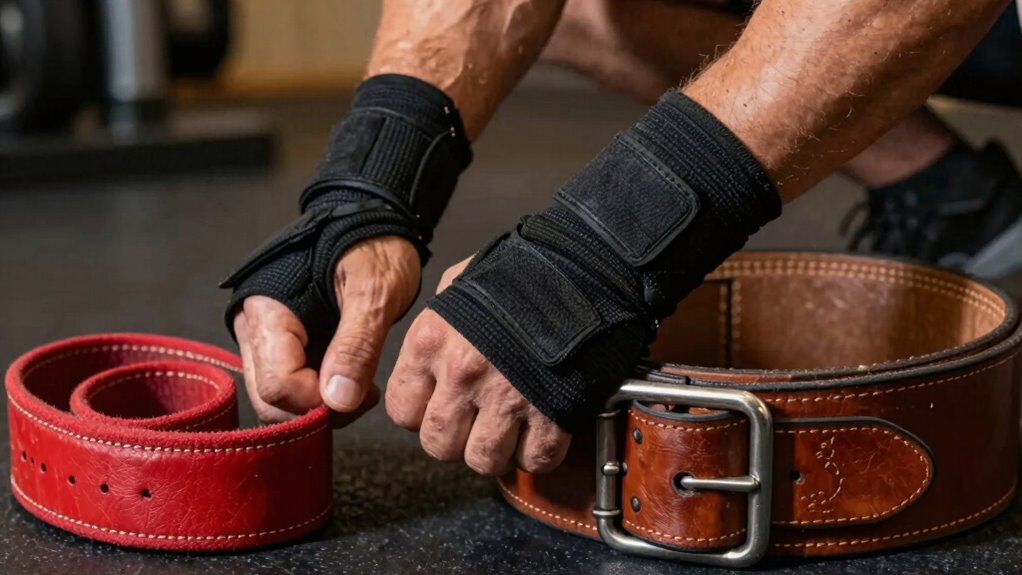

Wrist wraps support your wrists during heavy lifts, helping prevent hyperextension and improving stability, which might boost your mobility over time. Lifting straps offload grip muscles, allowing you to lift heavier or do more reps without slipping, but overusing them can hinder grip strength development. Belts provide core stability and increase intra-abdominal pressure, protecting your lower back during maximum loads. To get the most out of each tool, understanding their roles can help you lift smarter and safer—keep exploring to see how they fit into your training.

Get workout gear delivered free with Prime
- Fast, free delivery on millions of items
- Prime Video, Amazon Music and more included
- Member-only deals all year
Key Takeaways
- Wrist wraps stabilize and support wrists, reducing hyperextension and strain during heavy lifts.
- Lifting straps offload grip muscles, allowing for more repetitions and heavier weights.
- Belts increase intra-abdominal pressure, providing core stability and protecting the lower back.
- Each tool enhances safety, performance, and mobility when used correctly during intense lifting sessions.
- Proper use of these tools can prevent injury and help overcome lifting plateaus effectively.
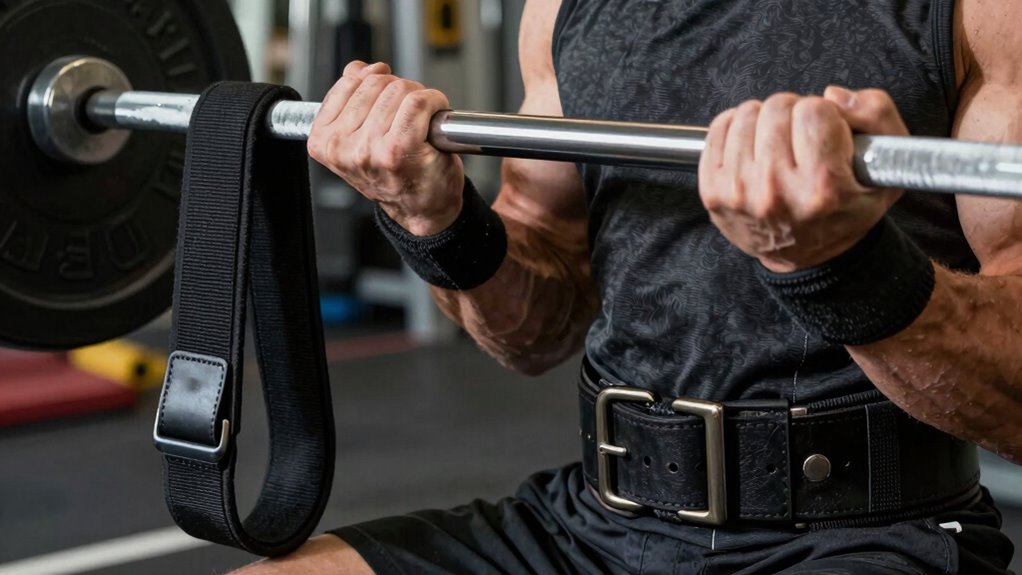
When you’re lifting heavy weights, wrist wraps, lifting straps, and belts can be essential tools to enhance your performance and protect your body. Each one serves a specific purpose, helping you push your limits while minimizing injury risk. If you want to improve your lifting game, understanding how these tools work is key. Let’s focus on wrist wraps first. They provide support around your wrists, stabilizing the joint during heavy presses or lifts. This support helps maintain wrist alignment, reducing strain and preventing hyperextension. Over time, consistent use can even improve wrist mobility by encouraging proper positioning during lifts. Additionally, wrist wraps can boost grip endurance by reducing fatigue in the stabilizing muscles, allowing you to hold onto heavier weights longer without discomfort. This is especially beneficial when you’re performing high-rep sets or exercises with maximum load.
Lifting straps are another crucial tool, primarily designed to enhance your grip endurance. When you’re lifting weights that challenge your grip strength, your forearms can tire out before the target muscles do. Straps wrap around the bar and your hands, taking some of the load off your grip. This means you can perform more repetitions or lift heavier weights without your grip giving out prematurely. Using straps allows you to focus more on your intended muscles, like your back or biceps, rather than worrying about slipping. However, it’s important to use straps judiciously; over-reliance can sometimes hinder grip development, but they’re invaluable for pushing past plateaus or during heavy pulling movements.
Belts serve a different purpose—they provide core stability during heavy lifts like squats or deadlifts. When properly fitted, a belt increases intra-abdominal pressure, creating a brace around your core. This support helps protect your lower back from injury and allows you to generate more power. Wearing a belt doesn’t mean you’re weak; it’s a tool that allows you to lift more safely and effectively. Many lifters find that a belt also helps them maintain proper form, especially when handling maximum loads. While it doesn’t directly influence wrist mobility or grip endurance, a supportive core can contribute to overall lifting performance, making each movement more controlled and efficient.
As an affiliate, we earn on qualifying purchases.
Frequently Asked Questions
Can Wrist Wraps Improve Grip Strength During Lifts?
Wrist wraps can help improve your grip endurance during lifts by providing extra wrist stability, which allows you to focus more on your grip and less on wrist discomfort. They support your wrist joint, reducing strain and preventing fatigue, so you can lift heavier or for longer. While they don’t directly increase grip strength, they help maintain proper form and reduce the risk of injury, boosting overall lifting performance.
Are Lifting Straps Suitable for All Types of Lifting Exercises?
Lifting straps aren’t suitable for all types of lifts, especially those requiring precise grip and stabilization. They excel in exercises like heavy pulls or shrugs, thanks to their ergonomic design that reduces grip fatigue. While they add aesthetic appeal, they may compromise natural grip strength over time. Use straps selectively to prevent reliance, ensuring you maintain core grip and lifting technique for overall strength development.
How Do Belts Affect Core Engagement During Lifts?
Belts act like a sturdy backbone, supporting your core stability during heavy lifts. They increase intra-abdominal pressure, which helps prevent injuries and keeps your spine aligned. While they assist with safety, over-reliance can weaken your natural core muscles. Use belts wisely, especially during max lifts, to enhance injury prevention without compromising your own strength-building efforts. Proper core engagement remains essential for effective, safe lifting.
What Materials Are Best for Durability in These Supports?
You should choose supports made from synthetic fabrics or leather for durability. Synthetic fabrics are lightweight, resistant to wear, and hold up well over time, making them ideal for frequent use. Leather offers exceptional durability and strength, especially in belts, but requires proper care to maintain its longevity. Both materials withstand intense workouts, so pick based on your comfort preferences and how much maintenance you’re willing to do.
Can Overusing Wraps, Straps, or Belts Weaken Natural Strength?
Overusing wraps, straps, or belts can create muscle dependency, making your muscles rely on them instead of strengthening naturally. Imagine your muscles as a muscle car engine—if you constantly rely on turbo boosts, the engine’s true power softens. This reliance hampers strength adaptation, weakening your ability to lift without support over time. For lasting gains, use supports wisely, allowing your muscles to grow stronger on their own.
Conclusion
Understanding the roles of wrist wraps, lifting straps, and belts helps you optimize your training. Did you know that 65% of powerlifters report using supportive gear during heavy lifts? These tools can boost your confidence, improve stability, and prevent injuries. Incorporate them wisely into your routine, focusing on your progress and safety. With the right gear and technique, you’ll lift smarter and reach your goals faster. Keep pushing, and gear up for success!
Fall Picks
fall essentials
As an affiliate, we earn on qualifying purchases.