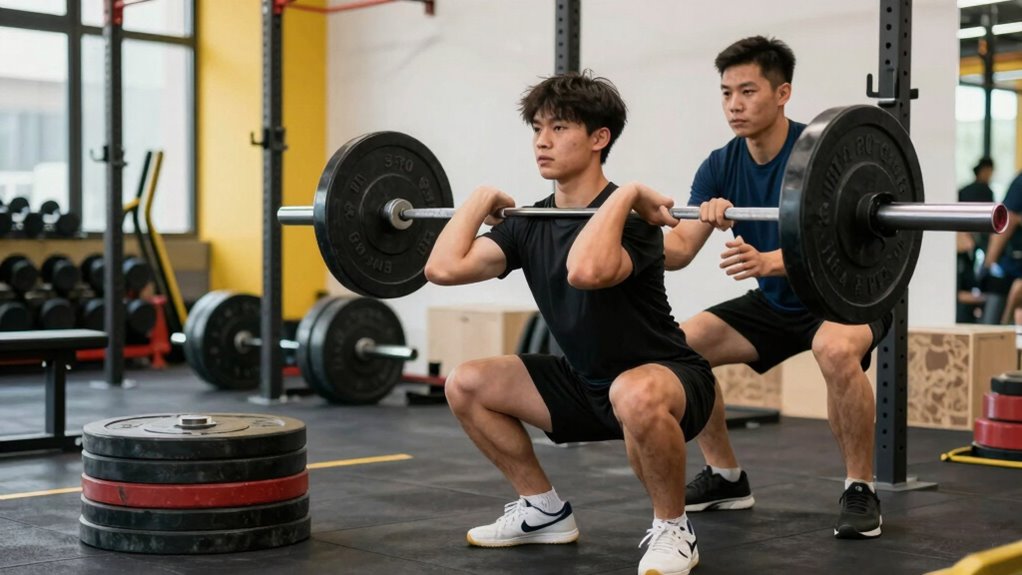

Progressive overload is key for beginners because it helps you build strength and muscles steadily by gradually increasing the challenge. By adding more reps, weight, or intensity, you prevent your progress from stagnating and avoid plateaus. It guarantees your workouts stay effective and safe, boosting your confidence over time. Consistently pushing your limits leads to sustainable growth without risking injury. Keep exploring how to apply these principles, and you’ll realize the full potential of your fitness journey.

Get workout gear delivered free with Prime
- Fast, free delivery on millions of items
- Prime Video, Amazon Music and more included
- Member-only deals all year
Key Takeaways
- It ensures beginners build strength gradually, reducing injury risk and preventing discouragement.
- Progressive overload promotes consistent progress, establishing a solid fitness foundation early on.
- It helps beginners adapt safely by increasing workload in manageable steps.
- Steady improvements boost motivation and confidence as progress becomes visible.
- Applying overload principles fosters long-term growth and sustainable fitness habits from the start.

Are you wondering how to steadily build strength and improve your fitness? The key lies in understanding why progressive overload matters, even when you’re just starting out. It’s a simple concept: to get stronger, you need to challenge your muscles gradually over time. This approach guarantees you’re not just maintaining your current level but actively pushing beyond it. But to do this effectively, training consistency is essential. Showing up regularly and sticking to your workout routine creates a solid foundation for progress. Without consistency, even the best plan won’t produce meaningful results. When you combine consistent effort with gradual increases in intensity or volume, your body adapts, making your workouts more effective and helping you avoid plateaus.
Nutrition plays an indispensable role in supporting your training efforts. The significance of proper nutrition can’t be overstated—what you eat fuels your workouts, aids recovery, and helps your muscles grow stronger. If you neglect your diet, you might find it hard to recover from workouts or see the progress you’re aiming for. Eating enough protein, staying hydrated, and consuming a balanced mix of carbs and fats ensures your body has the resources it needs to adapt and grow. When you pair good nutrition with a focus on progressive overload, you’re setting yourself up for sustainable progress. It’s not just about lifting heavier or doing more reps; it’s about providing your body with the building blocks it needs to handle those increased demands.
You might be tempted to jump into more intense workouts quickly, but that’s where the significance of incremental progress comes into play. Small, manageable increases—whether adding a couple of reps, increasing weight slightly, or extending your workout duration—are more effective and safer than sudden jumps. This steady progression prevents injuries and keeps you motivated, as you see consistent improvements without feeling overwhelmed. As a beginner, embracing this gradual approach helps your body adapt smoothly and builds confidence in your abilities. Remember, the goal is to challenge yourself just enough to stimulate growth, but not so much that you risk setbacks.
adjustable dumbbells for beginners
As an affiliate, we earn on qualifying purchases.
As an affiliate, we earn on qualifying purchases.
Frequently Asked Questions
How Quickly Should Beginners Increase Their Workout Intensity?
You should increase your workout intensity gradually, aiming for about 5-10% weekly progress. Focus on adjusting your training frequency and adding variety to your workouts to avoid plateaus. Listen to your body to prevent injury, and make sure proper recovery. By slowly increasing intensity, you build strength sustainably while keeping your routine engaging. Remember, consistency and patience are key to making steady progress without overtraining.
Can Progressive Overload Cause Injuries in Beginners?
Progressive overload can pose formulation risks and adaptation challenges for beginners if you push too quickly. You might strain muscles or joints, leading to injuries. To prevent this, you should proceed prudently, prioritizing proper technique and gradual increases. Listen to your body, avoid overexertion, and allow ample recovery. By pacing progress carefully, you protect yourself from potential setbacks, making your fitness journey safer, smoother, and more sustainable.
Is It Better to Add Weight or Reps First?
You should add reps before weight when progressing, especially as a beginner. This approach allows your muscles and tendons to adapt gradually, reducing injury risk. Focus on maintaining proper form and increasing training frequency or workout variety to challenge your muscles safely. Once you’re comfortable with higher reps, gradually add weight to continue progressing. This balanced method helps build strength steadily while minimizing overuse injuries.
How Do I Track Progress Effectively as a Beginner?
To track progress effectively, focus on training consistency and clear goal setting. Keep a workout journal or use apps to record your exercises, reps, and weights. Regularly review your progress, noting improvements in strength or endurance. Adjust your goals as needed to stay motivated. Staying consistent helps you see real results, and setting achievable targets keeps you focused on continuous improvement, making your fitness journey more rewarding.
Are There Alternative Methods to Progressive Overload?
Think of your training as tending a garden—alternating between different plants (training variation) keeps everything thriving. Besides progressive overload, you can use training variation to challenge your muscles differently. Incorporate recovery strategies like rest days and proper nutrition to prevent burnout and injuries. These methods help you grow stronger without solely relying on increasing weight or reps, making your progress sustainable and enjoyable.
Conclusion
Remember, progressive overload is your secret weapon for steady growth, much like watering a plant to see it flourish. Even as a beginner, consistently challenging yourself guarantees your strength and endurance blossom over time. Don’t let your gains plateau—keep pushing just beyond your comfort zone. With patience and persistence, you’ll watch your progress unfold like a sunrise, brightening your fitness journey and inspiring you to reach even higher. Keep moving forward, and growth will follow.
Halloween Picks
halloween
As an affiliate, we earn on qualifying purchases.