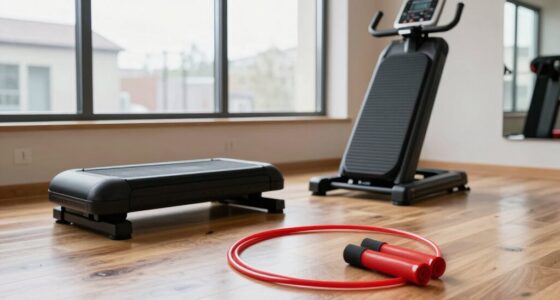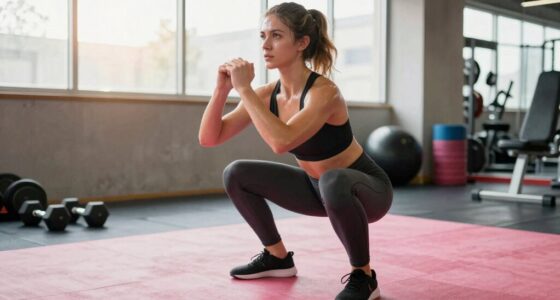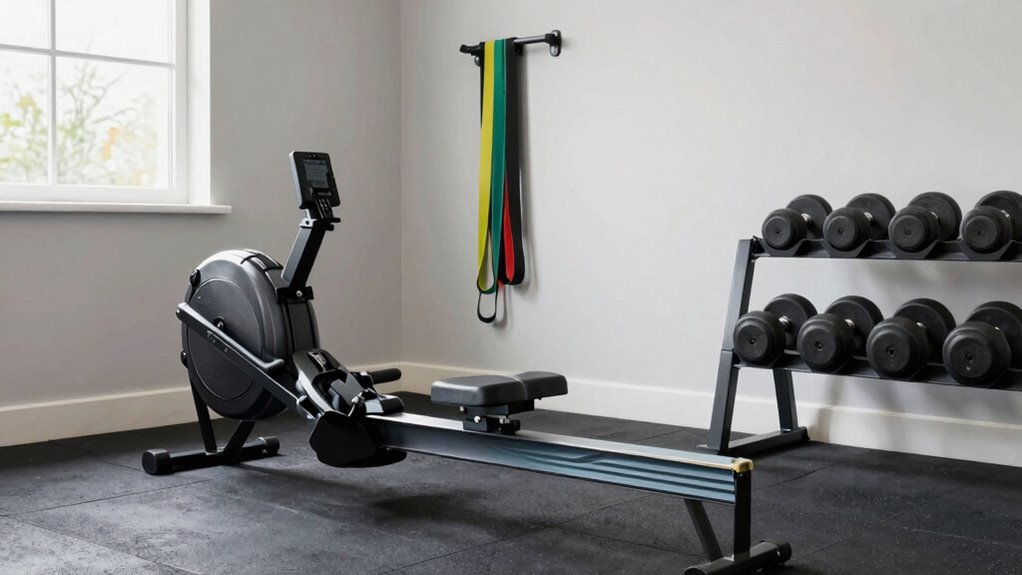
When building a home gym as a beginner, focus on essential, durable equipment that matches your goals and space. Prioritize versatile cardio machines like a good treadmill or stationary bike, and add simple strength tools like dumbbells or resistance bands. Opt for quality items with easy controls and modern features to stay motivated. A carefully chosen setup can grow with you, so explore options that offer value and long-term use—you’ll find more helpful tips ahead.

Get workout gear delivered free with Prime
- Fast, free delivery on millions of items
- Prime Video, Amazon Music and more included
- Member-only deals all year
Key Takeaways
- Prioritize essential, durable, and easy-to-use equipment aligned with your fitness goals and space constraints.
- Start with core cardio and strength tools, expanding gradually to avoid overwhelm and manage costs.
- Focus on quality and performance features to ensure long-term satisfaction and effective workouts.
- Incorporate modern features like workout programs for motivation and variety.
- Build a personalized system that promotes consistency and balanced fitness progress.
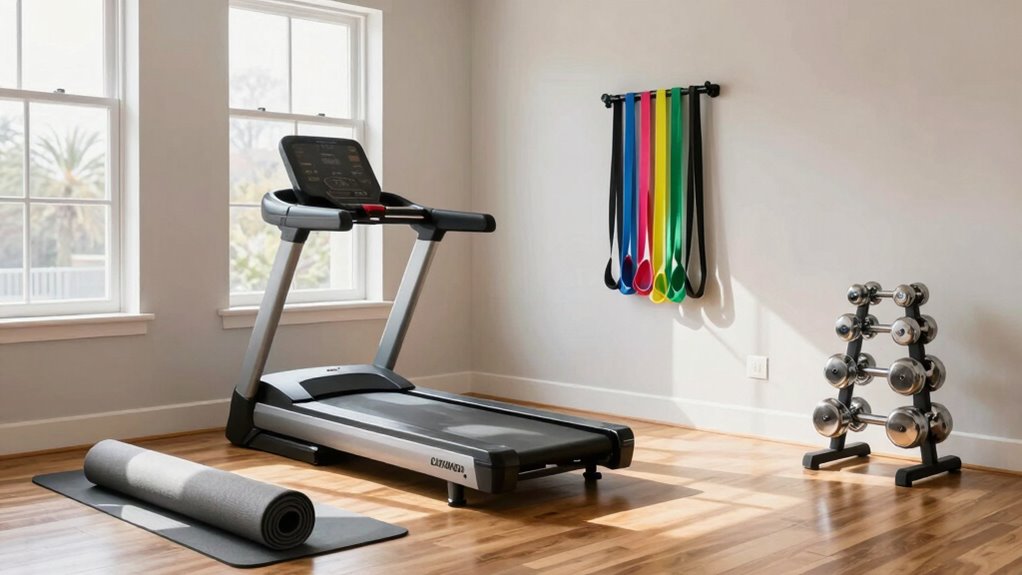
Starting a home gym might seem overwhelming at first, but with the right system, it becomes an achievable and rewarding goal. The key is to focus on what you need most and build from there. When it comes to cardio options, you want equipment that fits your space, budget, and exercise preferences. Treadmills, stationary bikes, and rowing machines are popular choices, offering effective ways to get your heart rate up. Think about the noise level, footprint, and features like adjustable resistance or built-in workout programs. If you enjoy running or cycling, a treadmill or bike might be worth the investment. If you prefer low-impact workouts, a rowing machine provides both cardio and full-body engagement. You don’t need all options immediately; starting with one or two can keep your setup manageable and cost-effective. Additionally, durability and ease of use are *vital*—look for equipment that’s sturdy, simple to operate, and fits your space. Incorporating quality and specific goals into your choice can help you stay motivated and committed. Considering modern features can also enhance your workout experience and keep you motivated. When selecting cardio equipment, paying attention to performance capabilities will ensure you get the most out of your workouts. A well-rounded home gym includes both cardio options for stamina and fat loss, plus strength training tools to build muscle and improve overall fitness. Considering the modern toilet for your bathroom setup can also enhance convenience and water efficiency in your home gym area. By focusing on quality and your specific goals, you’ll create a system that motivates you to stick with your workouts and see real results.
As an affiliate, we earn on qualifying purchases.
Frequently Asked Questions
How Much Space Do I Need for a Home Gym System?
You’ll want at least 50 to 100 square feet for a home gym system, depending on the equipment’s versatility. Prioritize space optimization by choosing compact, multi-use machines that offer diverse workouts. Clear enough room to move freely and perform exercises safely. Consider your available space carefully, and select equipment that maximizes functionality without overcrowding, ensuring you can workout comfortably and efficiently at home.
Are Budget-Friendly Home Gym Options Effective?
Budget-friendly home gym options can be effective if you focus on cost-effective solutions and beginner-friendly equipment. You don’t need expensive gear to get a good workout; simple items like resistance bands, dumbbells, and a yoga mat work well. These options help you stay consistent without breaking the bank. With the right equipment and routine, you can build strength, endurance, and fitness at home, even on a tight budget.
What Safety Features Should I Look for in Equipment?
You should look for safety features like sturdy, non-slip grips and secure locking mechanisms on your equipment. Always follow safety precautions, such as proper form and not overloading weights. Regular equipment maintenance is essential to prevent accidents—check for loose bolts, worn cables, and damaged parts. These steps guarantee your workouts are safe and effective, helping you avoid injuries and extend the lifespan of your home gym equipment.
Can I Get Professional Guidance With a Home Gym?
Yes, you can definitely get professional guidance with a home gym. Hiring a personal trainer, even for virtual sessions, helps tailor workout plans to your goals and fitness level. They can demonstrate proper form, motivate you, and adjust routines as you progress. Many trainers offer online coaching, making it easier to access expert advice without leaving home. This personalized support guarantees you stay safe and maximize your workouts effectively.
How Often Should I Update or Replace Equipment?
You should update or replace your gym equipment based on maintenance tips and equipment longevity. Regularly inspect for wear and tear, lubricate moving parts, and clean thoroughly to extend its lifespan. Replace items when they show signs of decreased performance or damage that can’t be repaired. Typically, equipment lasts 5-10 years with proper care, but high-use or heavy-duty gear may need replacement sooner to guarantee safety and ideal workout results.
Conclusion
Choosing the right home gym system is like planting a seed—you nurture it with consistency, and it blossoms into strength and confidence. Remember, the perfect setup isn’t just about equipment; it’s about committing to your growth. Invest wisely, start small, and let each workout be a step toward your best self. Your fitness journey may be a small seed now, but with dedication, it will grow into a mighty tree of health and resilience.
Fall Picks
fall essentials
As an affiliate, we earn on qualifying purchases.