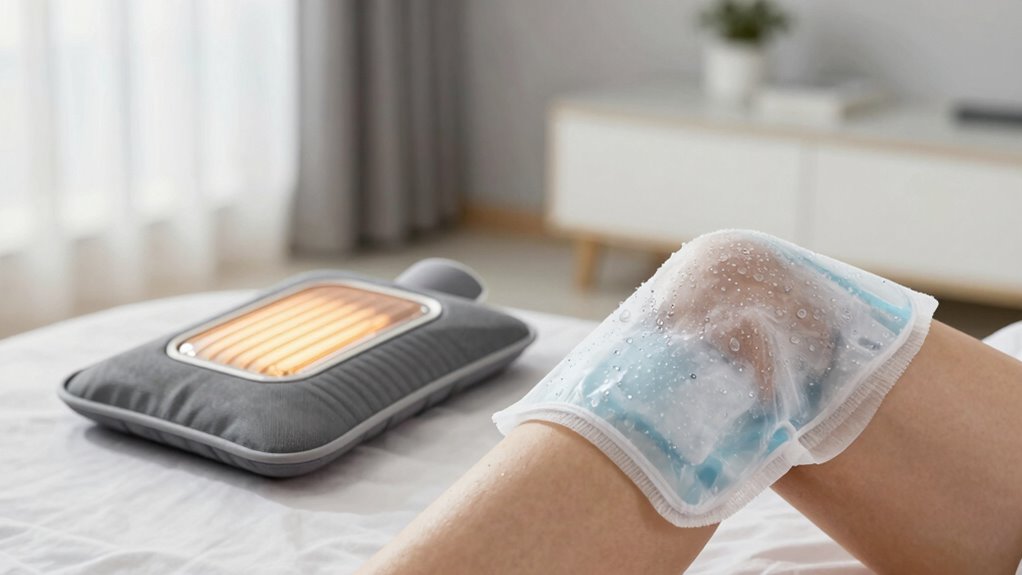

Choosing between heating pads and ice wraps depends on your injury stage and symptoms. Use ice wraps immediately after injury to reduce swelling and inflammation, focusing on cold therapy for up to 48 hours. Switch to heating pads later to relax muscles and improve circulation for soreness or stiffness. Knowing when to switch can speed up recovery and ease discomfort. Keep exploring to discover how to best incorporate these treatments into your healing routine.

Get workout gear delivered free with Prime
- Fast, free delivery on millions of items
- Prime Video, Amazon Music and more included
- Member-only deals all year
Key Takeaways
- Use ice wraps immediately after injury to reduce swelling and inflammation effectively.
- Apply heating pads after the initial swelling subsides to relax muscles and improve blood flow.
- Cold therapy is best within the first 48 hours post-injury; heat therapy is beneficial during recovery.
- Combining both treatments at different stages optimizes healing and alleviates pain.
- Follow safety guidelines and proper timing to prevent skin damage and maximize recovery benefits.
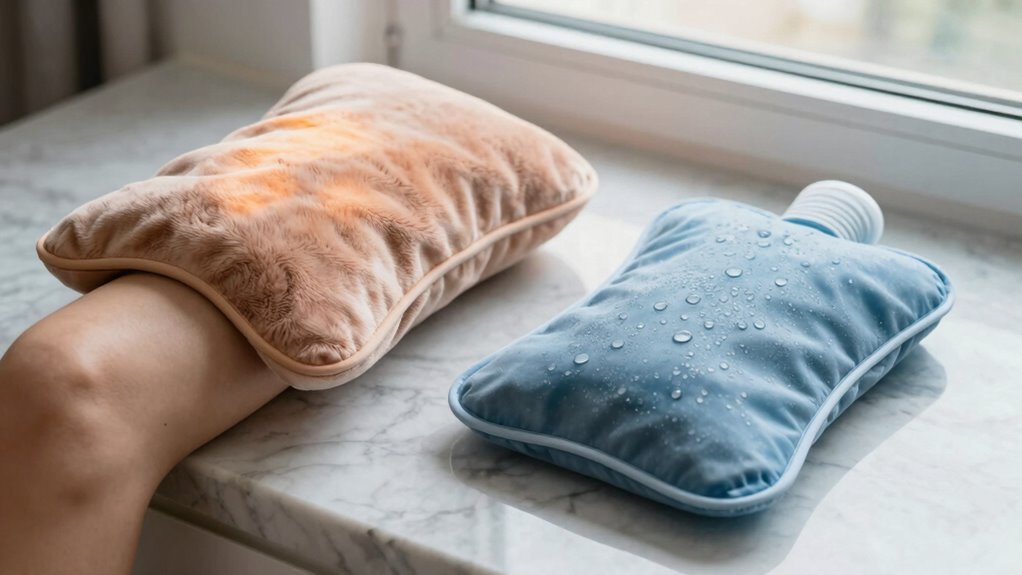
Are you unsure whether to use a heating pad or an ice wrap for your pain or injury? The choice can be confusing, but understanding how each option works helps you decide which one fits your recovery needs best. Heating pads are great for muscle relaxation. When you apply heat, it increases blood flow to the area, helping your muscles loosen up and reducing stiffness. If you’re dealing with tightness or soreness from overexertion, a heating pad can ease the tension, making movement less painful. It’s a soothing way to relax your muscles after a long day or a tough workout.
Heating pads relax muscles and ease soreness by increasing blood flow and reducing stiffness.
On the other hand, ice wraps are your go-to for inflammation control. When you injure yourself—think sprains, strains, or swelling—applying cold helps reduce blood flow to the area. This constriction of blood vessels minimizes swelling and limits inflammation, which can hasten your recovery. Ice wraps are especially effective in the first 48 hours after an injury, as they help prevent the issue from worsening. The numbing sensation from cold also offers pain relief, making it easier to handle discomfort. Incorporating proper application techniques can ensure you get the most benefit while avoiding skin damage. Additionally, understanding therapeutic temperature ranges can help you apply these treatments safely and effectively.
Sometimes, your pain might require both treatments at different times. For example, in the first two days after an injury, cold therapy is usually recommended to control inflammation. After that, switching to heat can help loosen tight muscles and improve circulation, aiding in healing. Proper application techniques, including appropriate timing and duration, are crucial to maximize benefits and prevent skin damage. It’s also important to listen to your body and adjust treatments accordingly to ensure optimal recovery without overdoing it. Recognizing early signs of skin damage can help prevent adverse effects from improper use.
Ultimately, your choice depends on your symptoms and the stage of your recovery. Whether you opt for a heating pad or an ice wrap, listen to your body. Use cold therapy initially to control inflammation, then switch to heat for muscle relaxation as your injury progresses. This balanced approach ensures you’re addressing both inflammation control and muscle relaxation effectively, making your recovery smoother and more comfortable.
As an affiliate, we earn on qualifying purchases.
Frequently Asked Questions
Can Heating Pads Be Safely Used on All Skin Types?
Heating pads can be safely used on most skin types, but you should be cautious if you have sensitive skin or known allergies. Skin sensitivity can cause irritation or allergic reactions, so it’s smart to test the pad on a small area first. Always use a barrier like a cloth between the pad and your skin, and avoid prolonged use to prevent burns or discomfort. If you notice redness or irritation, remove it immediately.
How Long Should I Leave an Ice Wrap On?
Imagine you’re icing your ankle after a tough workout; usually, you should leave an ice wrap on for about 15-20 minutes. With cold therapy, this duration helps reduce swelling and numb pain effectively without risking frostbite. Remember, ice duration varies depending on your comfort level and injury, but don’t exceed 20 minutes. Take breaks between applications to allow your skin to recover and prevent cold-related damage.
Are Heating Pads Suitable for Chronic Pain Relief?
Yes, heating pads are suitable for chronic pain relief. They promote muscle relaxation, easing tension and discomfort over time. Additionally, heat helps enhance circulation, which can speed up the healing process and reduce stiffness. You should use heating pads carefully, avoiding excessive heat or prolonged use to prevent burns. Incorporate them into your routine for ongoing relief, especially when muscle tightness or persistent soreness affects your daily activities.
Can I Use Both Heating Pads and Ice Wraps Together?
Yes, you can use both heating pads and ice wraps together through alternating therapies. This approach allows you to reduce inflammation with ice, then increase blood flow and relax muscles with heat. Alternating treatments can enhance recovery, especially for injuries or chronic pain. Just make sure to follow recommended time intervals—about 15-20 minutes each—and avoid overusing either to prevent skin damage or adverse effects.
What Are the Risks of Improper Use of These Recovery Tools?
Using heating pads or ice wraps improperly can cause skin burns, frostbite, or worsen injuries. You might think they’re safe, but overuse or incorrect application increases risks. These tools are part of alternative therapies, yet they require careful use to prevent injury and support recovery. Always follow guidelines, limit treatment time, and consult professionals for injury prevention, ensuring you get the benefits without harm.
Conclusion
Whether you reach for a heating pad or an ice wrap, you’ll find yourself momentarily in the right place at the right time—warmth when muscles ache, cold when inflammation strikes. Just like catching a cool breeze on a hot day or a cozy blanket on a chilly evening, choosing the right recovery tool can turn discomfort into relief effortlessly. So, trust your instincts—and let these simple comforts guide your healing journey.
Halloween Picks
halloween
As an affiliate, we earn on qualifying purchases.