
TL;DR

Get workout gear delivered free with Prime
- Fast, free delivery on millions of items
- Prime Video, Amazon Music and more included
- Member-only deals all year
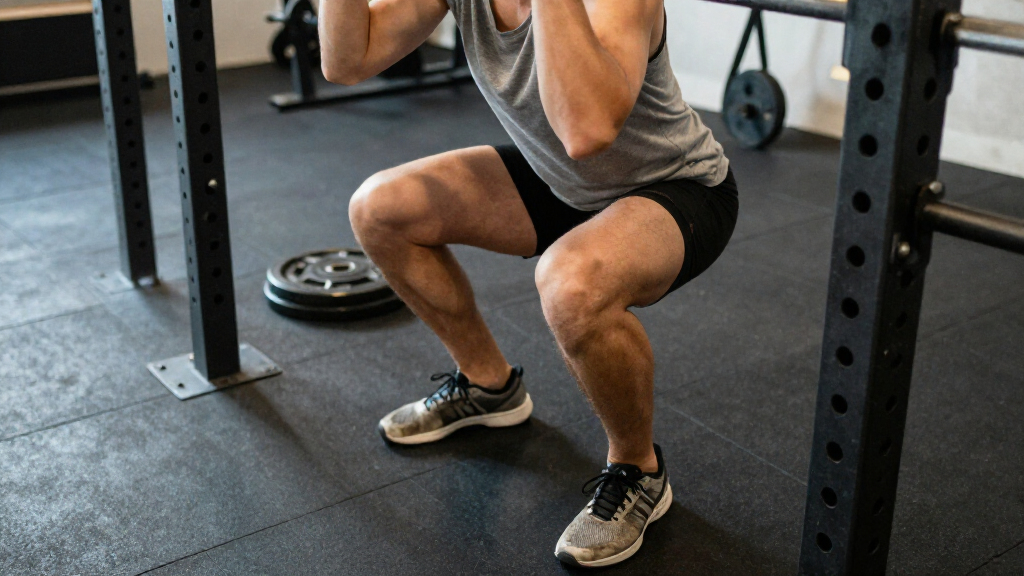
A Fit&Well report says heels lifting during a squat can be linked to limited ankle movement, but may also reflect hip mobility or strength limitations. It outlines three scaled squat exercises: suspension-trainer squats, slow sit-to-stands and heel-elevated deep squat holds. The report does not establish that these exercises work for everyone or identify the cause for any individual.
Fit&Well has published a guide to why a person’s heels may lift during a squat and describes three modified exercises for practicing the movement: squats using a suspension trainer, slow chair sit-to-stands and deep squat holds with the heels supported on plates or wedges. The report says the cause is not always limited ankle flexibility, and presents the exercises as a gradual way to work on range and strength—not as a diagnosis or a guaranteed fix.
The report says restricted ankle dorsiflexion is a common explanation for heels rising as someone lowers into a squat. Dorsiflexion is the ankle movement that lets the shin travel forward over the foot. Tight calves or restricted ankle joints can limit that movement, according to the article. It also cautions that hip mobility and strength may play a role, and that lifting the heels could serve as a protective response for some people.
The first exercise is a suspension-trainer squat. Holding the straps can reduce the balance challenge while the person practices lowering into a squat, with feet around hip-width or slightly wider and toes turned out slightly. The guide advises pausing briefly at the lowest comfortable point and then standing, using the straps less as strength and mobility improve.
The second option is a slow sit-to-stand from a sturdy chair, performed without pushing off with the hands. The focus is on controlled lowering and rising. The third is a heel-elevated deep squat hold, using thin plates or wedges under the heels to support a deeper position. Fit&Well suggests reducing the heel support gradually over time. Its suggested progression is practice first, then, if comfortable with the technique, three sets of each exercise for one minute, with one minute of rest between sets.
Building Squat Range With Support
The guidance matters to people who interpret lifted heels as proof that their ankles alone are too stiff. The report offers a broader set of possible explanations, including hip limitations, and warns that calf and ankle stretching by itself may not address every case. That distinction can help readers avoid treating a visible movement pattern as a diagnosis.
The exercises also provide ways to scale the movement rather than forcing an unsupported deep squat. Straps, a chair and heel supports each change the task, allowing practice at different levels of balance demand or depth. The article frames repeated, gradual practice as a way to develop control and strength across the movement.
However, the source is an exercise guide, not a clinical assessment or a study comparing treatments. It does not show that the exercises will correct heel lift for every person. Readers should treat them as general fitness suggestions and stop if an exercise causes pain or feels unsafe.
Products Worth Considering

Philips Sonicare 5950 Rechargeable Electric Toothbrush with 2 Brush Heads, Pink

Bowflex SelectTech 840 Adjustable Kettlebell

Oral-B iO Series 5 Rechargeable Electric Toothbrush with Travel Case, White
As an affiliate, we earn on qualifying purchases.
Why Squat Heels May Rise
In a squat, the ankles need to bend as the body lowers while the feet remain planted. The report describes ankle dorsiflexion as one factor that can affect this motion: limited movement can make it harder for the shin to travel toward the toes. Calf tightness or ankle-joint restriction may contribute, according to Fit&Well.
The article adds that, for some people—particularly those it describes as having weak or tight hips—heel lift may be a protective mechanism. This is the report’s explanation, not a confirmed cause for any particular reader. It recommends working on hip mobility and strength through a manageable squat range rather than relying only on ankle and calf stretches.
Its three exercise variations move from supported squatting and a chair-based movement to a deeper hold with the heels elevated. The proposed progression is to reduce assistance or heel height as capability improves. The source does not supply a research review, clinical criteria or a deadline by which readers should expect a change.
““For some, however, especially those with particularly weak or tight hips, the heels lifting could actually be a protective mechanism to safeguard the body from injury.””
— Fit&Well report
What the Guide Does Not Establish
The source does not explain how to tell whether a specific person’s heel lift comes from ankle restriction, hip limitations, balance, technique or another factor. It also does not cite a clinical assessment or comparative evidence showing that these three exercises resolve the issue. The proposed protective role of heel lifting is presented as a possibility, not a finding about every person who squats.
Fit&Well does not specify how many weeks of practice are needed, how much improvement to expect, or what to do if the movement remains limited. It also does not give screening guidance for people with pain, prior injuries or medical conditions. Those details remain outside the information provided in the report.
Progress Slowly and Seek Guidance
The report’s next step for readers is regular, gradual practice: begin with the supported versions, explore a comfortable range and progress only when the technique feels controlled. It suggests moving toward three one-minute sets of each exercise, with one minute of rest, once the movements are familiar. For the heel-elevated hold, the proposed progression is to lower the support height over time.
That advice is not a substitute for individualized coaching or medical care. Anyone experiencing pain, instability or a history of injury can seek guidance from a qualified health professional or appropriately trained exercise professional before changing their routine. The source provides no follow-up results or scheduled update, so whether these exercises help a given reader will depend on factors the article does not assess.
Key Questions
Does heel lift during a squat always mean tight ankles?
No. The Fit&Well report identifies limited ankle dorsiflexion as one possible reason, but also says hip mobility or strength may contribute. The article does not determine the cause for an individual.
Which three exercises does the report suggest?
It describes suspension-trainer squats, slow sit-to-stands from a sturdy chair and deep squat holds with the heels supported on plates or wedges.
How often should I do the exercises?
The report says to begin by practicing the variations without focusing on rep counts. Once comfortable with the technique, it suggests three one-minute sets of each move, resting one minute between sets. This is general guidance, not an individualized plan.
Should I keep doing the exercises if they hurt?
The source does not provide a pain-management protocol. Stop an exercise that causes pain or feels unsafe, and seek advice from a qualified health professional, particularly if you have an injury or relevant medical condition.
Source: fitandwell.com