
For a fitness tracker with Spotify, my strongest picks are the Garmin Forerunner 170 Music for Spotify downloads and running tools, the Garmin Forerunner 165 Music for a balanced training watch, and the Garmin vívoactive 5 for broader health and activity tracking. The main distinction is that Garmin’s music watches can store supported service downloads for phone-free listening, while the Fitbit Charge 6 and Versa 2 are better treated as trackers with music controls—not equivalent offline Spotify players.

Get workout gear delivered free with Prime
- Fast, free delivery on millions of items
- Prime Video, Amazon Music and more included
- Member-only deals all year
I ranked these options by how directly they meet the Spotify use case, then by GPS independence, training and health features, and practical drawbacks. A subscription is required for music downloads from supported services, and service availability can change. If offline music is your priority, start with the Garmin models; if compact tracking or simple phone-connected music controls matter more, compare the Fitbit picks before choosing.
Complete the kit


Key Takeaways
- The Garmin Forerunner 170 Music is the clearest Spotify pick here: it supports Spotify downloads to the watch for phone-free listening, with a subscription required.
- The Forerunner 165 Music also pairs stored music with built-in GPS and running recovery tools, making it a strong alternative for focused runners.
- The vívoactive 5 adds broad health metrics and multiple sports modes, but its listing does not explicitly identify Spotify by name; verify current service support before buying for Spotify.
- Fitbit Charge 6 offers a smaller tracker with built-in GPS and YouTube Music controls, not the same offline Spotify capability as Garmin’s music models.
- Fitbit Versa 2 supports music controls and uses a phone for GPS, so it suits connected everyday use better than phone-free workout music.
| Garmin Forerunner 170 Music GPS Running Smartwatch, 43 mm, Whitestone/Cloud Blue |  | Best Overall for Spotify Downloads | Display: AMOLED touchscreen with button controls | Case size: 43 mm | GPS: Built-in GPS; GLONASS and Galileo support | VIEW ON AMAZON | See Our Full Breakdown |
| Garmin Forerunner 165 Music GPS Running Smartwatch, 43 mm, Turquoise |  | Best for Balanced Running and Recovery | Display: AMOLED touchscreen | Case size: 43 mm | GPS: Built-in | VIEW ON AMAZON | See Our Full Breakdown |
| Garmin vívoactive 5 GPS Smartwatch, 42mm, Ivory |  | Best for Broad Health and Fitness Tracking | Display: AMOLED | Size: 42 mm | Battery life: Up to 11 days | VIEW ON AMAZON | See Our Full Breakdown |
| Google Fitbit Charge 6 Fitness Tracker, Gold Case with Coral Band |  | Best Compact Tracker with Built-In GPS | Display input: Touchscreen | GPS: Built-in | Exercise modes: More than 40 | VIEW ON AMAZON | See Our Full Breakdown |
| Fitbit Versa 2 Smartwatch Bundle with Small and Large Bands, Petal |  | Best for Phone-Connected Everyday Use | Display: 1.34-inch AMOLED touchscreen | Resolution: 341 × 341 | GPS: Connected GPS via compatible smartphone | VIEW ON AMAZON | See Our Full Breakdown |
| fitness trackers with spotify | Display | GPS | Battery life | Water resistance |
|---|---|---|---|---|
| Garmin Forerunner 170 Music GP | AMOLED touchscreen with button controls | Built-in GPS; GLONASS and Galileo support | Up to 10 days smartwatch mode; up to 20 hours GPS mode | 50 meters |
| Garmin Forerunner 165 Music GP | AMOLED touchscreen | Built-in | Up to 11 days smartwatch mode; up to 19 hours GPS mode | 50 meters |
| Garmin vívoactive 5 GPS Smartw | AMOLED | — | Up to 11 days | — |
| Google Fitbit Charge 6 Fitness | — | Built-in | — | — |
| Fitbit Versa 2 Smartwatch Bund | 1.34-inch AMOLED touchscreen | Connected GPS via compatible smartphone | — | 50 meters |
More Details on Our Top Picks
Garmin Forerunner 170 Music GPS Running Smartwatch, 43 mm, Whitestone/Cloud Blue
The Forerunner 170 Music is my first choice when Spotify is the deciding feature. Its listing specifically says it supports Spotify downloads to watch storage, so a runner can listen from the watch with compatible headphones instead of carrying a phone. A Spotify subscription is required for service downloads, making this a better fit for existing subscribers than for someone seeking free music playback.
It also has built-in GPS, wrist-based heart rate tracking, and more than 80 activity profiles. That combination gives it a more training-focused role than the Fitbit Charge 6, whose supplied details emphasize tracking and YouTube Music controls rather than offline Spotify. Compared with the Forerunner 165 Music, this model lists more activity profiles and names Spotify support explicitly, while the 165 offers a longer stated smartwatch-mode battery life.
The tradeoffs are real: the Forerunner 170 lists up to 10 days in smartwatch mode and up to 20 hours in GPS mode, and music downloads still depend on a paid service. I would choose it for phone-free Spotify runs and structured training, not as the simplest or most compact everyday band.
Pros:- Explicit Spotify download support for phone-free playback
- Built-in GPS with support for GLONASS and Galileo
- More than 80 activity profiles and personalized Garmin Coach plans
- AMOLED touchscreen with button controls
Cons:- Spotify and other supported service downloads require a subscription
- Up to 10 days of smartwatch-mode battery life is less than the Forerunner 165’s stated 11 days
- Music playback and GPS use can add to the practical charging burden
Best for: Runners who want explicitly listed Spotify downloads on the watch, built-in GPS, and a wide range of activity profiles.
Not ideal for: Buyers who do not subscribe to a supported music service, want a slim tracker rather than a running watch, or need the longest battery figures in this group.
- Display:AMOLED touchscreen with button controls
- Case size:43 mm
- GPS:Built-in GPS; GLONASS and Galileo support
- Battery life:Up to 10 days smartwatch mode; up to 20 hours GPS mode
- Music:On-watch storage; Spotify, Amazon Music, and Deezer downloads with subscription
- Water resistance:50 meters
- Activity profiles:More than 80
- Band:Silicone
Our verdict“I recommend the Forerunner 170 Music first for buyers who specifically want Spotify downloads, phone-free GPS runs, and running-focused training tools.”
Garmin Forerunner 165 Music GPS Running Smartwatch, 43 mm, Turquoise
The Forerunner 165 Music is a strong pick for runners who want a more rounded training watch with stored music. It combines an AMOLED display, built-in GPS, wrist-based heart rate monitoring, training plans, and recovery insights. Music storage supports phone-free listening, though the supplied details do not name Spotify as directly as the Forerunner 170 listing does. I would confirm the current Garmin music-service compatibility before choosing this model specifically for Spotify.
Compared with the Forerunner 170, the 165 has a better stated smartwatch battery figure—up to 11 days rather than 10—and a clear emphasis on recovery insights. The 170, however, explicitly lists Spotify downloads and more than 80 activity profiles. The 165 makes more sense if its training and battery balance is the draw; the 170 is the safer pick when explicit Spotify support is the deciding factor.
Its 4 GB storage and 50-meter water resistance suit regular workouts, while music streaming service downloads still require a subscription. Some safety features also depend on a paired phone and network coverage, so this watch should not be treated as a completely independent safety device. I see it as the better choice for a runner who values training guidance as much as music.
Pros:- Built-in GPS and wrist-based heart rate monitoring
- Music storage for phone-free listening
- Training plans and recovery insights
- Up to 11 days of smartwatch-mode battery life
Cons:- Music streaming service downloads require a subscription
- The supplied description does not explicitly name Spotify
- Some safety features require a paired phone and network coverage
Best for: Runners looking for built-in GPS, recovery guidance, stored music, and a longer stated smartwatch-mode battery life than the Forerunner 170.
Not ideal for: Buyers who require the product details to explicitly confirm Spotify downloads before purchase, or who want a compact band-style tracker.
- Display:AMOLED touchscreen
- Case size:43 mm
- GPS:Built-in
- Battery life:Up to 11 days smartwatch mode; up to 19 hours GPS mode
- Storage:4 GB
- Water resistance:50 meters
- Connectivity:Bluetooth, USB, and Wi-Fi
- Compatibility:Android and iOS
Our verdict“I’d choose the Forerunner 165 Music for a runner who values recovery guidance and battery life, but I’d verify Spotify support before buying for that service alone.”
Garmin vívoactive 5 GPS Smartwatch, 42mm, Ivory
The Garmin vívoactive 5 suits someone who wants a general-purpose fitness watch first and music storage second. Its health features cover sleep, stress, HRV, menstrual tracking, and Body Battery, with more than 30 sports modes. That wider everyday scope contrasts with the Forerunner 170, which is more clearly aimed at running and explicitly lists Spotify downloads.
This model includes music storage, an AMOLED display, and up to 11 days of battery life. However, the provided listing does not name Spotify or identify which streaming services can download music. Since stored music alone does not confirm Spotify compatibility, I would check Garmin’s current service support before buying it for that purpose. If Spotify certainty matters more than broad health tracking, the Forerunner 170 is the stronger match.
Smart notifications and music use require pairing with a smartphone, according to the supplied details, and Garmin notes that health data are estimates that can vary. The 42 mm size is the only listed case option, so fit may be a limitation for some wrists. I’d choose this over the Fitbit Charge 6 for buyers who want a watch form, many health metrics, and multiple sports modes—not for anyone who wants an unambiguous Spotify-first purchase.
Pros:- Bright AMOLED display and up to 11 days of stated battery life
- Health tracking includes sleep, stress, HRV, menstrual tracking, and Body Battery
- More than 30 indoor and GPS sports modes
- Music storage and Garmin Pay
Cons:- The supplied details do not explicitly confirm Spotify support
- Notifications and music require smartphone pairing
- Health measurements are estimates and may vary
- Only a 42 mm size is listed
Best for: People who want extensive health monitoring, multiple sports modes, music storage, and a smartwatch-style display.
Not ideal for: Spotify-first buyers who need explicit confirmation of supported downloads, or shoppers who want a smaller, simpler tracker.
- Display:AMOLED
- Size:42 mm
- Battery life:Up to 11 days
- Health monitoring:Sleep, stress, HRV, menstrual cycle, and Body Battery
- Sports apps:More than 30 indoor and GPS sports modes
- Music storage:Yes; verify current service compatibility for Spotify
- Smart features:Smart notifications and Garmin Pay
Our verdict“I’d pick the vívoactive 5 for broad health and activity tracking, but I would verify Spotify service support before treating it as an offline Spotify watch.”
Google Fitbit Charge 6 Fitness Tracker, Gold Case with Coral Band
The Fitbit Charge 6 is the compact choice in this lineup, with built-in GPS, more than 40 exercise modes, automatic workout tracking, and a broad set of activity, sleep, and stress features. It is a more band-like option than the Garmin watches, and its built-in GPS is a practical advantage over the Versa 2, which relies on a connected phone for location tracking.
For the specific Spotify question, expectations need to be clear: the supplied details mention YouTube Music controls, Google Maps directions, and Google Wallet, but do not list Spotify downloads or on-watch music storage. That makes it a less direct match than the Forerunner 170. It may suit someone who wants a compact tracker and music controls in a Google-oriented setup, but I would not buy it expecting phone-free Spotify listening.
Its health and exercise coverage is extensive for a tracker, including heart rate, SpO2, ECG, sleep monitoring, and stress tracking. Some features depend on a separately sold Google Health Premium subscription. Compared with the vívoactive 5, the Charge 6 gives up the broad smartwatch form and Garmin music storage, but favors a more compact profile and Fitbit’s tracker-focused experience.
Pros:- Built-in GPS and automatic workout tracking
- More than 40 exercise modes
- Tracks activity, heart rate, sleep, and stress
- Includes Google Maps directions and Google Wallet
Cons:- Supplied details list YouTube Music controls, not Spotify downloads
- Google Health Premium is sold separately
- Does not match Garmin’s stated phone-free music storage use case
Best for: Buyers who prefer a compact fitness band with built-in GPS, automatic workout tracking, and Google-connected functions.
Not ideal for: Anyone seeking verified Spotify downloads to the device or music playback without a phone.
- Display input:Touchscreen
- GPS:Built-in
- Exercise modes:More than 40
- Features:Activity, multisport, ECG, contactless payments, and sleep monitoring
- Sensors:Heart rate, SpO2, accelerometer, gyroscope, GPS, temperature, and ambient light
- Music:YouTube Music controls listed; Spotify downloads not specified
- Connectivity:Bluetooth and Wi-Fi
- Band:Silicone
Our verdict“I recommend the Charge 6 as a compact GPS fitness tracker, not as a phone-free Spotify player.”
Fitbit Versa 2 Smartwatch Bundle with Small and Large Bands, Petal
The Fitbit Versa 2 is an older-style smartwatch choice for buyers who want an always-on AMOLED screen, activity and sleep tracking, notifications, and music controls. It is not the pick I’d make for phone-free Spotify: the supplied information describes music controls, while GPS connects through a compatible smartphone. By contrast, the Forerunner 170 combines built-in GPS with explicitly listed Spotify downloads.
That phone dependence is not a problem for every buyer. If a phone is already coming along on walks or workouts, the Versa 2’s music controls and Alexa voice control can support a connected routine, and the bundle includes small and large silicone bands. Its water resistance is listed at 50 meters, and sleep-stage and heart-rate tracking help it cover everyday wellness needs.
The limits are more pronounced for outdoor training: GPS requires a phone, and an always-on display may mean more frequent charging. Some services and features may require subscriptions or may not be available in every country. Compared with the Charge 6, the Versa 2 has a larger watch-style screen and Alexa, while the Charge 6 adds built-in GPS and a stronger compact-tracker profile. Neither listing establishes offline Spotify playback.
Pros:- Activity, heart rate, sleep-stage, and sleep-score tracking
- Alexa voice control and smartphone notifications
- Water resistant to 50 meters
- Includes small and large silicone bands
Cons:- GPS depends on a connected smartphone
- Music controls are listed, but Spotify downloads are not specified
- Always-on display can require more frequent charging
- Some features or services may require subscriptions or vary by country
Best for: People who want a watch-style screen, everyday activity and sleep tracking, Alexa, and music controls while keeping a compatible phone nearby.
Not ideal for: Runners who want built-in GPS or anyone looking for verified Spotify downloads and phone-free playback.
- Display:1.34-inch AMOLED touchscreen
- Resolution:341 × 341
- GPS:Connected GPS via compatible smartphone
- Water resistance:50 meters
- Features:Activity, heart rate, sleep and stress tracking, Alexa, notifications, and music controls
- Bands included:Small and large silicone bands
- Compatibility:Compatible iPhone or Android device with Fitbit app
Our verdict“I’d choose the Versa 2 for connected everyday smartwatch use, but not for independent GPS or phone-free Spotify listening.”
How We Picked
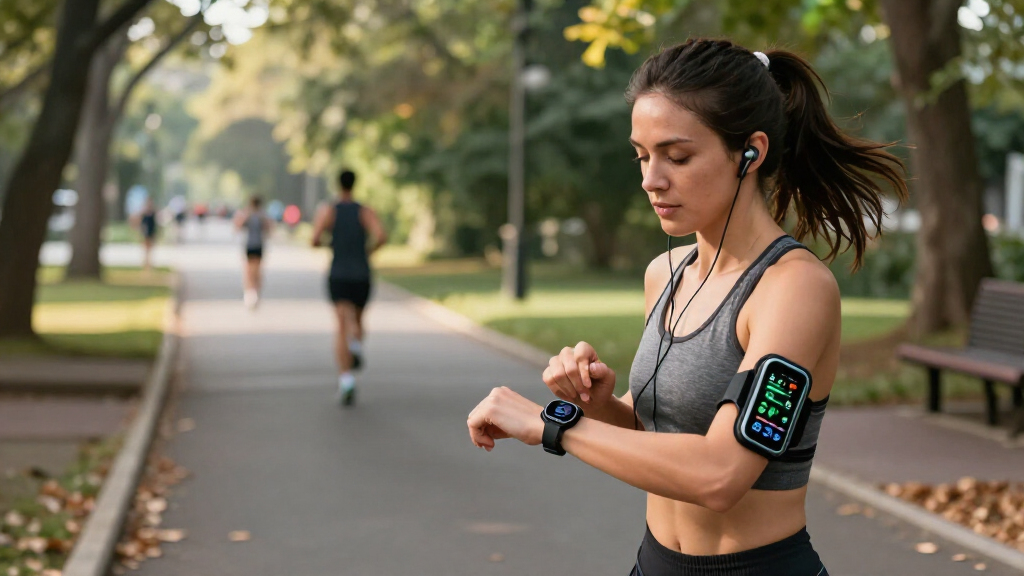
I ranked these five products around the phrase fitness trackers with Spotify, not around general smartwatch appeal. That distinction matters: a device that can control music playing on a phone is useful, but it does not meet the same need as a watch that stores supported Spotify downloads and plays them without a phone nearby. I gave the strongest placement to products whose supplied details explicitly state on-watch music storage and Spotify support.
After music capability, I compared built-in GPS, workout and recovery features, battery information, and everyday health tracking. Those features affect whether a buyer can leave a phone behind, follow training progress, or use one device for more than running. I also factored in tradeoffs such as phone-dependent GPS, subscription requirements, and missing confirmation of Spotify support. The vívoactive 5 is included for its music storage and wide fitness scope, but I do not treat its listing as proof of Spotify compatibility. I make no claims based on personal testing; the rankings reflect the supplied product details and how directly each option serves the stated use case.
| fitness trackers with spotify | GPS | Battery life |
|---|---|---|
| Garmin Forerunner 170 Music GP | Built-in GPS; GLONASS and Galileo support | Up to 10 days smartwatch mode; up to 20 hours GPS mode |
| Garmin Forerunner 165 Music GP | Built-in | Up to 11 days smartwatch mode; up to 19 hours GPS mode |
| Garmin vívoactive 5 GPS Smartw | — | Up to 11 days |
| Google Fitbit Charge 6 Fitness | Built-in | — |
| Fitbit Versa 2 Smartwatch Bund | Connected GPS via compatible smartphone | — |
Factors to Consider When Choosing Fitness Trackers With Spotify
I’d start by separating three different promises: Spotify downloads stored on the watch, music controls that operate a phone, and general music storage without named service compatibility. They are not interchangeable. The right choice depends on whether you want to leave your phone behind, how much training detail you need, and whether you prefer a watch or a slim band.Check whether Spotify works on the watch itself
For phone-free listening, look for explicit support for Spotify downloads to watch storage, plus compatible Bluetooth headphones. In this group, the Forerunner 170 is the clearest match because its supplied details name Spotify. The Forerunner 165 and vívoactive 5 list music storage, but their supplied details do not explicitly confirm Spotify. I would check current service compatibility for those models before purchase. The Fitbit listings describe controls or YouTube Music features, not offline Spotify downloads.
Also distinguish downloaded playlists from live streaming. A watch storing music generally plays content downloaded in advance; it is not the same as streaming over a cellular connection. Garmin music downloads require a subscription to the supported service, so factor that requirement into your decision.
Decide how much GPS independence you need
Built-in GPS lets the Forerunner models, vívoactive 5, and Charge 6 record outdoor routes without relying on a phone for location data. That matters if you run light or want a route trace while leaving your handset at home. The Versa 2 instead uses connected GPS, so the phone needs to come along for location tracking.
Phone-free GPS and phone-free music are separate requirements. A watch can have built-in GPS but still rely on a phone or subscription for certain music features. Check both details rather than assuming one implies the other.
Match the watch to your training style
The Forerunner 170 and 165 are the most running-focused choices here, with training features and built-in GPS; the 170 lists more than 80 activity profiles, while the 165 emphasizes recovery insights and a longer stated smartwatch-mode battery life. The vívoactive 5 suits people who want a broader mix of sports plus health measures such as HRV, stress, sleep, and menstrual tracking.
The Charge 6 makes sense for a buyer who wants a compact tracker with many exercise modes and automatic workout detection. The Versa 2 leans toward everyday smartwatch functions and phone-connected use rather than a dedicated running setup.
Treat battery figures as context, not a music guarantee
Manufacturer battery figures are mode-specific. The Forerunner 165 lists up to 11 days in smartwatch mode and 19 hours in GPS mode; the Forerunner 170 lists up to 10 days and 20 hours respectively. Music playback, GPS use, display settings, and notifications can change real charging frequency. The vívoactive 5 also lists up to 11 days, but the supplied details do not provide a separate GPS-and-music figure.
If you plan long workouts with GPS and downloaded music, focus on the relevant use mode rather than the largest headline number. The Versa 2 listing also warns that its always-on display can require more frequent charging.
Compare subscription and phone requirements
A Spotify-compatible music watch does not automatically include a Spotify subscription. The Garmin Forerunner 170’s listed downloads require one, while the Forerunner 165 also notes a subscription requirement for music streaming services. Fitbit’s Charge 6 listing identifies Google Health Premium as a separately sold subscription, and Versa 2 features or services may vary by country or need a subscription.
Finally, check phone compatibility and connection needs. Some Garmin notifications and safety features depend on a paired phone, and the Versa 2 needs a compatible phone for GPS. If your priority is to leave the phone behind, confirm every part of the intended workout routine—route tracking, music playback, and any safety tools—before deciding.
Frequently Asked Questions
Which tracker in this comparison explicitly supports Spotify downloads?
The supplied product details for the Garmin Forerunner 170 Music explicitly say it supports Spotify downloads to the watch, with a subscription required. The other Garmin models list music storage but do not name Spotify in their supplied descriptions, so I would verify current compatibility for them. The Fitbit products list music controls or YouTube Music features, not Spotify downloads.
Can I listen to Spotify without carrying my phone?
The Forerunner 170 is the clearest choice here for phone-free Spotify playback because its listing describes on-watch downloads. You will need a supported subscription, downloaded playlists, and compatible Bluetooth headphones. Built-in GPS on a watch does not by itself confirm that Spotify can play without a phone, so check the music-service details as well as GPS.
Do Fitbit Charge 6 or Fitbit Versa 2 store Spotify playlists?
The supplied descriptions do not say that either Fitbit model stores Spotify playlists for offline listening. The Charge 6 lists YouTube Music controls, while the Versa 2 lists music controls. Those descriptions support a connected music-control use case, not a confirmed standalone Spotify player. I would choose a Garmin option with explicit service support if offline Spotify is a requirement.
Do I need a Spotify subscription to use music on a Garmin watch?
For Spotify downloads on the Forerunner 170, the supplied details specify that a subscription is required. The Forerunner 165 also notes that music streaming services require a subscription. Check Spotify’s current plan rules and Garmin’s supported-device information before buying, since availability and service terms can change.
Which option is best if I want a tracker rather than a running watch?
The Fitbit Charge 6 is the most compact tracker-style option in this lineup and has built-in GPS, automatic workout tracking, and more than 40 exercise modes. It is not the strongest Spotify choice because the supplied details do not list Spotify downloads. If music independence matters more than the band form, the Forerunner 170 is a closer fit; if everyday health coverage matters more, compare the Charge 6 with the vívoactive 5.
Conclusion
For a buyer whose main goal is Spotify without a phone, I recommend the Garmin Forerunner 170 Music because its listing explicitly confirms Spotify downloads and pairs them with built-in GPS. Choose the Forerunner 165 Music if recovery guidance and its stated 11-day smartwatch-mode battery life appeal more, but verify Spotify support before ordering. For broader health and sports tracking, the vívoactive 5 is the more general-purpose Garmin option, though its Spotify compatibility is not specified in the supplied details.
If you prefer a compact band with built-in GPS, the Fitbit Charge 6 is the better Fitbit fit, provided music controls are enough and offline Spotify is not a must. Choose the Versa 2 for a watch-style screen, Alexa, and phone-connected daily use. I would skip both Fitbit models if leaving the phone behind with Spotify playlists is the central requirement.
Fall Picks
fall essentials
As an affiliate, we earn on qualifying purchases.