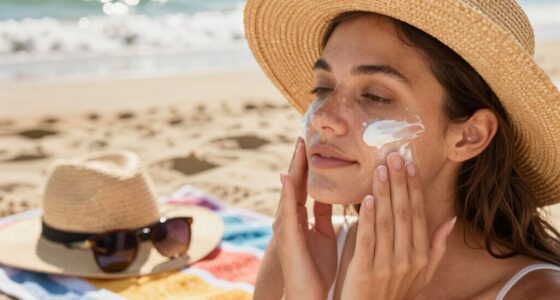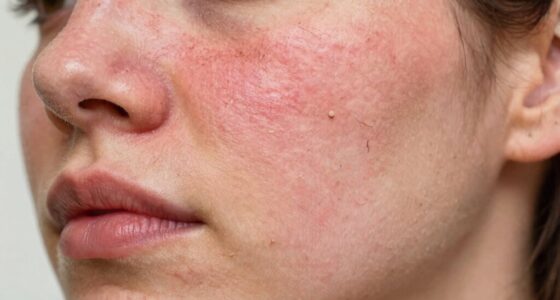
To protect your skin during outdoor workouts, apply broad-spectrum sunscreen with SPF 30+ before heading out and reapply every two hours, especially if sweating. Wear protective clothing, a wide-brimmed hat, and UV sunglasses to shield your face and neck. Stay hydrated by drinking plenty of water and electrolyte drinks, and clean your skin thoroughly afterward. Using antioxidants in your skincare routine adds extra defense against environmental damage. Keep going to discover more tips for keeping your skin safe while staying active outdoors.

Get workout gear delivered free with Prime
- Fast, free delivery on millions of items
- Prime Video, Amazon Music and more included
- Member-only deals all year
Key Takeaways
- Apply broad-spectrum SPF 30+ sunscreen before outdoor exercise and reapply every two hours.
- Wear protective clothing, UV sunglasses, and a wide-brimmed hat to shield skin from direct sunlight.
- Stay hydrated by drinking water and electrolyte drinks before, during, and after workouts.
- Use antioxidant-rich skincare products to defend against environmental damage and pollution.
- Cleanse your skin thoroughly post-workout and apply moisturizer to maintain skin barrier health.
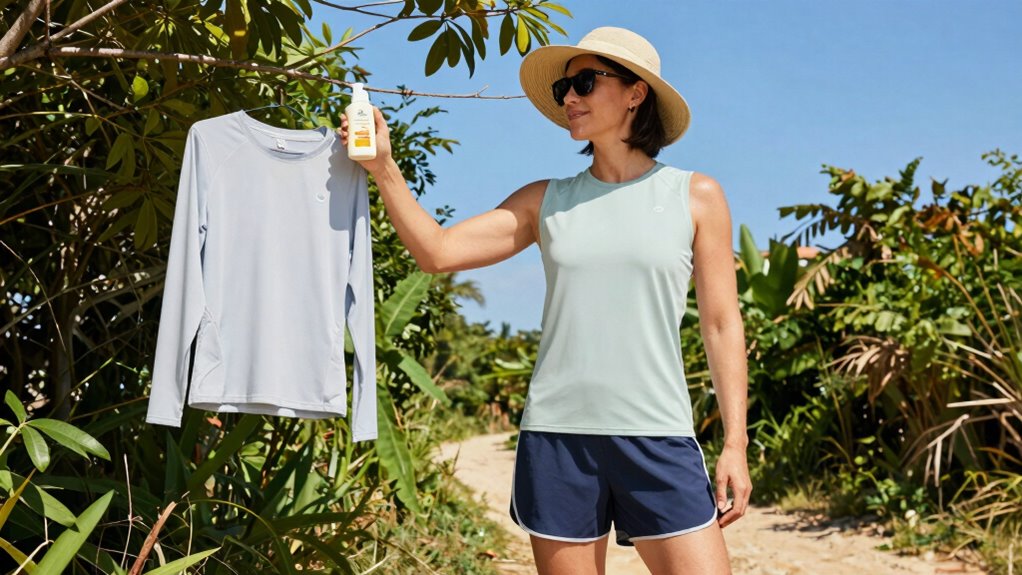
Exercising outdoors offers numerous health benefits, but it also exposes your skin to environmental hazards like sun damage, pollution, and wind. To keep your skin healthy and protected during outdoor workouts, you need to prioritize sun protection and hydration strategies. Sun protection is essential because prolonged exposure to UV rays can cause premature aging, sunburns, and increase your risk of skin cancer. Before heading out, apply a broad-spectrum sunscreen with at least SPF 30, and don’t forget to reapply every two hours, especially if you’re sweating or wiping your face. Wearing protective clothing, such as long sleeves, wide-brimmed hats, and UV-protective sunglasses, adds an extra layer of defense. These measures help shield your skin from direct sunlight and reduce the chance of sun-related damage.
In addition to sun protection, hydration strategies play a key role in maintaining your skin’s health during outdoor exercise. When you sweat, your body loses water and essential electrolytes, which can lead to dry, flaky skin and impair your skin’s ability to repair itself. Drinking plenty of water before, during, and after your workout keeps your skin hydrated from within. Consider carrying a water bottle and taking regular sips, especially on hot days or during intense activities. Incorporating electrolyte drinks can also help replenish lost minerals and keep your skin and body functioning at their best. Proper hydration not only prevents dehydration but also supports your skin’s barrier function, making it more resilient against environmental stressors. Additionally, using protective skincare products that contain antioxidants can further shield your skin from free radical damage caused by pollution and UV exposure. Incorporating antioxidants into your routine can provide an extra layer of defense against environmental damage.
You should also pay attention to your skin’s surface. Cleansing your face thoroughly after your workout removes sweat, dirt, and pollutants that can clog pores and cause irritation or breakouts. Regular cleansing is especially important because pollution particles can settle on your skin and contribute to oxidative stress. Follow up with a moisturizer suited to your skin type to lock in hydration and reinforce your skin’s natural barrier. If you’re exposed to wind or pollution, using antioxidant-rich serums or creams can provide extra protection by neutralizing free radicals that can cause cellular damage. Remember, protecting your skin isn’t just about choosing the right products; it’s about establishing a routine that integrates sun protection and hydration strategies seamlessly into your outdoor workout schedule. With consistent care, you’ll enjoy the benefits of outdoor exercise while keeping your skin healthy, radiant, and protected from environmental hazards.
broad spectrum SPF 30+ sunscreen for outdoor workouts
As an affiliate, we earn on qualifying purchases.
As an affiliate, we earn on qualifying purchases.
Frequently Asked Questions
What Are the Best Natural Remedies for Sunburn Relief?
For natural remedies and effective sunburn relief, you should try aloe vera gel, which soothes and moisturizes your skin. Applying cool chamomile tea bags or cucumber slices can also reduce inflammation and discomfort. Honey has healing properties, so consider a light layer to promote recovery. Stay hydrated and avoid further sun exposure. These natural remedies help calm your skin, speed healing, and alleviate pain from sunburn.
How Does Outdoor Pollution Affect Skin During Workouts?
Outdoor pollution can considerably impact your skin during workouts, as pollution-induced irritation leads to redness, dryness, and breakouts. Many believe oxidative stress effects from pollutants accelerate aging and damage skin cells, but studies show this isn’t just a myth. Exposure to pollutants increases free radicals, causing inflammation and dullness. To defend against this, cleanse your skin thoroughly afterward, use antioxidant-rich skincare, and stay hydrated to combat pollution’s damaging effects during outdoor exercise.
Can Certain Foods Improve Skin Protection From UV Rays?
Yes, certain foods can boost your skin’s defense against UV rays. Eating nutrient-rich foods like berries, nuts, and leafy greens increases your antioxidant intake, which helps neutralize free radicals caused by sun exposure. Incorporate these into your diet to strengthen your skin’s natural barrier. Staying consistently nourished with these antioxidant-rich options supports your skin’s resilience, making it better equipped to handle UV damage during outdoor workouts.
Are There Specific Skincare Products for Different Outdoor Climates?
Absolutely, you should seek climate-specific products for outdoor skincare. Think of it as armor tailored to your environment—hydrating creams for cold, dry climates, or lightweight, oil-free sunscreens for humid areas. These outdoor skincare products help shield your skin from harsh elements, preventing damage and irritation. Remember, just like a good leather jacket, the right product adjusts and protects you across different outdoor conditions, keeping your skin healthy and resilient.
How Often Should I Reapply Sunscreen During Exercise?
You should reapply sunscreen every two hours during exercise to maintain effective workout sun protection. If you’re sweating heavily or swimming, reapply more frequently—about every 40 to 60 minutes. Remember, sunscreen reapplication is essential to shield your skin from harmful UV rays, especially during outdoor workouts when exposure is prolonged. Staying consistent with reapplication helps prevent sunburns and long-term skin damage, keeping your skin healthy and protected.
Conclusion
Remember, your skin is like a brave knight on a quest, facing the blazing sun and harsh winds. Guard it with a shield of sunscreen, armor of protective clothing, and a trusty helmet. Keep it hydrated like a well-tended garden, and avoid the sun’s fiery arrows during peak hours. By shielding your skin, you’re setting it up for a triumphant victory, glowing with health and ready to conquer every outdoor adventure that comes your way.
Fall Picks
fall essentials
As an affiliate, we earn on qualifying purchases.