
To protect your skin on beach days, apply broad-spectrum SPF 30 sunscreen and reapply every two hours, especially after swimming or sweating. Wear protective accessories like hats and sunglasses, and seek shade during peak hours. Stay hydrated by sipping water regularly and eat water-rich fruits. After beach time, cleanse your skin thoroughly, then moisturize to lock in hydration. Developing these habits helps keep your skin healthy; continue exploring for even more tips.

Get workout gear delivered free — and shop member deals
- Fast, free delivery on millions of items
- Access to Prime Big Deal Days deals on October 6–7
- Prime Video, Amazon Music and more included
Key Takeaways
- Apply and reapply broad-spectrum SPF 30+ sunscreen every two hours, covering all exposed skin and often-overlooked areas.
- Carry and sip water regularly, and consume water-rich fruits to keep skin hydrated throughout the day.
- Use mineral-based sunscreens, antioxidants, and gentle cleansers suited for outdoor skin protection.
- Cleanse skin thoroughly after beach activities and saltwater exposure, then apply a nourishing moisturizer.
- Maintain consistent skincare habits by protecting, hydrating, and gently caring for skin during and after beach days.

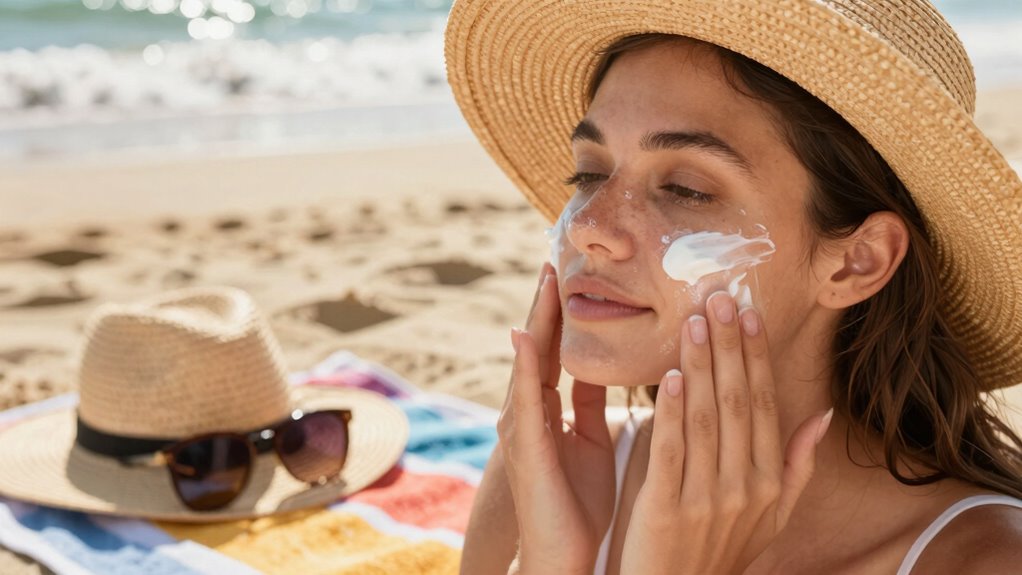
Heading to the beach is fun, but it also means your skin faces intense sun exposure and environmental stress. That’s why adopting the right skin care habits can make all the difference in keeping your skin healthy and glowing. First and foremost, sun protection should be your top priority. Apply a broad-spectrum sunscreen with at least SPF 30 generously on all exposed skin before you hit the sand. Don’t forget often-overlooked spots like your ears, the back of your neck, and your feet. Reapply every two hours, or more frequently if you’re swimming or sweating. Wearing protective accessories like wide-brimmed hats, sunglasses, and lightweight cover-ups adds an extra layer of defense, helping to shield your skin from harmful UV rays. Remember, seeking shade during peak hours—typically between 10 a.m. and 4 p.m.—can notably reduce your risk of sun damage.
While protecting your skin from the sun is essential, maintaining proper hydration is equally important. The sun’s heat and exposure can quickly dehydrate your skin, making it look dull and increasing the risk of irritation. To combat this, carry a water bottle and sip regularly throughout the day. Hydration tips also include eating water-rich fruits like watermelon and berries, which support your skin from the inside out. Using a hydrating facial mist can be a quick refresh during the day, especially if you notice your skin feeling tight or dry. Applying a moisturizer before heading to the beach creates a barrier that locks in moisture and helps prevent dehydration caused by sun and wind. If you plan to spend several hours outdoors, consider bringing a lightweight, hydrating serum to boost your skin’s moisture levels, and reapply moisturizer after swimming or sweating. Incorporating natural skincare practices such as using mineral-based sunscreens and gentle cleansing can further protect and nurture your skin in outdoor environments. Additionally, choosing products with antioxidants can provide extra defense against environmental stressors like pollution and UV radiation. Being aware of skincare ingredients and their functions can help you choose products that best suit your skin type and environmental needs.
Another smart habit is to cleanse your skin thoroughly after the day at the beach. Saltwater, sand, and sunscreen can clog pores and lead to breakouts if not cleaned properly. Use a gentle cleanser suited to your skin type to remove any residues and restore your skin’s natural balance. Proper cleansing techniques enhance your skin’s recovery process and prevent irritation, especially when using products formulated for sensitive skin. Follow up with a nourishing moisturizer to replenish lost moisture and help your skin recover from environmental stress. Taking these simple yet effective steps—prioritizing sun protection and hydration tips—ensures your skin stays healthy, protected, and radiant, even after long hours under the sun. With consistent habits, you’ll enjoy your beach days while keeping your skin in top condition.
broad spectrum SPF 30+ sunscreen for face and body
As an affiliate, we earn on qualifying purchases.
As an affiliate, we earn on qualifying purchases.
Frequently Asked Questions
How Often Should I Reapply Sunscreen at the Beach?
You should reapply sunscreen every two hours when you’re at the beach, especially if you’re swimming or sweating. Keep hydration tips in mind by drinking plenty of water to stay hydrated. After sun exposure, use after sun remedies like aloe vera to soothe your skin. Remember, reapplying sunscreen and staying hydrated are key to protecting your skin and preventing damage during sunny beach days.
Can I Wear Makeup While Swimming or Sunbathing?
You can wear makeup while swimming or sunbathing, but choose waterproof formulas to prevent smudging. Did you know that about 70% of people wear makeup at the beach? Just remember, makeup can hinder sun protection, so it’s essential to apply a broad-spectrum, waterproof sunscreen first. Reapply sunscreen often, especially if you’re swimming or sweating, to keep your skin protected while enjoying your day in the sun.
Are Natural Oils Better for Beach Skincare Than Commercial Products?
Natural oils can be better for beach skincare than commercial products because they’re often free of synthetic chemicals and preservatives that might irritate your skin or harm the environment. You can choose oils like coconut, jojoba, or argan, which offer hydration and some sun protection. However, make sure to reapply them regularly, and remember that commercial products with added SPF can give you extra environmental protection during your beach day.
How Can I Prevent Sand From Irritating My Skin?
Sand irritation can turn your beach day into a nightmare, but you can prevent it easily. Before heading out, apply a barrier like petroleum jelly or a thick moisturizer to your skin, especially on sensitive areas. Wearing tightly woven, snug-fitting clothes can also minimize sand contact. Rinse off with fresh water after swimming, and wear protective clothing to boost your skin protection. These simple steps keep sand irritation at bay, letting you enjoy the sun worry-free.
What Are Quick Skincare Tips for Beach Emergencies?
In beach emergencies, act fast by applying sun protection like broad-spectrum sunscreen to shield your skin. Keep a small spray or mist of water handy to refresh your face and prevent dehydration. Hydration tips include drinking plenty of water and avoiding alcohol or caffeine. If your skin feels irritated, gently rinse with cool water and apply soothing aloe vera. These quick steps help protect your skin and keep you comfortable during beach mishaps.
Conclusion
Remember, protecting your skin on beach days isn’t just about looking good — it’s about long-term health. Did you know that about 90% of skin cancers are caused by sun exposure? By sticking to these simple habits—like applying broad-spectrum sunscreen, seeking shade, and staying hydrated—you’re not only enjoying the sun but also safeguarding your skin’s future. So, make these habits part of your beach routine, and soak up the sun safely!
Fall Picks
fall essentials
As an affiliate, we earn on qualifying purchases.