
When choosing between mineral and body sunscreens, consider your activity and skin sensitivity. Mineral sunscreens sit on your skin’s surface, providing immediate broad-spectrum protection, making them great for sensitive skin or quick applications. Chemical or body sunscreens absorb UV rays and often feel lighter, ideal for active outdoor activities. Reapplication needs vary—mineral sunscreens require blending, while chemical ones need reapplying every two hours. To get the best protection for your needs, keep exploring these differences further.

Get workout gear delivered free — and shop member deals
- Fast, free delivery on millions of items
- Access to Prime Big Deal Days deals on October 6–7
- Prime Video, Amazon Music and more included
Key Takeaways
- Mineral sunscreens are ideal for sensitive skin and natural lifestyles, offering immediate broad-spectrum protection.
- Chemical body sunscreens are lighter, easier to reapply during active outdoor use, and suitable for water sports.
- Mineral types may require more careful application to avoid white cast, especially for quick, on-the-go use.
- Chemical filters absorb UV rays, converting them into heat, making them more suitable for frequent reapplication during activity.
- Choice depends on skin sensitivity, activity level, and preference for ease of application or natural ingredients.
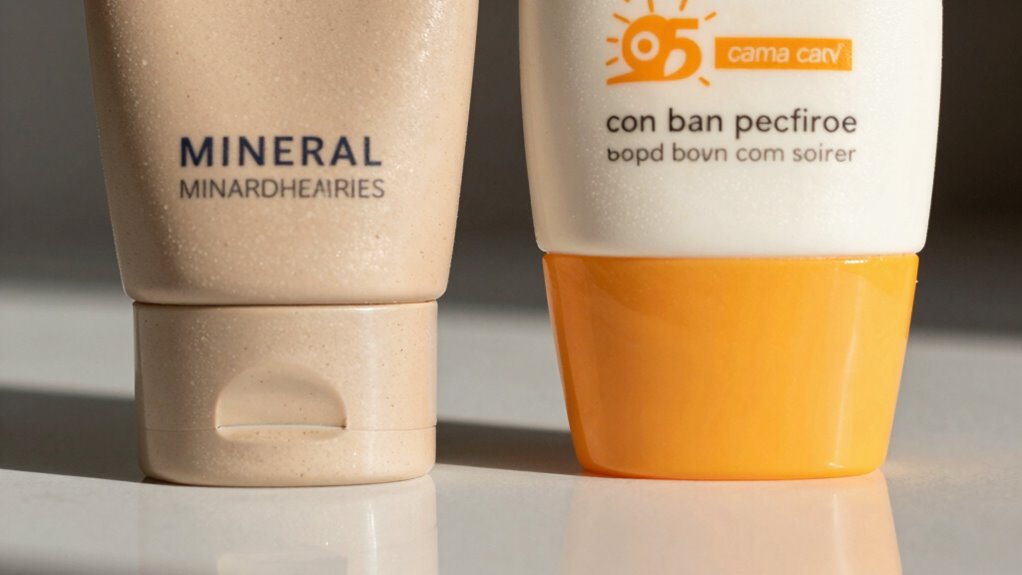
When choosing between mineral sunscreen and body sunscreen, understanding their differences can help you make a better decision for your skin. Mineral sunscreens typically contain active ingredients like zinc oxide or titanium dioxide, which sit on top of your skin and reflect UV rays away. Body sunscreens, on the other hand, often use chemical filters such as avobenzone, oxybenzone, or homosalate, which absorb UV rays and convert them into heat. This fundamental distinction influences how you apply these products and their effectiveness based on your activity or skin type.
Chemical filters in body sunscreens tend to be more transparent and easier to spread, making application quicker and more convenient—especially when you’re in a rush. With application techniques, the key is to apply generously and evenly. You’ll want to use enough product to cover every inch of exposed skin, usually about one ounce for full body coverage. It’s also essential to reapply every two hours or immediately after swimming or sweating, regardless of whether it’s labeled water-resistant. Since chemical filters absorb UV rays, they need to be properly applied to guarantee coverage and protection.
Apply chemical sunscreens generously and reapply every two hours for effective UV protection.
In contrast, mineral sunscreens often have a thicker consistency and a tendency to leave a white cast if not applied carefully. When using mineral formulas, you might need to work the product into your skin more thoroughly or opt for tinted options to reduce whiteness. Proper application techniques include gentle patting or blending to ensure an even layer without gaps. Because mineral sunscreens sit on top of the skin, they tend to be less irritating for sensitive skin types and provide broad-spectrum protection immediately upon application, no waiting needed. Additionally, mineral sunscreens are often preferred for their natural ingredients, which can be beneficial for those seeking a more eco-friendly or less chemical-laden option.
The choice of sunscreen also depends on your use case. For outdoor sports or activities involving water, a broad-spectrum, water-resistant body sunscreen with chemical filters might be more suitable, given its lighter feel and ease of reapplication. However, if you’re concerned about sensitive skin, or if you prefer a more natural option, mineral sunscreen could be the better fit, even if it requires a bit more effort to apply thoroughly. Remember, the application techniques differ: chemical filters require a generous, even coat, with regular reapplication, while mineral options demand careful blending and patience to avoid a white cast.
In the end, understanding these nuances helps you select the best protection for your skin, whether you’re heading to the beach, running errands, or enjoying outdoor sports. Your choice hinges on your skin type, activity level, and preference for application methods, ensuring you stay protected without compromising comfort.
mineral sunscreen with zinc oxide
As an affiliate, we earn on qualifying purchases.
As an affiliate, we earn on qualifying purchases.
Frequently Asked Questions
Are Mineral Sunscreens Better for Sensitive Skin?
Yes, mineral sunscreens are generally better for sensitive skin. They contain ingredients like zinc oxide or titanium dioxide, which are less likely to cause irritation. These ingredients are considered safer for sensitive skin because they sit on the surface, reflecting UV rays without penetrating deeply. If you have sensitive skin, mineral sunscreens offer a gentler, safer option that minimizes the risk of allergic reactions and irritation.
Can Body Sunscreens Be Used on the Face?
Yes, you can use body sunscreens on your face, but it’s not always recommended. Body sunscreens are formulated mainly for larger areas and may contain ingredients that can clog facial pores or cause breakouts. For your facial skin, opt for a sunscreen specifically designed for the face, as it offers better protection and is gentle enough for sensitive facial skin, ensuring effective body coverage without irritation.
How Often Should Mineral Sunscreen Be Reapplied During Outdoor Activities?
Think of your skin as a shield that needs constant reinforcement. You should reapply mineral sunscreen every two hours during outdoor activities for maximum protection. If you’re swimming, sweating, or towel-drying, reapply immediately afterward. This reapplication frequency guarantees your outdoor protection stays strong, preventing UV damage. Keep this routine in mind to enjoy your time outside confidently, knowing your skin stays guarded against harmful rays.
Do Mineral and Body Sunscreens Differ in Waterproof Qualities?
Mineral and body sunscreens do differ in waterproof qualities. Mineral sunscreens often have better waterproof efficacy because their active ingredients, like zinc oxide or titanium dioxide, are more stable in water. This stability helps them maintain their protective barrier longer during sweating or swimming. In contrast, some body sunscreens may lose effectiveness quickly if their ingredients aren’t as stable or if they lack water-resistant formulations, so check labels carefully.
Are There Any Environmental Concerns With Mineral Sunscreens?
You should know that mineral sunscreens generally have a lower environmental impact than chemical ones, especially regarding reef safety. They contain zinc oxide or titanium dioxide, which are less likely to harm marine life. However, some formulations may still pose risks if they contain microplastics or certain chemicals. To protect reefs and the environment, choose mineral sunscreens labeled as reef-safe and avoid spray or powder types that can easily disperse into water.
Conclusion
Choosing between mineral and body sunscreen depends on your specific needs and skin sensitivities. Mineral sunscreens offer more natural protection and are gentle on sensitive skin, making them ideal for daily use. Body sunscreens, on the other hand, often provide broader coverage for active outdoor days. Ultimately, isn’t protecting your skin about more than just SPF? It’s about finding the right match for your lifestyle and keeping your skin safe and healthy every day.
Fall Picks
fall essentials
As an affiliate, we earn on qualifying purchases.