TL;DR

Get workout gear delivered free with Prime
- Fast, free delivery on millions of items
- Prime Video, Amazon Music and more included
- Member-only deals all year
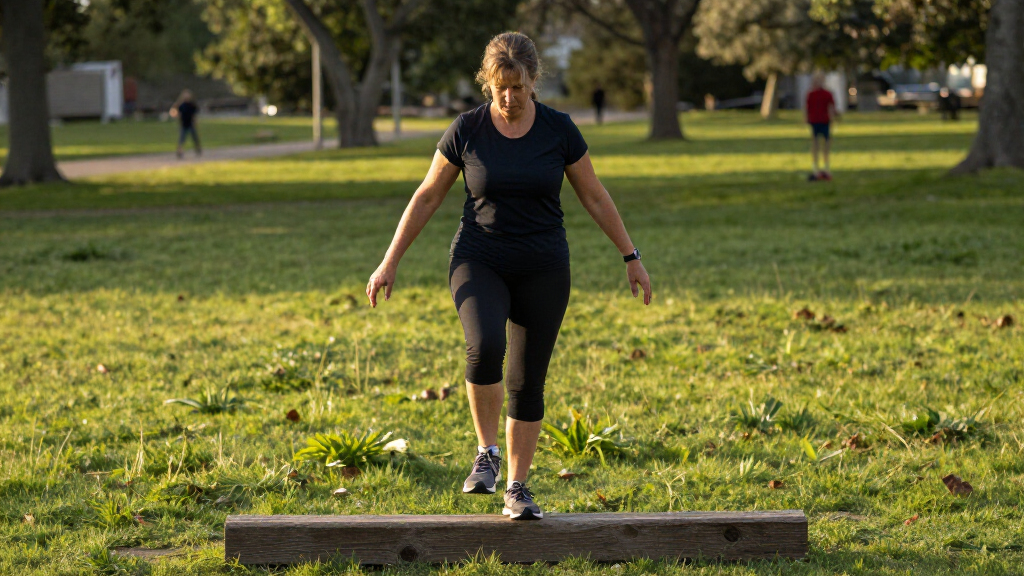
A Fit&Well report highlights muscular power—the ability to produce force quickly—as a fitness skill that may receive less attention than strength training for women in midlife. Trainer Kylie Hansen recommends short, rested sets of adaptable exercises, while noting that quality movement matters more than exhaustion.
A Fit&Well report has highlighted muscular power—the ability to produce force quickly—as a fitness skill women may overlook in midlife, and shared a four-move workout from personal trainer Kylie Hansen. Hansen says quick force production can help with rapid movements such as regaining balance after a trip, while the exercises can be scaled for beginners.
Hansen, a NASM-certified personal trainer and coach at Busy Bariatrics, distinguishes power from strength: strength involves producing force, while power involves producing it quickly. She says muscle fibers involved in fast, forceful movements can decline with age and inactivity. The supplied report does not provide research data quantifying that decline or showing that this specific workout improves longevity.
The suggested session includes burpees, squat jumps, squat-to-upright rows with dumbbells or kettlebells, and plank dumbbell pull-throughs. Hansen recommends two or three sets of five or six repetitions per exercise, resting 60 to 90 seconds between sets; the pull-through is prescribed for five or six repetitions on each side.
The routine offers lower-impact options: step through a burpee rather than jump, rise onto the toes instead of jumping for the squat jump, and perform the pull-through from the knees. Hansen advises prioritizing crisp, controlled repetitions over high repetitions or exercise to exhaustion, because fatigue can reduce power. The workout is presented as expert guidance in the report, not as a clinical trial or individualized medical prescription.
Power for Everyday Reactions
Power is relevant to ordinary movements that require a quick response, not only athletic performance. Hansen gives the examples of catching oneself after a trip, regaining balance, and moving rapidly to avoid someone on a crowded sidewalk. These examples explain the practical focus of the report: fitness can involve both how much force a person can produce and how quickly they can produce it.
The guide adds a distinct training emphasis to the familiar discussion of maintaining strength with age. It does not establish that the workout prevents falls, extends lifespan, or produces a particular health outcome. Rather, it offers a trainer’s practical approach to practicing speed, coordination and stability in movements that can be adapted to individual ability.
As an affiliate, we earn on qualifying purchases.
Strength and Speed Differ
Strength training is widely discussed in advice for aging adults, including women in midlife. The Fit&Well report says that developing and maintaining power receives less attention in those conversations. It frames power as using strength at speed, a quality that can involve coordinated action across the body as well as quick lower-body movement.
The four exercises have different roles. Burpees and squat jumps emphasize rapid movement; the squat-to-upright row coordinates the lower and upper body while rising; and the plank pull-through challenges core stability as the base of support changes. Hansen says the final exercise is not an explosive move in the same way as the others, but complements them by requiring the person to stabilize quickly.
“Power drops as fatigue builds.”
— Kylie Hansen
Evidence and Individual Fit
The supplied report does not identify a study behind its longevity framing, provide measurements of age-related power loss, or show that this particular routine improves longevity or prevents injury. Hansen’s comments are trainer guidance, and the exercises are not presented as a program tested in a clinical study. The report also does not specify how often to repeat the workout or how to progress it over time.
People’s fitness, balance, joint comfort and experience vary. The report does not offer individual screening or say who should avoid jumps or particular lifts. Anyone with a health condition, pain, balance concerns or uncertainty about exercise should seek guidance from a qualified health professional or trainer before starting; the listed modifications do not guarantee that a movement is suitable for every person.
Adapting the Workout Safely
The report’s immediate recommendation is to complete two or three sets of each movement, resting 60 to 90 seconds between sets and keeping repetitions purposeful rather than pushing to exhaustion. Beginners can use the suggested step-back burpee, toe-rise alternative to jumping, or kneeling plank pull-through, and should use a load they can control for the squat-to-row.
No follow-up research, program schedule or outcome data is provided in the source material. Readers considering the routine can treat it as general exercise guidance, adjust movements to their ability, and consult a qualified professional where health or safety questions apply.
Key Questions
What does muscular power mean?
In Hansen’s definition, muscular power is the ability to produce force quickly. It differs from strength alone because speed is part of the movement.
Which exercises are in the suggested workout?
The report lists burpees, squat jumps, squat-to-upright rows and plank dumbbell pull-throughs. It recommends two or three sets, with five or six repetitions per exercise and 60 to 90 seconds of rest between sets; pull-throughs are done on each side.
Can beginners modify the exercises?
Yes. The report suggests stepping rather than jumping during a burpee, rising onto the toes instead of doing a squat jump, and performing the pull-through from the knees. Whether an option is appropriate depends on the individual’s ability and health.
Does this workout prove that power training extends longevity?
No. The supplied report offers a trainer’s explanation and exercise suggestions, but it does not provide evidence that this specific workout extends lifespan or prevents falls or injuries.
Source: rss
Fall Picks
fall essentials
As an affiliate, we earn on qualifying purchases.