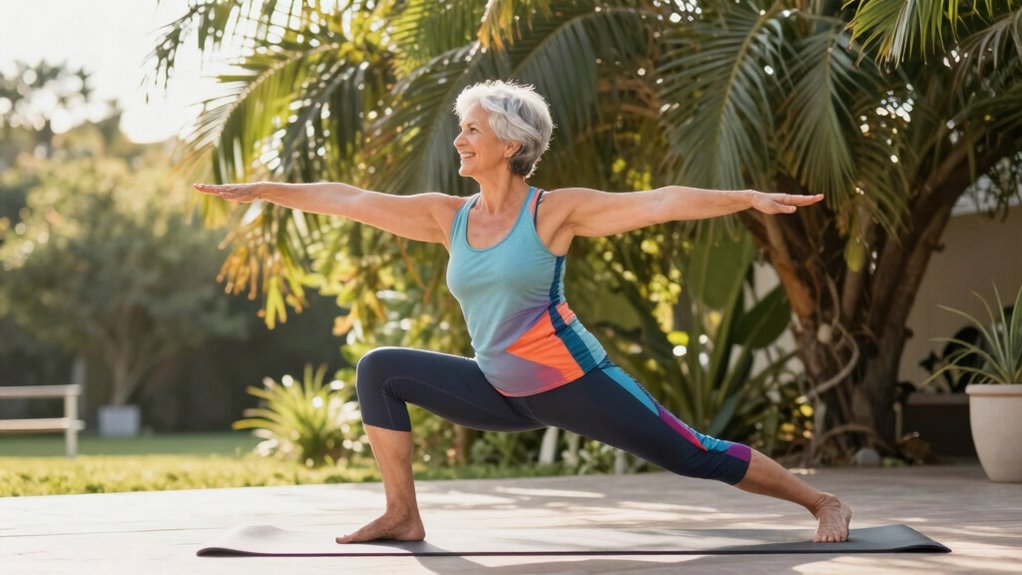

Mobility training helps you feel younger by boosting your strength, balance, and flexibility, making daily tasks easier and more enjoyable. It improves stability, reducing the risk of falls, and increases confidence in movement. Regular routines also alleviate stiffness and discomfort, helping you stay active and independent longer. This combination of physical benefits lifts your mood and sense of energy. Keep exploring to discover how these practices can keep you feeling youthful and spirited every day.

Get workout gear delivered free with Prime
- Fast, free delivery on millions of items
- Prime Video, Amazon Music and more included
- Member-only deals all year
Key Takeaways
- Enhances physical strength and flexibility, reducing stiffness and promoting a youthful, vibrant feel.
- Improves balance and stability, preventing falls and boosting confidence in daily activities.
- Maintains independence by enabling seniors to perform tasks easily and enjoy favorite activities.
- Supports mental well-being by fostering a positive outlook and motivation to stay active.
- Promotes overall resilience, vitality, and a sense of youthfulness through proactive movement routines.
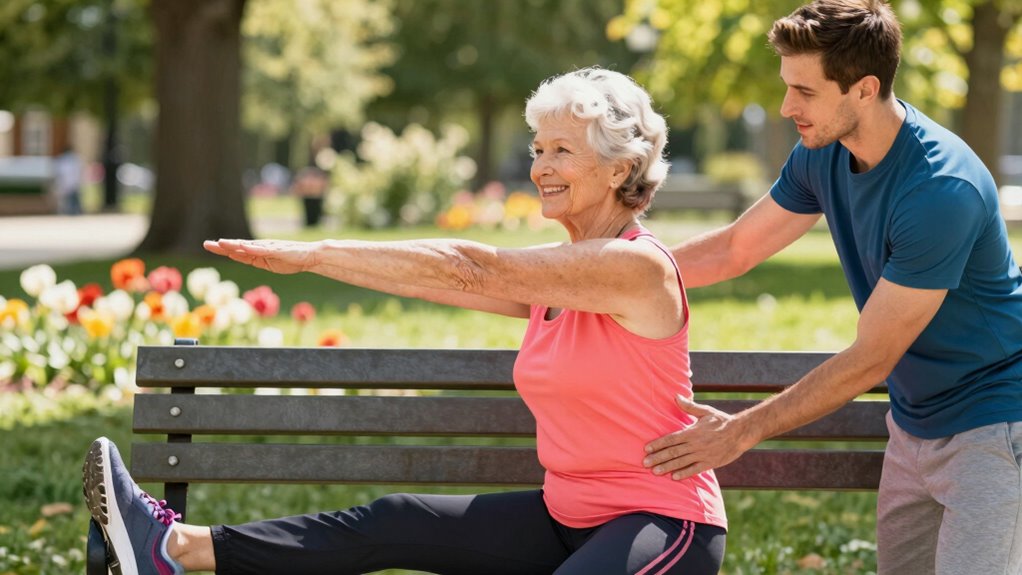
As you age, maintaining mobility becomes essential for independence and quality of life. When you prioritize mobility training, you’re actively working to preserve your ability to move freely, perform daily tasks, and enjoy your favorite activities. One of the most effective ways to do this is through balance exercises, which help improve your stability and prevent falls. By dedicating time to simple activities like standing on one leg or walking heel-to-toe, you strengthen the muscles responsible for keeping you steady. These exercises challenge your nervous system, enhancing your body’s ability to respond quickly to changes in terrain or posture. As a result, you’ll notice increased confidence when walking, climbing stairs, or reaching for objects.
Prioritize mobility training to boost stability, prevent falls, and enhance confidence in daily activities.
In addition to balance exercises, incorporating flexibility routines into your daily regimen can make a significant difference. Flexibility routines involve stretching your muscles and joints to maintain or improve your range of motion. When your muscles are flexible, you move more easily and with less discomfort, reducing stiffness and the risk of injury. Gentle stretches targeting your hamstrings, calves, shoulders, and back can loosen tight muscles and keep your joints limber. Incorporating flexible materials like soft, elastic bands can also enhance your stretching routines and help you achieve better results. Consistently practicing these routines helps you stay agile, making everyday movements smoother and more natural. Plus, improved flexibility can alleviate common aches and pains, giving you a more youthful feeling and encouraging you to stay active.
By combining balance exercises and flexibility routines, you’re creating a comprehensive approach to mobility training that truly helps you feel younger. These activities not only enhance your physical capabilities but also boost your confidence, making you less hesitant to engage in social outings, exercise, or even simple chores around the house. When your body feels more capable, your mental outlook tends to brighten as well, reinforcing your motivation to keep moving. Over time, these regular practices become a vital part of your routine, helping you maintain your independence longer and enjoy life to the fullest.
Ultimately, mobility training isn’t just about staying active; it’s about reclaiming your vitality and independence. When you invest in balance exercises and flexibility routines, you’re doing more than strengthening your body—you’re nurturing your overall well-being. Incorporating copper cookware sets into your kitchen can even motivate healthier cooking habits that support your active lifestyle. This proactive approach helps you feel more energetic, resilient, and youthful, empowering you to embrace each day with confidence and joy. You owe it to yourself to stay mobile, and these simple, effective routines are a powerful step toward aging gracefully while feeling vibrant and alive.
senior balance exercise equipment
As an affiliate, we earn on qualifying purchases.
As an affiliate, we earn on qualifying purchases.
Frequently Asked Questions
How Often Should Seniors Do Mobility Exercises?
You should aim for mobility exercises about three to five times a week. Incorporate stretching routines to enhance flexibility and focus on balance improvement to prevent falls. Short, daily sessions can be very effective, especially if you combine gentle stretching with movements that boost your stability. Consistency is key, so find a routine you enjoy and stick with it, ensuring you stay active and maintain your independence.
Are Mobility Exercises Suitable for All Health Conditions?
Mobility exercises are generally suitable for many health conditions, but you should consult your healthcare provider first. They help improve joint flexibility and muscle strength, which can benefit overall mobility. However, if you have severe arthritis, heart issues, or recent surgeries, some exercises might need modification. Always listen to your body, start slow, and prioritize safety to avoid injury while enhancing your joint flexibility and muscle strength.
Can Mobility Training Prevent Falls in Seniors?
Absolutely, mobility training can help prevent falls in seniors. Think of it as your personal knight, strengthening your stance through balance improvement and muscle flexibility. As you practice these exercises, you’ll enhance stability, reduce the risk of missteps, and feel more confident walking around like a young adventurer. Regular mobility work keeps your body agile, making falls less likely and helping you stay safe and independent longer.
What Equipment Is Needed for Senior Mobility Workouts?
For senior mobility workouts, you’ll need resistance bands and balance balls. Resistance bands help improve strength and flexibility, making daily movements easier. Balance balls enhance stability and coordination, reducing fall risks. Keep these pieces of equipment accessible and easy to use, starting with gentle exercises. Consistent use helps boost confidence, mobility, and overall well-being, making you feel younger and more active every day.
How Long Does It Take to See Benefits From Mobility Training?
You’ll typically start noticing improvements in age-related stiffness and muscle flexibility within 4 to 6 weeks of consistent mobility training. As you engage regularly, your joints become more lubricated, and your muscles loosen, making movement easier. The key is to stay committed, gradually increase intensity, and listen to your body. Over time, these efforts help you feel more youthful, energetic, and agile.
Conclusion
By embracing mobility training, you can stay spry and independent, making every day feel a bit more like a walk in the park. Think of it as your secret potion, turning back the clock and keeping your spirit lively. Just remember, the fountain of youth isn’t a myth—it’s in your daily movement. So, don your armor and keep moving, for your best years are still ahead, not behind.
Fall Picks
fall essentials
As an affiliate, we earn on qualifying purchases.