TL;DR
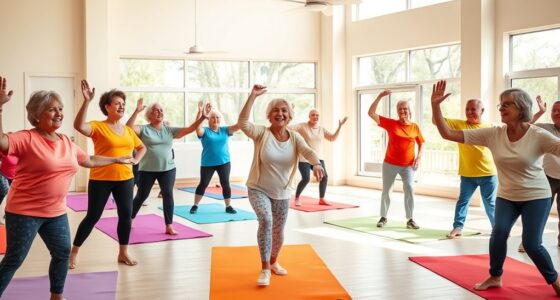
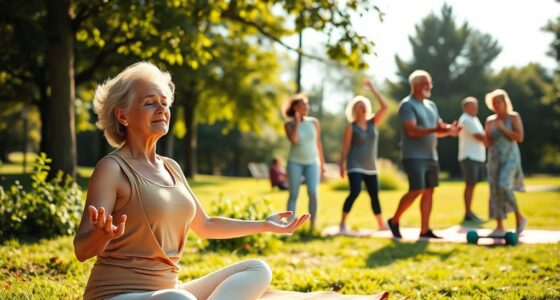
A trainer who works with older adults says coordination exercises are a regular part of her chair-based yoga classes and personal training sessions. Her Fit&Well report describes three moves, with seated alternatives, while citing a 2019 review that found balance and coordination exercises may support certain cognitive and movement abilities.
A trainer who works with older adults has outlined three coordination exercises she includes in classes and personal training sessions: knee and opposite-arm raises, side step-outs with an opposite-arm reach, and a ball-catching drill. In a Fit&Well report, she says each can be adapted for seated practice, offering options for people with different mobility levels.

Get workout gear delivered free with Prime
- Fast, free delivery on millions of items
- Prime Video, Amazon Music and more included
- Member-only deals all year
The trainer says she uses coordination work alongside other exercise, including chair-based yoga, to practise moving limbs in different directions. She describes the aim as engaging the mind-to-muscle connection and helping clients practise everyday movements. Those outcomes are her account of her training approach, not a guarantee that the exercises will produce the same effects for everyone.
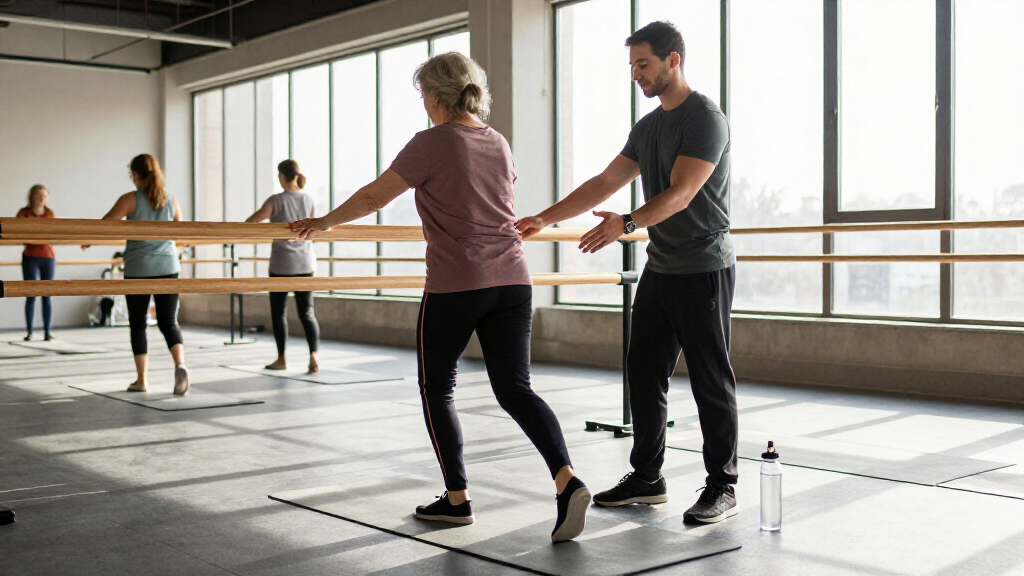
For the first move, stand with feet hip-width apart and arms extended at shoulder height. Raise one knee while bringing the opposite arm forward, then return to the starting position and switch sides. The report suggests five to six repetitions per side. For a seated version, slowly march in place and lift the opposite arm with each knee raise.
The second exercise pairs a side step with a reach from the opposite arm. Step one foot outward and reach forward; a side lunge is optional, and the report says people can remain upright. Repeat on the other side for five to six repetitions per side. Seated, the movement becomes a side step-out with the opposite arm opening to the side.
Practising Coordination in Daily Movement
The exercises focus on combining movements rather than training strength alone. That may be relevant to readers who want to practise balance, controlled stepping and responding while moving. The report connects those skills with ordinary situations such as moving around other people or managing tasks at home, but it does not establish that these particular drills prevent falls, preserve independence or extend lifespan.
The seated options also make the suggestions more adaptable: a person does not have to perform every movement standing or on one leg. The report presents modifications as ways to adjust the challenge, not as a substitute for individual guidance when someone has health or mobility concerns.
Products Worth Considering

Garmin Forerunner 970 GPS Running and Triathlon Smartwatch, 47mm, Carbon Gray DLC Titanium with Black/Whitestone Band

Withings Sleep Under-Mattress Sleep Tracking Pad

Hyperice Hypervolt Go 3 Percussion Massage Gun with Carry Case
As an affiliate, we earn on qualifying purchases.
The Research Behind the Routine
The report notes that strength training is often discussed as one form of exercise that can support healthy aging, then argues that coordination work is another element worth including. It refers to a 2019 review of balance and coordination exercises in older adults. According to the report’s summary, the review found improvements in cognitive processes such as spatial awareness, as well as postural control and stability in distracting environments.
The source does not provide the review’s title, authors, participant numbers, intervention details or effect sizes. Its brief summary therefore offers background for the trainer’s approach, but readers cannot assess from this report alone how large or consistent the reported effects were. The trainer says she adapts standing work for clients who can do it and uses seated versions for others.
The third exercise uses a ball. Stand a few steps from a wall, balance on one foot, and gently throw a ball underhand so it bounces back to be caught. The report recommends five to 10 repetitions and suggests varying the throw direction. Easier options include keeping both feet on the floor, sitting down, or using a different-sized ball.
“I always incorporate coordination training into my chair-based yoga classes and personal training sessions with older adults.”
— The trainer, as quoted in the Fit&Well report
Limits of the Reported Evidence
The source does not identify the trainer by name or provide a date for the article. It also does not give detailed citations for the 2019 review, so the review’s methods and findings cannot be checked from the supplied material alone. The report does not show that these three specific exercises were tested as a set, nor does it quantify their effects on health or everyday functioning.
There is no information about how often the trainer recommends doing the routine, how long to practise it, or how to progress it over time. Readers’ abilities and health needs differ; the report does not provide individual medical advice or a screening process. Anyone unsure whether a standing balance drill is suitable can seek guidance from a qualified health or exercise professional.
Adapting the Exercises Safely
The report offers no announced follow-up study or scheduled next step. Its immediate guidance is to choose a version that matches current ability: try the seated march or seated side reach, or keep both feet down for the ball drill, rather than attempting a more difficult balance variation by default. A clear, stable area and a light, controlled pace can help keep practice manageable.
People can use the listed repetition ranges as the report’s suggested starting point, but the source gives no progression plan. Those with existing conditions, recent injuries, frequent dizziness or concerns about falls should ask a clinician or appropriately qualified exercise professional for individualized guidance before trying balance challenges.
Key Questions
Which coordination exercises does the trainer recommend?
The report lists a knee raise paired with the opposite arm, a side step paired with an opposite-arm reach, and a ball throw-and-catch drill performed while balancing.
Can these exercises be done seated?
Yes. The report gives seated versions of the first two moves and says the ball drill can also be done seated. The seated alternatives reduce the need to balance while standing.
What does the report say about research on coordination training?
It summarizes a 2019 review as finding that balance and coordination exercises in older adults can improve some cognitive processes, spatial awareness, postural control and stability. The supplied source does not include the review’s full citation or detailed results.
How many repetitions does the report suggest?
It suggests five to six repetitions per side for each of the first two exercises and five to 10 repetitions for the ball drill. It does not specify a weekly schedule or progression plan.
Source: rss