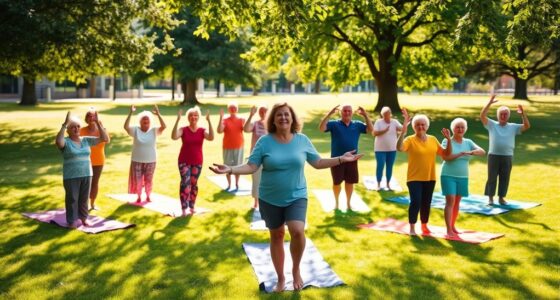
After retirement, your top fitness priorities should be staying consistent with gentle exercises like walking, swimming, or chair yoga that boost strength, balance, and flexibility. Focus on routines you can stick to daily, creating habits that support independence and overall well-being. Prioritize nourishing your body with nutrient-rich foods and staying well-hydrated. Small, regular changes make a big difference, helping you feel strong and engaged—if you continue exploring, you’ll discover more ways to thrive.

Get workout gear delivered free — and shop member deals
- Fast, free delivery on millions of items
- Access to Prime Big Deal Days deals on October 6–7
- Prime Video, Amazon Music and more included
Key Takeaways
- Prioritize gentle, senior-friendly exercises to enhance strength, flexibility, and balance safely.
- Establish consistent routines like daily walks and stretching to support ongoing activity.
- Focus on nutrient-dense foods and proper hydration to maintain energy and overall health.
- Incorporate outdoor activities and landscaping to encourage regular outdoor engagement.
- Emphasize small, sustainable lifestyle changes that promote long-term fitness and well-being.
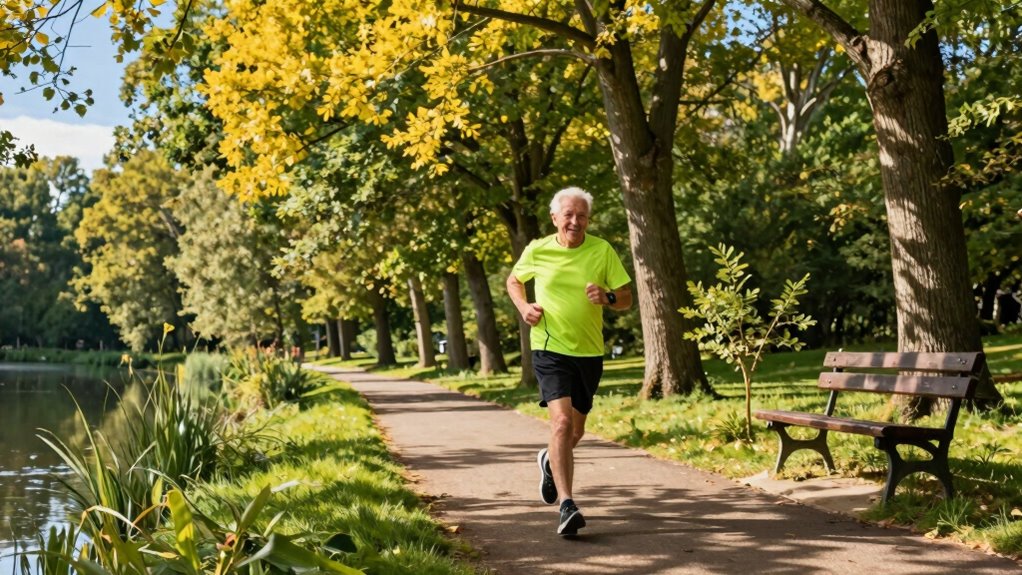
Have you ever wondered how to stay healthy and energized after retiring? It’s a common question, and the answer lies in prioritizing activities that support your well-being without overwhelming you. Focusing on senior friendly exercises and nutritional adjustments can make a significant difference in how you feel daily. These approaches aren’t just about adding years to your life—they’re about making those years active, enjoyable, and fulfilling.
Senior friendly exercises are designed to enhance strength, flexibility, and balance without putting too much strain on your body. Think gentle activities like walking, swimming, or chair yoga. These workouts are easy to incorporate into your daily routine and can help prevent common issues like falls or joint pain. By engaging in regular, moderate movement, you boost your circulation and maintain muscle mass, which naturally declines with age. It’s also essential to listen to your body and avoid overexertion. Starting slow and gradually increasing intensity ensures you stay motivated and injury-free. Remember, consistency in activity beats intensity when it comes to senior fitness. Simple daily walks or stretching routines can become a key part of your lifestyle, helping you stay active and independent. Incorporating landscaping elements into your outdoor space can also motivate you to spend more time outdoors and stay active. Additionally, understanding the importance of supporting caregivers’ emotional well-being can help you stay resilient and motivated on your health journey. Staying informed about hydration strategies, especially in older adults, can further support your overall health.
A well-rounded approach includes being aware of nutritional needs, which change with age and influence overall vitality. Alongside exercise, nutritional adjustments are equally important. As you age, your body’s nutritional needs change, and what you eat can profoundly impact your energy levels and overall health. Incorporate more nutrient-dense foods like fruits, vegetables, whole grains, lean proteins, and healthy fats. These provide essential vitamins and minerals that support immune function, bone health, and cognitive sharpness. Reducing processed foods, added sugars, and excessive salt can decrease inflammation and lower the risk of chronic diseases such as hypertension and diabetes. Staying well-hydrated is also imperative, especially since thirst sensation can diminish with age. Taking small, consistent steps to improve your diet can boost your vitality and help you recover faster from physical activity.
Making these adjustments doesn’t mean you have to overhaul your entire routine overnight. Small, manageable changes are often more sustainable and easier to stick with. Combining regular, senior friendly exercises with thoughtful nutritional choices lays a strong foundation for a healthy retirement. It’s about creating a balanced lifestyle that keeps you feeling strong, alert, and engaged. When you prioritize these fitness aspects, you’re not just adding years to your life—you’re enriching the quality of those years. Staying active and nourished empowers you to enjoy your retirement to the fullest, embracing new adventures with confidence and vitality.
senior gentle exercise equipment
As an affiliate, we earn on qualifying purchases.
As an affiliate, we earn on qualifying purchases.
Frequently Asked Questions
How Do I Stay Motivated to Exercise Regularly?
To stay motivated to exercise regularly, focus on building mental resilience by setting achievable goals and celebrating small victories. Keep social engagement alive by exercising with friends or joining group activities, which makes workouts more enjoyable and provides accountability. Remind yourself of the mental and physical benefits, and find activities you genuinely enjoy. Maintaining a positive mindset and social connections helps you stay committed and motivated over the long term.
What Are the Safest Low-Impact Workouts for Seniors?
You can stay safe with low-impact workouts like chair exercises and water aerobics. Chair exercises help you strengthen muscles without stressing your joints, perfect for limited mobility. Water aerobics reduces impact on your knees and hips while providing resistance to build strength. Both options are gentle, effective, and suitable for seniors, helping you stay active without risking injury. Always consult your doctor before starting new exercise routines.
How Can I Prevent Injuries During Fitness Routines?
Don’t put all your eggs in one basket—spread out your safety measures. To prevent injuries during fitness routines, focus on proper warm-ups, especially balance training and flexibility exercises. Always listen to your body and start slow, gradually increasing intensity. Use correct form and wear supportive shoes. Incorporating these habits helps you stay injury-free and enjoy your workouts, keeping you strong and steady for the long haul.
What Nutritious Foods Support Post-Retirement Fitness?
You should include superfood smoothies and plant-based proteins in your diet to support your post-retirement fitness. Superfood smoothies pack antioxidants and essential nutrients that boost energy and recovery, while plant-based proteins help maintain muscle mass and support overall health. Incorporate ingredients like berries, spinach, and chia seeds into your smoothies, and choose lentils, tofu, or quinoa for plant-based protein sources. These foods keep you energized and aid your fitness goals.
How Often Should I Update My Fitness Goals?
Should you update your fitness goals regularly? Absolutely. You should revisit and modify your goals every few months, especially as you notice progress or encounter new challenges. Consistent goal adjustment keeps you motivated and ensures your fitness plan remains effective. Make progress tracking a habit; it helps you see where you’re excelling and where to improve. Staying flexible with your goals ensures you stay on track and continue making meaningful gains.
Conclusion
So, after all the planning and effort, it turns out your biggest fitness priority is simply staying active—surprisingly, not lifting the heaviest weights or running marathons. Ironically, the real secret isn’t about pushing limits; it’s about maintaining consistency and enjoying movement. Because in the end, the best exercise for your retirement years is the one you actually do. Who knew that staying healthy might just be about keeping it simple?
Fall Picks
fall essentials
As an affiliate, we earn on qualifying purchases.