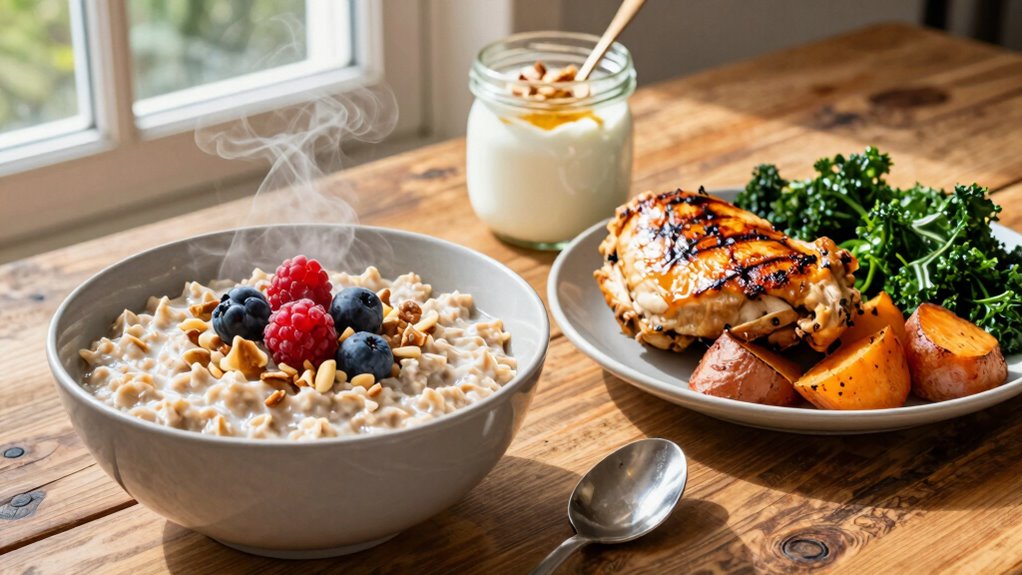

To stay full while managing your weight, focus on foods high in fiber and water, like vegetables, fruits, and soups, which add bulk without many calories. Incorporate lean proteins such as eggs, chicken, or legumes to boost satiety, and control portion sizes to prevent overeating. Filling half your plate with greens and non-starchy veggies helps you feel satisfied longer. Keep exploring to discover more tips that can make healthy eating easier and more effective.

Get workout gear delivered free with Prime
- Fast, free delivery on millions of items
- Prime Video, Amazon Music and more included
- Member-only deals all year
Key Takeaways
- Foods high in fiber and water, like vegetables and fruits, add volume and promote fullness with fewer calories.
- Protein-rich foods such as lean meats, eggs, and legumes enhance satiety and reduce hunger.
- Incorporating low-calorie-density foods allows larger portions while maintaining calorie control.
- Portion control of calorie-dense foods prevents overeating and supports weight management.
- Combining volume-rich, nutrient-dense foods with mindful eating strategies sustains fullness and aids weight goals.
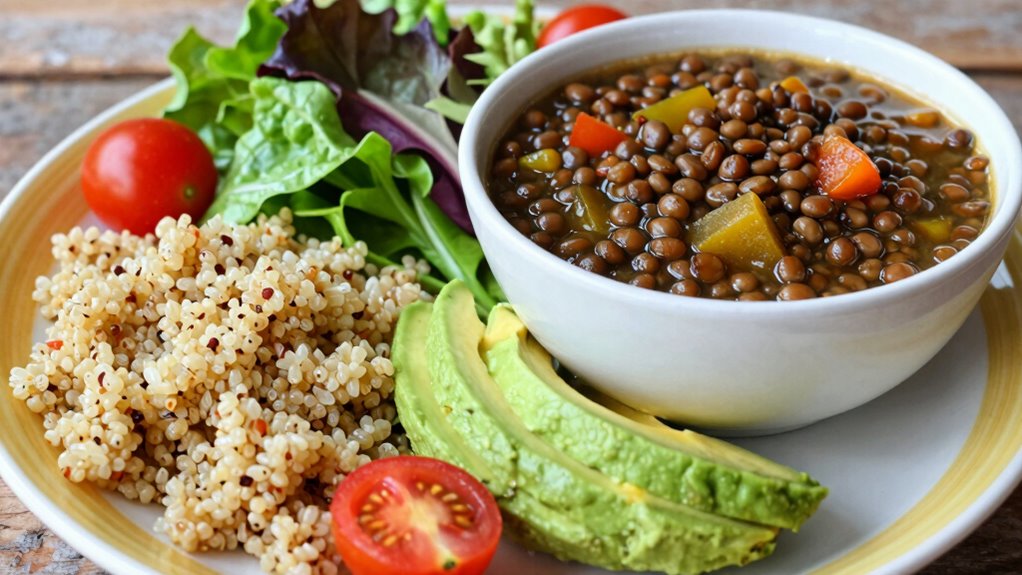
When it comes to managing your weight, choosing foods that keep you full longer can make a big difference. One of the key factors to consider is calorie density—the amount of calories a food contains relative to its weight. Foods with low calorie density allow you to eat larger portions without consuming too many calories, which helps you feel satisfied without overeating. Vegetables, fruits, and soups fall into this category, offering volume and nutrients while keeping calorie intake in check. Incorporating these into your meals lets you enjoy generous portions and stave off hunger longer.
Choosing low-calorie-density foods like vegetables and fruits helps you eat more and feel full longer.
Portion control is another essential strategy. Even healthy foods can lead to weight gain if you eat too much of them. By paying attention to serving sizes, you ensure you’re not consuming excess calories, which is crucial for weight management. Combining portion control with foods that have low calorie density creates a powerful duo—you get to eat satisfying amounts without sabotaging your goals. For instance, filling half your plate with leafy greens or other non-starchy vegetables can help you feel full, while a smaller serving of calorie-dense foods like nuts or cheese can prevent overeating.
Filling foods often share a common trait: they are high in fiber and water content. Fiber adds bulk to your diet, slowing digestion and promoting a feeling of fullness. Water-rich foods, such as cucumbers, watermelon, and lettuce, add volume without adding many calories. When you choose these options, you naturally reduce your overall calorie density, making it easier to control your intake while still feeling satisfied. This approach supports your weight loss or maintenance efforts by allowing you to eat more food in terms of volume, without the calorie overload.
Protein also plays a significant role in creating filling meals. Foods rich in protein, like lean meats, eggs, and legumes, increase satiety and help regulate appetite hormones. Including adequate protein in your meals can reduce cravings and prevent overeating later on. When combined with vegetables and mindful portion control, protein-rich foods enhance the overall filling quality of your diet.
Ultimately, managing your weight isn’t just about what you eat but how you approach eating. Prioritize foods with low calorie density, practice portion control, and include fiber and protein to keep yourself full longer. This balanced approach allows you to enjoy satisfying meals while staying on track with your weight management goals, making healthy choices easier and more sustainable.
Products Worth Considering

BowFlex Results Series SelectTech 552 Adjustable Dumbbell

Levoit Vital 100S-P Air Purifier with Washable Pre-Filter

Garmin Venu 3 Fitness Smartwatch, 45 mm, Black
As an affiliate, we earn on qualifying purchases.
Frequently Asked Questions
Do Filling Foods Help Prevent Emotional Eating?
Yes, filling foods can help prevent emotional eating by promoting mindful eating and satisfying your hunger. When you choose foods that keep you full longer, you’re less likely to respond to emotional cues with unnecessary snacking. By focusing on satisfying, nutrient-dense options, you become more aware of your body’s true hunger signals and can better manage emotional triggers, reducing the likelihood of eating out of emotion rather than hunger.
Can These Foods Be Incorporated Into a Vegan Diet?
Yes, you can definitely incorporate these filling foods into a vegan diet. Plant-based proteins like beans, lentils, and tofu are excellent options that keep you full longer. If you’re worried about variety, explore vegan snack options such as nuts, seeds, or veggie sticks with hummus. These foods help manage hunger and fit seamlessly into your vegan lifestyle, making it easier to stay satisfied and on track.
Are There Any Side Effects of Eating High-Fiber Foods Frequently?
Eating high-fiber foods frequently can cause side effects like bloating, gas, and constipation, especially if your fiber digestion isn’t gradual. You might experience discomfort or gastrointestinal issues as your body adjusts. To minimize these effects, increase your fiber intake slowly, stay well-hydrated, and balance your diet with a variety of fiber sources. Prioritizing gastrointestinal health helps your body comfortably handle increased fiber without adverse effects.
How Do Portion Sizes Affect Feelings of Fullness?
Coincidentally, portion sizes directly influence how full you feel. When you eat smaller portions, you might notice increased hunger, but larger portions, especially with varied food textures, boost feelings of fullness. Proper meal timing guarantees your stomach signals satiety at the right moments, preventing overeating. By adjusting portion sizes and considering food texture, you can better manage your hunger and maintain a satisfying, balanced diet throughout the day.
Can Filling Foods Improve Long-Term Weight Loss Success?
Filling foods can definitely improve your long-term weight loss success. They help you stay full longer, reducing cravings and unnecessary snacking. Focus on meal timing and maintaining a good macronutrient balance—protein, fiber, and healthy fats—to keep hunger at bay. When your meals are satisfying and well-balanced, you’re more likely to stick with your plan and see sustainable results over time.
Conclusion
Choosing filling foods helps you stay satisfied longer, making weight management easier. But don’t forget, even the most satisfying meals won’t work if you’re not mindful of your overall habits. It’s like having a sturdy foundation for a house—beautiful walls won’t hold up without it. So, while filling foods curb hunger, pair them with balanced habits. That way, you create a sustainable, nourishing approach that’s more than just a fleeting fix.