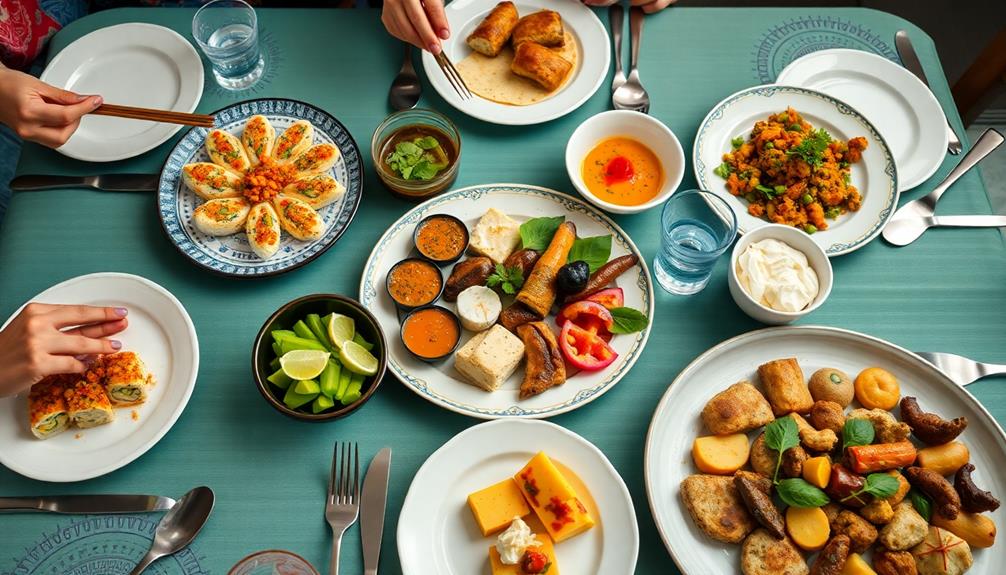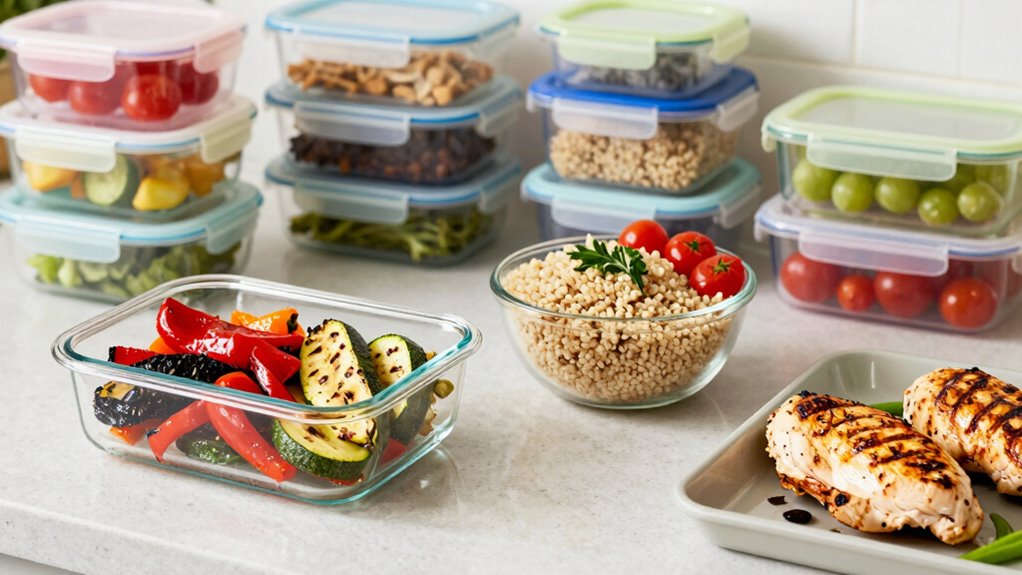

Meal prep doesn’t have to mean eating the same thing every day. By focusing on portion control and ingredient variety, you can prepare components separately and mix them in different ways throughout the week. This keeps your meals exciting and prevents food fatigue. With creative assembly options like salads, wraps, or bowls, you can enjoy diverse flavors while staying consistent with your goals. Keep exploring, and you’ll discover how flexibility makes meal prep both easy and enjoyable.

Get workout gear delivered free with Prime
- Fast, free delivery on millions of items
- Prime Video, Amazon Music and more included
- Member-only deals all year
Key Takeaways
- Flexible meal prep involves preparing ingredients separately for varied meal combinations throughout the week.
- Using ingredient variety prevents boredom and encourages diverse nutrient intake.
- Portion control allows for easy mixing and matching of different food components.
- Meal assembly options like salads, wraps, or bowls enable creative, personalized meals.
- Emphasizing variety ensures meals remain satisfying, nourishing, and sustainable long-term.
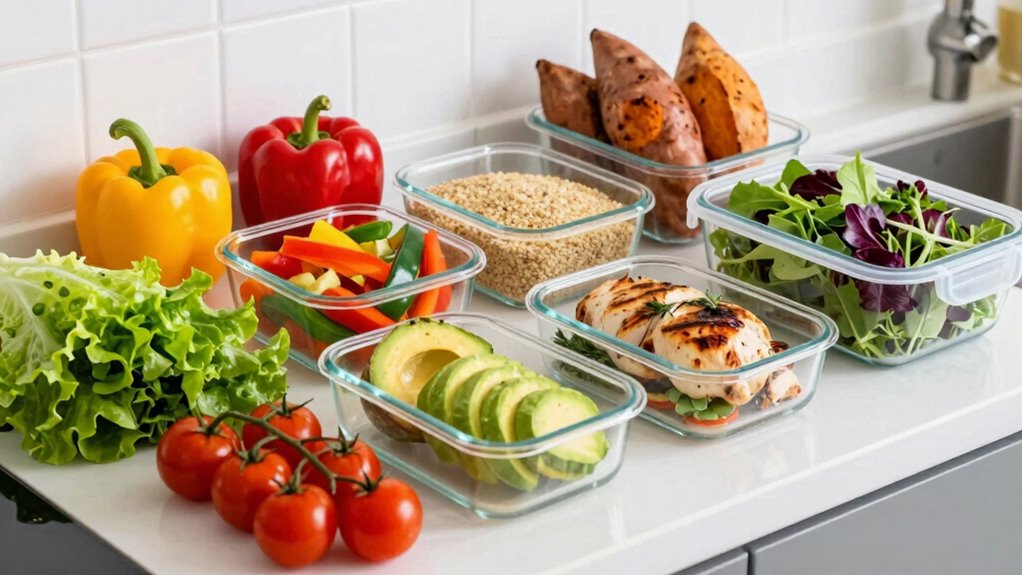
Have you ever felt restricted by rigid meal prep routines? If so, you’re not alone. Many people assume that meal prepping means preparing a single dish for the entire week or sticking to a strict menu that gets monotonous quickly. But that’s not the case. Meal prep can be flexible and exciting when you focus on principles like portion control and ingredient variety. These strategies allow you to create nutritious, satisfying meals without feeling trapped in a cycle of sameness.
When it comes to portion control, it’s about managing your intake so you don’t overeat or feel deprived. Instead of preparing large, identical portions every day, you can pre-portion ingredients into smaller containers. This gives you the freedom to mix and match during the week, helping you stay on track with your goals without limiting your options. For example, you might cook a batch of grilled chicken, roasted vegetables, and grains, then divide them into separate containers. During the week, you can combine different portions to create varied meals—perhaps a chicken and vegetable stir-fry one day, a grain bowl with veggies and a protein the next. This approach keeps your meals balanced and controlled while avoiding the boredom of eating the same thing every day.
Ingredient variety is another key to maintaining meal prep flexibility. Instead of sticking to one recipe, focus on prepping multiple ingredients that can be assembled in different ways. For instance, prepare a selection of proteins like chicken, fish, and beans, alongside a variety of vegetables and grains. With these building blocks, you can assemble different meals throughout the week—salads, wraps, bowls, or stir-fries—each with a unique flavor profile. This not only keeps things interesting but also ensures you’re getting a broad spectrum of nutrients. Plus, it reduces the likelihood of food fatigue, where you grow tired of eating the same ingredients repeatedly.
As an affiliate, we earn on qualifying purchases.
Frequently Asked Questions
Can Meal Prep Be Suitable for Special Dietary Restrictions?
Yes, meal prep can suit special dietary restrictions by incorporating dietary accommodations and custom recipes. You can plan and prepare meals tailored to your needs, like gluten-free, vegan, or low-sugar options. By customizing recipes ahead of time, you guarantee your meals meet your restrictions without sacrificing variety. This approach makes it easier to stick to your diet while enjoying diverse, nutritious meals throughout the week.
How Long Can Prepped Meals Be Stored Safely?
You can typically store prepped meals safely in airtight storage containers for 3 to 4 days in the refrigerator. To guarantee food safety, always cool meals promptly and keep them at or below 40°F. Use good-quality storage containers to prevent spoilage and contamination. If you need longer storage, consider freezing meals, which can extend freshness for up to 3 months. Always reheat thoroughly before eating.
What Are Quick Variety Ideas for Meal Prep?
You can easily add variety to your meal prep with quick flavor combinations like spicy sriracha, lemon herb, or smoky paprika. Don’t worry about storage—use airtight containers and keep cooked ingredients separate until mealtime to maintain freshness. Mix and match proteins, grains, and veggies, and vary sauces or seasonings throughout the week. This way, your meals stay exciting, and food stays safe and fresh.
How Do I Prevent Meal Boredom Over Time?
To prevent meal boredom over time, mix up flavor combinations and incorporate texture contrasts in your meals. Experiment with herbs, spices, and different sauces to keep flavors interesting. Add ingredients with varied textures, like crunch veggies or creamy dressings, and rotate proteins, grains, and vegetables regularly. This variety keeps your meals exciting and satisfying, making meal prep enjoyable without feeling repetitive.
Are There Budget-Friendly Meal Prep Options?
Yes, there are budget-friendly meal prep options. You can focus on cost-effective ingredients like beans, rice, and seasonal vegetables. Using versatile cooking methods—such as roasting, steaming, or stir-frying—allows you to create diverse meals without extra costs. Batch cooking these staples saves money and time, giving you variety throughout the week while sticking to your budget. This approach keeps your meals exciting and affordable.
Conclusion
Remember, meal prep isn’t a rigid chain but a flexible dance that lets you mix, match, and enjoy variety. It’s your ticket to a balanced, stress-free week where boredom stays out and flavor stays in. Embrace the rhythm of planning, and you’ll find that you can have the best of both worlds—healthy, easy meals that keep your taste buds dancing and your schedule on beat. Let your prep be the melody, not the monotony.
Halloween Picks
halloween
As an affiliate, we earn on qualifying purchases.