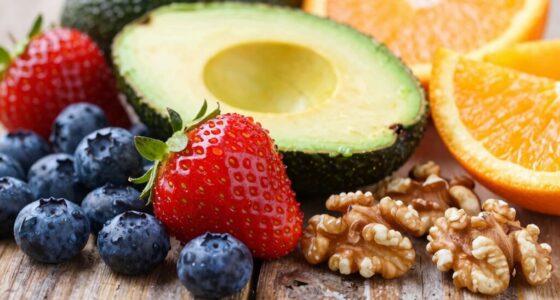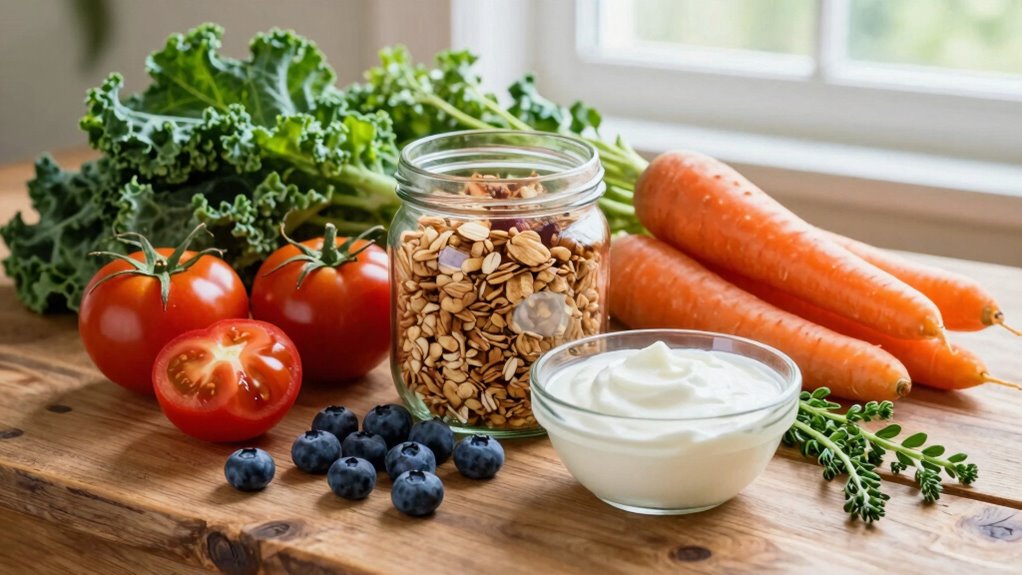

Clean eating is about making mindful choices by choosing minimally processed foods without artificial additives, focusing on natural, whole ingredients like fresh produce and lean meats. While labels can be misleading, paying attention to ingredient lists helps you avoid unregulated marketing buzzwords. Growing your own food and customizing your diet to your needs supports sustainable, wholesome eating habits. If you want to uncover more about balancing these principles in your daily life, there’s plenty to discover.
Key Takeaways
- Clean eating emphasizes minimally processed, natural foods, but labels can be misleading; focus on ingredient lists instead.
- Growing your own produce ensures access to fresh, unprocessed foods, supporting true clean eating.
- A balanced approach, rather than perfection, promotes sustainable, enjoyable, and realistic healthy eating habits.
- Dietary restrictions require mindful label reading and personalized choices to maintain clean, allergy-aware nutrition.
- Clean eating isn’t about extreme exclusion but about making informed, wholesome food choices for overall well-being.
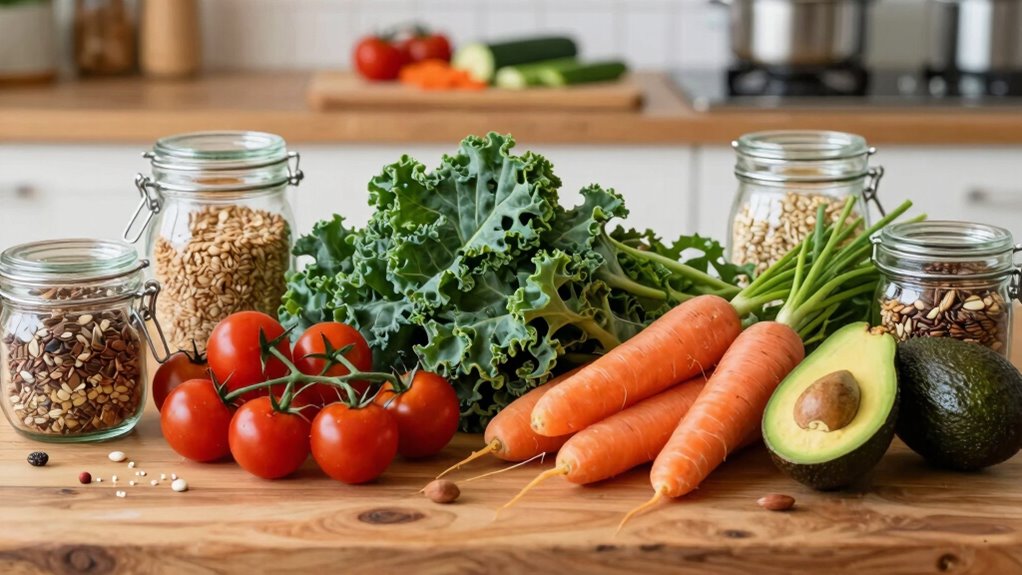
Have you ever wondered what it truly means to eat clean? It’s a term that’s become popular, but its meaning can be unclear and often misunderstood. At its core, eating clean involves choosing foods that are minimally processed, free of artificial additives, and closer to their natural state. But steering through the world of clean eating requires more than just picking up fresh produce or lean meats. It involves understanding food labeling and being aware of your dietary restrictions. Food labels are your best tool here—they can tell you what’s really in your food and whether it aligns with your clean eating goals. However, labels can be tricky; terms like “natural,” “healthy,” or “low-fat” aren’t always regulated, so it’s essential to read ingredient lists carefully. For example, a product labeled “gluten-free” might still contain other ingredients you’re trying to avoid, especially if you have specific dietary restrictions. The key is to look beyond the marketing buzzwords and focus on the actual ingredients. If the list is short and recognizable—like oats, nuts, or vegetables—you’re likely on the right track. Incorporating well-drained soil and full sun can also help you grow your own fresh produce to support clean eating habits.
Your dietary restrictions also play a critical role in what clean eating means for you. Whether you’re vegetarian, vegan, allergic to certain foods, or have other health conditions, you need to tailor your choices accordingly. Clean eating isn’t about adhering to a rigid set of rules; it’s about making mindful decisions that suit your health needs. For instance, if you’re lactose intolerant, choosing dairy alternatives like almond milk or coconut yogurt aligns with both your dietary restrictions and your goal to eat clean. If you’re avoiding processed foods due to a sensitivity, it’s essential to read labels diligently to prevent accidental consumption of hidden ingredients. This awareness helps you stay in control and guarantees your meals support your overall health.
Ultimately, clean eating is about cultivating a balanced relationship with food. It’s not about perfection or strict rules but about making informed choices that nourish your body. By understanding food labeling and respecting your dietary restrictions, you can steer your dietary journey with confidence. It’s a process of learning what works best for your body and making adjustments along the way. Remember, real-life nutrition isn’t just about avoiding certain foods; it’s about embracing a sustainable, enjoyable way to nourish yourself with wholesome, minimally processed foods that support your well-being.
organic produce storage containers
As an affiliate, we earn on qualifying purchases.
As an affiliate, we earn on qualifying purchases.
Frequently Asked Questions
How Can I Identify Truly Clean Foods From Processed Items?
To identify truly clean foods, start by reading the ingredient list carefully. Look for items with minimal ingredients and avoid those with food additives, artificial colors, or preservatives. Whole, unprocessed foods like fresh fruits, vegetables, and meats are your best bet. If the ingredient list is long or contains unfamiliar terms, it’s likely processed. Stick to simple foods with recognizable ingredients to guarantee you’re choosing truly clean options.
Are Organic Foods Always Healthier Than Non-Organic Options?
Organic foods aren’t always healthier than non-organic options. While they’re free from most synthetic food additives and less likely to contain genetically modified ingredients, they can still carry pesticides or be processed similarly to conventional foods. Focus on the overall quality of your choices, including fresh produce and minimally processed items. Remember, organic doesn’t automatically mean more nutritious, so read labels and prioritize whole, natural foods whenever possible.
Can Clean Eating Improve Mental Health and Mood?
Imagine you’re a modern-day Zen master—clean eating can really boost your mental health and mood. By focusing on whole, nutritious foods, you support your brain’s chemistry and reduce mood swings. Incorporate mindfulness practices and develop emotional awareness to enhance these benefits. When you nourish your body thoughtfully, you’ll notice improved clarity, resilience, and overall well-being—making your journey to mental wellness feel like stepping into a future where health and happiness are in harmony.
Is It Necessary to Eliminate All Sugar for Clean Eating?
You don’t need to eliminate all sugar for clean eating. Instead, focus on reducing added sugars and choosing healthier options like natural sweeteners. Sugar substitutes and artificial sweeteners can help satisfy your sweet cravings without overdoing it. Remember, moderation is key. Incorporate real, whole foods and enjoy small treats occasionally, rather than cutting out sugar entirely, which can make your diet feel restrictive and harder to maintain long-term.
How Do I Maintain Variety in a Clean Eating Diet?
To maintain variety in a clean eating diet, focus on diverse meal planning and smart grocery shopping. Incorporate different fruits, vegetables, lean proteins, and whole grains each week. Experiment with new recipes and spices to keep meals exciting. When grocery shopping, make a list that covers various food groups, and try to include seasonal produce. This approach keeps your diet balanced, flavorful, and sustainable without feeling restrictive.
Conclusion
So, after all this talk about “clean eating,” you might realize that chasing perfect foods often misses the point. The irony? By obsessing over every ingredient, you could overlook the joy and balance that real-life, imperfect meals bring. Nutrition isn’t about perfection; it’s about enjoying food in a way that truly nourishes your body and soul. Sometimes, the best “clean” choice is simply eating what makes you happy and keeps you going.