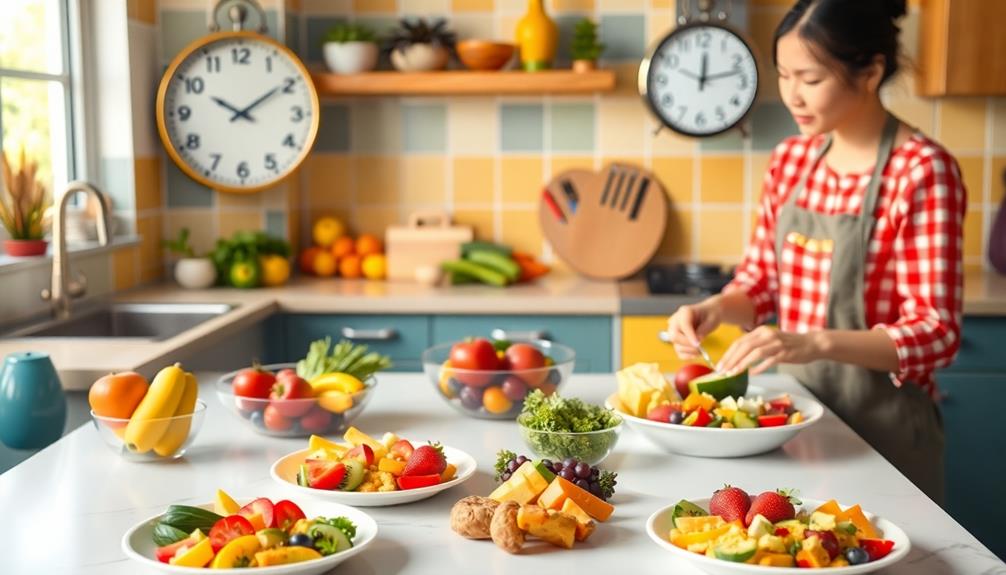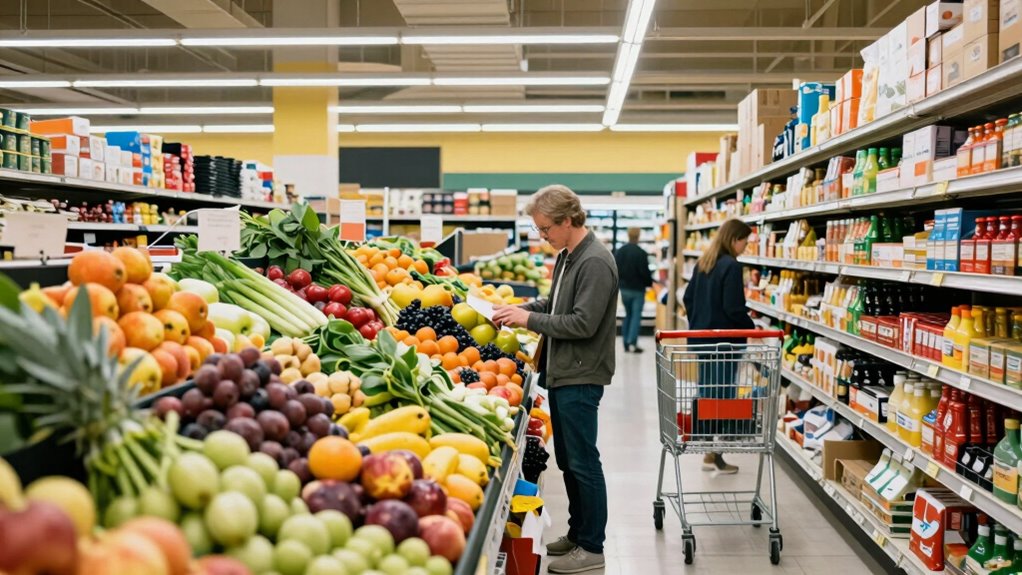
The biggest grocery store mistakes that hurt your goals include shopping without a plan, which leads to impulse buys and overspending. Wandering through store layouts and marketing tactics can make you purchase unhealthy or unnecessary items. Skipping meal and snack prep results in unfocused shopping trips. Buying snacks indiscriminately or when hungry increases temptations. Failing to compare prices or use coupons can drain your budget. Keep these pitfalls in mind, and you’ll discover how to shop smarter to stay on track.

Get workout gear delivered free with Prime
- Fast, free delivery on millions of items
- Prime Video, Amazon Music and more included
- Member-only deals all year
Key Takeaways
- Shopping without a plan leads to impulse buys and overspending, undermining health and budget goals.
- Falling for store layout and marketing tactics encourages unnecessary, unhealthy, or costly purchases.
- Choosing unhealthy snacks over nutrient-dense options wastes money and hampers health objectives.
- Not comparing prices, ignoring sales, and skipping coupons reduces savings and increases costs.
- Shopping when hungry or without a list causes impulsive, unplanned purchases that derail nutritional and financial targets.

Shopping at the grocery store might seem straightforward, but many shoppers make simple mistakes that can add up to wasted money and time. One common mistake is not planning ahead, which often leads to impulse buys and unhealthy choices. If you walk in without a list, you’re more likely to pick up items that don’t align with your health goals or budget. Instead, take a few minutes to plan your meals and snacks for the week. This way, you can create a focused shopping list that keeps you on track, saving money and helping you avoid unnecessary temptations. Being aware of store layout tactics can also help you navigate more efficiently and make healthier choices. When it comes to healthy snack strategies, many people overlook the importance of choosing nutrient-dense options that keep you full longer. Instead of reaching for chips or candy, stock up on nuts, fresh fruit, or veggie sticks. These snacks are not only healthier but also more cost-effective when bought in bulk or on sale. Incorporating these into your shopping routine can also help you resist unhealthy temptations, especially when hunger strikes. Additionally, understanding product placement strategies used by stores can give you an advantage in choosing better options. Awareness of marketing tactics can influence your purchasing decisions, so staying informed helps you make smarter choices. Making smart shopping choices by comparing prices and selecting seasonal produce can significantly stretch your grocery budget. Budget-friendly shopping tips can make a significant difference in sticking to your financial goals. Look for sales, use coupons, and compare store brands to save money without sacrificing quality. Many stores offer discounts on items nearing expiration or overstocked products—grab those deals when possible. Additionally, avoid shopping when you’re hungry, as this can lead to impulsive purchases of unnecessary or unhealthy items. Stick to your list and focus on whole foods like grains, beans, and seasonal produce, which tend to be cheaper and more nutritious.
As an affiliate, we earn on qualifying purchases.
Frequently Asked Questions
How Can I Avoid Impulse Buys at the Checkout?
To avoid impulse buys at checkout, practice impulse control by making a list and sticking to it. Use checkout tactics like placing your cart away from temptations and avoiding eye contact with tempting displays. Bring your own snacks or water to reduce the urge to grab treats. By staying focused and aware of your goals, you’ll resist unnecessary purchases and save money while maintaining your grocery budget.
What’s the Best Time to Shop for Healthy Produce?
You should shop for fresh produce early in the day, ideally in the morning, when stores stock new arrivals and seasonal selections are at their peak. This way, you get the best quality and variety. Shopping when the store isn’t crowded helps you pick the freshest items without rushing. Also, look for seasonal produce, which is usually more flavorful, affordable, and nutritious, supporting your healthy eating goals.
How Do Store Layouts Influence My Shopping Choices?
Store layouts heavily influence your shopping choices through strategic product placement and aisle design. When healthy foods are placed at eye level or near the front, you’re more likely to pick them up. Aisle design that guides you past tempting treats can tempt you into buying less nutritious options. Being aware of these tactics helps you make conscious decisions, sticking to your goals instead of falling for store tricks.
Are Loyalty Programs Truly Beneficial for Saving Money?
Loyalty programs can be a game-changer if you use them wisely. Imagine opening exclusive discounts and personalized offers that cut costs on your favorite items—sounds tempting, right? These programs often include membership benefits and discount strategies tailored to your shopping habits. However, stay alert, as not all offers are genuinely savings. When used correctly, loyalty programs can boost your savings, but only if you’re mindful of their real value.
How Can I Plan My Shopping Trip to Reduce Waste?
You can plan your shopping trip to reduce waste by starting with meal planning. Make a detailed list based on your weekly meals to avoid impulse buys. Focus on portion control by buying only what you need for each meal, which prevents leftovers from spoiling. Stick to your list to minimize waste and save money. Efficient planning guarantees you purchase fresh, appropriate amounts, ultimately reducing food waste and supporting your goals.
Conclusion
So, next time you walk into a grocery store, will you let these common mistakes sabotage your goals? Remember, mindful shopping is about more than just saving money—it’s about making choices that support your health and your budget. By avoiding impulsive buys and sticking to your list, you can stay on track and reach your grocery goals faster. Are you ready to shop smarter and take control of your food choices?
Fall Picks
fall essentials
As an affiliate, we earn on qualifying purchases.