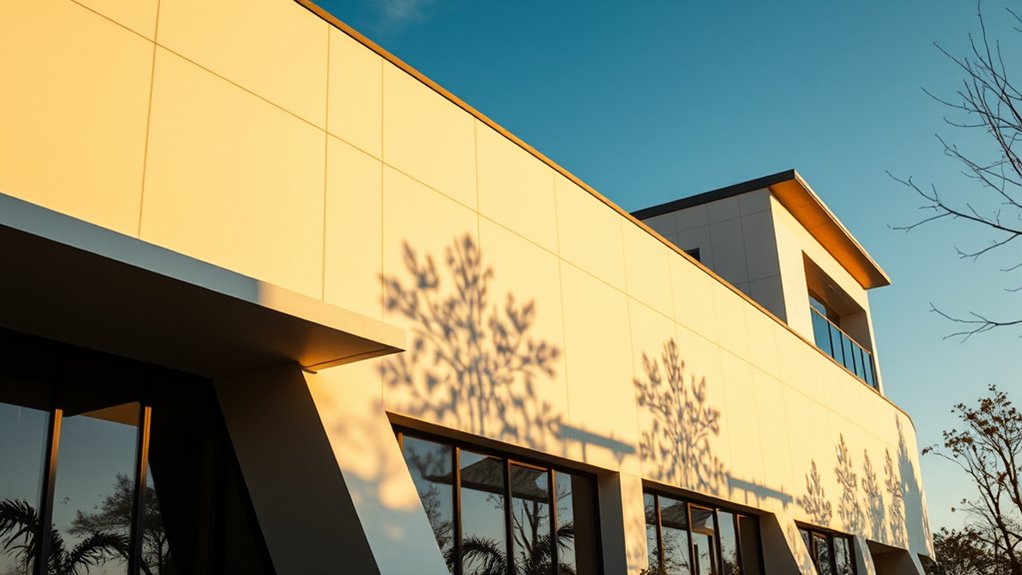
To optimize solar gain and shade, align your building’s long side toward the south (in the northern hemisphere) to maximize winter sunlight and minimize summer heat. Use overhangs, shading devices, and landscaping to block high summer sun while allowing lower winter rays inside. Adjust your design seasonally by incorporating movable elements or flexible layouts. Continue exploring these strategies to learn how proper orientation can boost comfort and energy efficiency year-round.
Key Takeaways
- Orient long building facades south in the northern hemisphere to maximize winter solar gain and natural lighting.
- Use overhangs and shading devices aligned with building orientation to block high summer sun while allowing winter rays.
- Place windows strategically—larger on south-facing sides for sunlight, smaller on north for heat retention.
- Incorporate landscape features like trees and shrubs to provide seasonal shading and reduce heat gain.
- Design adjustable shading elements to respond to seasonal sun angle changes, optimizing solar gain and minimizing overheating.
Understanding Solar Path and Its Impact on Building Design
Understanding the solar path is essential for designing energy-efficient buildings. It helps you predict how sunlight interacts with your structure throughout the day and year. By studying the sun’s movement, you can identify the best locations for windows, shading devices, and ventilation. This knowledge allows you to maximize natural light and heat when needed, reducing reliance on artificial lighting and climate control. You’ll also learn when and where to add shade to prevent overheating during hot months. Recognizing the solar path empowers you to create designs that are responsive to seasonal changes, improving comfort and sustainability. Ultimately, understanding this path guides you in making informed decisions that optimize solar gain while minimizing unwanted heat gain or loss. Understanding solar gain and shade is crucial for balancing natural energy utilization with comfort.
Optimal Building Orientation for Solar Gain

To maximize solar gain, you should carefully consider the building’s orientation relative to the sun’s path. Position your building so that the longest façade faces south in the northern hemisphere or north in the southern hemisphere. This setup allows for the most sunlight exposure during winter, helping to naturally warm your space. Avoid orienting the building directly east or west, which can lead to excessive heat gain in summer and insufficient warmth in winter. If possible, align living areas and major windows toward the sun’s southern exposure to optimize sunlight penetration. Keep in mind the local climate; in colder regions, a more southerly orientation enhances heating, while in warmer areas, a slightly different approach may be necessary to prevent overheating.
Strategic Placement of Windows and Glazing
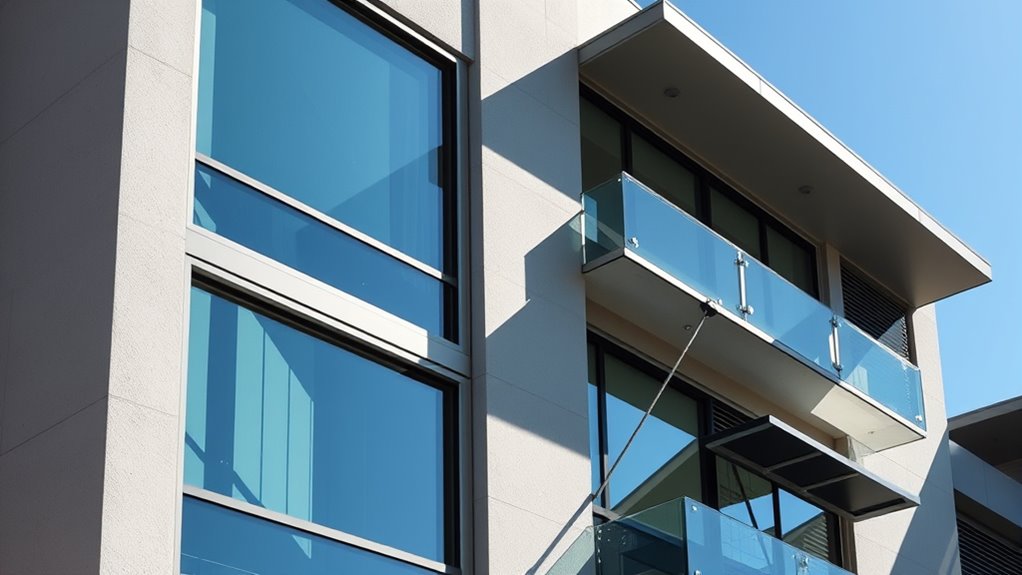
Once you’ve positioned your building to maximize solar gain, the next step is to strategically place windows and glazing to optimize sunlight indoors. Place larger, south-facing windows to capture winter sun, providing warmth and natural light. Use smaller or fewer windows on the north side to minimize heat loss. Consider glazing types—double or triple-pane windows improve insulation, reducing unwanted heat transfer. Incorporate operable windows to enhance ventilation and control indoor temperature. Position windows to avoid direct glare while still allowing ample sunlight. Use high-performance glazing with low-emissivity coatings to reflect infrared heat, keeping interiors cooler in summer. Proper placement and selection of window types enable you to harness solar energy effectively, balancing daylight needs with thermal comfort throughout the year. Additionally, selecting projector technology that supports high contrast ratios and color accuracy can further enhance indoor visual quality.
Utilizing Overhangs and Shading Devices Effectively
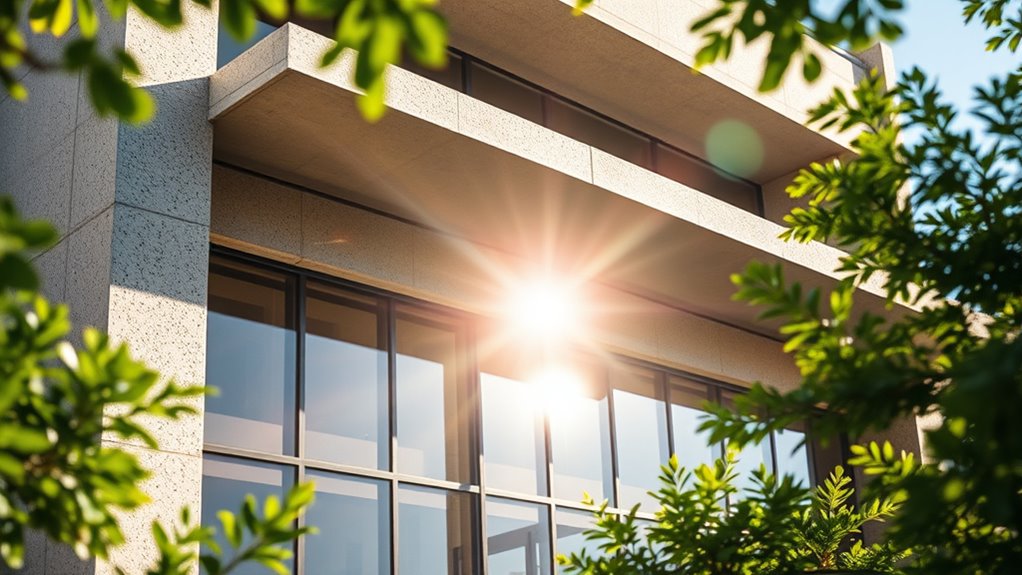
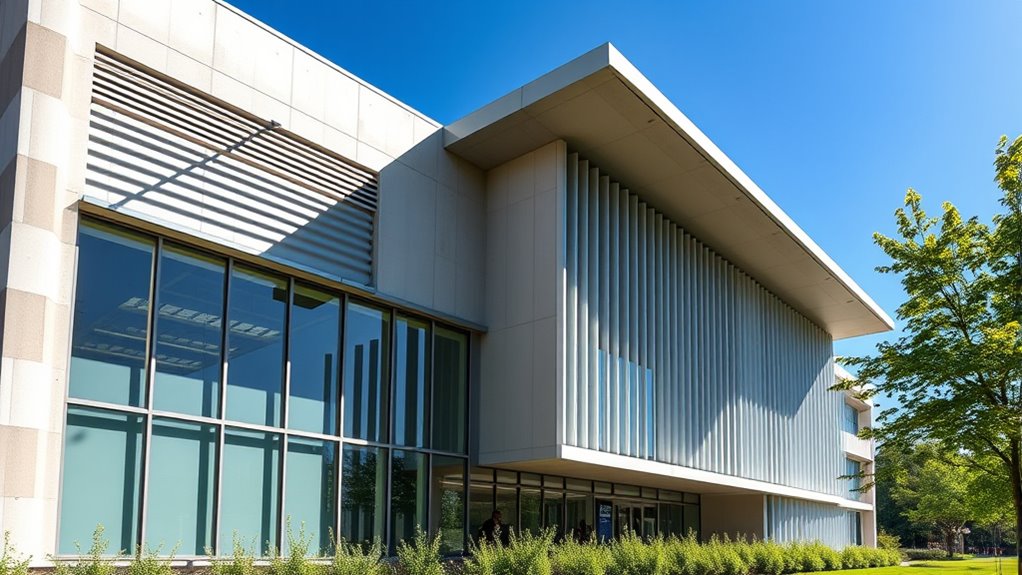
Overhangs and shading devices are essential tools for controlling solar gain and enhancing indoor comfort. They help block excessive sunlight during hot months while allowing warmth in winter. To use them effectively, consider your building’s orientation; for example, overhangs on south-facing windows can shade high summer sun but let in lower winter rays. Adjustable shading devices, like louvers or retractable awnings, give you flexibility to respond to changing conditions. Make sure overhangs are proportioned correctly—they should extend far enough to shade the window but not obstruct natural light unnecessarily. Proper placement minimizes glare and reduces cooling loads, saving energy. Regular maintenance, such as cleaning or adjusting shading elements, guarantees they continue to operate effectively and provide consistent comfort year-round. Additionally, understanding the impact of building orientation can maximize the benefits of shading strategies and improve overall energy efficiency.
The Role of Landscaping in Managing Solar Exposure
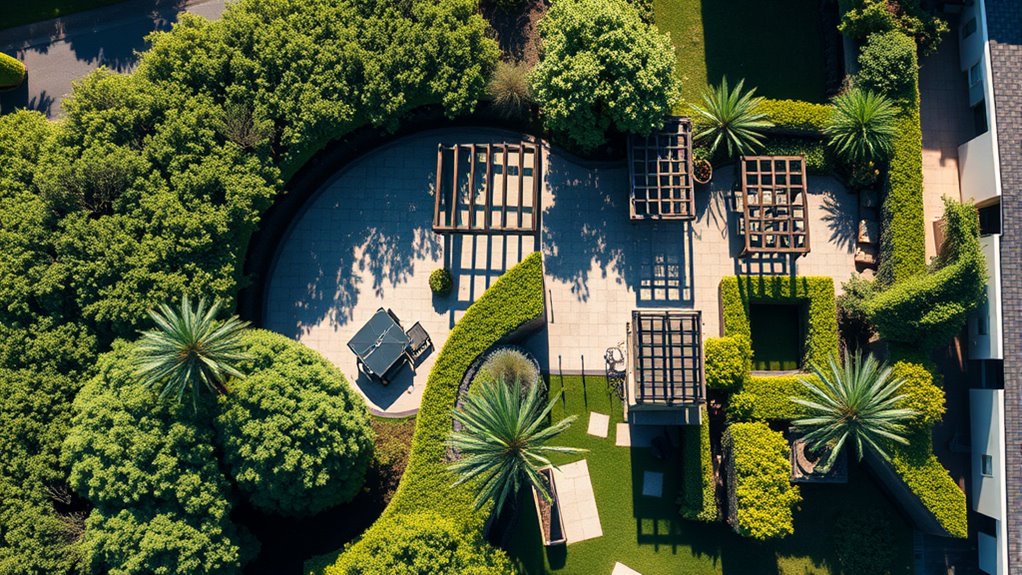
You can manage solar exposure effectively through strategic plant placement, which provides shade where needed most. Natural wind barriers created by trees also help control heat and airflow around your home. Incorporating natural elements like plants and water features not only promotes tranquility but also enhances the overall energy efficiency of your space. By combining these landscaping techniques, you’ll enhance comfort and reduce energy costs.
Strategic Plant Placement
Strategic plant placement plays a crucial role in controlling solar exposure and enhancing energy efficiency around your property. By carefully positioning trees and shrubs, you can block harsh summer sun while allowing winter rays to warm your home. Deciduous trees are particularly effective—leafless in winter to let in sunlight, leafy in summer to provide shade. Place taller plants on the south and west sides to shield your home during peak sun hours, reducing cooling costs. Conversely, plantings on the north side can serve as windbreaks without blocking sunlight. Think about the size and growth habits of your plants to guarantee they mature in the right spots. Properly planned landscaping helps manage solar gain naturally, minimizing reliance on mechanical cooling and heating. Understanding plant growth patterns ensures your landscape remains effective over time while supporting energy efficiency.
Natural Wind Barriers
Landscaping can be an effective way to create natural wind barriers that protect your property from cold gusts and reduce heat loss. By planting dense shrubs, trees, or hedges strategically, you block strong winds before they reach your home. Deciduous trees are especially useful—they block winter winds while allowing sunlight through in summer. Evergreens provide year-round protection and act as durable shields. Properly positioned windbreaks can improve energy efficiency, lower heating costs, and enhance comfort. Consider the prevailing wind directions when selecting plants and placing barriers. Taller plants should be positioned on the windward side to deflect gusts, while lower plants can serve as buffer zones. Thoughtful landscaping creates a natural shield that benefits your home’s thermal performance and overall landscape appeal. Incorporating proper plant placement can maximize the effectiveness of these barriers and further improve your home’s resilience against weather extremes.
Incorporating Passive Solar Design Principles
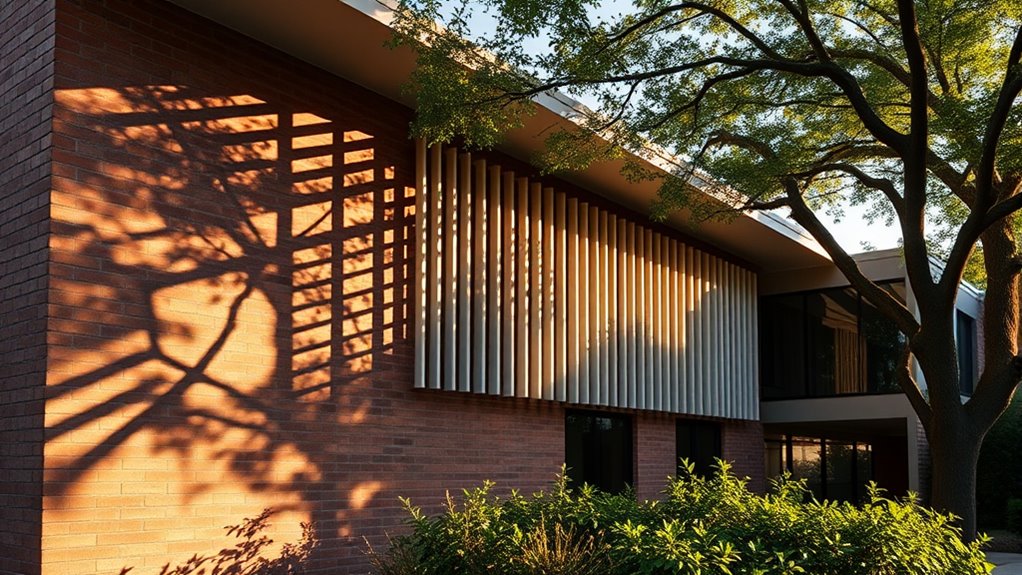
Incorporating passive solar design principles involves thoughtfully positioning and designing your building to maximize natural heat gain and minimize cooling needs. You can harness the sun’s energy by strategically placing windows, choosing materials that absorb and release heat, and designing layouts that promote airflow. These choices help create a comfortable environment while reducing energy bills. Regularly assessing and adjusting your design elements can further optimize space and organization, ensuring your home remains energy-efficient and comfortable year-round. You’ll gain control over your indoor climate naturally, lowering reliance on mechanical systems.
- Feel the warmth of the sun on your skin during chilly mornings
- Experience comfort from sunlight without extra effort
- Enjoy savings on energy bills every month
- Create inviting spaces filled with natural light
- Reduce your carbon footprint effortlessly
Adjusting Orientation for Seasonal Changes
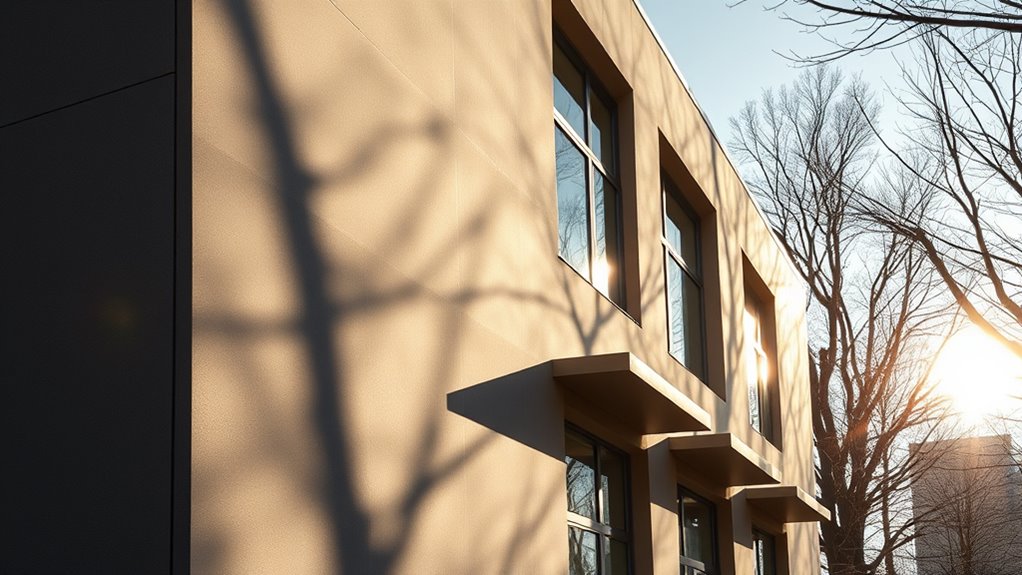
Adjusting the orientation of your building to match seasonal sun angles can considerably enhance your passive solar design. In winter, you’ll want to tilt your building to maximize sunlight entering through south-facing windows, providing natural warmth and light. Conversely, during summer, you should position shading devices or modify the building’s tilt to block high-angle sun, preventing overheating. Consider aligning your building’s longest axis east-west to optimize solar gain in colder months while minimizing excess heat in summer. Incorporate movable shading elements or adjustable window placements to respond to seasonal changes easily. By thoughtfully orienting your structure, you harness the sun’s natural cycle, reducing reliance on mechanical heating and cooling, and creating a comfortable, energy-efficient environment year-round. Proper risk assessment of your design choices can further help mitigate potential issues related to seasonal variations and ensure long-term performance.
Case Studies of Successful Orientation Strategies

You can improve energy efficiency by carefully placing buildings in relation to the sun’s path. Strategic use of landscape and structural elements helps maximize shade and sunlight at the right times. These case studies show how thoughtful orientation leads to significant gains in comfort and sustainability. Incorporating shade management techniques can further optimize building performance by controlling solar gain throughout the year.
Building Placement and Sun Path
When designing buildings, careful placement relative to the sun’s path can considerably enhance natural light and reduce cooling costs. By understanding sun angles throughout the year, you can optimize building orientation for maximum comfort and efficiency. Incorporating passive solar design principles can further improve energy performance by utilizing natural heat gain and loss strategies. Consider these successful strategies:
- Position living spaces to face south, capturing winter sun while minimizing summer heat
- Place shaded outdoor areas on the west to block late-day heat
- Orient windows to allow natural light without excessive glare or heat gain
- Use flexible layouts that adapt to changing sun angles over seasons
- Incorporate overhangs or shading devices to control direct sunlight and improve energy performance
Landscape and Structural Elements
Landscape and structural elements play a crucial role in maximizing building orientation strategies, as demonstrated by numerous successful case studies. You can use trees, shrubs, and green screens to block unwanted summer sun while allowing winter sunlight to penetrate. Strategic placement of these elements helps create natural shading, reducing cooling loads. Incorporating porches, overhangs, and pergolas provides additional shade and directs sunlight where needed. In some cases, landscape design guides wind flow, improving natural ventilation and temperature regulation. Structural features like angled roofs, reflective surfaces, and sunshades can also enhance solar control. By integrating these elements thoughtfully, you optimize orientation benefits, improve energy efficiency, and create comfortable, sustainable living spaces. These case studies show that combining landscape and structural features is key to successful solar gain management.
Frequently Asked Questions
How Does Local Climate Influence Solar Orientation Choices?
You should consider your local climate because it directly impacts your solar orientation choices. In colder areas, you’ll want to maximize sunlight exposure by facing main windows toward the sun, helping to warm your space naturally. Conversely, in hot, sunny climates, shade and orientation away from intense sunlight can keep your home cooler. Understanding your climate helps you design a space that’s energy-efficient, comfortable, and suited to your environment.
Can Orientation Optimize Energy Efficiency for Commercial Buildings?
Absolutely, optimizing energy efficiency through orientation can make a big difference. Think of your building’s placement as a compass guiding energy savings. By aligning your structure to maximize sunlight in winter and minimize it in summer, you reduce heating and cooling needs. You’ll cut costs and boost sustainability. Proper orientation acts like a silent partner, quietly working to keep your building comfortable while lowering energy consumption.
Are There Specific Materials Better Suited for Different Orientations?
Yes, certain materials work better for specific orientations. For south-facing walls, use high thermal mass materials like concrete or brick to absorb and release heat, keeping indoor temperatures stable. For east and west orientations, opt for reflective or light-colored surfaces to reduce heat gain. In shaded or less sunny areas, insulation materials with low thermal conductivity help maintain comfort, while glazing choices can optimize natural light and heat control based on orientation.
How Does Building Height Affect Solar Gain and Shading Strategies?
Building height is like a tall tree casting shadows; taller buildings block more sunlight, reducing solar gain in nearby spaces. You’ll need to adjust shading strategies accordingly, using overhangs or louvers to protect lower levels from excessive heat or glare. Higher structures also create shade patterns that shift throughout the day, so you should plan for dynamic shading solutions that adapt to changing sunlight angles, ensuring comfort and energy efficiency.
What Role Does Renewable Energy Integration Play in Orientation Planning?
You should consider renewable energy integration early in orientation planning to maximize efficiency. By aligning buildings to optimize solar panel exposure, you increase energy generation. Proper orientation also helps reduce reliance on external power sources, lowering costs and carbon footprints. Incorporating wind turbines or other renewable tech benefits from strategic positioning. Ultimately, integrating renewable energy into your design enhances sustainability, saves money, and supports environmental goals.
Conclusion
By understanding the sun’s path, you control your building’s comfort and energy use. While strategic shading keeps you cool in summer, open windows invite warmth in winter. It’s a delicate balance—like dance partners in sync—between exposure and protection. Mastering orientation isn’t just about saving energy; it’s about creating a space that responds to the seasons. With thoughtful planning, you can turn sunlight into your greatest asset, not your biggest challenge.