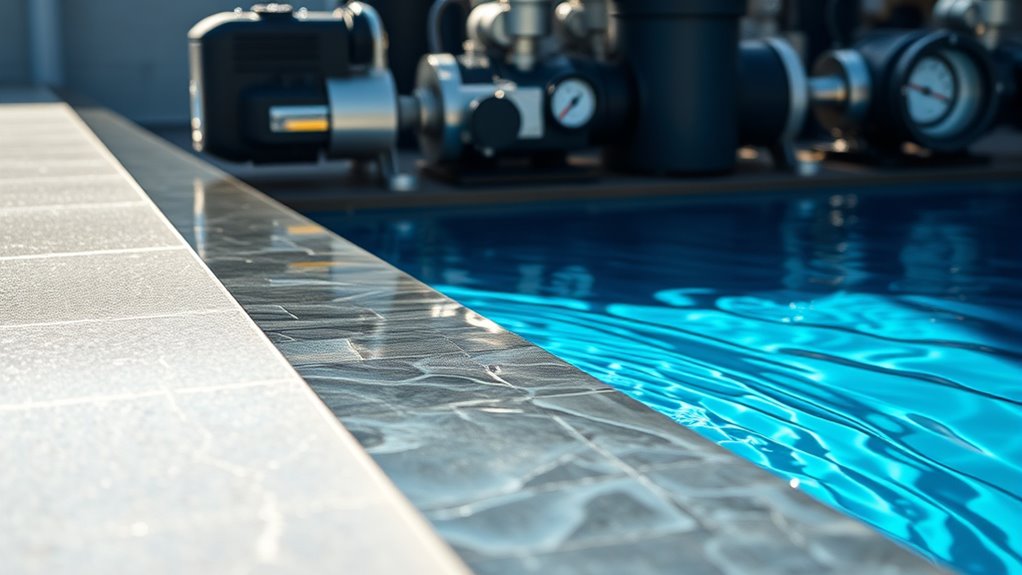

To guarantee your infinity pool functions beautifully, you need to understand flow rate and pump sizing. Proper hydraulic design means selecting a pump that provides the right flow—typically a full turnover every 4-6 hours—based on your pool’s volume. Too little flow causes stagnation, while too much creates turbulence. By matching your pump size to these needs, you’ll maintain the stunning visual effects and water clarity you want. Learn more about optimizing your system below.

Get workout gear delivered free — and shop member deals
- Fast, free delivery on millions of items
- Access to Prime Big Deal Days deals on October 6–7
- Prime Video, Amazon Music and more included
Key Takeaways
- Calculate pool volume and aim for a full turnover every 4-6 hours to determine required flow rate.
- Match pump size to desired flow, typically 50 GPM per 10,000 gallons, for efficient circulation.
- Adjust flow rates for features like waterfalls or jets that need higher flow.
- Avoid oversized pumps to reduce turbulence and energy waste; undersized pumps cause poor circulation.
- Regularly maintain and troubleshoot pumps to ensure consistent flow and optimal system performance.
As an affiliate, we earn on qualifying purchases.
Understanding the Basics of Hydraulic Systems in Pools
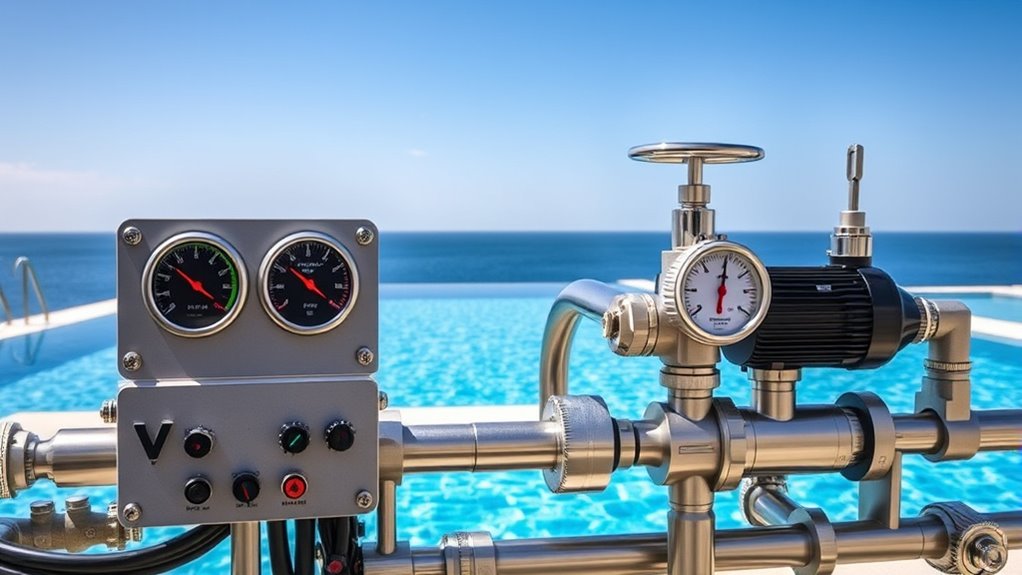
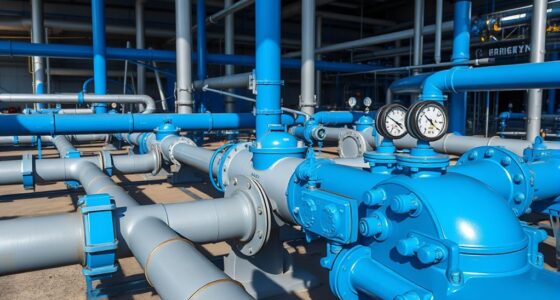
Have you ever wondered how your pool’s water flows smoothly and stays clean? It all starts with understanding the basics of hydraulic systems. These systems use pumps, pipes, valves, and filters to move and treat water efficiently. The pump acts as the heart, creating pressure that pushes water through the circulation system. Pipes guide water to different parts of the pool, while valves control flow direction and rate. Filters trap debris, ensuring clean water returns to the pool. Hydraulic systems are designed to maximize flow while minimizing energy use. Knowing how these components work together helps you troubleshoot issues and optimize performance. A well-designed system maintains water clarity, balances chemical levels, and keeps your infinity pool running smoothly. Additionally, selecting the appropriate pump size is essential for achieving optimal flow rates and energy efficiency.
How Flow Rate Impacts Infinity Pool Performance
The flow rate in your infinity pool directly affects its visual appeal and overall functionality. If the flow rate is too low, the water won’t cascade smoothly over the edge, diminishing that iconic infinity effect. It can also lead to poor circulation, which may cause stagnant spots or uneven water levels. Conversely, a flow rate that’s too high creates excessive noise and turbulence, disrupting the tranquil aesthetic you want. Proper flow rate ensures a steady, graceful overflow, enhancing the pool’s sleek appearance. It also maintains consistent water quality by promoting proper filtration and aeration. Achieving the right flow rate balances visual impact with operational efficiency, making sure your infinity pool remains both stunning and functional. Additionally, maintaining an appropriate flow rate helps prevent stagnant water, which can lead to algae growth and other water quality issues.
Calculating the Necessary Flow Rate for Your Design
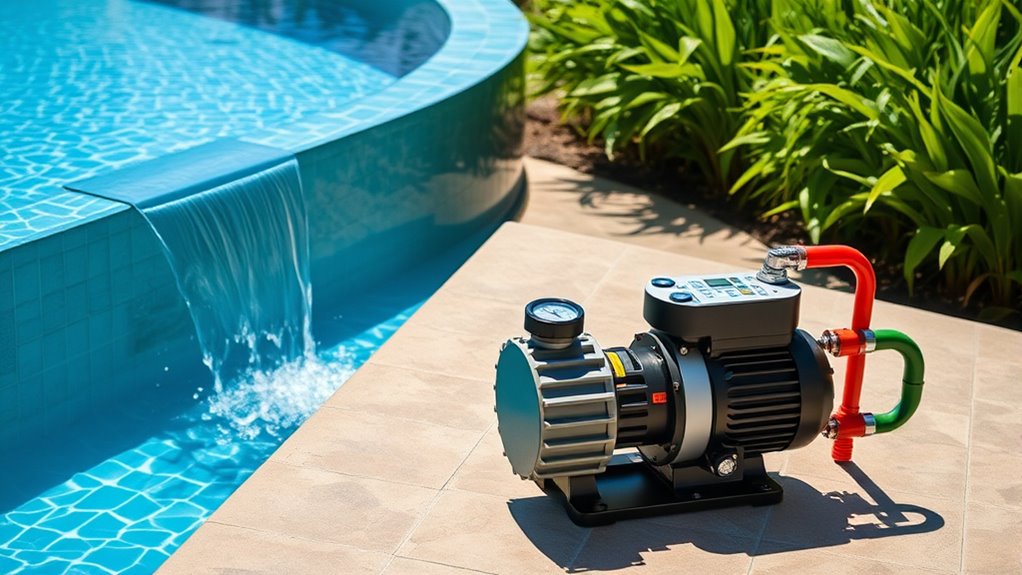
To guarantee your infinity pool functions perfectly and achieves the desired visual effect, you need to calculate the appropriate flow rate based on your design specifications. First, determine the pool’s volume in gallons or liters. Next, decide how often you want the water to circulate—typically, a full turnover every 4 to 6 hours works well. Divide the total volume by the number of hours for circulation to find the hourly flow rate. For example, a 10,000-gallon pool with a 4-hour turnover requires a flow rate of 2,500 gallons per hour. Adjust this figure based on any additional features, such as waterfalls or jets, which may demand higher flow rates. Proper pump sizing is essential for maintaining water clarity and overall system efficiency. Precise calculations ensure your pump provides adequate circulation without overworking, maintaining clarity and aesthetic appeal.
Choosing the Right Pump Size for Optimal Circulation
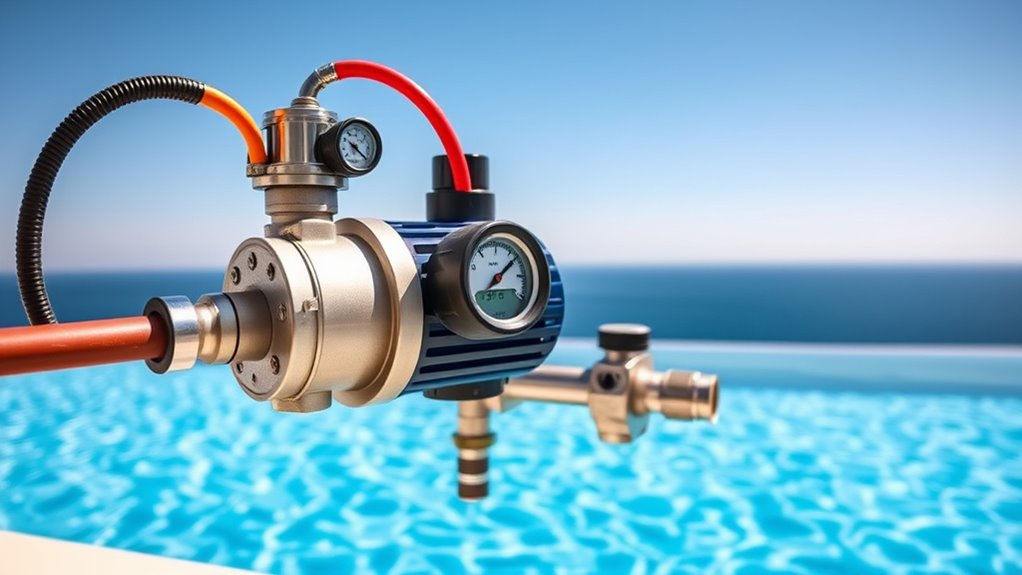
Selecting the right pump size is crucial for ensuring your pool’s circulation system runs efficiently and effectively. An appropriately sized pump maintains proper water flow, prevents strain on the system, and saves energy. To choose correctly, consider your pool’s volume and desired turnover rate. Oversized pumps waste energy and can cause turbulence, while undersized pumps struggle to circulate water properly. Use the table below to match flow rates with pump sizes:
| Pool Volume (gallons) | Recommended Flow Rate (GPM) |
|---|---|
| 10,000 | 50 |
| 20,000 | 100 |
| 30,000 | 150 |
| 40,000 | 200 |
Matching your pump to these guidelines ensures effective circulation and longevity.
Factors Affecting Pump Efficiency and Longevity

Many factors can influence your pump’s efficiency and how long it lasts, making it essential to understand what impacts performance. One key factor is proper maintenance; neglecting regular cleaning and inspections can cause debris buildup, reducing flow and causing strain. The quality of the pump’s components also matters—higher-quality parts typically last longer and operate more efficiently. Operating conditions, like running the pump at higher speeds than necessary, increase wear and energy consumption. Correct sizing is vital; a pump that’s too powerful or too weak can lead to unnecessary stress and reduced lifespan. Additionally, ambient temperature and water chemistry can affect internal components, causing corrosion or deterioration over time. Regularly monitoring pump performance can help detect issues early and prevent costly failures. By paying attention to these factors, you can improve your pump’s efficiency and extend its service life.
Common Mistakes to Avoid When Sizing Pumps
Choosing the right pump size is essential for maximum performance, but common mistakes can undermine this goal. One mistake is sizing the pump too large, which wastes energy and causes unnecessary wear. Conversely, selecting a pump that’s too small results in poor circulation and inadequate filtration. Another error is ignoring flow rate requirements or not calculating head loss properly, leading to mismatched equipment. Overlooking the pool’s specific needs, like height and plumbing complexity, can also cause problems. Additionally, relying solely on manufacturer recommendations without considering actual pool conditions can be risky. Avoid overspending on a pump with excess capacity or risking underperformance with an undersized one. Careful calculation and understanding your pool’s requirements assure you avoid these common pitfalls and optimize your pump’s performance. Moreover, understanding how flow rate impacts circulation and filtration efficiency can help in selecting the appropriate pump size.
Installing and Maintaining Your Pool Pump System

To keep your pool pump running smoothly, start by placing it in a well-ventilated, level spot to prevent issues. Regularly check your system for leaks, unusual noises, or decreased flow to catch problems early. When something goes wrong, troubleshooting common issues quickly can save you time and keep your pool pristine. Additionally, inspecting pump performance regularly ensures optimal operation and longevity.
Proper Pump Placement
Have you ever wondered why proper pump placement is essential for your pool’s filtration efficiency? It’s vital because the pump’s position affects water flow, energy use, and equipment lifespan. You want to place the pump close to the pool and on a stable, level surface to minimize vibrations and noise. Elevating or placing it too far away can cause air leaks or reduce flow. Keep the pump away from debris, dirt, and areas prone to flooding. Confirm there’s enough clearance for maintenance and servicing. Proper drainage around the pump prevents water accumulation that could damage the system. Additionally, positioning the pump with the inlet facing the skimmer ensures effective water intake. Correct placement optimizes filtration, saves energy, and prolongs your system’s lifespan. Proper pump placement also considers the essential oils for equipment maintenance, which can help prevent microbial buildup and keep your system running smoothly.
Regular System Checks
Regularly inspecting your pool pump system guarantees it operates efficiently and extends its lifespan. Check for leaks around fittings, gaskets, and seals, replacing any worn or damaged parts immediately. Ensure the pump’s motor is free of debris and dirt, and clean the strainer basket regularly to prevent clogging. Listen for unusual noises that could indicate issues like cavitation or bearing wear. Verify that the pump is properly aligned and securely mounted to reduce vibration. Examine the electrical connections for corrosion or loose wiring, which can cause operational failures. Keep the surrounding area free of debris to prevent airflow obstructions. Additionally, paying attention to headphones compatibility with your system can help ensure seamless audio functionality. These routine checks help maintain ideal flow and pressure, preventing costly repairs and ensuring your pool stays clean and inviting.
Troubleshooting Common Issues
When your pool pump isn’t working properly, identifying the root cause quickly can save time and prevent further damage. Start by checking the power supply—ensure the breaker hasn’t tripped and the cord is plugged in securely. If the pump hums but doesn’t start, it might have a jam or worn bearings. Inspect the strainer basket and skimmer for debris, which can cause flow issues. Leaks around the pump or pipes indicate a seal or fitting problem. Low flow rates could result from clogged filters or closed valves. Regularly clean or replace filters and check for blockages. If the pump still underperforms, consider scheduling professional maintenance to diagnose more complex issues like motor failure or impeller damage. Compatibility of the pump with your system components is essential for optimal operation. Quick troubleshooting keeps your system running efficiently.
Troubleshooting Flow Rate and Pump Issues
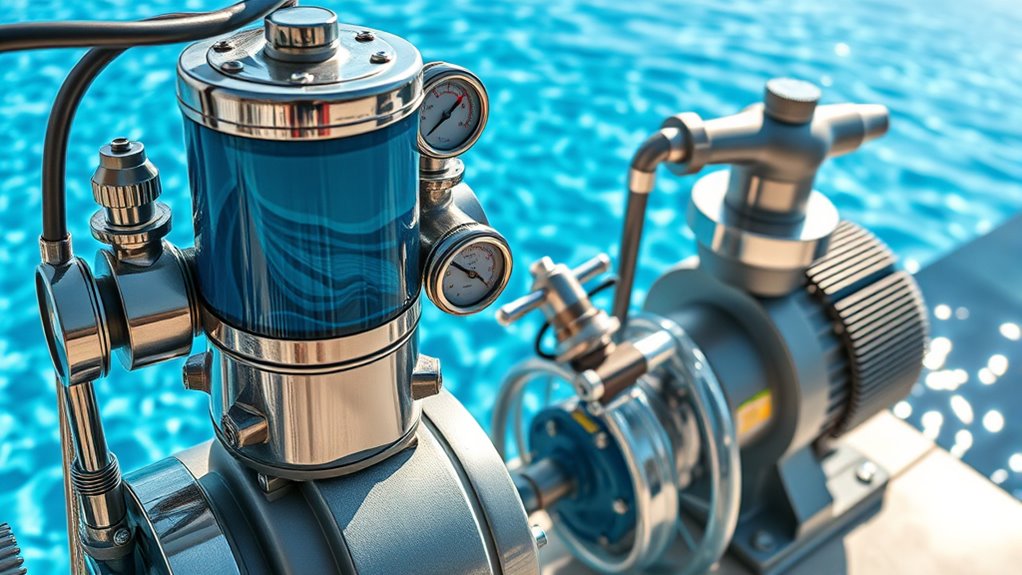
Troubleshooting flow rate and pump issues begins with understanding how each component interacts within the hydraulic system. If flow is weak or inconsistent, check for obstructions, leaks, or clogged filters. Confirm the pump’s motor is running smoothly and that valves are fully open. A sudden drop in flow might mean the pump is undersized or worn out. Use the table below to identify common problems:
| Issue | Possible Cause |
|---|---|
| Low flow rate | Clogged intake filter |
| No flow or pump not starting | Electrical or motor failure |
| Excessive noise | Worn bearings or cavitation |
Regular inspection and maintenance assure your system runs efficiently, preventing issues before they escalate. Additionally, understanding flow rate principles can help optimize pump performance and system longevity.
Frequently Asked Questions
How Does Pipe Diameter Affect Flow Rate in Infinity Pools?
You’ll find that pipe diameter directly impacts flow rate in infinity pools. Larger pipes reduce resistance, allowing water to flow more freely and at higher rates. Smaller pipes increase resistance, slowing down the flow and potentially causing pump strain. To optimize your pool’s circulation and efficiency, choose pipe sizes that balance flow needs with system capabilities, ensuring smooth operation without overloading your pump.
What Safety Considerations Are Important When Sizing Pool Pumps?
When sizing your pool pump, you need to prioritize safety by guaranteeing the pump is properly rated for your pool size and flow rate. Avoid over-sizing, which can cause excessive pressure and damage, and under-sizing, which may lead to inadequate circulation. Regularly inspect and maintain your pump, use appropriate safety devices like automatic shut-offs, and follow manufacturer guidelines to prevent accidents and ensure safe operation.
Can Variable Speed Pumps Improve Energy Efficiency?
Yes, variable speed pumps can improve your energy efficiency markedly. They adjust their motor speed based on your pool’s needs, reducing energy consumption when full power isn’t necessary. This flexibility allows you to operate the pump at lower speeds for filtration and circulation, saving you money on electricity. Plus, they tend to last longer due to less wear and tear, making them a smart, eco-friendly choice for your infinity pool.
How Often Should Pump Maintenance Be Performed?
You should perform pump maintenance every 3 to 6 months. Imagine your pump working tirelessly, like a marathon runner, and neglecting it can lead to 50% higher energy costs. Regular checks keep it running smoothly, preventing issues like leaks or worn-out parts. Cleaning filters, inspecting seals, and lubricating components ensure peak performance. Staying consistent with maintenance saves you money and extends your pump’s lifespan, keeping your infinity pool pristine.
What Are Signs of an Undersized or Oversized Pump?
You’ll notice an undersized pump struggles to circulate water properly, causing poor filtration, cloudy water, and increased strain on the system. An oversized pump, on the other hand, may produce excessive noise, high energy bills, and turbulent water flow, which can damage your pool’s equipment. If you observe inconsistent flow or strange noises, it’s a sign you need to reevaluate your pump size to guarantee peak performance and efficiency.
Conclusion
Now that you understand the flow of water, the size of your pump, and the importance of proper maintenance, you can guarantee your infinity pool runs smoothly, efficiently, and beautifully. By selecting the right pump, monitoring performance, and avoiding common mistakes, you’re creating a seamless flow that mirrors the infinity edge itself. With careful attention and ongoing care, your pool will flow effortlessly, delivering endless enjoyment and breathtaking views for years to come.
Halloween Picks
halloween
As an affiliate, we earn on qualifying purchases.