In desert climates, you can combat high evaporation by using water-conserving landscapes with native, drought-tolerant plants grouped by water needs. Install drip irrigation and mulch to retain soil moisture. Apply reflective roofing and insulating materials to reduce heat transfer, and design windows for cross-ventilation with shaded openings. Incorporate water harvesting systems like raincatchers and recycle greywater, while planting trees and shrubs for natural cooling. Continue exploring these strategies to create more resilient, energy-efficient desert environments.
Key Takeaways
- Use native, drought-tolerant plants grouped by water needs to minimize evaporation loss.
- Apply mulch around plants to retain soil moisture and reduce surface evaporation.
- Install drip irrigation systems for direct, precise watering, reducing water loss through evaporation.
- Incorporate shaded structures and landscape shading to limit direct sunlight and lower evaporation rates.
- Design reflective roofs and insulating materials to reduce indoor heat gain, decreasing water demand for cooling.
Water-Conserving Landscaping Techniques
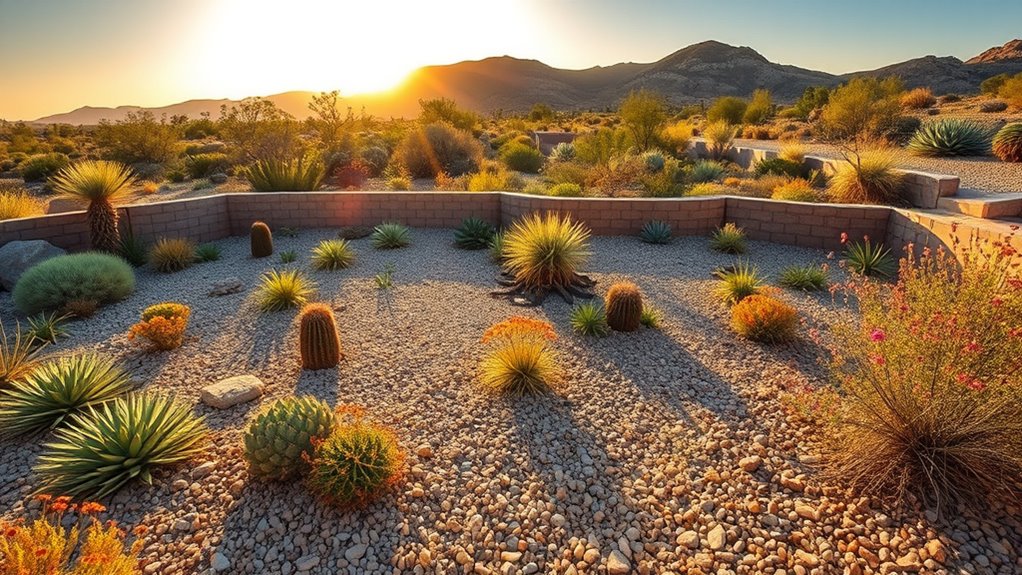
In desert climates, conserving water is essential for maintaining healthy landscapes. You can achieve this by choosing native plants that are adapted to arid conditions and require minimal watering. Group plants with similar water needs together to prevent over- or under-watering. Mulching around plants helps retain soil moisture and reduces evaporation, making watering more efficient. Installing drip irrigation systems directs water precisely to plant roots, avoiding waste and runoff. Consider creating xeriscapes—landscapes designed specifically for water conservation—by using rocks, gravel, and drought-tolerant plants. These techniques not only save water but also reduce maintenance and create low-cost, sustainable landscapes. Additionally, selecting drought-tolerant plants that thrive in arid conditions ensures a resilient landscape. By implementing these strategies, you guarantee your landscape thrives despite the harsh desert environment while conserving precious water resources.
Use of Reflective and Insulating Building Materials

Using reflective and insulating building materials can significantly reduce heat gain in desert climates, making your structures cooler and more energy-efficient. Reflective materials, such as white or light-colored roofs and exterior surfaces, bounce sunlight away, preventing heat absorption. Insulating materials, like foam or reflective barriers, minimize heat transfer from outside to inside. By combining these approaches, you create a thermal barrier that keeps indoor temperatures stable, reducing reliance on air conditioning. Proper application ensures maximum effectiveness, lowering energy costs and enhancing comfort. Additionally, selecting high R-value insulation can further improve thermal resistance, ensuring your building remains cooler during peak desert heat. Overall, these materials are essential for designing resilient buildings that withstand extreme desert heat while maintaining a cooler indoor environment.
Design Strategies for Natural Ventilation and Shading

To effectively reduce indoor temperatures in desert climates, you should prioritize natural ventilation and shading strategies that leverage the environment. Use cross-ventilation by designing windows and vents on opposite sides of your building, encouraging airflow that cools indoor spaces. Incorporate shaded openings—like overhangs, pergolas, or louvers—to block direct sunlight while allowing breezes to enter. Position windows high for hot air to escape and lower for cooler air intake. Use landscape shading, such as trees or shrubs, to protect walls and windows from direct sun. Incorporate reflective surfaces around openings to bounce heat away. Additionally, selecting the appropriate paint sprayer tips can help apply reflective or heat-resistant coatings effectively on surfaces, further contributing to heat reduction. These strategies work together to maximize airflow and minimize heat gain, creating a cooler, more comfortable indoor environment without relying heavily on mechanical cooling.
Implementation of Water Harvesting and Recycling Systems
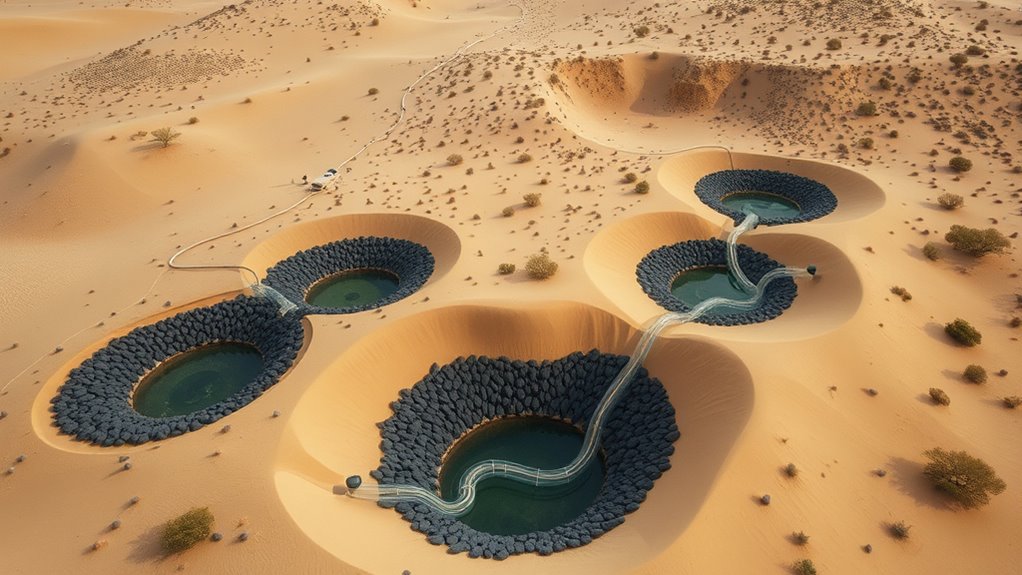
Implementing water harvesting and recycling systems is essential for sustainable living in desert climates, where water is scarce. You can collect rainwater using catchment surfaces like rooftops and permeable pavements, directing it into storage tanks. Recycling greywater from sinks and showers reduces freshwater demand and minimizes waste. To optimize efficiency, consider integrating filtration and treatment units for reuse in irrigation or flushing. Proper system design guarantees minimal evaporation losses, maximizing water conservation. Here’s a quick overview:
| System Component | Function |
|---|---|
| Catchment Surfaces | Capture rainwater effectively |
| Storage Tanks | Store harvested water for later use |
| Filtration Units | Purify greywater for reuse |
Ensuring proper maintenance and understanding total-cost clarity can significantly improve system sustainability.
Incorporating Vegetation and Natural Elements for Microclimate Regulation

Have you ever wondered how natural elements can cool and shade a desert environment? By incorporating vegetation and natural features, you create a sanctuary that cools the air and reduces heat. Imagine lush trees providing shade, lowering temperatures beneath their canopy. Visualize green spaces that evoke comfort and vitality, transforming harsh landscapes into inviting retreats. To achieve this, consider:
- Planting native trees and shrubs to provide shade and moisture retention.
- Designing green corridors that promote airflow and cooling.
- Using natural elements like rock formations and water features to create microclimates.
- Recognizing that angel numbers can serve as signs of harmony and guidance in designing sustainable desert microclimates.
These strategies harness nature’s power to combat high evaporation rates, making desert spaces more livable and resilient. Embracing natural elements is essential for sustainable, cooling microclimates in arid regions.
Frequently Asked Questions
How Do Desert Climates Affect Urban Planning and Infrastructure?
Desert climates influence your urban planning by requiring you to focus on water conservation and heat mitigation. You should incorporate reflective surfaces, shade structures, and green spaces to reduce heat absorption. Efficient water management becomes vital, so design systems that minimize evaporation and promote recycling. You’ll also need to prioritize materials that withstand extreme temperatures and guarantee adequate ventilation, making the city livable despite the harsh environment.
What Are the Most Effective Drought-Resistant Plant Species for Desert Landscaping?
You might think lush greenery thrives here, but drought-resistant plants are your best bet. Consider succulents like agave and aloe vera, which store water efficiently. Native desert shrubs such as creosote bush and brittlebush require minimal watering and endure extreme heat. These hardy species not only survive but thrive, saving water and reducing maintenance. Embrace the irony—resisting desert dryness becomes easier with plants designed for such challenging conditions.
How Can Building Orientation Optimize Cooling in Desert Environments?
You can optimize cooling by orienting your building to minimize sun exposure during the hottest parts of the day. Position windows and outdoor spaces to face north or south, reducing direct sunlight. Use shading devices like overhangs or trees, and align your structure to take advantage of prevailing breezes. This setup helps keep interiors cooler, lowers energy costs, and creates a more comfortable environment in desert climates.
What Role Do Traditional Desert Architecture Techniques Play in Modern Design?
Traditional desert architecture techniques play a essential role in modern design because they offer proven methods for cooling and conserving energy. You might think these methods are outdated, but they actually enhance sustainability and comfort. By incorporating thick walls, small windows, and shading devices, you can reduce heat gain and improve indoor conditions. These timeless strategies adapt well to today’s eco-conscious building practices, making your designs more efficient and culturally resonant.
How Does Climate Change Influence Evaporation Rates and Desert Climate Adaptations?
Climate change increases evaporation rates in desert areas, making water conservation more critical. You should adapt by incorporating traditional techniques like shaded courtyards, thick walls, and wind catchers that reduce heat and slow evaporation. Emphasizing passive cooling and water harvesting helps you create resilient, sustainable designs. By understanding these shifts, you can better address the challenges posed by hotter, drier conditions and design environments that remain livable and efficient.
Conclusion
By embracing these desert climate design tactics, you create a oasis of comfort amidst the scorching sun. Picture your home surrounded by lush greenery, cool shadows dancing on sun-baked walls, and water shimmering in recycled systems. With thoughtful landscaping, reflective surfaces, and natural ventilation, you’ll turn harsh heat into a invigorating breeze. Together, these strategies transform your space into a rejuvenating retreat, where resilience and beauty thrive under the endless desert sky.