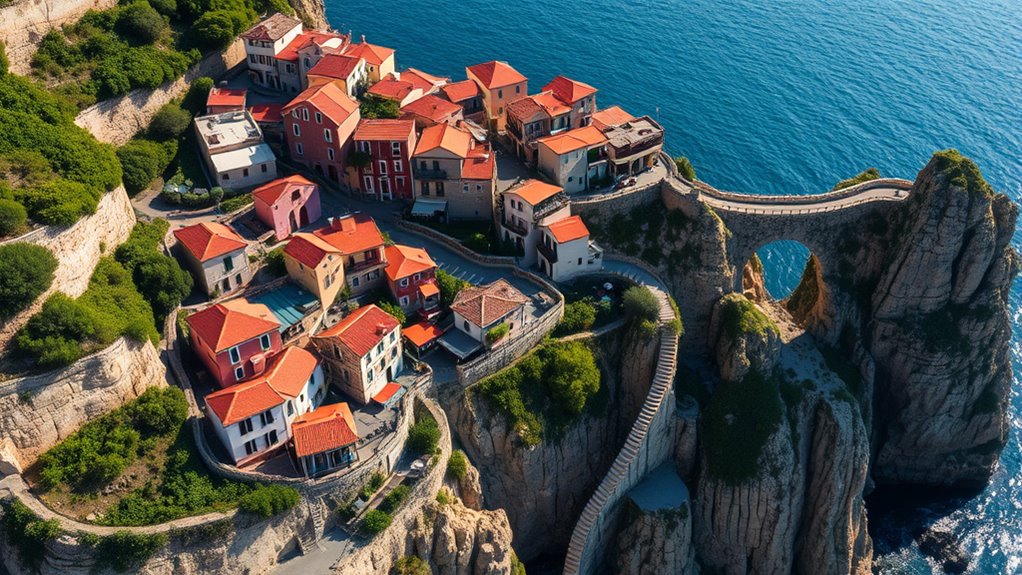
Building on steep cliffs requires thorough site analysis, geotechnical assessments, and advanced foundations like piles or anchors to guarantee stability. You’ll need effective erosion control, proper drainage, and reinforced contour strategies to prevent landslides. Choosing durable, eco-friendly materials and integrating environmental preservation helps maintain the landscape. Regulatory compliance and safe construction practices are essential. If you want to explore the best techniques to master these challenging terrains, keep looking into these expert strategies.
Key Takeaways
- Conduct thorough site analysis, including geology, soil stability, and natural features, to determine optimal foundation and support methods.
- Implement reinforced contour strategies, such as terracing and drainage systems, to prevent erosion and manage water runoff effectively.
- Choose durable, high-strength materials like reinforced concrete and steel, ensuring long-term stability and environmental compatibility.
- Prioritize environmental preservation by using eco-friendly materials, native plants, and adhering to regulatory requirements.
- Utilize advanced construction techniques like micro-piling, drone surveys, and prefabrication to enhance safety and efficiency on steep sites.
Assessing Geological Stability and Site Analysis
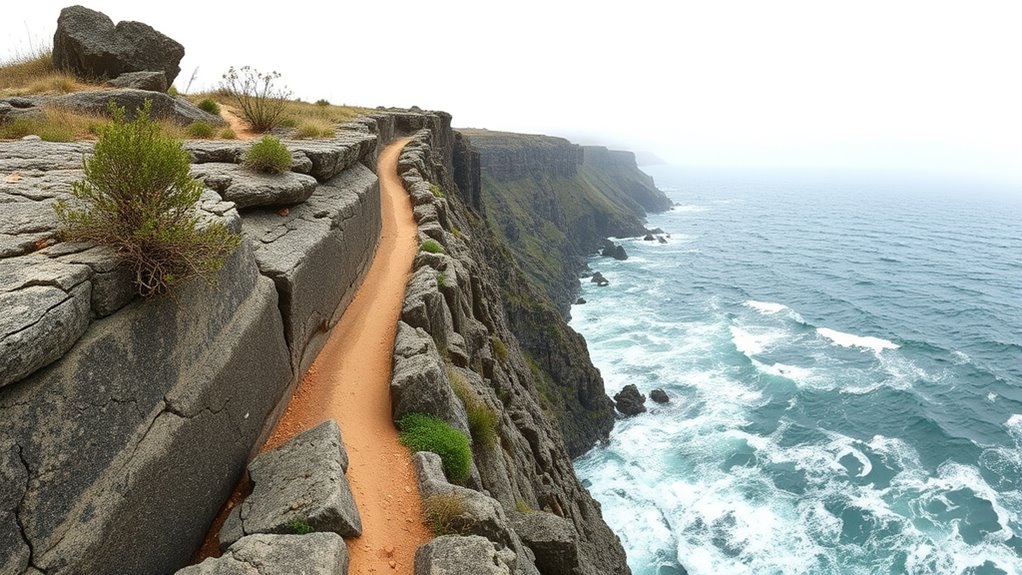
Before starting any cliffside construction, you need to thoroughly assess the geological stability and analyze the site. Begin by examining the rock formations and soil types to identify potential weaknesses or fractures. Conduct geotechnical surveys to measure soil bearing capacity and check for signs of erosion or movement. Pay close attention to natural features like fault lines, drainage paths, and slope angles, as these influence stability. Use soil sampling and lab testing to understand composition and cohesion. Review historical data and previous land use to identify risks. This detailed assessment helps you determine whether the site can support your project and guides necessary reinforcement measures. Incorporate environmental innovations such as sustainable drainage solutions or erosion control technologies when applicable. Skipping this step could lead to structural failures, so thorough analysis is essential for safety and success.
Designing for Erosion Control and Drainage
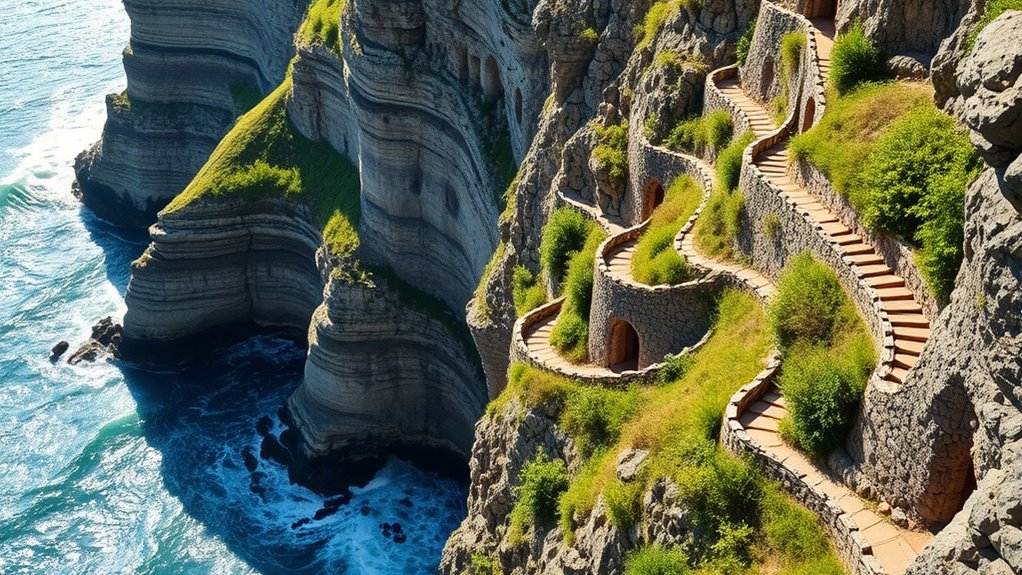
When designing for erosion control and drainage, you need to focus on reinforced contour strategies that follow the natural land shape to minimize runoff. Implementing effective drainage techniques guarantees water flows away from the structure, reducing erosion risks. By combining these methods, you create a stable, sustainable foundation on challenging cliffside terrain. Proper soil management is essential to maintain plant health and prevent further erosion over time.
Reinforced Contour Strategies
Reinforced contour strategies are essential for effectively managing erosion and ensuring proper drainage on cliffside builds. By shaping the landscape along natural contours, you create stable terraces that resist soil movement. Using materials like geogrids, retaining walls, and bioengineering techniques strengthens these contours, preventing washouts during heavy rains. You should incorporate terracing that follows the natural slope to distribute water evenly and minimize runoff speed. Reinforced contours also help direct water flow away from vulnerable areas, reducing erosion risk. It’s vital to assess soil stability and select appropriate reinforcement methods tailored to your site’s conditions. Properly designed contours act as a first line of defense, maintaining structural integrity and safeguarding your build from erosion-related damage. Additionally, understanding the importance of comfortable and supportive solutions can contribute to overall site stability and longevity.
Effective Drainage Techniques
How can you guarantee effective drainage on cliffside builds to prevent erosion and structural failure? First, install well-designed drainage systems like French drains or perforated pipes to channel water away from the structure. Use terracing and contouring to direct runoff safely downhill, reducing erosion risk. Incorporate vegetation to absorb excess moisture and stabilize soil. Regularly inspect and maintain drainage paths to prevent blockages. Here’s a quick overview:
| Technique | Benefit |
|---|---|
| French Drains | Efficient water removal from critical areas |
| Contour Terracing | Slows runoff and minimizes erosion |
| Vegetation Cover | Stabilizes soil and absorbs moisture |
These methods work together to manage water flow, protect your cliffside build, and ensure longevity. Additionally, selecting appropriate soil types can further enhance stability and drainage effectiveness.
Choosing Appropriate Building Materials for Steep Slopes
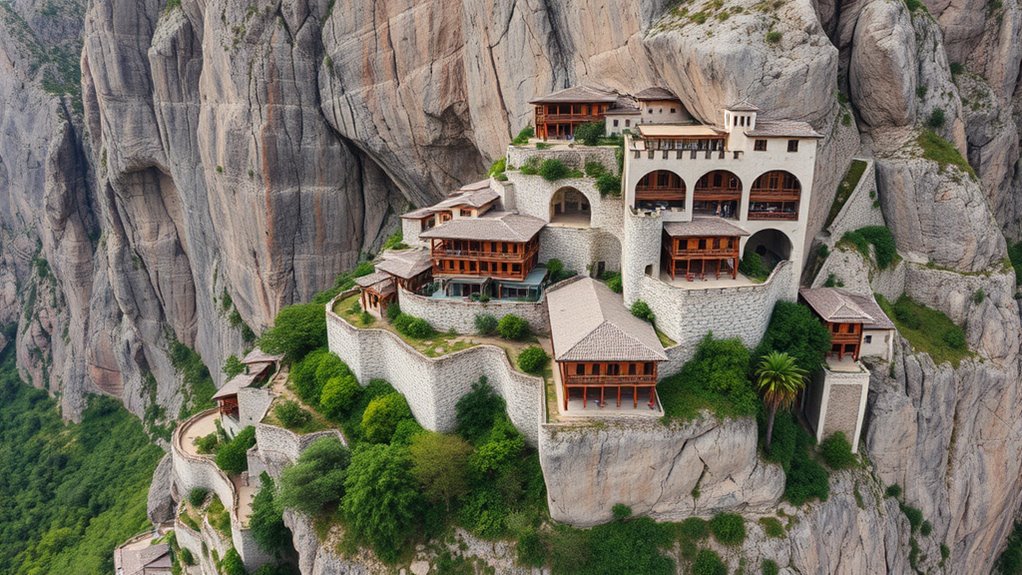
When selecting materials for steep slopes, you need to consider their strength and durability to ensure your structure lasts. Eco-friendly and local options can reduce environmental impact and support community resources. Don’t forget to weigh costs and ongoing maintenance to find a balance between affordability and long-term performance. Utilizing appropriate building materials can also enhance the stability and safety of the structure over time.
Material Strength and Durability
Choosing the right building materials for steep slopes is essential to guarantee your structure can withstand the challenging environment. You need materials with high strength to resist shifting soil, erosion, and shifting loads. Opt for durable options like reinforced concrete, which offers excellent compression strength and longevity. Steel, known for its tensile strength, can also provide added stability when used appropriately. Natural stones are strong and weather-resistant but must be properly selected and installed to prevent deterioration. Avoid materials prone to rot, corrosion, or rapid degradation, such as untreated wood or certain composites. Ensuring your materials can withstand moisture, temperature changes, and wind forces will prolong your structure’s life. Ultimately, choosing high-quality, durable materials minimizes maintenance needs and enhances safety on steep, unstable sites. Incorporating curiosity about material properties can also lead to innovative solutions that improve durability and performance.
Eco-Friendly and Local Options
Opting for eco-friendly and local building materials can substantially reduce your project’s environmental impact while enhancing its integration with the surrounding landscape. Using sustainably sourced timber, stone, or clay minimizes transportation emissions and supports local economies. These materials often blend seamlessly with the terrain, creating a harmonious aesthetic. Reclaimed wood or recycled metal can add character and reduce waste. Additionally, natural insulation options like sheep’s wool or cork improve energy efficiency without harmful chemicals. Choosing locally available materials also ensures they are well-suited to the climate and soil conditions, boosting durability. Incorporating eco-friendly options encourages sustainable practices and can sometimes qualify for green building incentives. Forsale 100 Overall, selecting local, environmentally friendly materials benefits both the environment and your project’s longevity on steep slopes.
Cost and Maintenance Factors
Selecting building materials for steep slopes requires careful consideration of both initial costs and ongoing maintenance. You need to balance affordability with durability to ensure your structure withstands the challenging environment.
Consider these factors:
- Material Durability – Choose materials resistant to weather, erosion, and shifting soil to minimize repair costs.
- Installation Expenses – Some materials, like natural stone or concrete, may have higher upfront costs but lower long-term maintenance.
- Maintenance Frequency – Opt for low-maintenance options such as treated wood or composite materials to reduce ongoing upkeep.
- Environmental Impact – Select eco-friendly materials that require fewer resources and less energy to maintain, lowering both costs and your footprint.
Prioritizing these factors helps you create a sustainable, cost-effective cliffside home. Additionally, understanding the relationships between various materials and environmental conditions can guide you toward choices that enhance longevity and reduce ongoing expenses.
Foundations and Structural Support Strategies
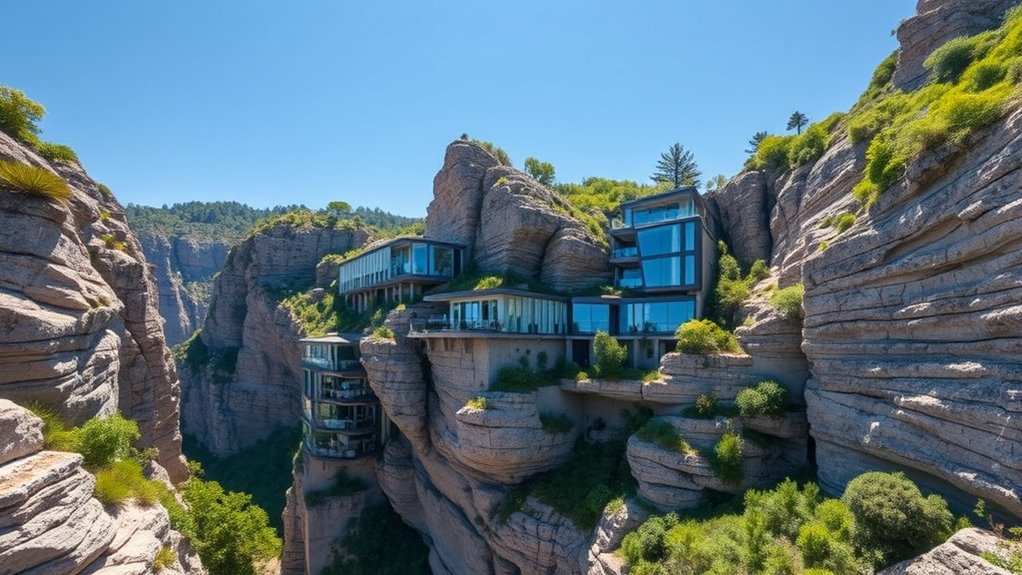
Building a stable foundation on a cliffside requires careful planning and innovative support strategies. You need to analyze the geology thoroughly to determine the best anchoring points and support methods. Pile foundations, drilled caissons, or rock anchors are common options, depending on the soil and rock stability. Reinforced concrete or steel frameworks help distribute weight evenly and resist shifting. You might also incorporate cantilevered structures or stilts that extend into solid bedrock, reducing excavation needs. Underpinning existing rock formations can enhance stability, while retaining walls prevent soil erosion. Regular inspections and adaptive reinforcement are essential to address shifting or weather-related stress. Additionally, understanding dog breeds can inspire innovative design ideas, as each breed’s traits often reflect strength and adaptability. By combining these strategies, you ensure your structure stays secure, resilient, and safe against the challenging conditions of steep, unstable terrains.
Incorporating Environmental Preservation and Sustainability
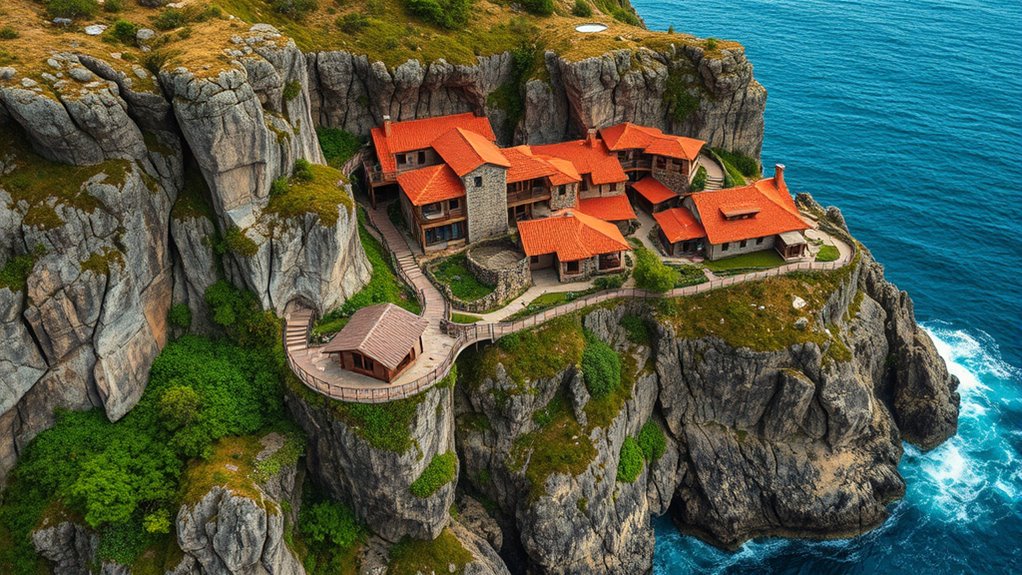
Integrating environmental preservation into cliffside construction guarantees that your project minimizes its ecological footprint while maintaining stability. You can achieve this by selecting eco-friendly materials, such as recycled or locally sourced options, reducing resource consumption. Implementing erosion control measures like vegetative buffers helps protect the surrounding landscape. Incorporating native plantings supports local biodiversity and stabilizes soil. Additionally, designing for energy efficiency through passive solar heating or solar panels reduces long-term environmental impact. To deepen your efforts, consider these strategies:
Prioritize eco-friendly materials and erosion controls to protect natural landscapes and ensure stable cliffside construction.
- Conduct thorough environmental impact assessments before construction.
- Use minimally invasive construction techniques to preserve natural landforms.
- Incorporate rainwater harvesting and greywater recycling systems.
- Plan for ongoing ecological monitoring to adapt and improve sustainability practices.
- Employ high-contrast projectors to reduce energy consumption and enhance visual clarity in your outdoor setup.
Navigating Permitting and Regulatory Requirements

Managing permitting and regulatory requirements is a crucial step that can greatly influence the timeline and success of your cliffside project. Start by researching local, state, and federal regulations early in your planning process. Contact relevant agencies to understand zoning laws, building codes, and environmental restrictions specific to steep or fragile terrains. Prepare detailed documentation, including site plans, environmental impact assessments, and safety measures, to streamline approval processes. Be proactive in addressing potential concerns from authorities or community stakeholders. Building relationships with permitting officials can help clarify requirements and facilitate smoother approvals. Remember, strict adherence to regulations not only prevents costly delays but also ensures your project complies with safety and environmental standards, safeguarding your investment and the surrounding ecosystem.
Innovative Construction Techniques for Challenging Terrains

Innovative construction techniques are essential when working on challenging terrains like cliffsides, where traditional methods may be impractical or unsafe. You need approaches that adapt to steep slopes, limited space, and unstable ground. Techniques like anchored retaining walls, micro-piling, and prefabricated modules help stabilize the site efficiently. Using drone surveys can provide precise topographical data, reducing guesswork and optimizing designs. Additionally, employing lightweight materials minimizes load on unstable surfaces. Here are some key methods:
- Anchored retaining systems for stability
- Micro-piling for deep foundation support
- Prefabricated, modular construction for quick assembly
- Drone-assisted site surveying for accurate planning
These techniques guarantee safety, reduce construction time, and address the unique challenges of steep terrains.
Ensuring Safety During and After Construction
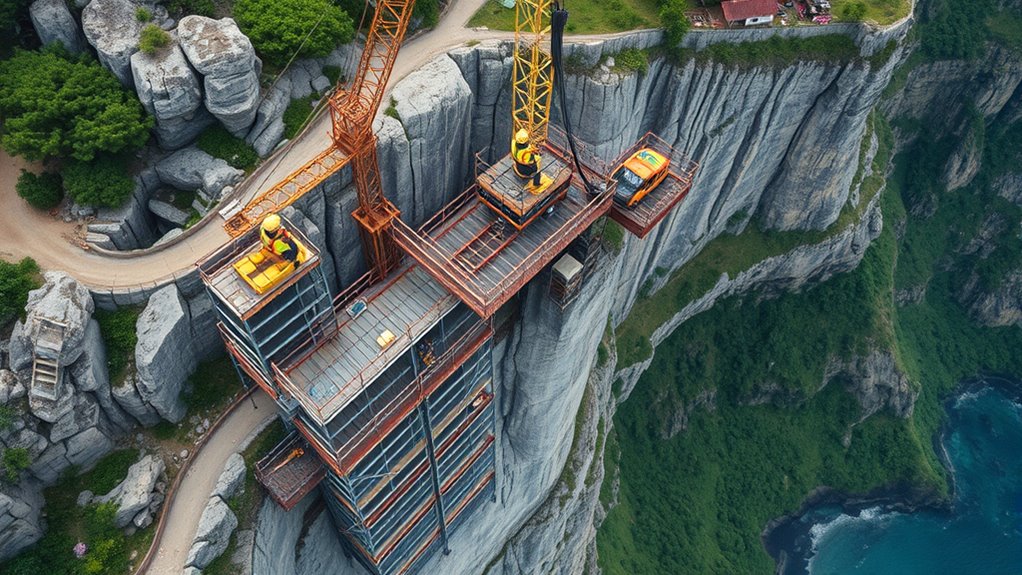
Ensuring safety during and after construction on cliffsides requires proactive planning and strict adherence to protocols. Before starting, conduct thorough site assessments to identify potential hazards like unstable soil or rockfalls. Install secure barriers, guardrails, and warning signage to protect workers and visitors. Use reliable safety equipment, such as harnesses and helmets, and enforce strict safety procedures. During construction, monitor weather conditions and soil stability continuously, adjusting plans as needed. After completion, establish ongoing inspections and maintenance routines to identify emerging risks. Train your team regularly on safety protocols and emergency procedures. By prioritizing safety at every stage, you minimize accidents and protect both workers and future users, ensuring the longevity and integrity of the cliffside structure.
Aesthetic Integration With Natural Surroundings
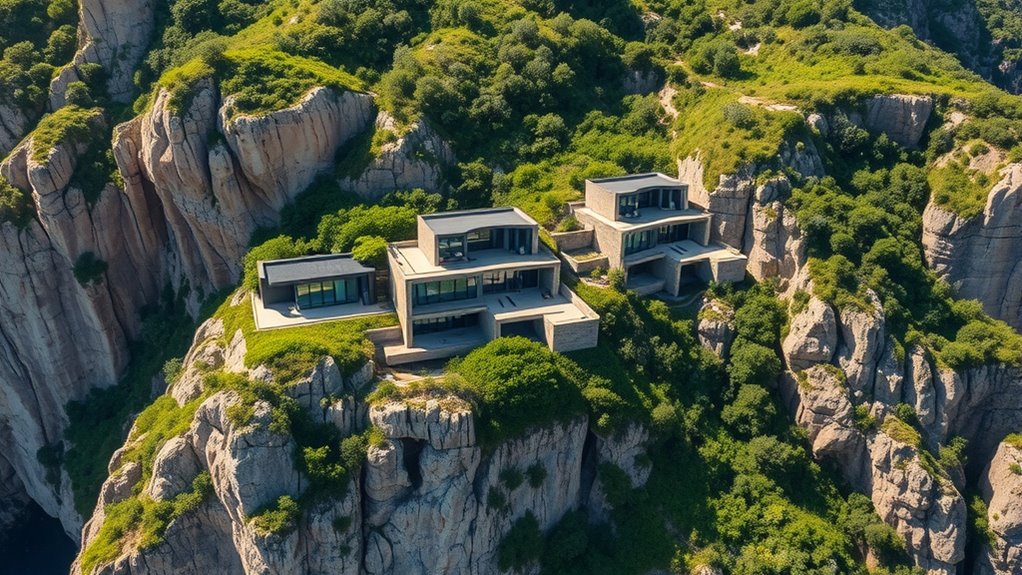
To create a seamless blend between your cliffside structure and its natural environment, focus on selecting materials and design elements that complement the landscape. Use locally sourced stone, wood, or materials that echo the colors and textures of the surroundings. Incorporate organic shapes and low-profile designs to minimize visual impact. Landscaping should enhance existing terrain, not overpower it. Incorporate native plants to maintain ecological harmony. Keep structures unobtrusive by avoiding bright colors or modern materials that clash with natural hues.
- Use natural, locally sourced materials
- Incorporate organic shapes and low profiles
- Integrate native vegetation for landscaping
- Choose subtle colors that blend with the environment
Frequently Asked Questions
How Do Steep Sites Affect Long-Term Maintenance Costs?
Steep sites tend to increase your long-term maintenance costs because they require more frequent repairs and specialized interventions. Landslides, erosion, and drainage issues happen more often, making your building vulnerable. You’ll need ongoing monitoring, reinforcement, and sometimes costly stabilization measures. These extra efforts add up over time, making maintenance more expensive than on flat land. Planning for these ongoing costs upfront helps you manage the financial impact effectively.
What Are Common Mistakes in Cliffside Foundation Design?
You often overlook the importance of proper drainage, which is a common mistake in cliffside foundation design. For example, if you neglect to install adequate drainage systems, water can erode the soil and destabilize the foundation over time. To avoid this, you should incorporate effective drainage solutions like French drains and retaining walls, ensuring water runoff is directed away from the foundation, protecting your structure from future damage.
How Can I Mitigate Landslide Risks During Construction?
To mitigate landslide risks during construction, you should conduct thorough geotechnical surveys to understand soil stability. Use proper drainage systems to prevent water buildup, and reinforce slopes with retaining walls or terracing. Limit heavy equipment on unstable ground, and avoid excavation during rainy periods. Implement erosion controls like silt fences and vegetation. Consistently monitor slope conditions, and work with geotechnical experts to adapt your plans as needed.
What Are the Best Practices for Retaining Walls on Steep Slopes?
You should design retaining walls that are sturdy, well-anchored, and properly constructed. Use durable materials like reinforced concrete or treated timber, and make certain proper drainage to prevent water buildup. Regularly inspect and maintain the walls to catch issues early. Incorporate setbacks and proper height limits to reduce pressure. By prioritizing strength, stability, and maintenance, you create a resilient barrier that secures your slope and safeguards your construction site.
How Does Climate Change Impact Cliffside Building Stability?
Climate change increases the risk of erosion, flooding, and extreme weather, which directly threaten cliffside building stability. You need to take into account rising sea levels and intense storms that can weaken foundations and cause landslides. To protect your structures, you should reinforce retaining walls, improve drainage systems, and adapt your designs to accommodate changing conditions. Staying proactive helps ensure your cliffside builds remain safe despite climate challenges.
Conclusion
Building on steep cliffs demands careful planning and respect for nature’s grandeur. By applying lessons from ancient builders, like the Romans, you can create structures that blend seamlessly into the landscape while standing the test of time. Embrace innovative techniques, prioritize safety, and preserve the environment. With patience and ingenuity, you’ll turn a formidable site into a masterpiece—proof that even in a world full of chaos, harmony with nature remains timeless, like a well-crafted tapestry woven through the ages.