
TL;DR

Get workout gear delivered free with Prime
- Fast, free delivery on millions of items
- Prime Video, Amazon Music and more included
- Member-only deals all year
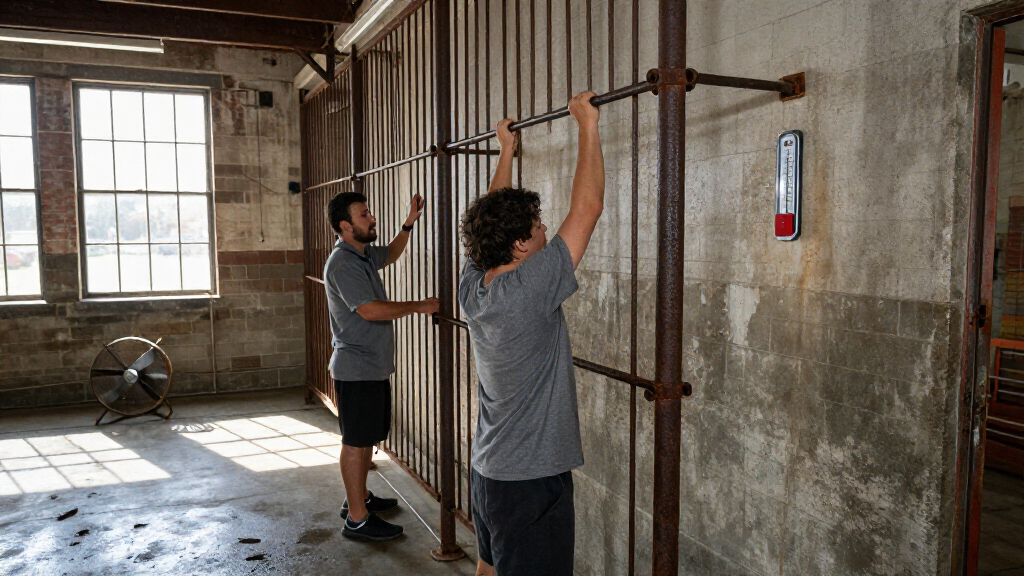
A study of Pennsylvania state prisons over 20 years found that extreme heat and cold were associated with higher rates of deaths, infirmary admissions and transfers to outside medical facilities. The researchers also found greater increases in some medical-care measures for women after extremely hot days; the study does not establish that temperature alone caused the outcomes.
A study published in Nature Communications found that extreme heat and cold were associated with higher rates of deaths, infirmary admissions and transfers to outside medical facilities among people in Pennsylvania state prisons over a 20-year period. The researchers also found that women had greater increases in some measures of medical care after extremely hot days than men, raising concerns about how aging facilities and strained health services are equipped for severe weather.
The study examined mortality and health-service use following extreme ambient temperatures in Pennsylvania’s state prison system. Its authors reported associations between both very hot and very cold conditions and increased rates of deaths and medical-care use. The findings add data to concerns that people in custody face particular exposure because they cannot leave prison buildings to seek cooler or warmer surroundings.
The report says outdoor temperatures in Pennsylvania reached 103 degrees Fahrenheit and fell to minus 9 degrees during the year described. Many state prisons were built in the 1990s or earlier, and some facilities—including Muncy, Cambridge Springs and Huntingdon—have air conditioning only in parts of the institution or very limited cooling, according to the source report.
The researchers described a notable difference by sex: women experienced greater increases in infirmary visits and transfers to outside medical facilities on and after extremely hot days than men. The finding is an association in the study data, not proof that heat alone caused the health-care events. The report identifies the work as research by Jaquelyn L. Jahn and colleagues; the supplied material does not provide the study’s exact temperature thresholds, effect sizes or full methods.
Heat Strains Prison Health Services
The findings matter because people in custody have limited control over their exposure to indoor temperatures and cannot independently move to a public cooling or warming center. When a facility has little or uneven air conditioning, weather extremes may affect people across housing units, while medical staff and infirmaries must respond to added demand.
The source report describes an older prison population with substantial chronic health needs and staffing pressures. It says the average age at admission rose from 31 in 2000 to 38 in 2023, while some facilities have had medical staff vacancy rates approaching 40%. Those figures provide context for why added heat- or cold-related care could be difficult to manage, but the study does not quantify how staffing levels influenced its temperature findings.
The result for women may also matter for planning. The report points to menopause-related hot flashes and night sweats, as well as chronic disease and accelerated aging, as possible reasons women in custody may face distinct risks. Those are proposed explanations, not mechanisms established by the study. The authors’ findings support closer attention to building conditions, health-care access and the needs of older adults and women during extreme weather.
portable air conditioner for large rooms
As an affiliate, we earn on qualifying purchases.
As an affiliate, we earn on qualifying purchases.
Older Buildings, Growing Health Needs
Pennsylvania confines nearly 40,000 people in its state prisons, the source report says, making its system the sixth-largest among U.S. states. It notes that several facilities have cooling only in selected buildings or units, such as nursing-care areas. That can leave other incarcerated people without equivalent temperature control during heat waves.
The study comes amid years of warnings from people in custody, advocates and local media about very hot and cold conditions inside prisons. One woman incarcerated at MCI Muncy told the Prison Journalism Project that she wears multiple layers of clothing in winter. Her account illustrates reported conditions but is not itself a measurement of temperature or a finding from the research.
The report also describes broader pressures on prison health care: people in custody are more likely than the general population to have chronic conditions, and older adults tend to have higher medical needs. It says medication costs average $3,357 per year for adults over 50, 53% more than for younger incarcerated adults. These details help explain the system’s existing demands; they do not establish that any single budget or staffing factor caused the outcomes observed in the study.
Study Limits and Open Questions
The supplied report does not give the study’s exact effect sizes, the thresholds used to define extreme heat and cold, or the number of deaths and medical events included. It also does not establish that temperature directly caused the observed outcomes. Other health and operational factors may contribute, and the reported association does not by itself identify which interventions would prevent harm.
It is also unclear from the available material whether Pennsylvania’s Department of Corrections has responded to the findings, plans facility upgrades, or has a systemwide extreme-weather plan. The study’s finding for women is described as unexpected, and the source says earlier studies in the general population have not consistently found the same pattern. Further research would be needed to explain the difference and determine how widely it applies.
Planning for Future Weather Extremes
The researchers argue that climate resilience planning should address prison conditions and health-care capacity, alongside policies that reduce incarceration, particularly for older adults. The report does not announce a specific state policy, construction project or implementation timetable.
Practical next steps for the state would include clarifying which facilities and housing areas lack cooling or reliable heating, reviewing how medical services respond during temperature extremes, and making any planned upgrades and emergency procedures public. Whether state officials will take those steps—and how they will address the study’s findings for women—remains unknown.
Key Questions
What did the Pennsylvania prison study find?
It found that extreme heat and cold were associated with higher rates of deaths, infirmary admissions and transfers to outside medical facilities among people in state prisons over 20 years.
Did the study prove extreme temperatures caused the deaths or medical visits?
No. The report describes an association between temperature extremes and health outcomes. The supplied material does not establish that temperature alone caused them.
What did researchers find about women in prison?
Women experienced greater increases in infirmary visits and transfers to outside medical facilities on and after extremely hot days than men, according to the study. The reason for that difference remains unclear.
Do all Pennsylvania state prisons have air conditioning?
No. The source report says some facilities have air conditioning in only certain buildings or units, while others have very limited cooling. It does not provide a complete facility-by-facility inventory.
What action has Pennsylvania announced in response?
The supplied report does not identify a state response, a planned upgrade or a timetable. It says the researchers recommend climate-resilience planning, but specific state actions remain unconfirmed.
Source: rss
Halloween Picks
halloween
As an affiliate, we earn on qualifying purchases.